
Frazer Nash Le Mans Replica History
Catalog record
Photography for this nameplate has not yet cleared the archive’s licensing and identity checks. The researched text below remains available while the page stays out of search and advertising inventory.
History
The post-war Frazer Nash story began when H.J. Aldington negotiated the British rights to the pre-war BMW 328 design and persuaded BMW's chief engineer Fritz Fiedler to come to England. The result was a family of lightweight sports cars powered by the Bristol 2-litre inline-six — a direct development of the BMW 328 engine built under licence — mounted in a tubular A-frame chassis with front and rear suspension also derived from 1930s BMW practice.
In 1949 one of the new cars, driven by H.J. Aldington's brother, finished third overall at the 24 Hours of Le Mans. The achievement was sufficiently remarkable for AFN to name the production model the Le Mans Replica. Producing around 120–150 bhp from the Bristol engine breathing through three downdraught Solex carburettors, the car exceeded 120 mph and could complete a standing-start quarter-mile in 16 seconds — extraordinary performance for a road-legal sports car of that era.
Approximately 34–50 Le Mans Replicas were built between 1949 and 1953 (sources vary slightly). The first 26 cars used an A-shaped tubular chassis with a Bristol rear axle; the final eight adopted a revised parallel-tube chassis developed for the 1952 single-seater competition cars, with an Austin rear axle on most and a de Dion unit on the last two. They were sold ready to race and competed successfully at Goodwood, Sebring, the Targa Florio, and club circuits across Britain.
Generations
Mark I · A-frame chassis
Original A-shaped tubular chassis, Bristol rear axle; ~26 built.
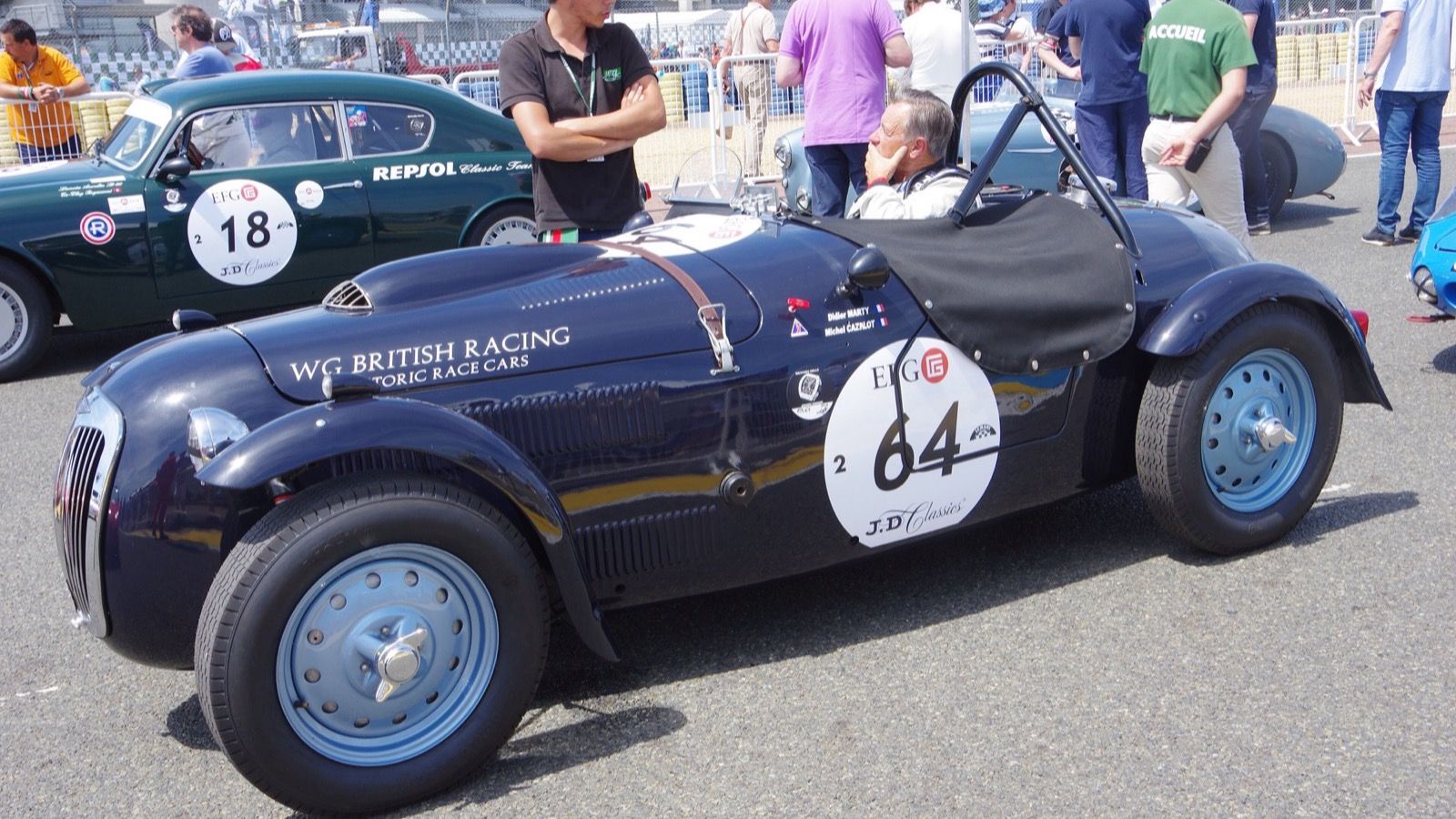
1950 Photo: “1950 Frazer Nash Le Mans Replica (32132760881).jpg” by David Merrett from Daventry, England / Wikimedia Commons, licensed under CC BY 2.0. Cropped to 16:9.
Mark II · Parallel-tube chassis
Revised parallel-tube chassis from the 1952 single-seater; Austin or de Dion rear axle; ~8 built.
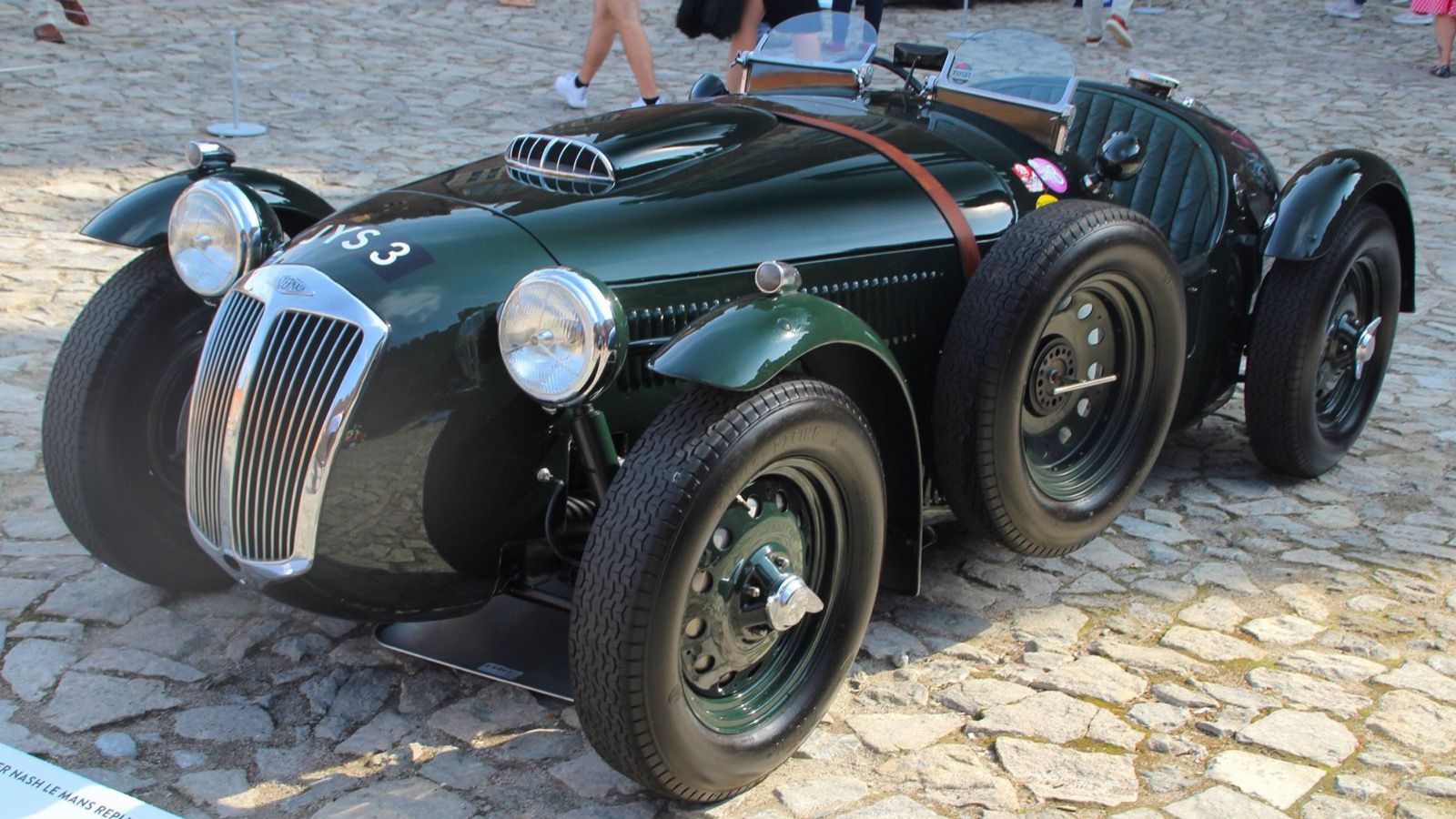
1952 Photo: “1952 Frazer Nash Le Mans (Replica).jpg” by MrWalkr / Wikimedia Commons, licensed under CC BY-SA 4.0. Cropped to 16:9.
Body styles
- Open roadster
Related models
Collect the nameplate
Find a scale model of the Frazer Nash Le Mans Replica
Search Amazon across available years, colors, and scales. Exact releases vary, so confirm the listing before ordering.