
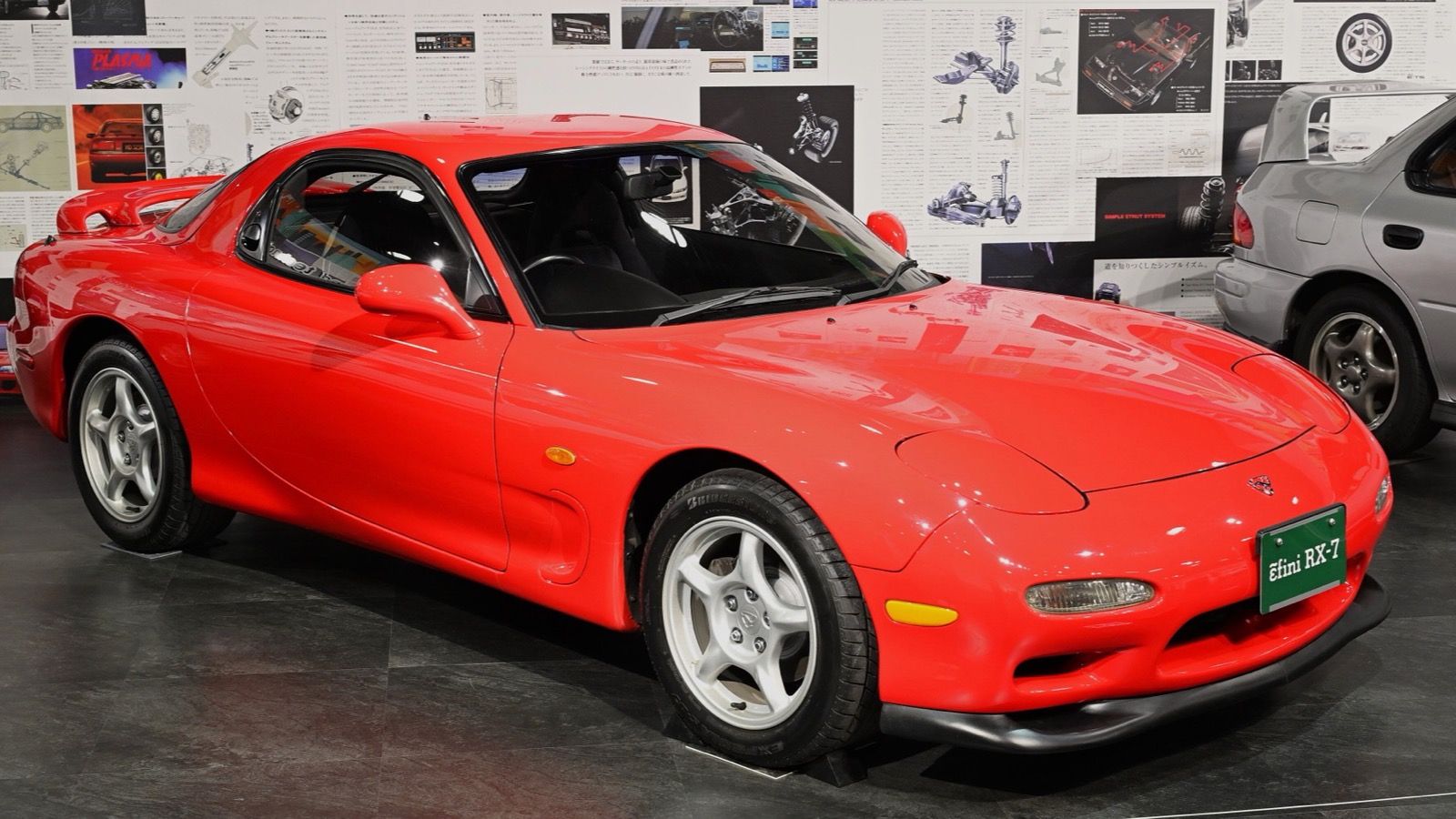
Efini RX-7 History
The legendary third-generation FD-chassis RX-7, sold in Japan under the ɛ̃fini badge — twin-turbo rotary, pop-up headlights, and 280 PS in top trim.
Photo: “1991 Ẽfini RX-7.jpg” by TTTNIS / Wikimedia Commons — CC0 1.0. Cropped to 16:9.
History
Announced in October 1991 and on sale in Japan by December of that year, the FD3S-chassis RX-7 was the third and final generation of Mazda's rotary sports car — and in Japan it wore the ɛ̃fini badge rather than the Mazda name, reflecting the multi-channel sales strategy of the era.
Its 13B-REW twin-rotor engine was the first mass-produced sequential twin-turbocharger system exported from Japan, producing 255 PS at launch and ultimately reaching the Japanese voluntary 280 PS ceiling in later homologation-spec variants. The design, penned at Mazda's Irvine, California studio by Wu-Huang Chin and Tom Matano under chief designer Yoichi Sato, featured an ultra-low drag coefficient and kept the car's weight close to 1,260 kg.
Japanese-market variants ranged from the base Type S and lightweight Type R to the track-focused Type RS (with Bilstein suspension and the full 280 PS output) and the grand-touring Touring X with automatic transmission. When ɛ̃fini dealerships were absorbed into Mazda Japan in 1997, the car continued as the Mazda RX-7 through 2002, but the Japanese enthusiast community still identifies the 1991–1997 cars as the ɛ̃fini RX-7.
Generations
Series 1 · FD3S Series 1
Photo: “1991 Ẽfini RX-7.jpg” by TTTNIS / Wikimedia Commons — CC0 1.0. Cropped to 16:9.
Launch cars; 255 PS 13B-REW, pop-up headlights, five trim levels from Type S to Type RZ.
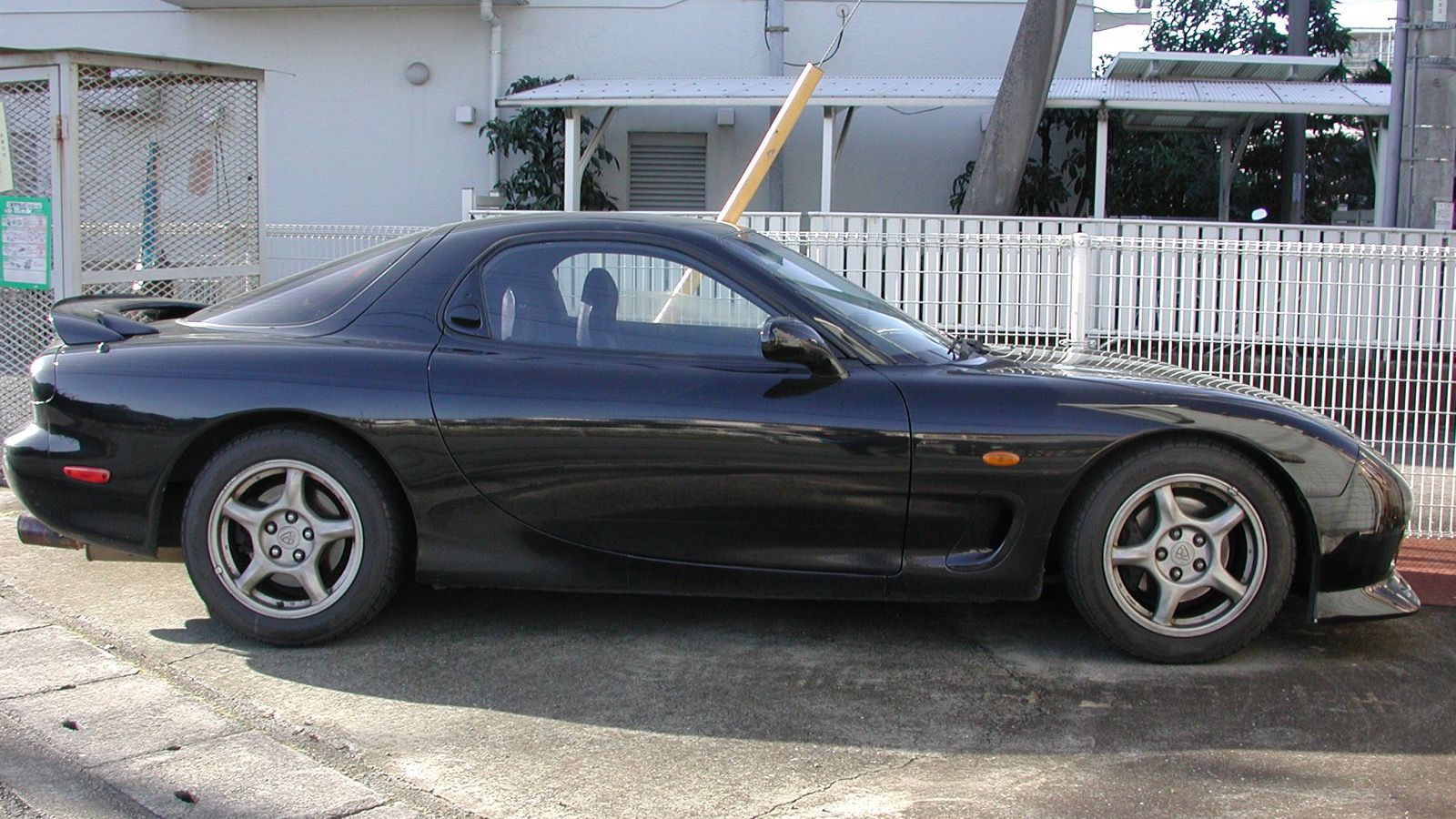
1991 Photo: “Mazda E-FD3S ε֮fini RX-7 Type R (03030807585).jpg” by Masayuki Igawa / Wikimedia Commons, licensed under CC BY 2.0. Cropped to 16:9.
Series 2 · FD3S Series 2
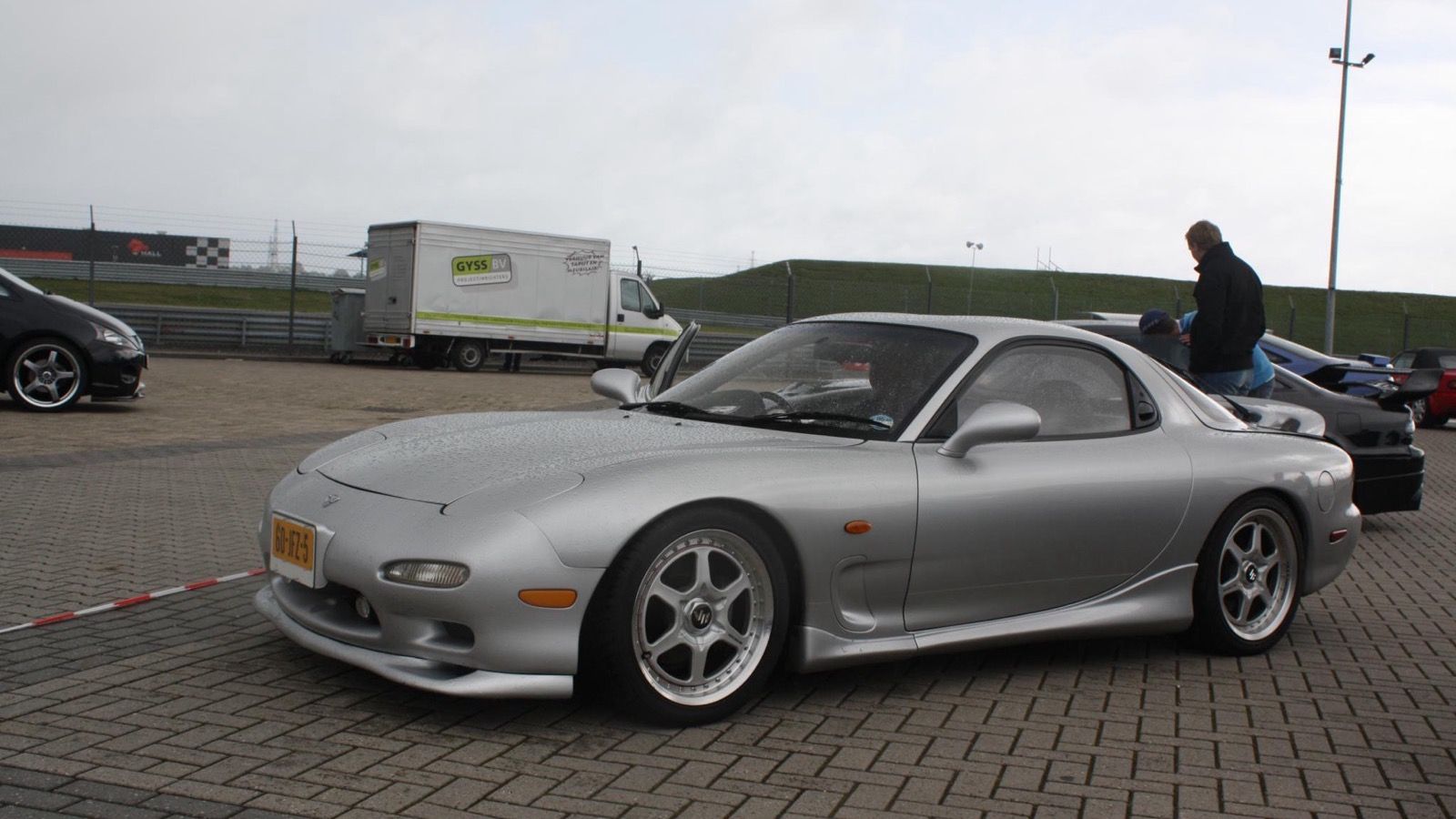
Photo: “Mazda E-FD3S ε֮fini RX-7 Type R2 (09091312240).jpg” by Mark van Seeters / Wikimedia Commons, licensed under CC BY 2.0. Cropped to 16:9.
August 1993 update; revised suspension geometry, minor ECU tuning, and trim restructure.
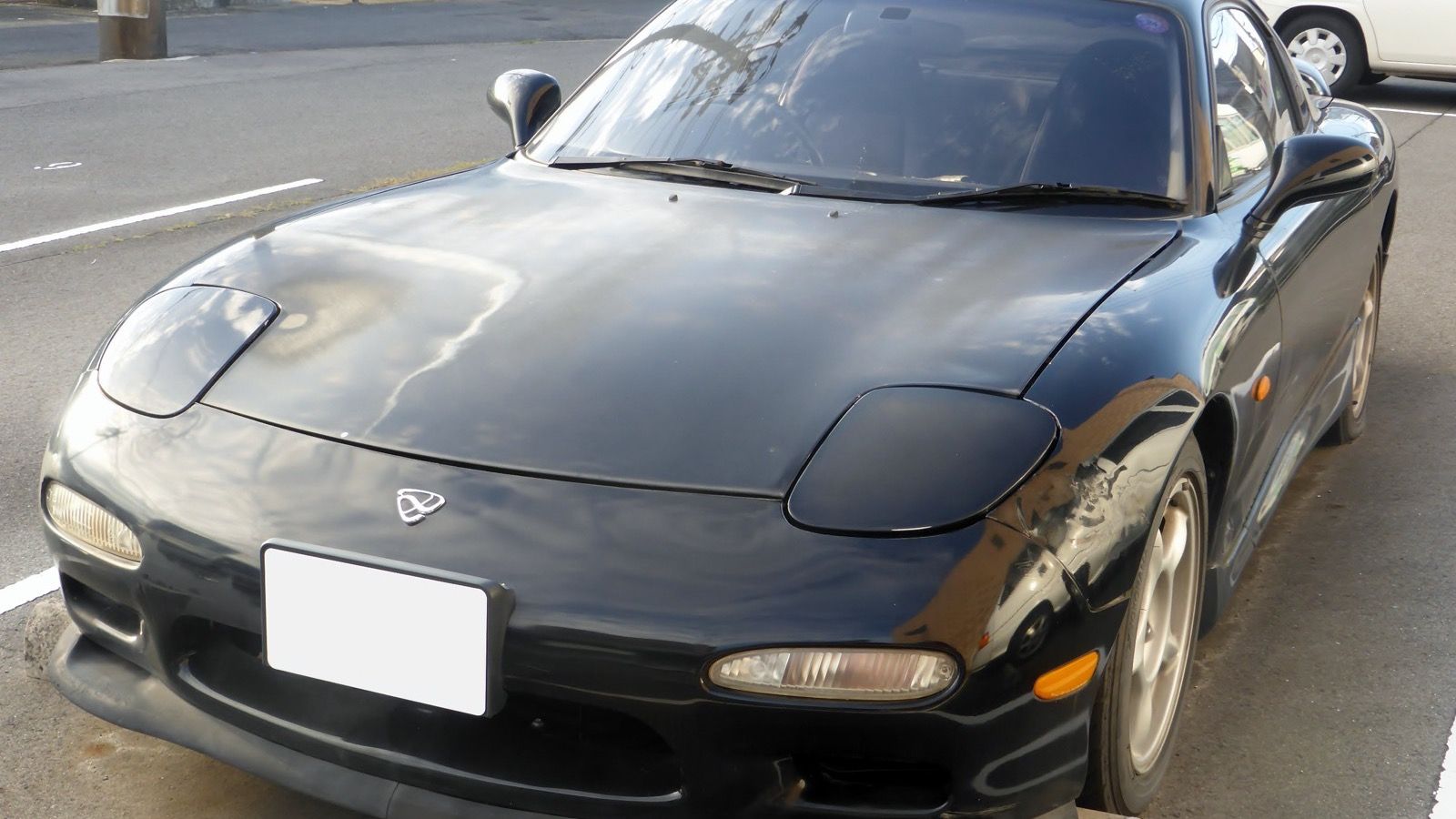
1993 Photo: “Ɛ̃fini RX-7 Type RS (FD3S) front.JPG” by Tokumeigakarinoaoshima / Wikimedia Commons — CC0 1.0. Cropped to 16:9.
Series 3 · FD3S Series 3
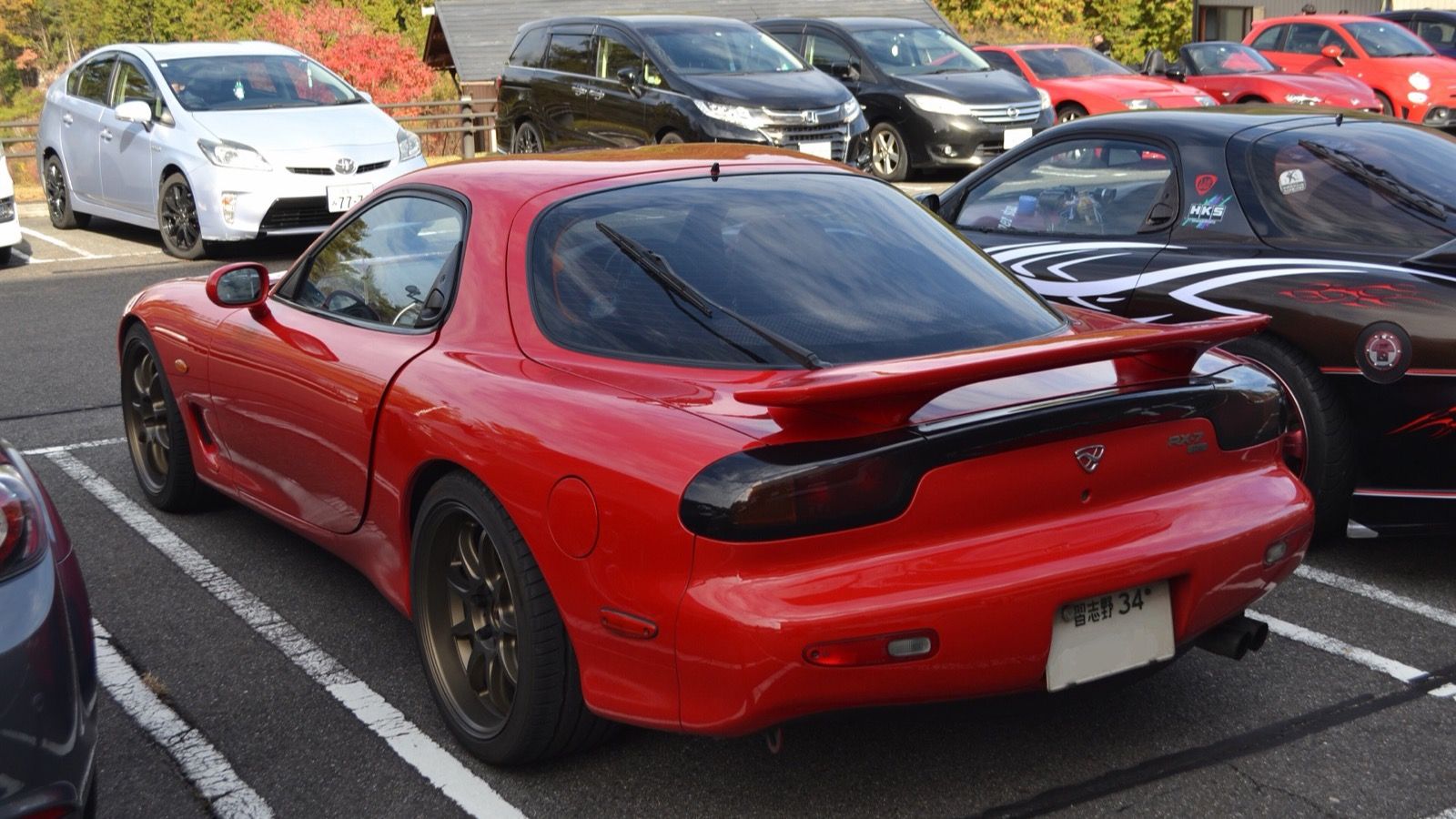
Photo: “Ɛ̃fini E-FD3S RX-7 Type R BATHURST (23112610465).jpg” by 先従隗始 / Wikimedia Commons — CC0 1.0. Cropped to 16:9.
March 1995 refresh; improved body rigidity, ABS upgrades; final ɛ̃fini-badged cars before the 1997 channel consolidation.
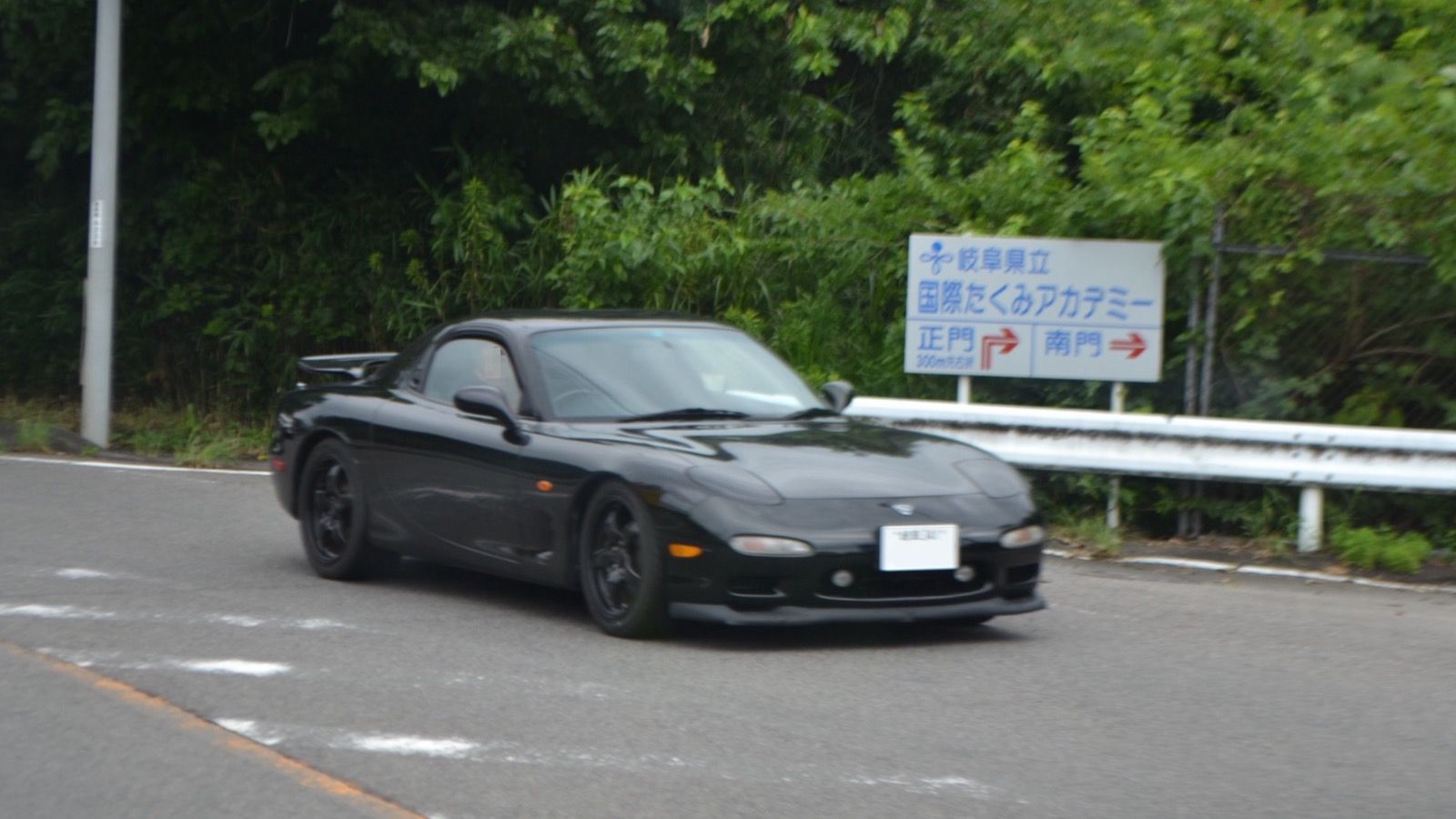
1995 Photo: “Ɛ̃fini E-FD3S RX-7 Type R-S (23071509402).jpg” by 先従隗始 / Wikimedia Commons — CC0 1.0. Cropped to 16:9.
Body styles
- Coupe
Notable special editions & performance variants
Type RS
Top-spec track variant with Bilstein dampers and 280 PS output — Japan's voluntary horsepower ceiling.
Type RZ
Lightweight performance variant; deleted rear seat and sound deadening to reduce kerb weight.
Related models
Collect the nameplate
Find a scale model of the Efini RX-7
Search Amazon across available years, colors, and scales. Exact releases vary, so confirm the listing before ordering.