
Crosley CC / CD Four History
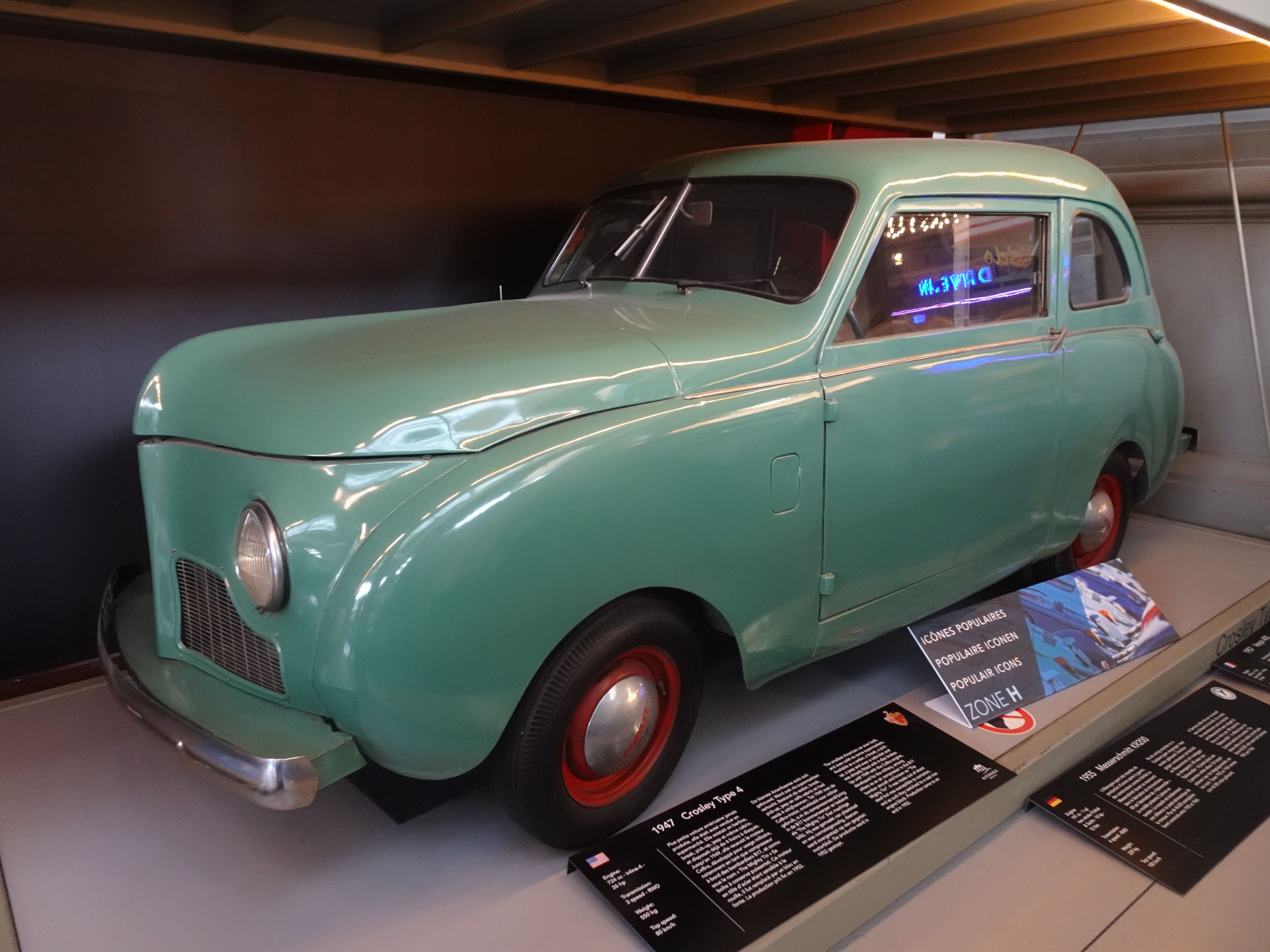
Crosley's post-war small car (1946–1952) — the first volume American OHC engine and the first 'Sport Utility' badge.
Photo: “1947 Crosley CC - Autoworld” by Stratoswift / Wikimedia Commons, licensed under CC BY-SA 4.0
History
When civilian production resumed in 1946, Crosley relaunched at Marion, Indiana with the all-new CC Four. Its headline feature was the CoBra (COpper-BRAzed) engine: a 44-cubic-inch (724 cc) overhead-camshaft four built from stamped sheet-metal sheets brazed together — America's first overhead-camshaft automobile engine produced in five-figure numbers, and a remarkably light, advanced design for a budget car.
The post-war Crosley peaked in 1948, when the company built around 24,000–28,000 cars and the station wagon became its best-selling model. In 1947 Crosley also coined the term 'Sport Utility', applying it to a 1948-model convertible wagon — the first recorded automotive use of the phrase. The fragile CoBra 'tin-block' engine proved a liability, however, corroding and failing in service.
For 1949 Crosley replaced it with the CIBA — a conventional cast-iron block of the same 44-cubic-inch displacement and far greater durability — and renamed the line the CD Four. But the CoBra's reputation, postwar buyers' return to full-size cars, and a contracting small-car market sank sales: from the 1948 peak, Crosley fell to about 7,400 cars in 1950, 4,839 in 1951 and just 1,522 in 1952. Production ended on July 3, 1952.
Generations
CC Four · CoBra-engined
Photo: “1947 Crosley CC - Autoworld” by Stratoswift / Wikimedia Commons, licensed under CC BY-SA 4.0
The post-war relaunch, powered by the sheet-metal CoBra OHC four — America's first volume overhead-cam engine. The 1948 station wagon was Crosley's best-seller.
1947 Photo: “1947 Crosley CC - Autoworld” by Stratoswift / Wikimedia Commons, licensed under CC BY-SA 4.0
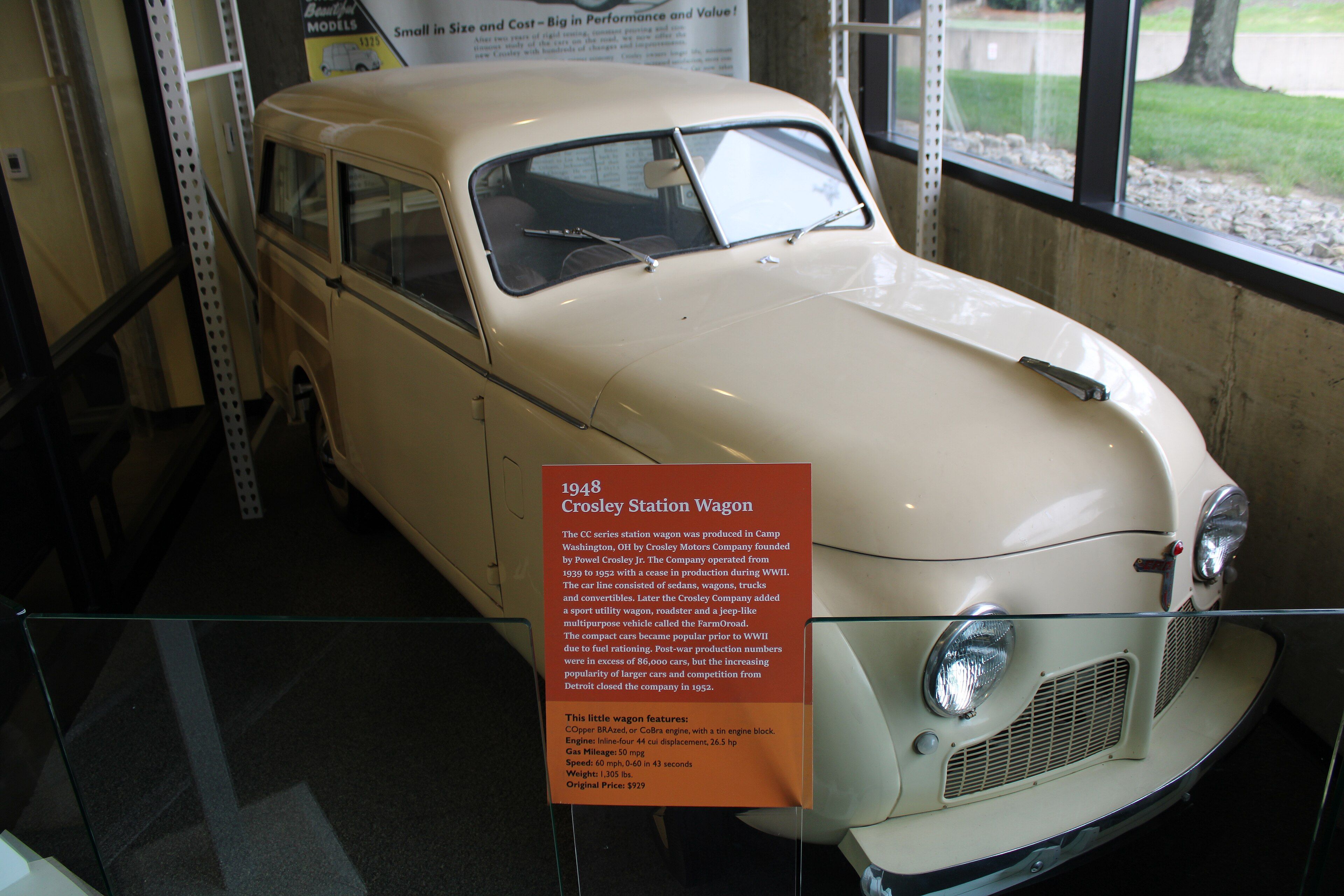
1948 Photo: “1948 Crosley CC Four Station Wagon at the Ohio History Center June 2022” by DogsRNice / Wikimedia Commons, licensed under CC BY-SA 4.0
CD Four · CIBA cast-iron
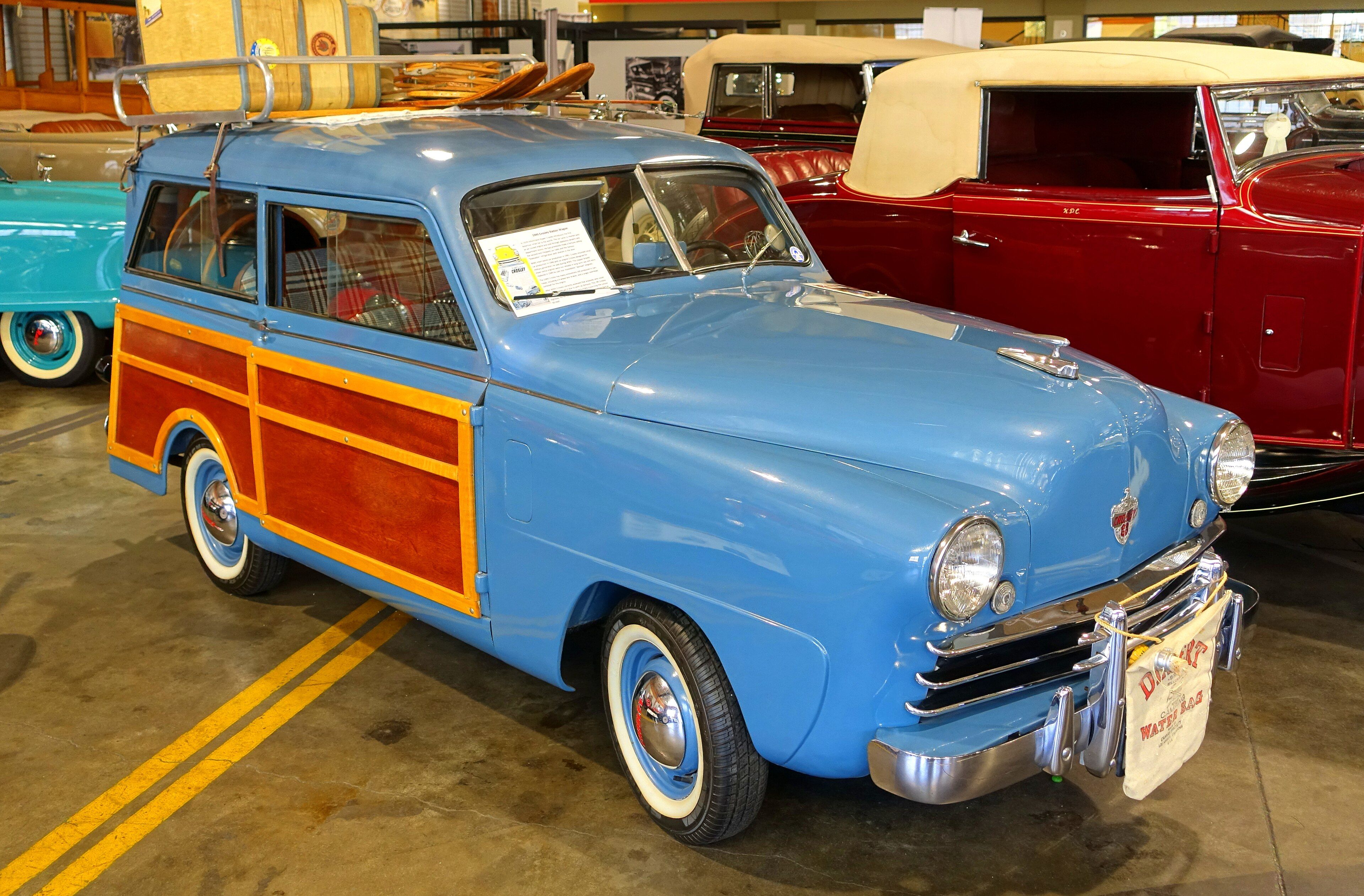
Photo: “1949 Crosley Station Wagon - Automobile Driving Museum - El Segundo, CA - DSC01980” by Daderot / Wikimedia Commons — CC0 1.0
The CoBra replaced by the durable cast-iron CIBA block of identical displacement; four-wheel disc brakes standard from May 1949 (dropped mid-1950 for drums). Sales declined to closure in 1952.
1949 Photo: “1949 Crosley Station Wagon - Automobile Driving Museum - El Segundo, CA - DSC01980” by Daderot / Wikimedia Commons — CC0 1.0
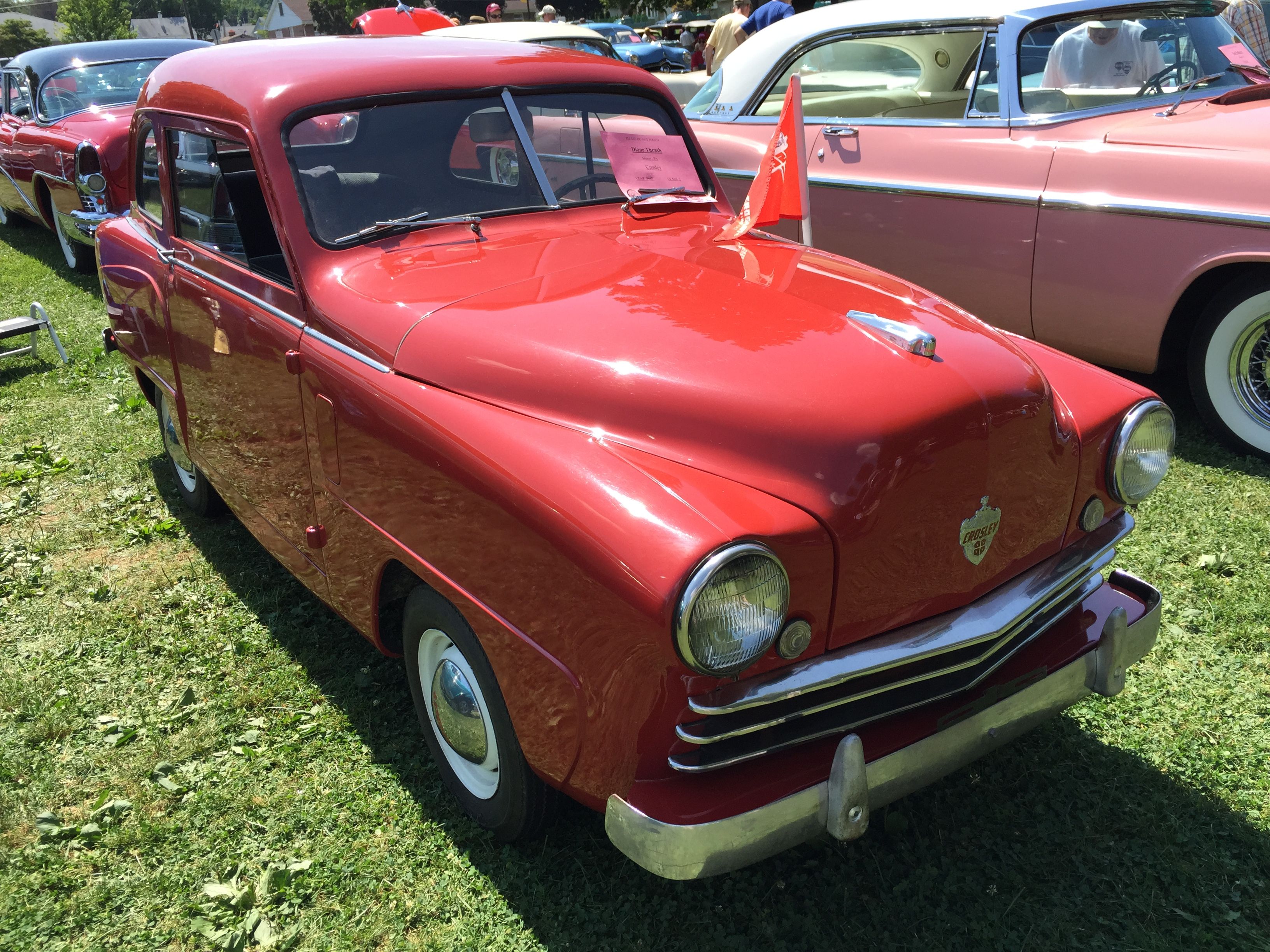
1950 Photo: “1950 Crosley sedan in red at 2015 Macungie show 1of2” by CZmarlin — Christopher Ziemnowicz — a photo credit is required if this image is used anywhere other than Wikipedia. / Wikimedia Commons, licensed under CC BY-SA 4.0
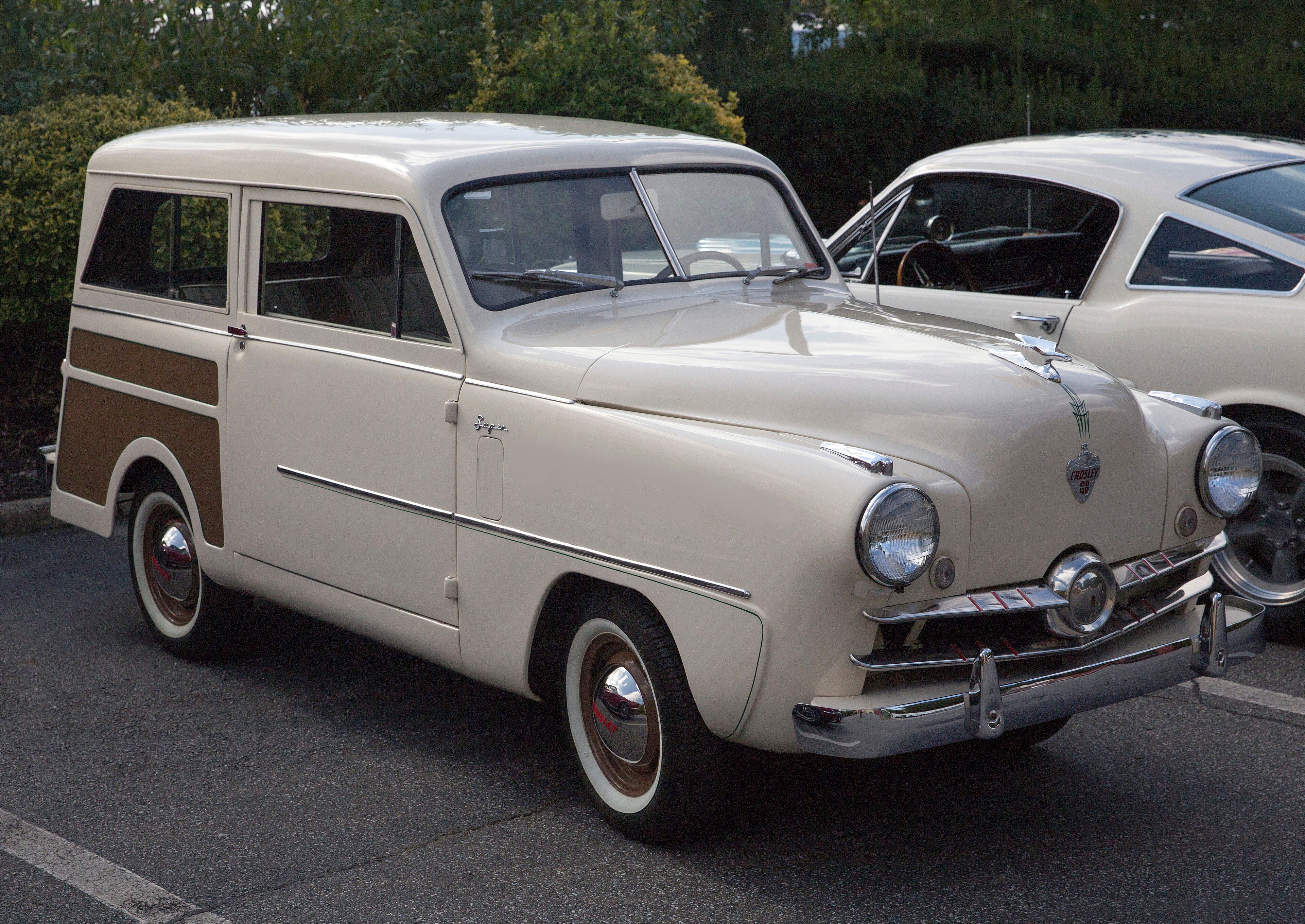
1951 Photo: “1951 Crosley CD Super Station Wagon in Cream and Brown, front right” by Mr.choppers / Wikimedia Commons, licensed under CC BY-SA 3.0
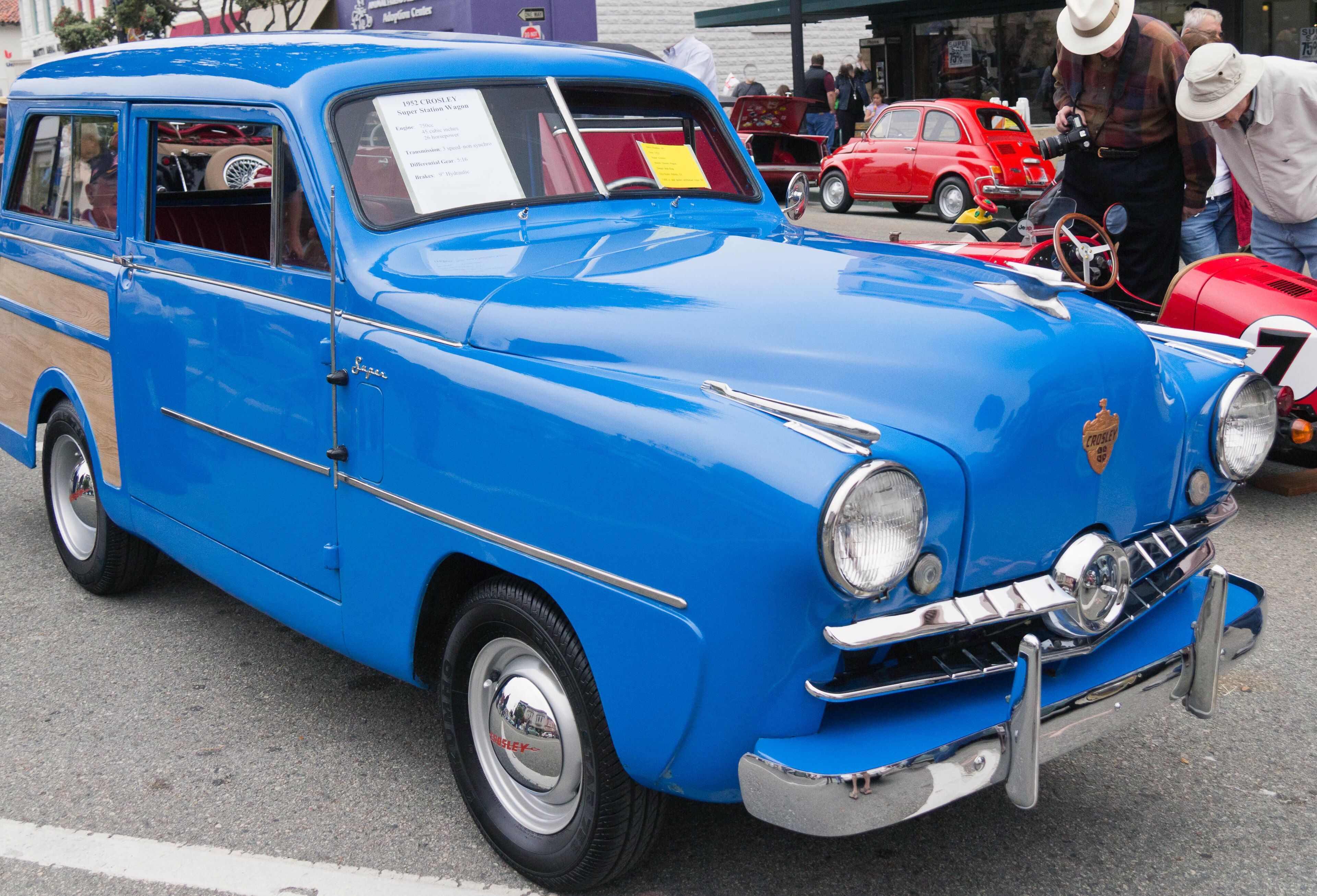
1952 Photo: “1952 Crosley Super Station Wagon” by Rick Verbanec ; Cropped, watermark removed, and levels adjusted by uploader Mr.choppers / Wikimedia Commons, licensed under CC BY 3.0
Body styles
- Fastback sedan
- Convertible
- Station wagon
- Pickup
- Panel delivery
Notable special editions & performance variants
Sport Utility wagon
A convertible-top wagon to which Crosley first applied the term 'Sport Utility' (1947) — the earliest recorded automotive use of the phrase.
Hydradisc four-wheel disc brakes
Standard across the line from May 15, 1949 — the first four-wheel caliper disc brakes on an American production car. Dropped mid-1950 after the cast-aluminum calipers corroded and seized in road-salt regions; replaced by Bendix drums.
Related models
Collect the nameplate
Find a scale model of the Crosley CC / CD Four
Search Amazon across available years, colors, and scales. Exact releases vary, so confirm the listing before ordering.