
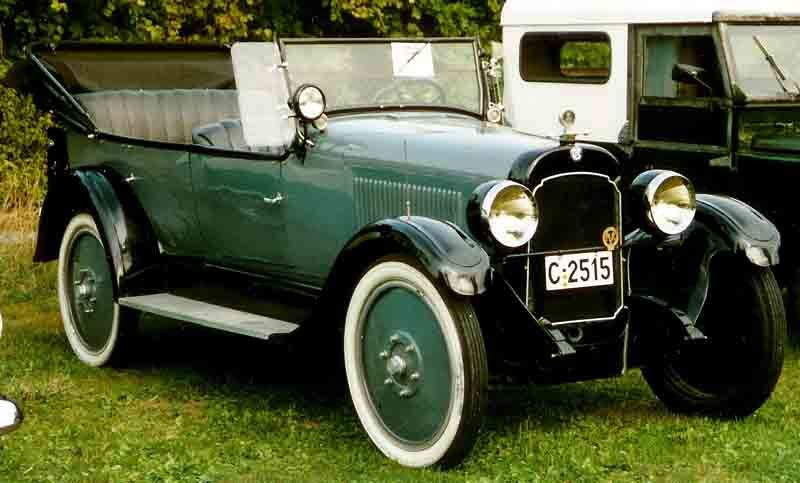
Chalmers Six-30 History
Chalmers' best-known later car (1916–1923) — the value six that carried the marque through its peak and into its final years.
Photo: “File:Chalmers Touring 1922.jpg” by Lars-Göran Lindgren Sweden / Wikimedia Commons, licensed under CC BY-SA 3.0
History
The Six-30 — built on the Model 35 series and sold through several lettered revisions — was the car most associated with Chalmers' later years. A lower-priced six aimed at high volume, it arrived as the company reached its sales peak: Chalmers' best year was 1916, when dealers took on more cars than they could sell, an over-shipment that contributed to the slump that followed.
From around 1917–1918 the Six-30 adopted Chalmers' 'Hot Spot' and 'Ram's Horn' intake arrangement, which warmed the fuel-air mixture to improve running and economy — a genuine engineering talking point of the late brass-into-nickel era. Later cars could be had with four-wheel hydraulic brakes, an advanced feature for the time.
The Six-30 lineage carried Chalmers to the end. After the 1917 alliance with Maxwell, falling output (reportedly around 20 cars a day by 1921 against Maxwell's 100-plus) sealed the marque's fate. Maxwell bought the Chalmers property in December 1922, the final Chalmers cars — including the 1923 Model 'Y' — were built in 1923, and the business was folded into the reorganization that became the Chrysler Corporation.
Generations
Model 35 series · Six-30 (35-A through 35-D)
Photo: “File:Chalmers Touring 1922.jpg” by Lars-Göran Lindgren Sweden / Wikimedia Commons, licensed under CC BY-SA 3.0
The volume value-six in successive lettered revisions; gained the 'Hot Spot'/'Ram's Horn' warmed-intake system around 1917–1918.
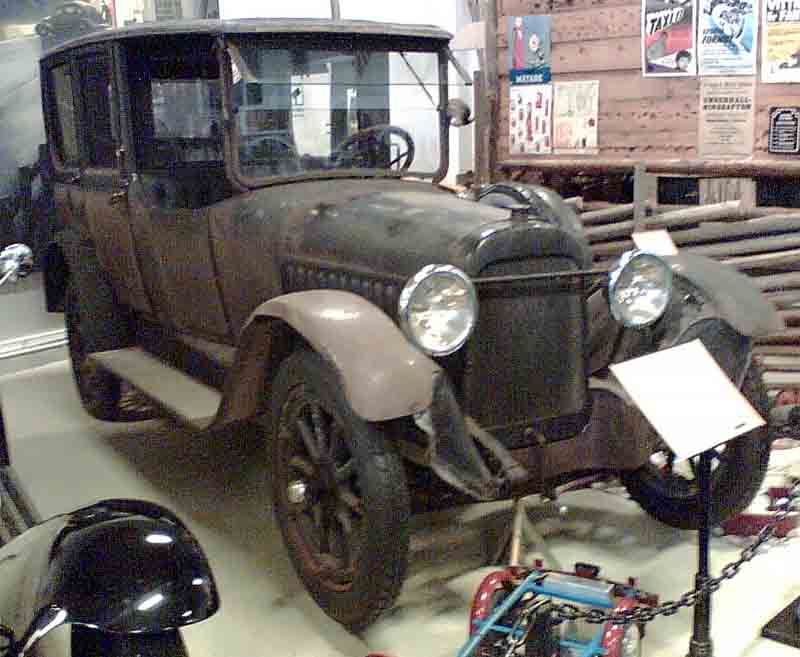
1917 Photo: “File:Chalmers 1917.jpg” by Lars-Göran Lindgren Sweden / Wikimedia Commons, licensed under CC BY-SA 3.0
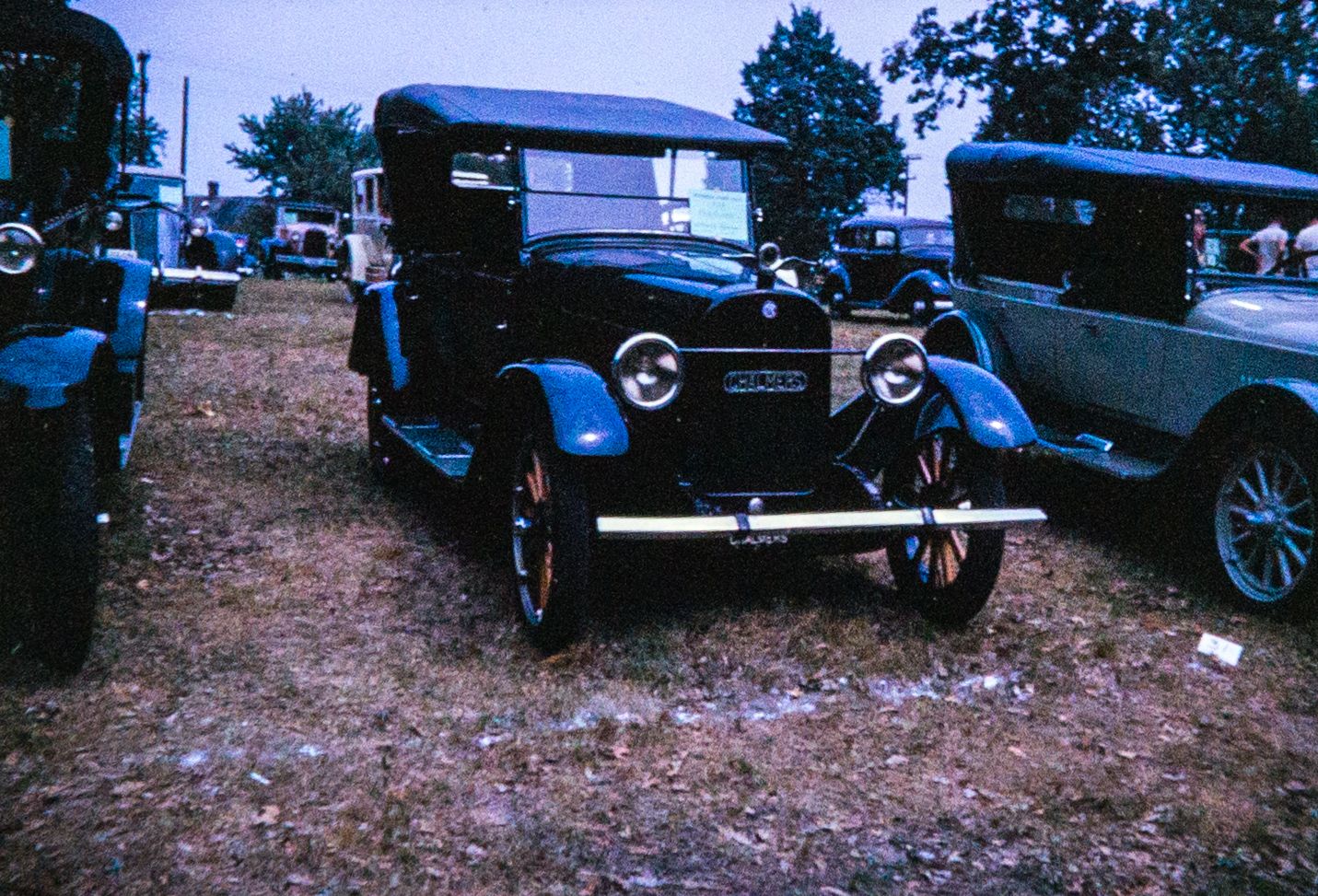
1919 Photo: “File:1919 Chalmers; John Glisson.jpg” by aaca.richmond / Wikimedia Commons, licensed under CC BY 2.0
Final Model Y · Chalmers 'Y'
The last Chalmers — a 1923 car offered with optional four-wheel hydraulic brakes, built as Maxwell absorbed the marque into what became Chrysler.
Body styles
- Touring
- Roadster
- Sedan
Related models
Collect the nameplate
Find a scale model of the Chalmers Six-30
Search Amazon across available years, colors, and scales. Exact releases vary, so confirm the listing before ordering.