
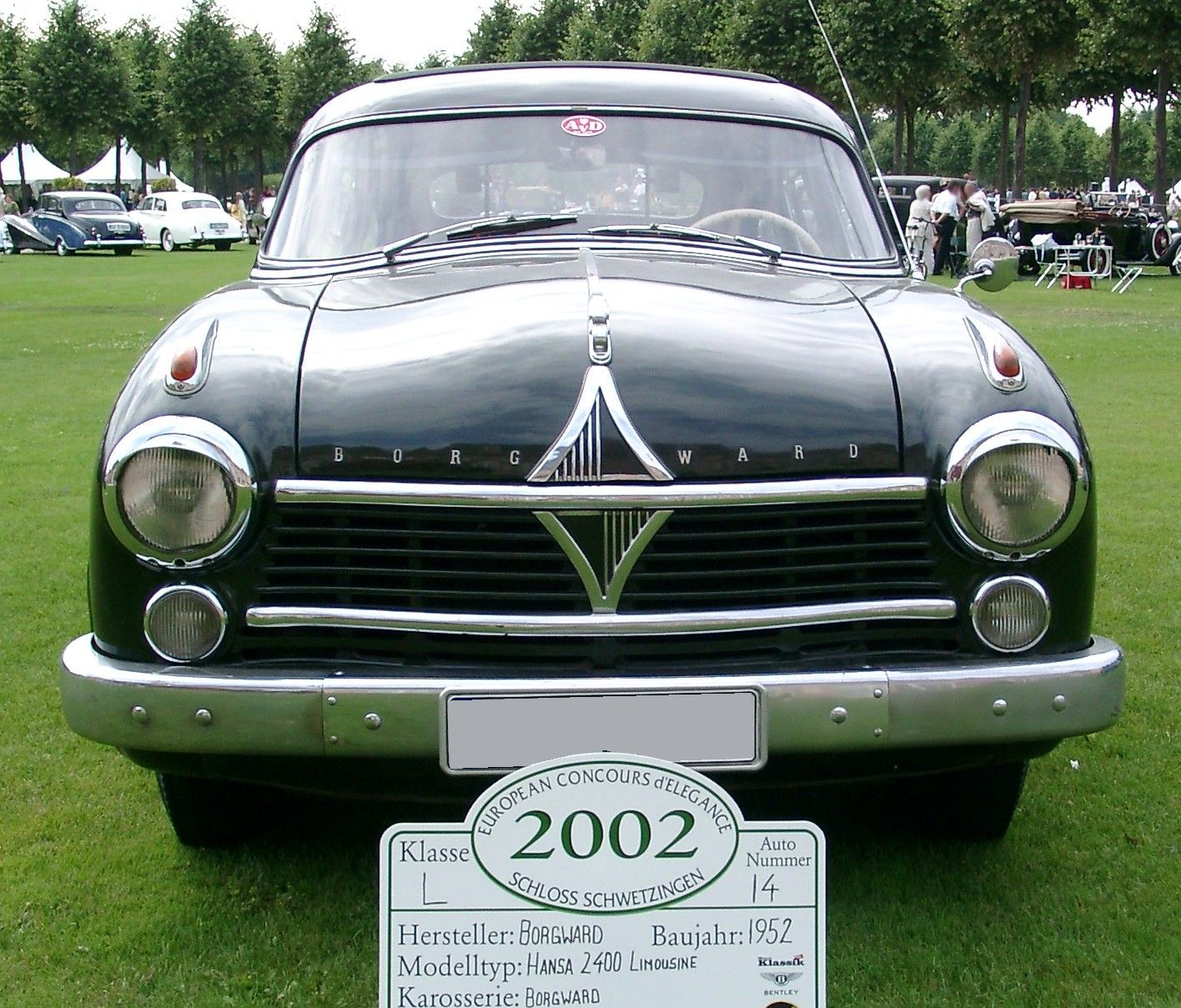
Borgward Hansa 2400 History
Borgward's flagship six-cylinder saloon (1952–1959), the largest and most prestigious car the Bremen firm ever offered before the P100.
Photo: “Borgward Hansa 2400 front 20020707.jpg” by Rudolf Stricker / Wikimedia Commons, licensed under CC BY-SA 3.0
History
First presented in 1951 and entering production in 1952, the Hansa 2400 was Borgward's pitch at the German upper-class market — a segment almost entirely owned by Mercedes-Benz. It was powered by a 2337 cc six-cylinder engine producing 82 bhp and capable of 150 km/h (93 mph), figures that made it genuinely competitive on the Autobahn.
An extended Pullman limousine variant was built in small numbers for official use, and a diesel-engined derivative was also offered. The 2400 was always a low-volume, high-ambition car; Borgward priced it aggressively against the Mercedes 220 but lacked Stuttgart's reputation for bullet-proof reliability.
Production ended in 1959, with the engineering bloodline of the six-cylinder unit carried forward directly into the Borgward P100 that debuted at the Frankfurt Motor Show the same year.
Generations
First generation · Hansa 2400 / Pullman
Photo: “Borgward Hansa 2400 front 20020707.jpg” by Rudolf Stricker / Wikimedia Commons, licensed under CC BY-SA 3.0
Single-generation six-cylinder flagship; 2337 cc, 82 bhp, offered in standard and extended Pullman limousine form.
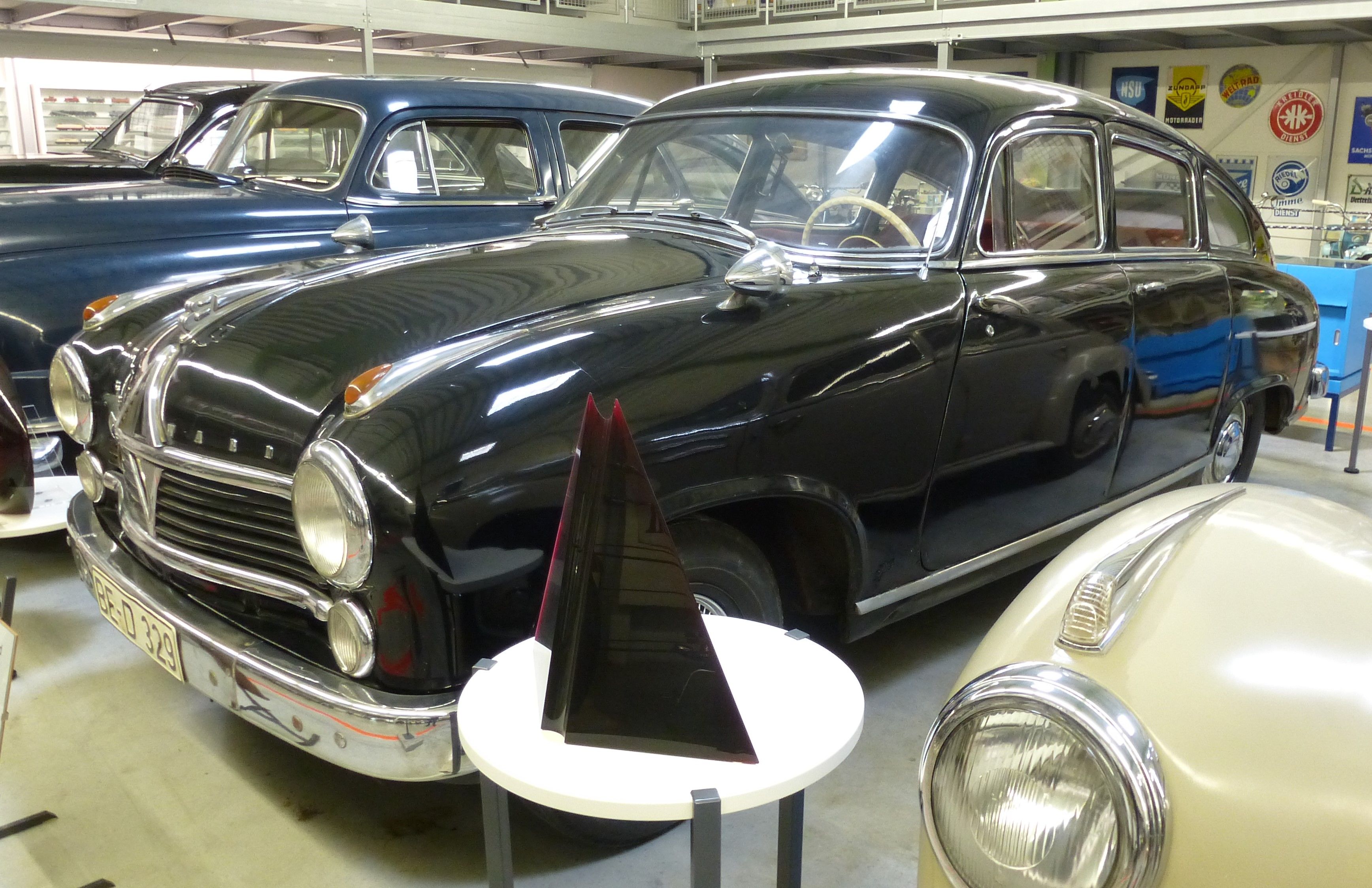
1952 Photo: “Borgward Hansa 2400 1952 im Museum Öhringen (1).JPG” by Buch-t / Wikimedia Commons, licensed under CC BY-SA 3.0 de
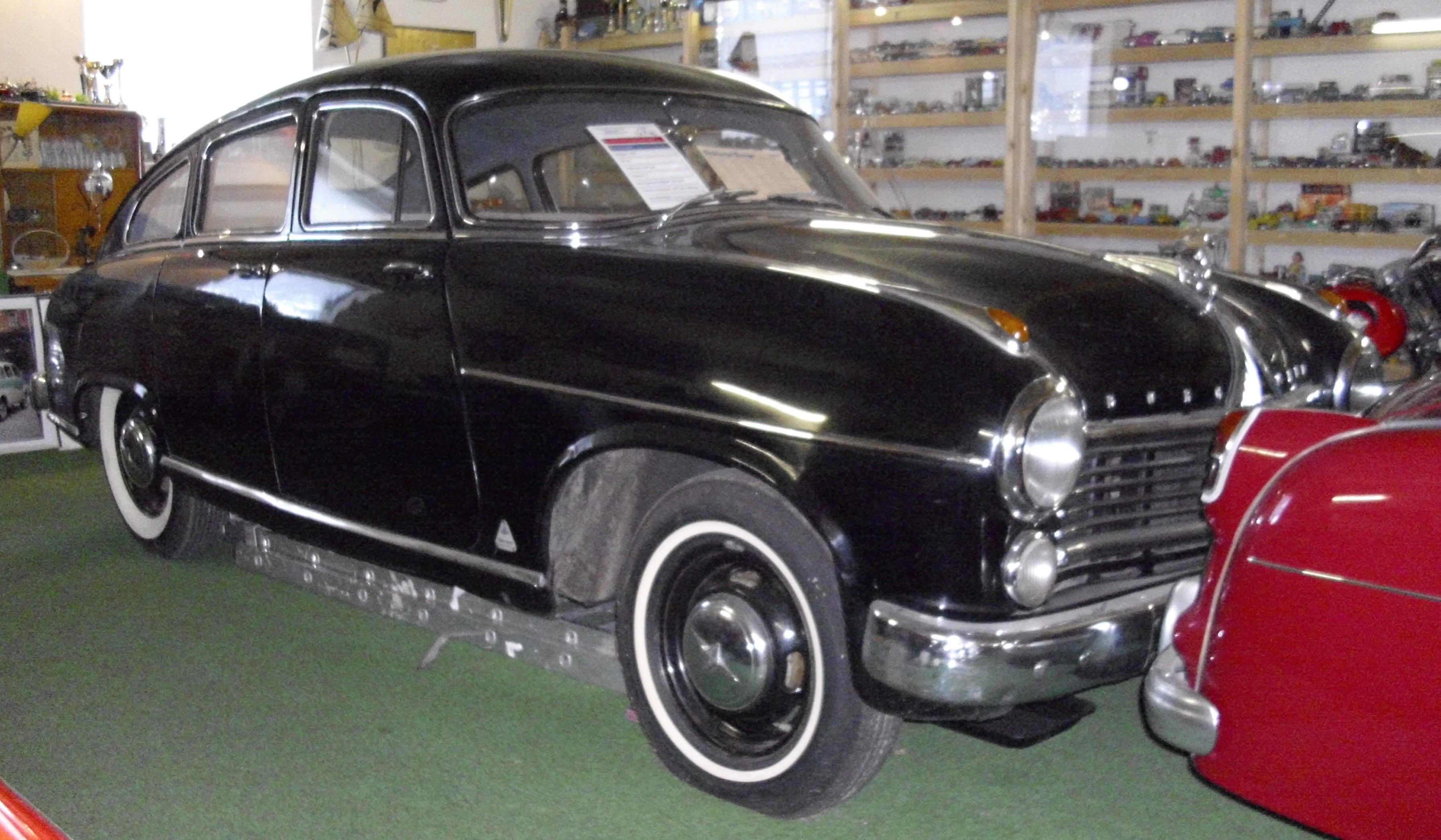
1953 Photo: “Borgward Hansa 2400 1953.JPG” by Buch-t / Wikimedia Commons, licensed under CC BY-SA 3.0 de
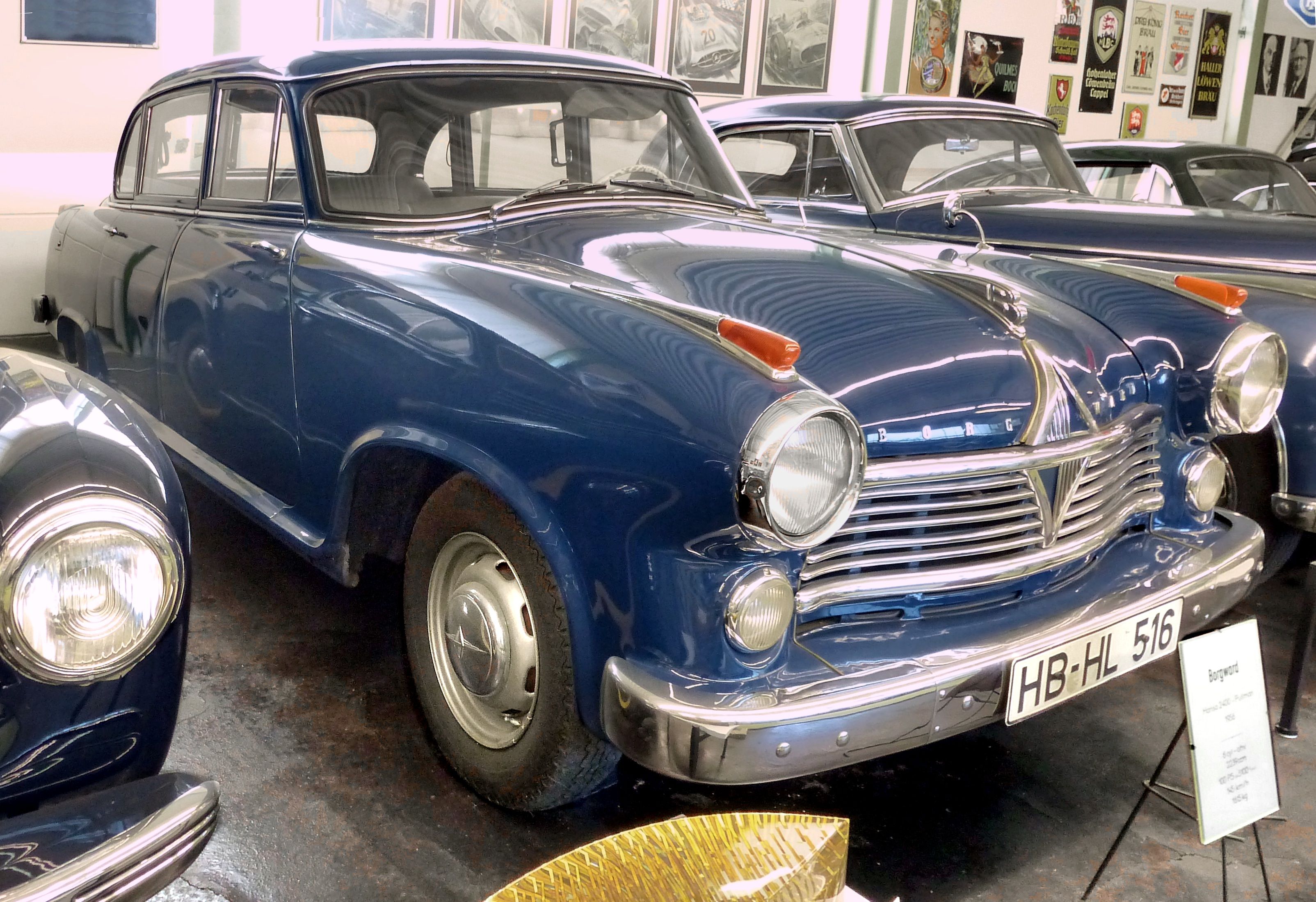
1956 Photo: “Borgward Hansa 2400 1956 im Museum Öhringen.JPG” by Buch-t / Wikimedia Commons, licensed under CC BY-SA 3.0 de
Body styles
- Sedan
- Pullman limousine
Related models
Collect the nameplate
Find a scale model of the Borgward Hansa 2400
Search Amazon across available years, colors, and scales. Exact releases vary, so confirm the listing before ordering.