
Tucker 48 History
The most innovative American car of the 1940s — a rear-engined, safety-first fastback sedan built in 51 examples before Tucker Corporation folded in 1949.
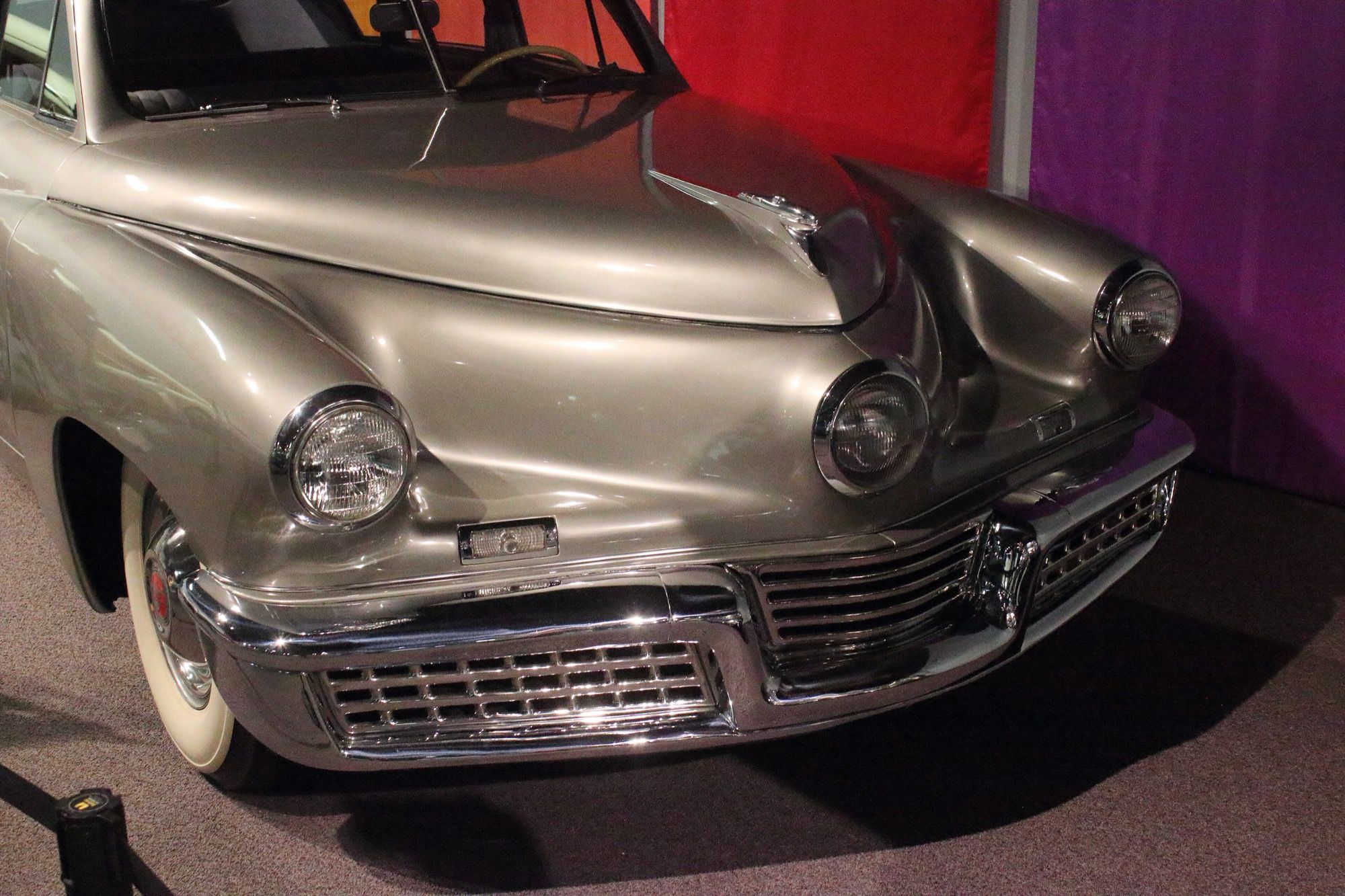
Photo: “1948 Tucker 48 Torpedo, front.jpg” by Andromeda2064 / Wikimedia Commons, licensed under CC BY-SA 4.0
History
The Tucker 48 grew from entrepreneur Preston Tucker's ambition to build a 'Car of Tomorrow' after World War II. Originally promoted under the name 'Tucker Torpedo,' the car was restyled in just 100 days by designer Alex S. Tremulis and premiered at Tucker's Chicago factory on June 19, 1947, to enormous public excitement. Its specifications were genuinely radical for the era: a rear-mounted horizontally-opposed 334-cubic-inch Franklin-derived flat-six producing approximately 166 horsepower; four-wheel independent suspension using rubber Torsilastic torsion units instead of conventional metal springs; a padded dashboard; a shatterproof windshield engineered to pop out on impact to protect occupants; a dedicated front 'crash chamber' for the front passenger; and a center 'Cyclops Eye' directional headlamp that swiveled with the steering wheel to illuminate corners — a feature not widely adopted by mainstream automakers until decades later.
Production of the Tucker 48 commenced in 1948 at the former Dodge aircraft-engine plant in Chicago — then one of the largest buildings in the world. Fifty production cars were delivered to customers or press alongside the original hand-built prototype, nicknamed the 'Tin Goose.' The SEC launched a stock-fraud investigation targeting Tucker's Accessories Program — a pre-sale scheme used to raise operating capital — and a grand jury indictment in February 1949, combined with sustained negative media coverage, destroyed investor confidence and forced the factory to close on March 3, 1949. In January 1950, Preston Tucker and all co-defendants were tried and a jury returned 'not guilty' verdicts on every count.
The Tucker 48 left a historical footnote that grew into a legend. Of the 51 vehicles built, approximately 47 survive, housed in museums and private collections worldwide including examples in Brazil, Japan, and Australia. Preston Tucker died of lung cancer in 1956, aged 53. The story was dramatized in Francis Ford Coppola's acclaimed 1988 film Tucker: The Man and His Dream, bringing renewed public attention to the car's prescient safety innovations — many of which did not become industry standard until the 1960s and beyond. Today surviving Tucker 48s routinely sell at auction for well over $1 million.
Generations
Prototype · Tin Goose (chassis #1001)
The hand-built prototype premiered June 19, 1947; differed from production cars in several mechanical details and is preserved at the Henry Ford Museum.
Production (first batch) · Tucker 48 production sedan (early)
Photo: “1948 Tucker 48 Torpedo, front.jpg” by Andromeda2064 / Wikimedia Commons, licensed under CC BY-SA 4.0
First 25 production cars (chassis #1002–#1025) assembled in 1948 with the original 117-inch wheelbase and fuel tank location.
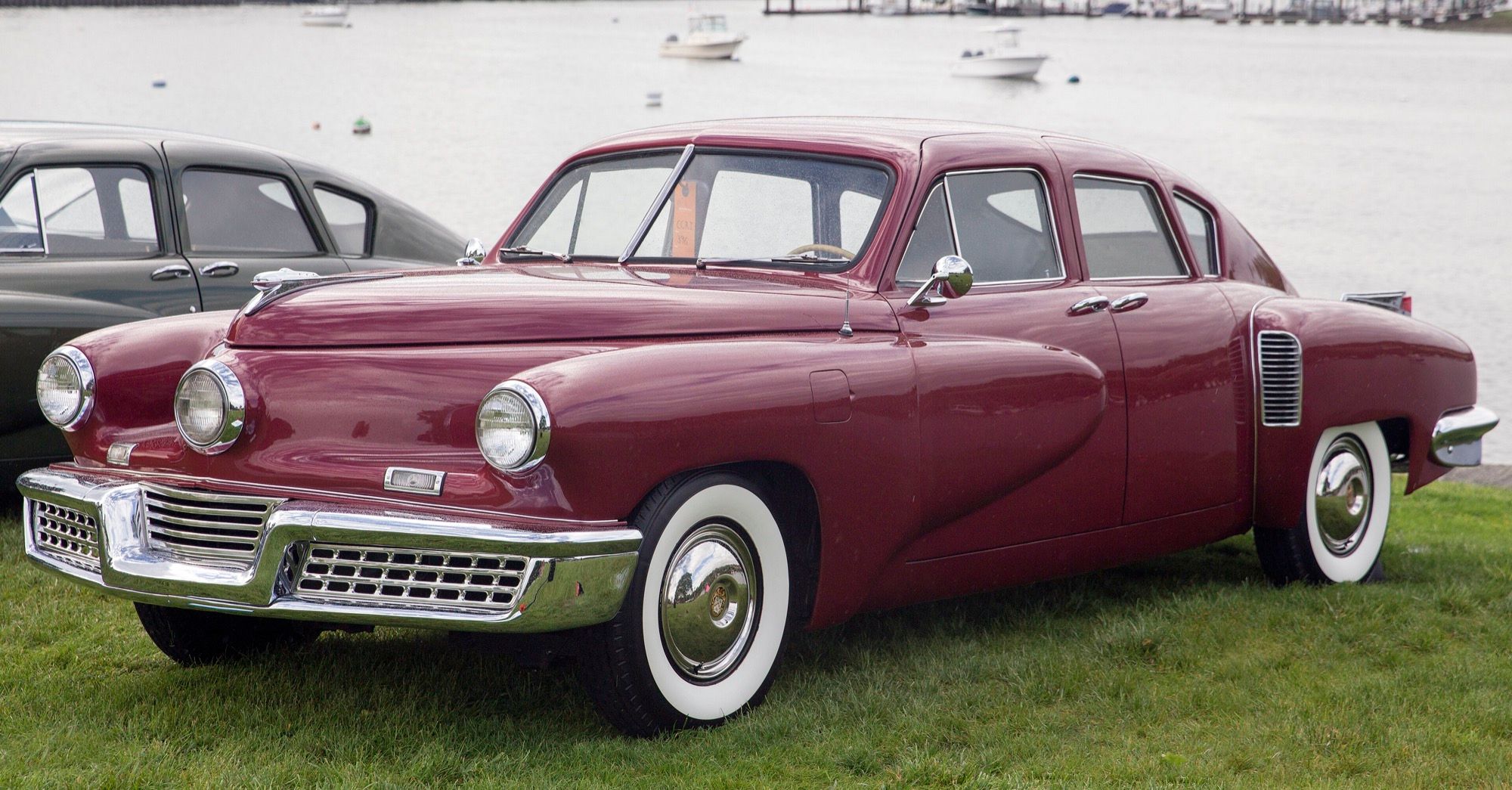
1948 Photo: “1948 Tucker Torpedo (no. 51) in Maroon, front left.jpg” by Mr.choppers / Wikimedia Commons, licensed under CC BY-SA 4.0
Production (second batch) · Tucker 48 production sedan (revised)
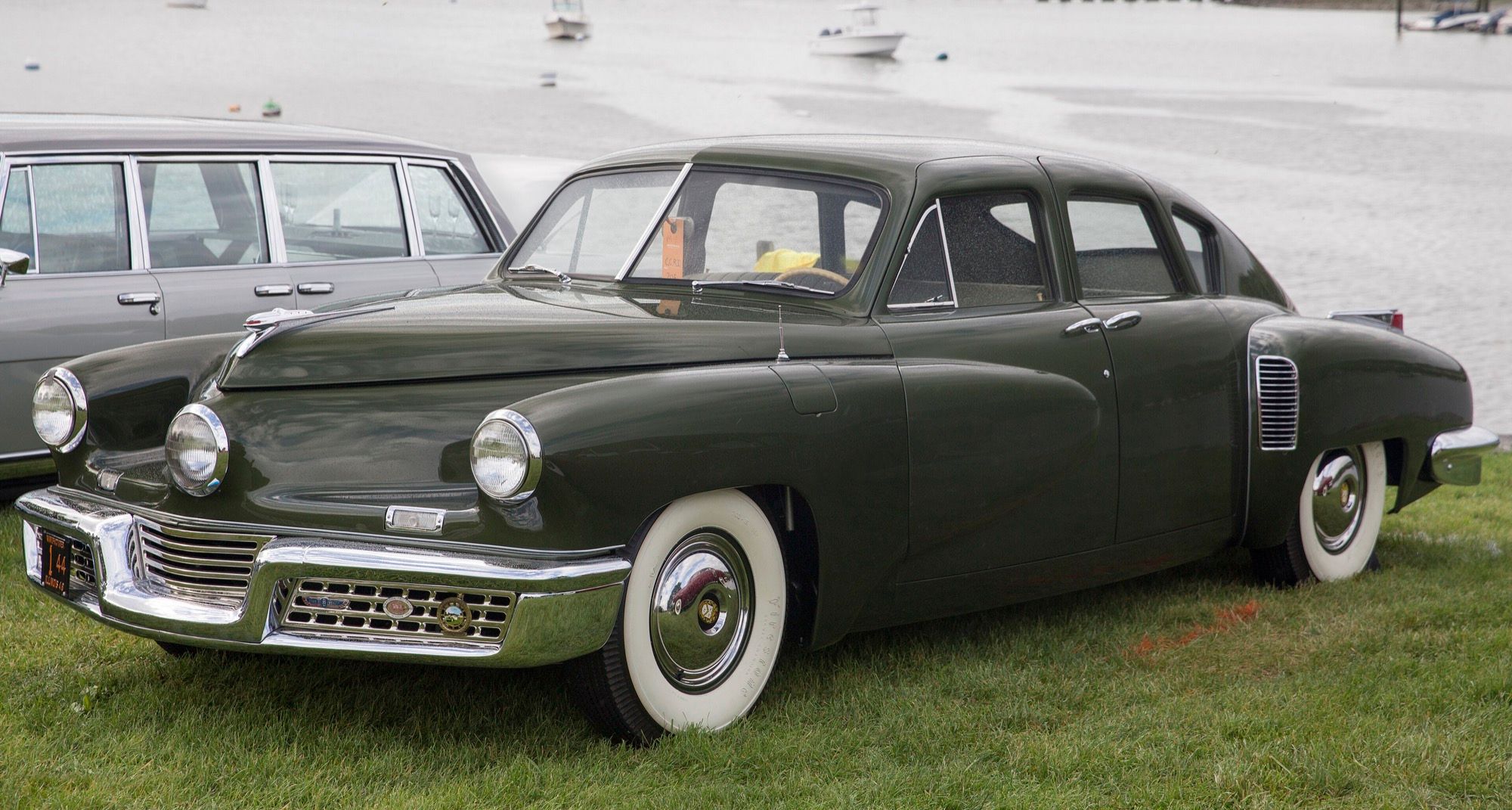
Photo: “1948 Tucker Torpedo (no. 44) in Green, front left.jpg” by Mr.choppers / Wikimedia Commons, licensed under CC BY-SA 4.0
From chassis #1026 onward: wheelbase extended by two inches and fuel tank relocated for improved weight distribution and handling.
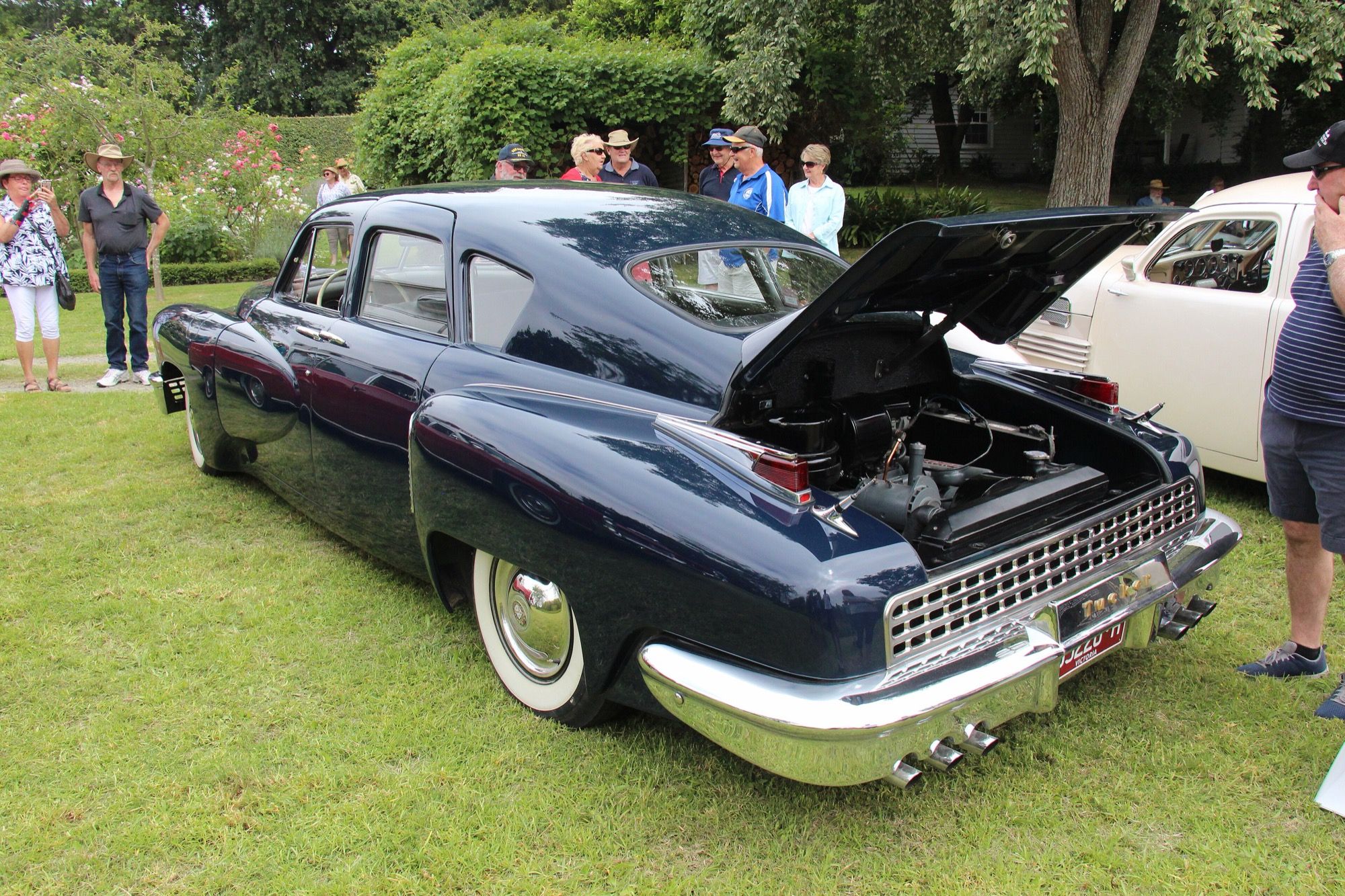
1948 Photo: “1948 Tucker 48 sedan (39881614513).jpg” by Sicnag / Wikimedia Commons, licensed under CC BY 2.0
Body styles
- Four-door fastback sedan
Notable special editions & performance variants
Talisman (planned — never built)
A sportier, more luxurious Tucker variant sketched by the Lippincott design team at Preston Tucker's request — re-sculpted from a full-size clay model as a proposed 1950s style advancement — that never progressed beyond concept stage before the company folded.
Related models
Collect the nameplate
Find a scale model of the Tucker 48
Search Amazon across available years, colors, and scales. Exact releases vary, so confirm the listing before ordering.