
Sunbeam Alpine History
Catalog record
Photography for this nameplate has not yet cleared the archive’s licensing and identity checks. The researched text below remains available while the page stays out of search and advertising inventory.
History
The Alpine name spans two distinct cars. The first (1953–1955) was a hand-built two-seat open roadster derived from the Sunbeam-Talbot 90 saloon and assembled by coachbuilders Thrupp & Maberly in London — only 1,582 were produced. It debuted at the 1953 Coupe des Alpes, where Stirling Moss was among the drivers to win a Coupe des Alpes award. A sapphire-blue example later starred in Alfred Hitchcock's To Catch a Thief (1955).
An all-new Alpine arrived for 1959 — a fully monocoque convertible styled by Kenneth Howes for the American sports-car market, notable as the first British sports car to offer wind-up windows. Five series were produced through 1968, with total output of approximately 69,251 cars. The Series I used a 1,494 cc four-cylinder; the definitive Series V (1965–68) gained a five-bearing 1,725 cc engine with twin Zenith-Stromberg carburettors producing 93 bhp. A lake-blue Series II appeared in the James Bond film Dr. No (1962).
The Series III (1963–64) is the rarest variant at 5,863 units, distinguished by its pronounced tailfins. The Series IV (1964–65) removed most of the fins. The Series V carried the nameplate to its end in 1968. A Harrington Le Mans fastback conversion of the Series II/III, developed by coachbuilder Thomas Harrington Ltd, competed at Le Mans and is among the most sought-after Alpine derivatives. The same 1959–68 platform also underpinned the Ford V8-powered Tiger.
Generations
First generation · Sunbeam-Talbot 90-derived roadster
Hand-built at Thrupp & Maberly; 1,582 produced. Stirling Moss raced it at the Coupe des Alpes; appeared in Hitchcock's To Catch a Thief.
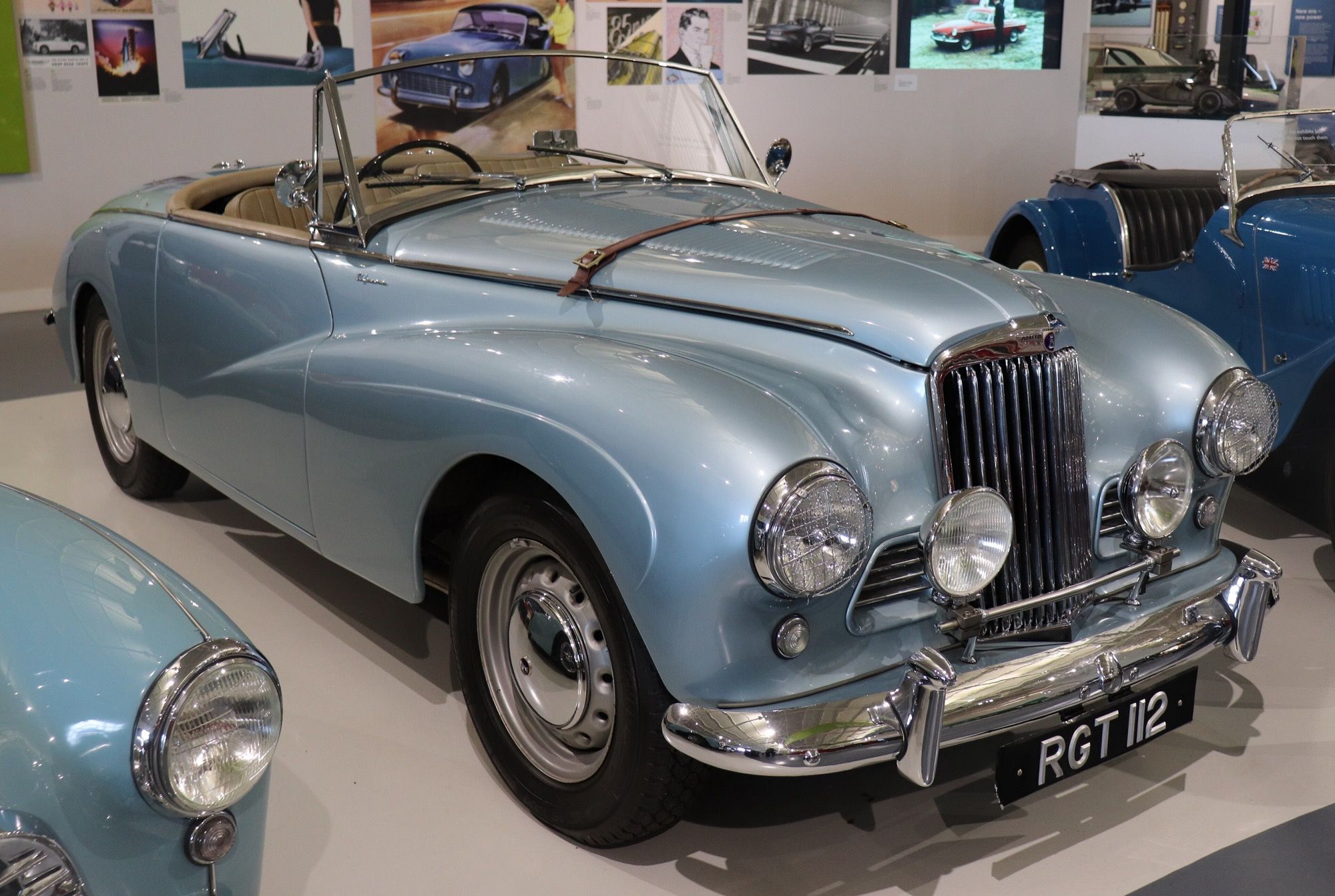
1953 Photo: “1953 Sunbeam Alpine Mark I 2.3 Front.jpg” by Vauxford / Wikimedia Commons, licensed under CC BY-SA 4.0
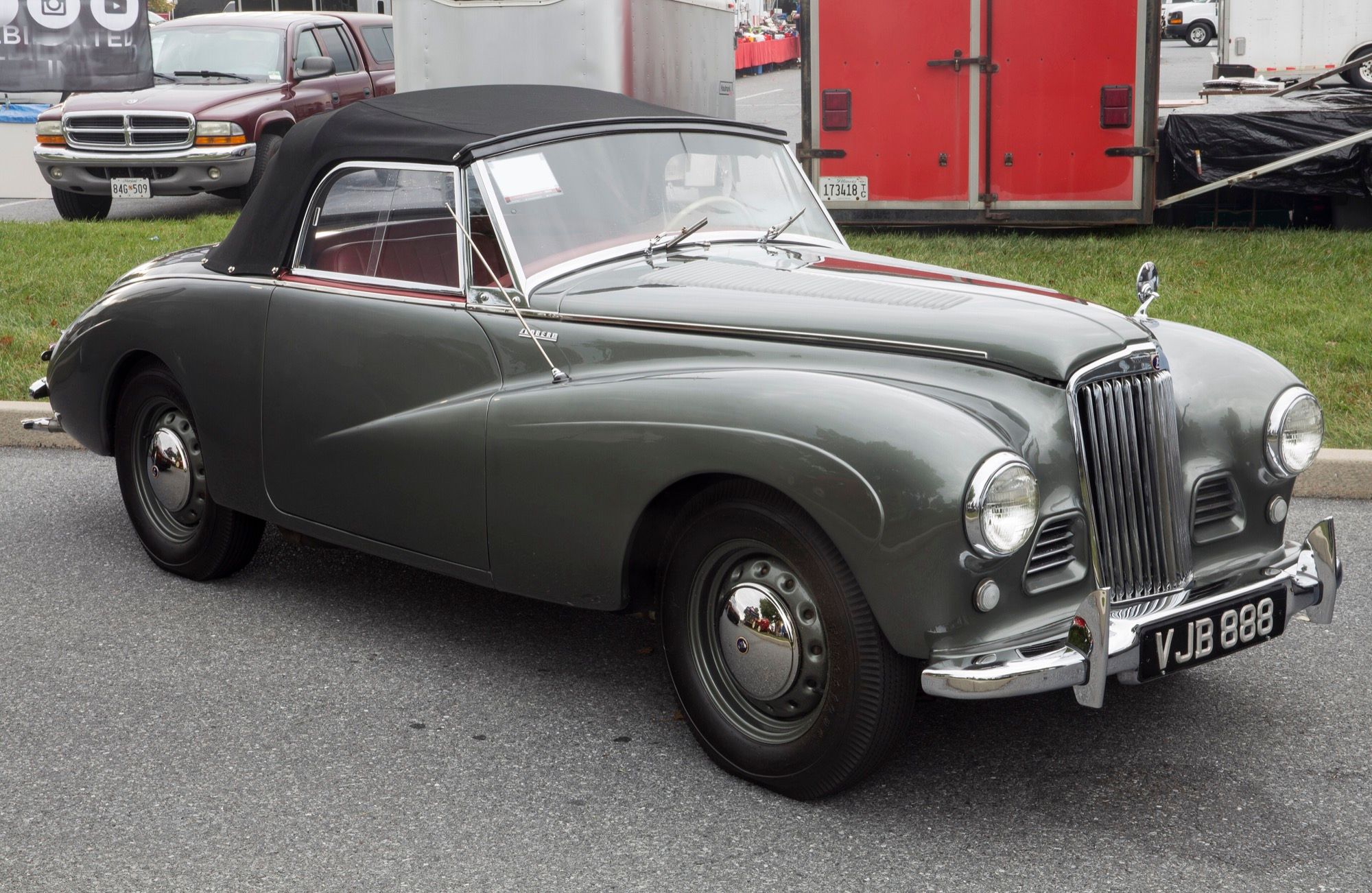
1954 Photo: “1954 Sunbeam Alpine Mark I Roadster, front right (Hershey 2019).jpg” by Mr.choppers / Wikimedia Commons, licensed under CC BY-SA 3.0
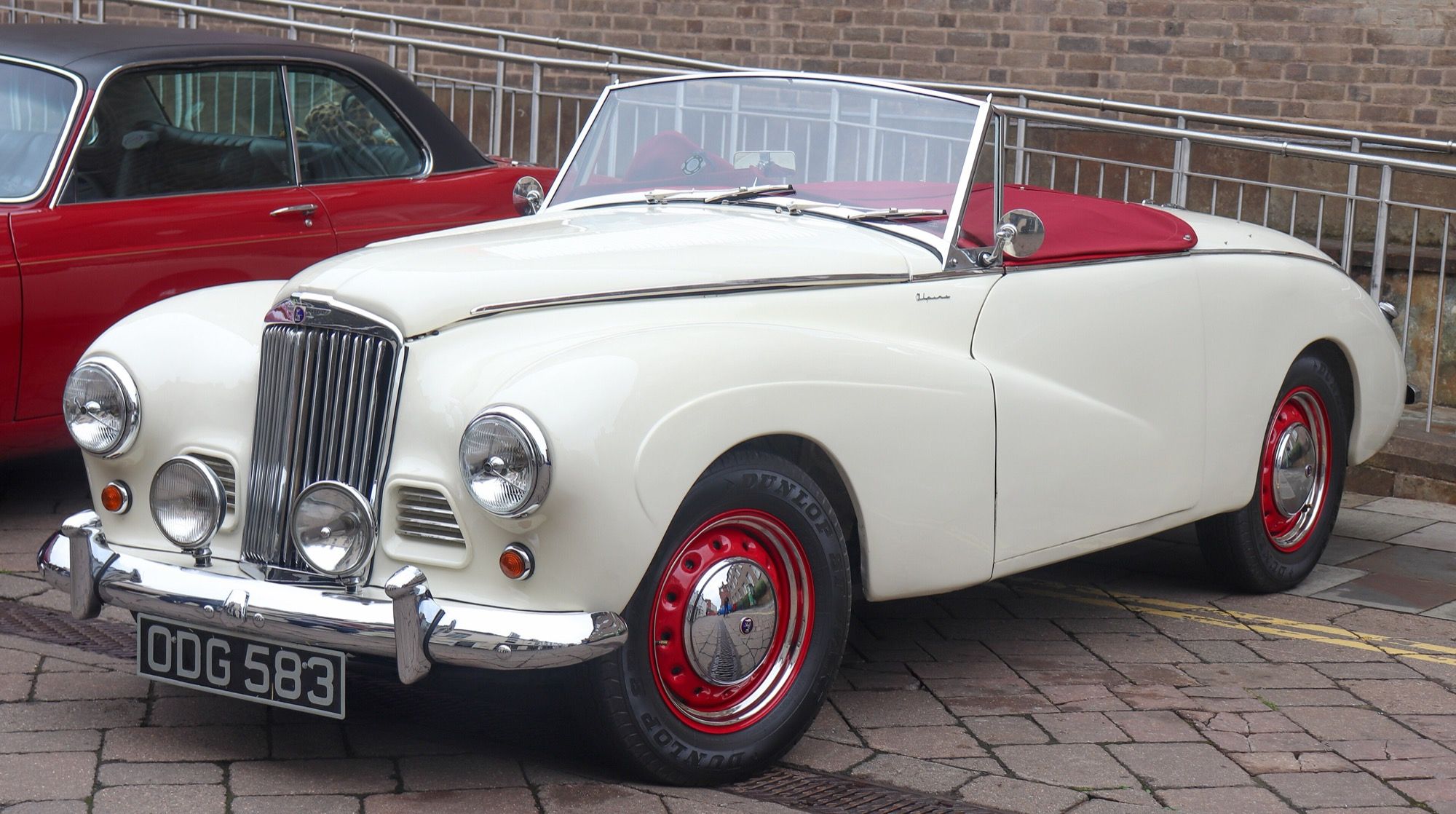
1955 Photo: “1955 Sunbeam Alpine Mark III 2.3 Front.jpg” by Vauxford / Wikimedia Commons, licensed under CC BY-SA 4.0
Series I · Monocoque roadster — first wind-up windows
All-new monocoque; 1,494 cc four-cylinder; first British sports car with wind-up windows. 11,904 built.
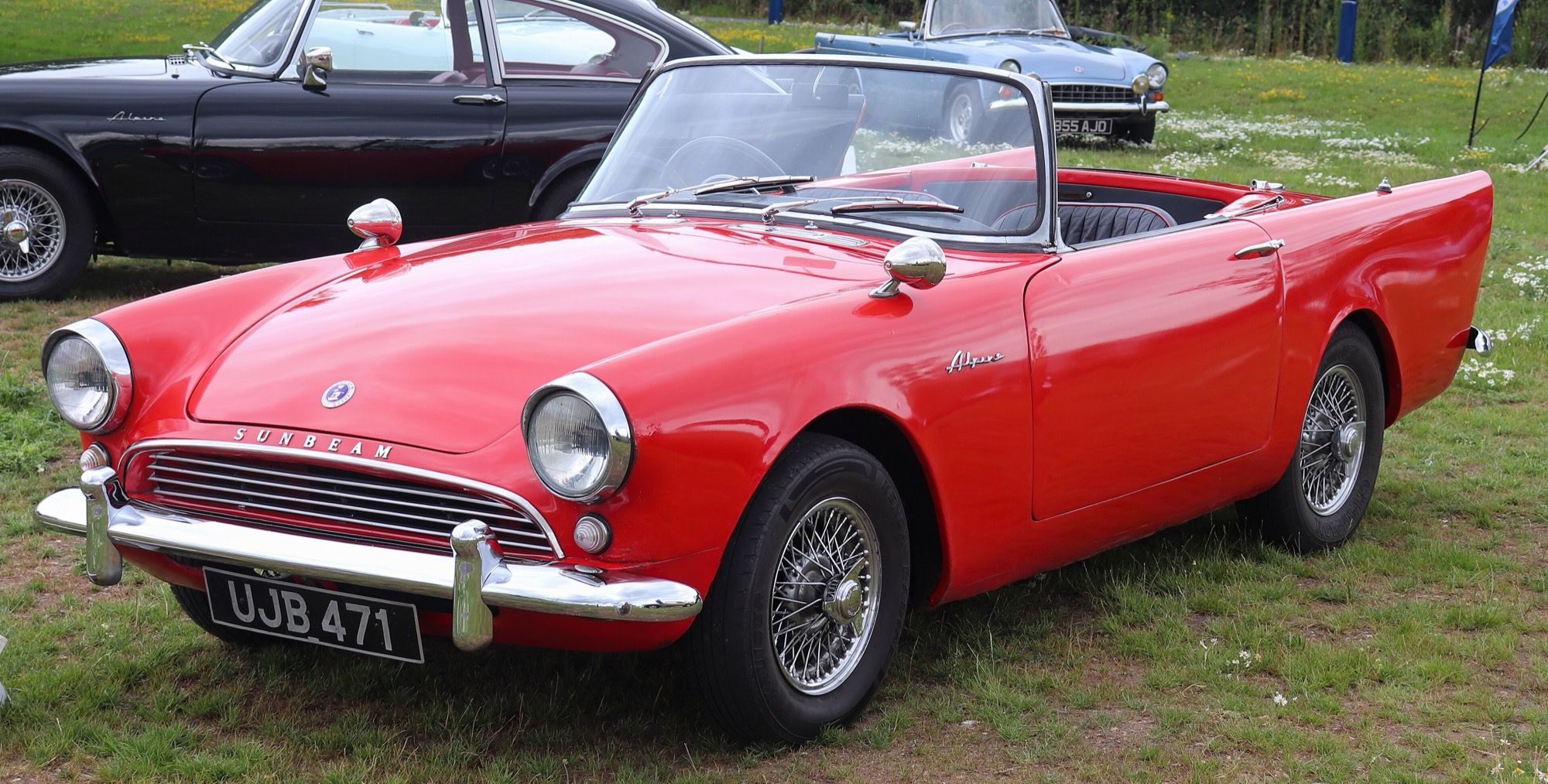
1960 Photo: “1960 Sunbeam Alpine Series I 1.5 Front.jpg” by Vauxford / Wikimedia Commons, licensed under CC BY-SA 4.0
Series II · 1,592 cc / Dr. No generation
Enlarged 1,592 cc engine (80 bhp); James Bond drove a lake-blue Series II in Dr. No (1962). 19,956 built.
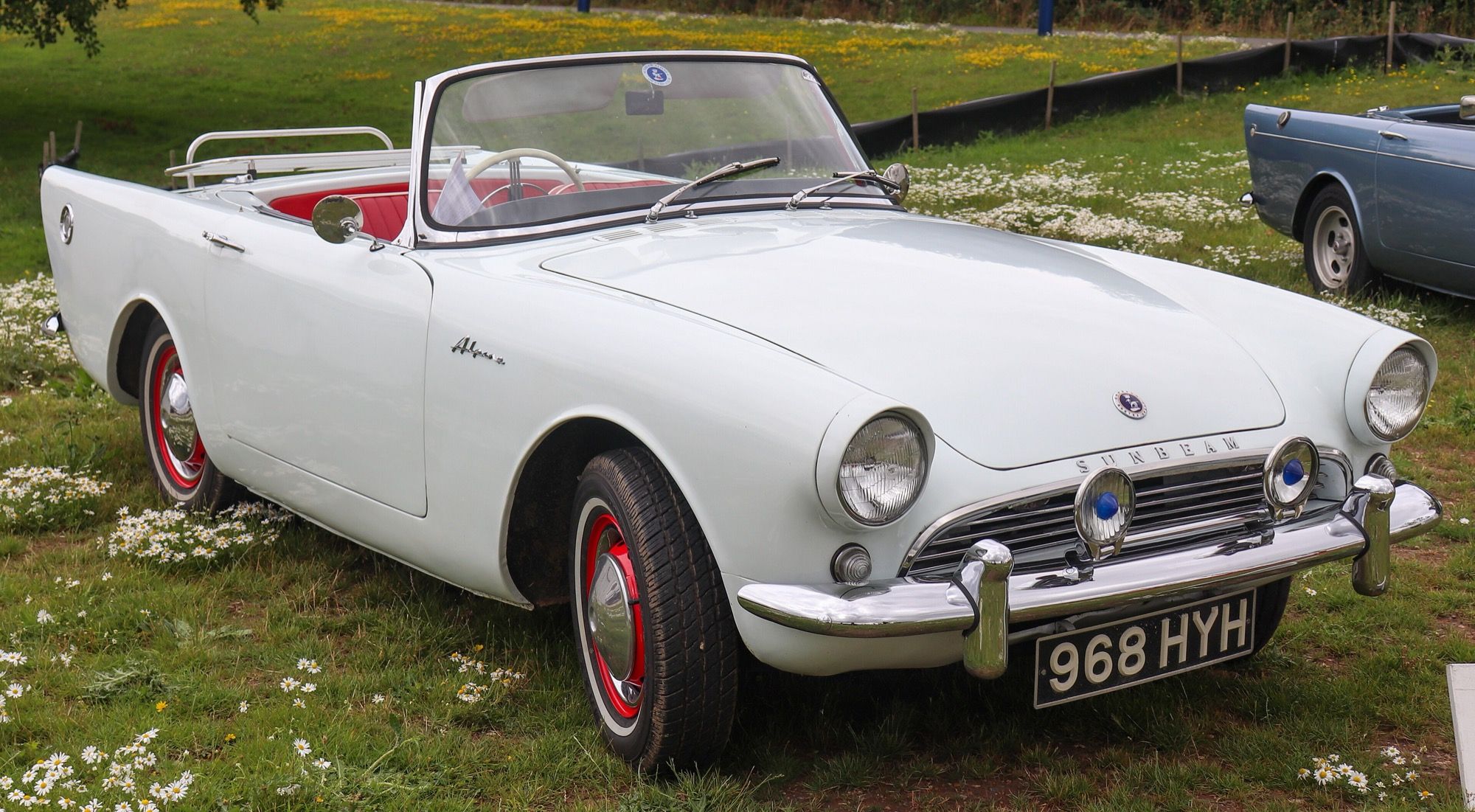
1962 Photo: “1962 Sunbeam Alpine Series II 1.6 Front.jpg” by Vauxford / Wikimedia Commons, licensed under CC BY-SA 4.0
Series III · High-fin rarest variant
Rarest of the series at 5,863 units — identifiable by pronounced tailfins and a vertical spare-tyre mounting.
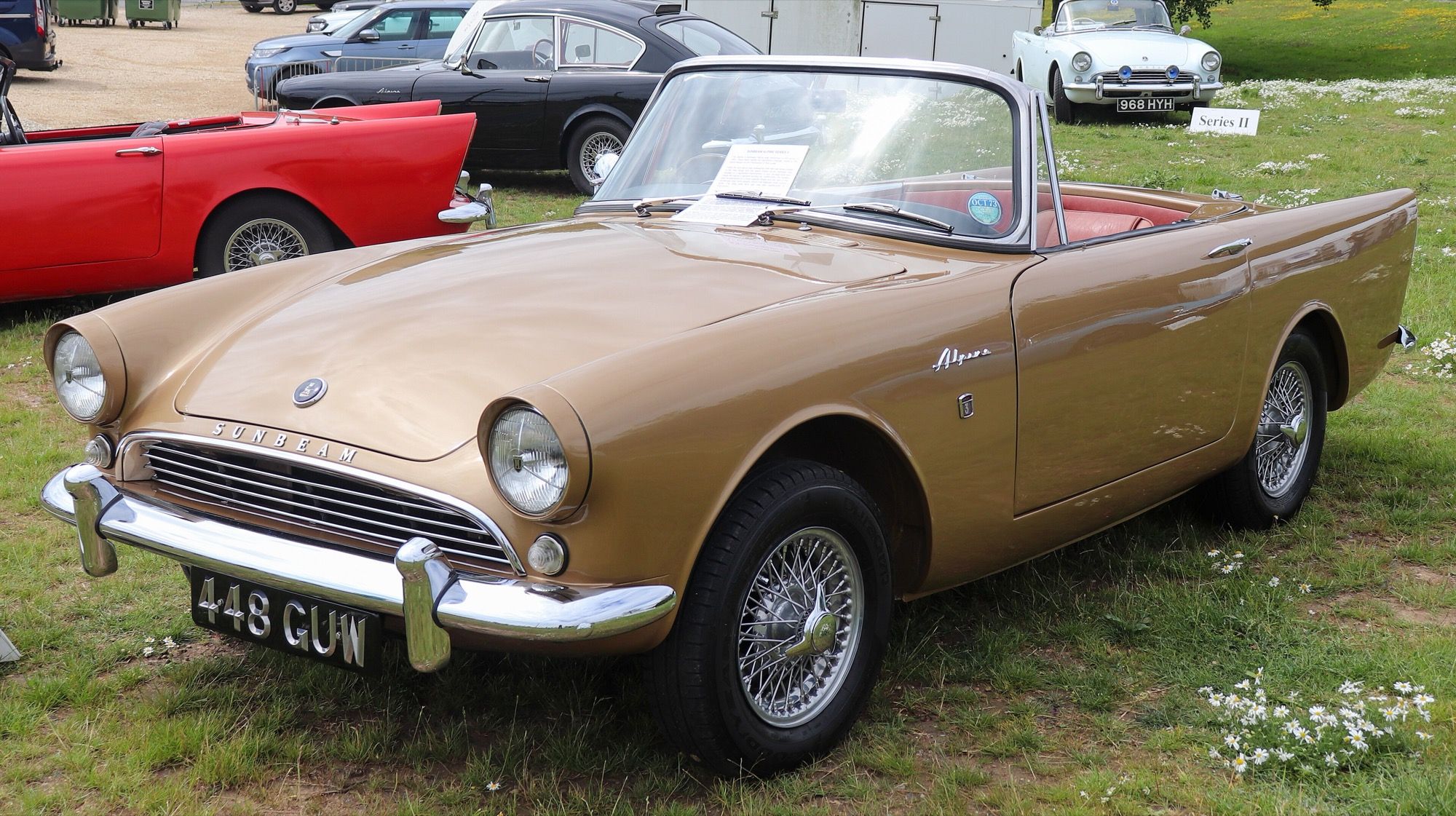
1963 Photo: “1963 Sunbeam Alpine Series III 1.6 Front.jpg” by Vauxford / Wikimedia Commons, licensed under CC BY-SA 4.0
Series IV · Fin-delete generation
Fins largely removed; optional automatic transmission offered. 12,406 built.
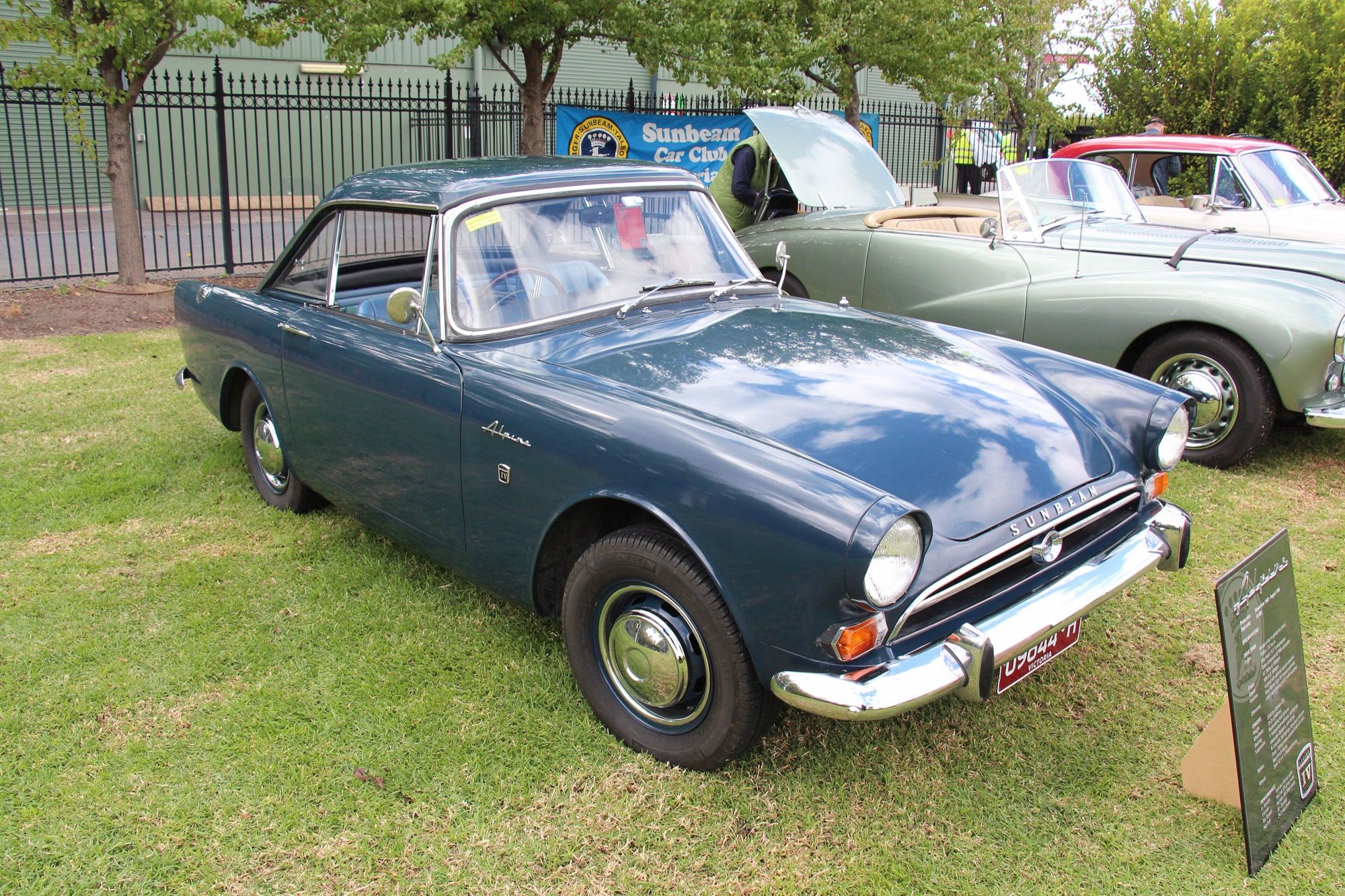
1964 Photo: “1964 Sunbeam Alpine Series IV Roadster (25931259944).jpg” by Sicnag / Wikimedia Commons, licensed under CC BY 2.0
Series V · Five-bearing 1,725 cc final run
New five-bearing 1,725 cc engine with twin carburettors (93 bhp); automatic option removed. 19,122 built.
Body styles
- Roadster
- Hardtop coupé (GT)
Notable special editions & performance variants
Harrington Le Mans
A Thomas Harrington Ltd fastback conversion on the Series II/III Alpine body — a coachbuilt GT with a raised-compression engine that raced at Le Mans and won the Index of Thermal Efficiency in 1961.
Related models
Collect the nameplate
Find a scale model of the Sunbeam Alpine
Search Amazon across available years, colors, and scales. Exact releases vary, so confirm the listing before ordering.