
Siata Spring History
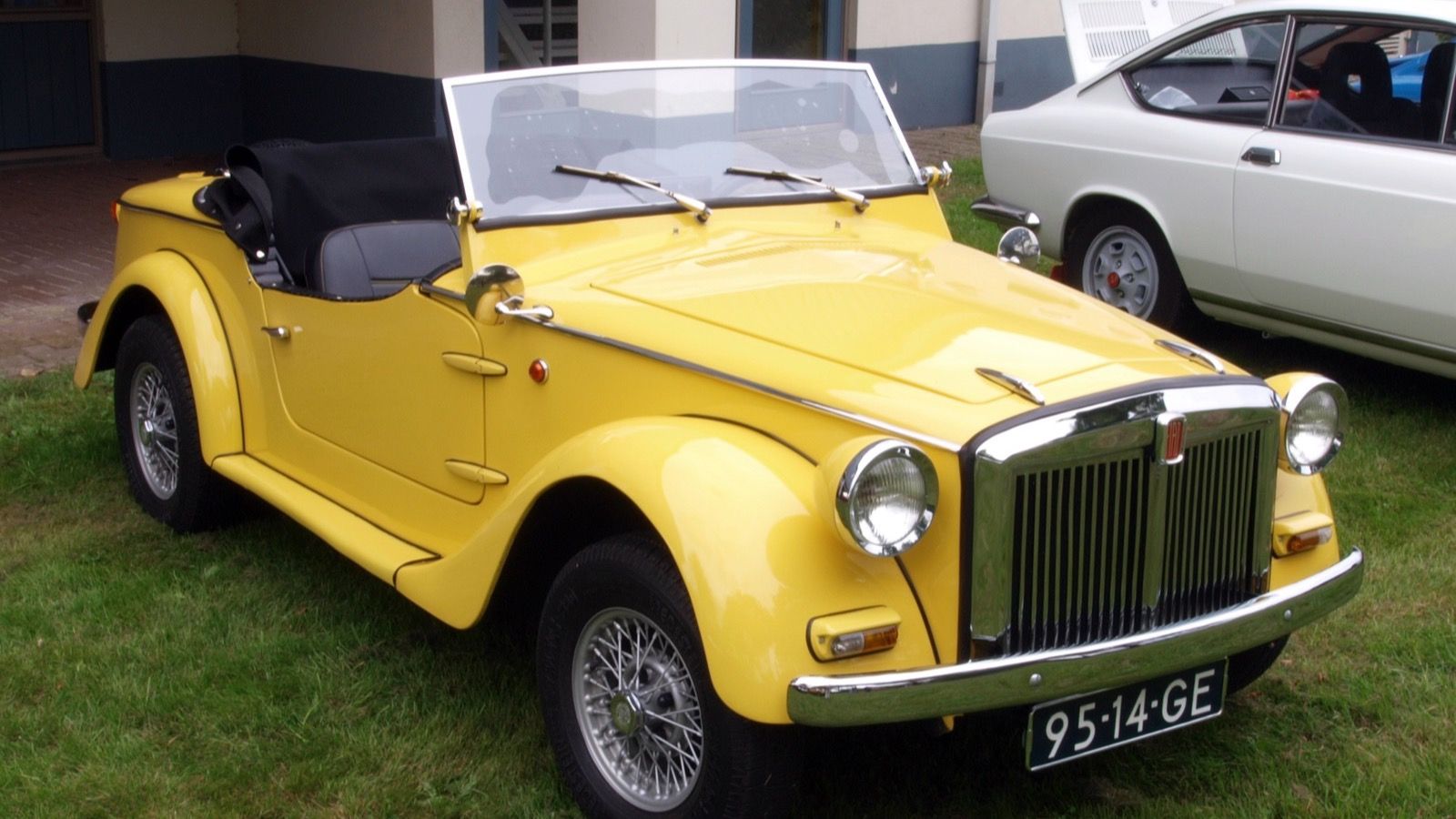
Siata's retro-roadster swan song (1968–1970) — a Fiat 850-based open two-seater aimed at Italian youth; around 3,500 built before bankruptcy closed the company.
Photo: “1968 Siata 850 Spring, Dutch licence registration 95-14-GE” by AlfvanBeem / Wikimedia Commons — CC0 1.0. Cropped to 16:9.
History
After a difficult middle period through the 1960s, Siata staked its survival on a new direction. Following detailed market research among Italian youth, the company commissioned designer Enrico Fumia — who styled the front end as early as 1966 — to create a small, cheerful open roadster built on Fiat 850 components. The Spring debuted in 1968 and made an immediate visual impact with its neo-vintage styling, contrasting with the utilitarian economy cars most Italians were driving.
Mechanically the Spring was simple and honest: Fiat's rear-mounted 843 cc four-cylinder drove the rear wheels through a four-speed manual gearbox, with independent suspension at both ends. All-drum brakes were already dated for 1968, but with a kerb weight of just 645 kg the car's light touch made them adequate. Contemporary Road & Track tests praised its lively handling and period charm.
Siata built approximately 3,500 Springs before financial pressures — exacerbated by the broader economic climate — forced the company into bankruptcy in 1970, ending 44 years of operation. The production line was subsequently purchased by a Sardinian company called ORSA (Officina Realizzazioni Sarde Automobili), which continued building a revised Spring until the 1973 oil crisis finally killed demand in 1975.
Generations
Spring
Photo: “1968 Siata 850 Spring, Dutch licence registration 95-14-GE” by AlfvanBeem / Wikimedia Commons — CC0 1.0. Cropped to 16:9.
Neo-vintage open two-seater on Fiat 850 rear-engined mechanicals; Siata's final model before bankruptcy.
1968 Photo: “1968 Siata 850 Spring, Dutch licence registration 95-14-GE” by AlfvanBeem / Wikimedia Commons — CC0 1.0. Cropped to 16:9.
Body styles
- Roadster
Related models
Collect the nameplate
Find a scale model of the Siata Spring
Search Amazon across available years, colors, and scales. Exact releases vary, so confirm the listing before ordering.