
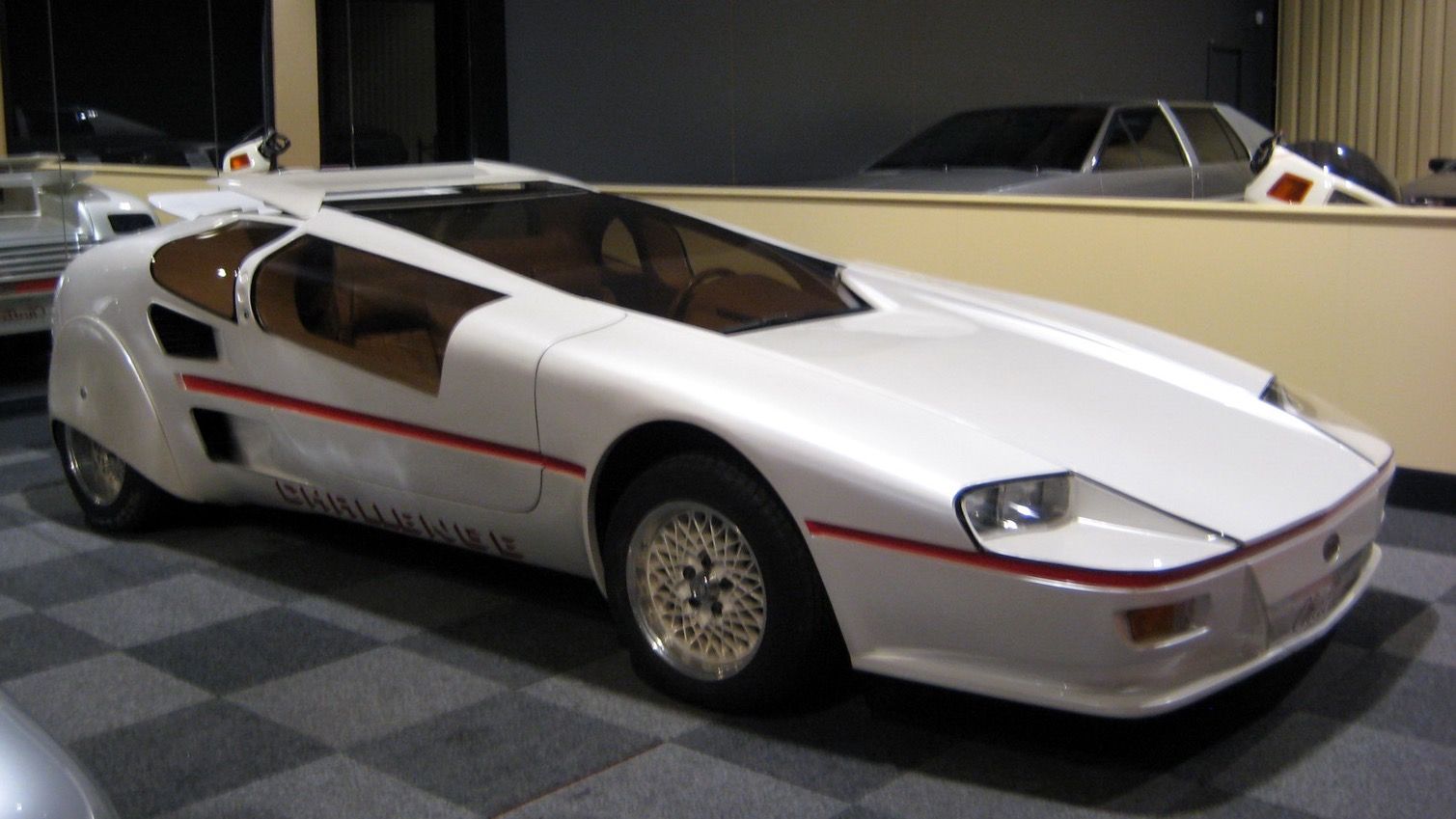
Sbarro Challenge History
Sbarro's most ambitious production attempt — a three-year Geneva Motor Show series peaking at eight examples built, evolving from a turbocharged Mercedes AWD supercar to a Porsche 930-based GT.
Photo: “Sbarro Challenge.jpg” by Mark from Netherlands Cropped and uploaded by Mr.choppers / Wikimedia Commons, licensed under CC BY 2.0. Cropped to 16:9.
History
The Challenge debuted at the 1985 Geneva Motor Show as the most complex car Sbarro had attempted to take into limited production. Challenge I used a bespoke tubular-steel spaceframe, racing-derived double-wishbone suspension at all four corners, and a turbocharged Mercedes-Benz 5.0-litre V8 producing a claimed 380 PS (280 kW), with torque distributed to all four wheels via a Jeep Cherokee transfer case. Quoted top speed was 310 km/h.
For 1986, Sbarro exhibited the Challenge 2+2, which revised the car to accommodate two rear seats and switched from the bespoke AWD drivetrain to Porsche 930 underpinnings — a turbocharged 3.0-litre flat-six producing 300 hp driving the rear wheels through a five-speed manual. This Porsche-based architecture continued into the Challenge III shown in 1987.
Franco Sbarro announced a production run of ten; his son Fabian later documented that eight were actually completed across the three-year series, making the Challenge the closest Sbarro ever came to a genuine limited-production road car outside the 328 Replica programme.
Generations
Challenge I · Turbocharged AWD original
Photo: “Sbarro Challenge.jpg” by Mark from Netherlands Cropped and uploaded by Mr.choppers / Wikimedia Commons, licensed under CC BY 2.0. Cropped to 16:9.
Bespoke spaceframe, turbocharged Mercedes 5.0 V8, four-wheel drive via Jeep transfer case; claimed 380 PS and 310 km/h.
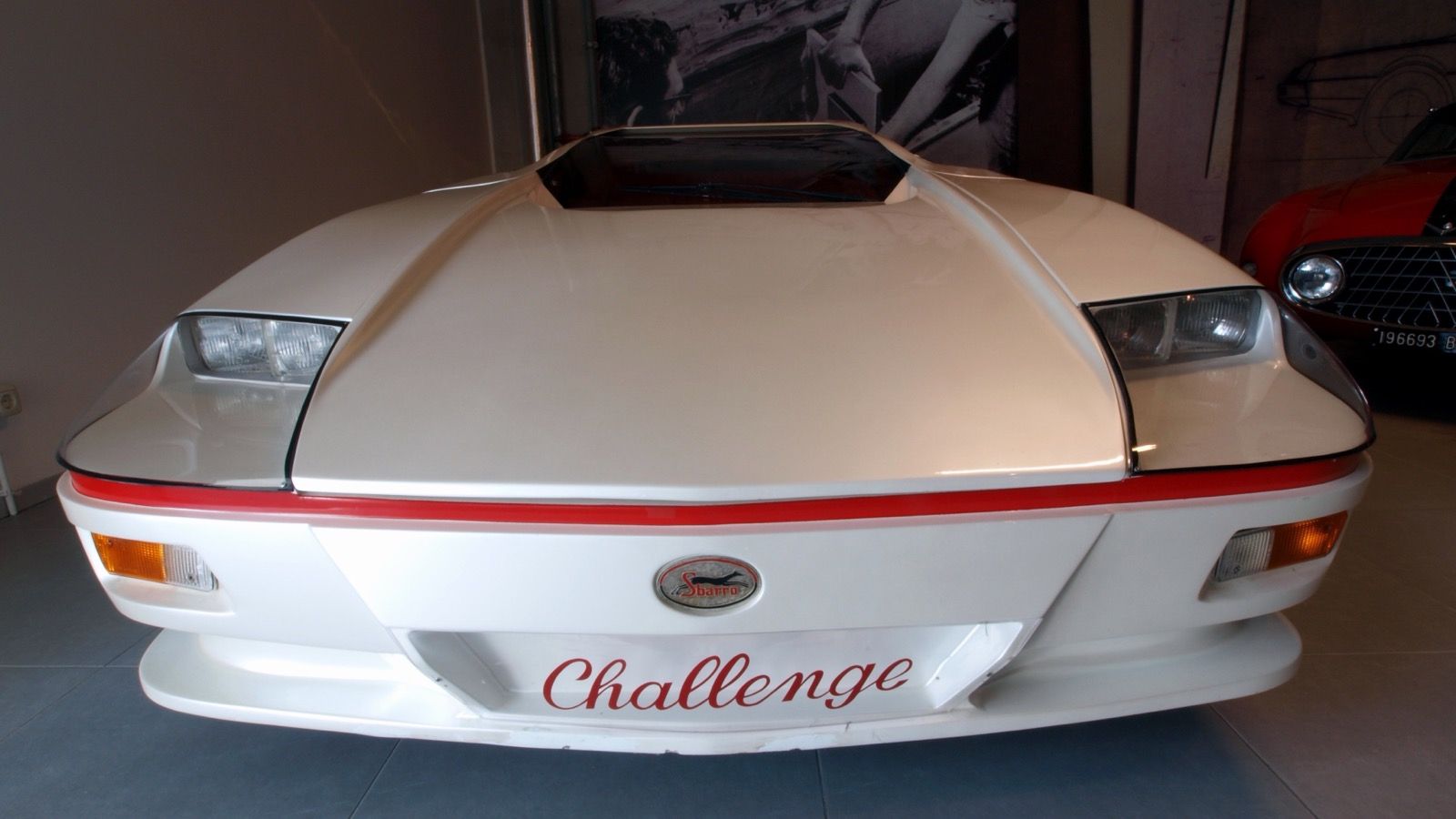
1985 Photo: “1985 Sbarro Challenge p4.JPG” by Alf van Beem / Wikimedia Commons — CC0 1.0. Cropped to 16:9.
Challenge 2+2 / III · Porsche 930-based GT
Switched to Porsche 930 underpinnings (turbo flat-six, 300 hp, RWD); added two rear seats; eight total built across the full series.
Body styles
- Coupe
Related models
Collect the nameplate
Find a scale model of the Sbarro Challenge
Search Amazon across available years, colors, and scales. Exact releases vary, so confirm the listing before ordering.