
Pierce-Arrow Twelve History
Catalog record
Photography for this nameplate has not yet cleared the archive’s licensing and identity checks. The researched text below remains available while the page stays out of search and advertising inventory.
History
Pierce-Arrow introduced its V-12 for the 1932 model year, joining the early-1930s luxury arms race against Cadillac, Packard, Lincoln, and others. The smooth, powerful twelve became the centerpiece of the Pierce-Arrow range and remained the company's defining engine through the end of production in 1938.
The V-12 was offered in several displacements as the line developed: an initial 6.5- and 7.0-liter pair, then a larger 7.6-liter (462-cubic-inch) unit producing about 175 hp for 1933–1934, rising to roughly 185 hp by the mid-1930s. In 1932–1933, a Pierce-Arrow Twelve set a string of stock-car speed records at the Bonneville Salt Flats with driver Ab Jenkins, demonstrating the engine's strength.
Despite the engineering, the Depression devastated demand for $3,000-plus luxury cars. Pierce-Arrow had separated from Studebaker in 1933 and struggled on independently, building beautifully but selling few. The company built its last cars in 1938 before liquidation, the V-12 powering the marque to the very end.
Generations
Twelve · V-12 flagship
Pierce-Arrow's smooth V-12, offered from 6.5 to 7.6 liters and producing up to about 185 hp — the marque's defining engine through the end of production.
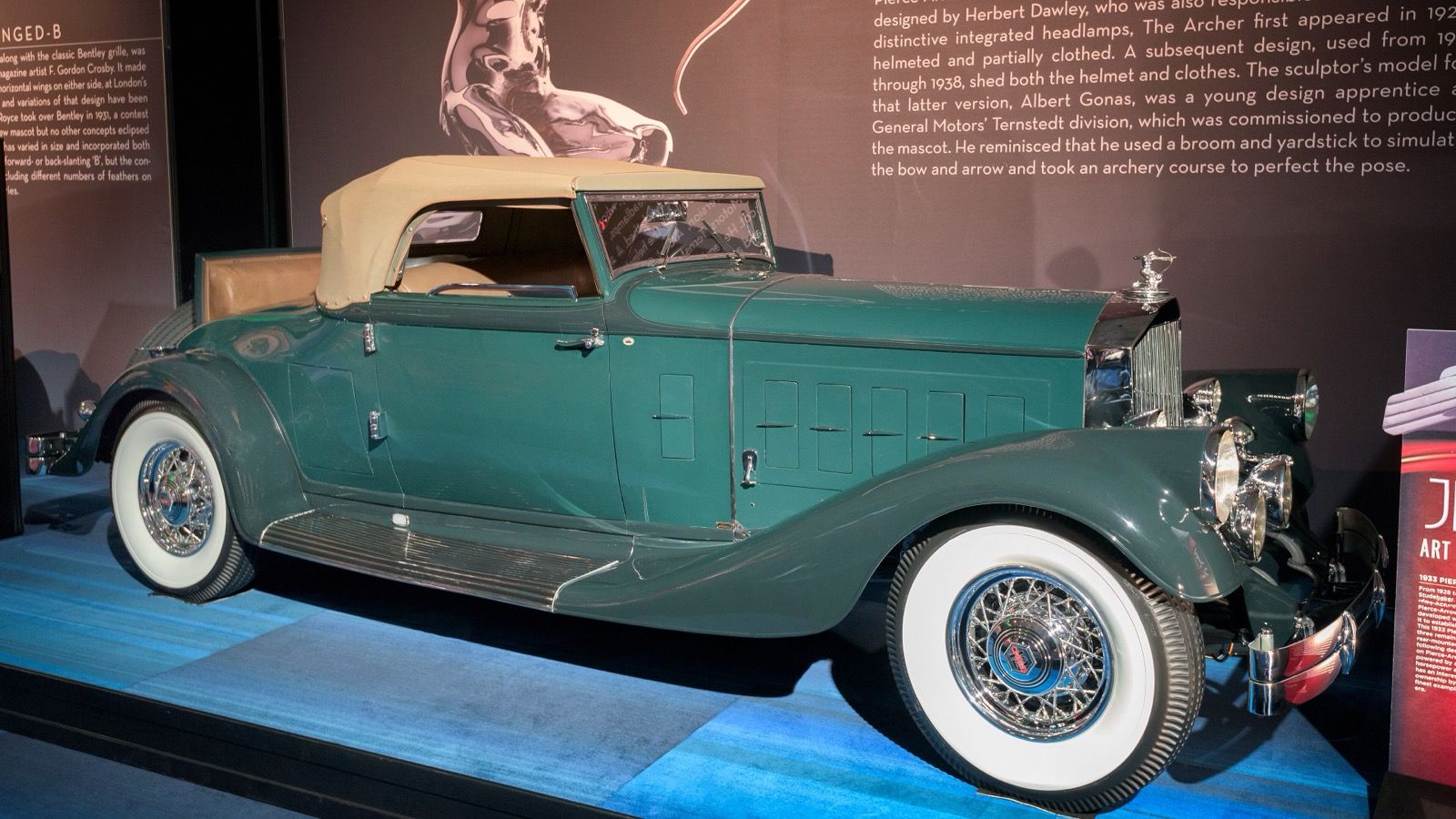
1933 Photo: “1933 Pierce-Arrow 1242 Convertible Coupe (40480972521).jpg” by Joe deSousa / Wikimedia Commons — CC0 1.0. Cropped to 16:9.
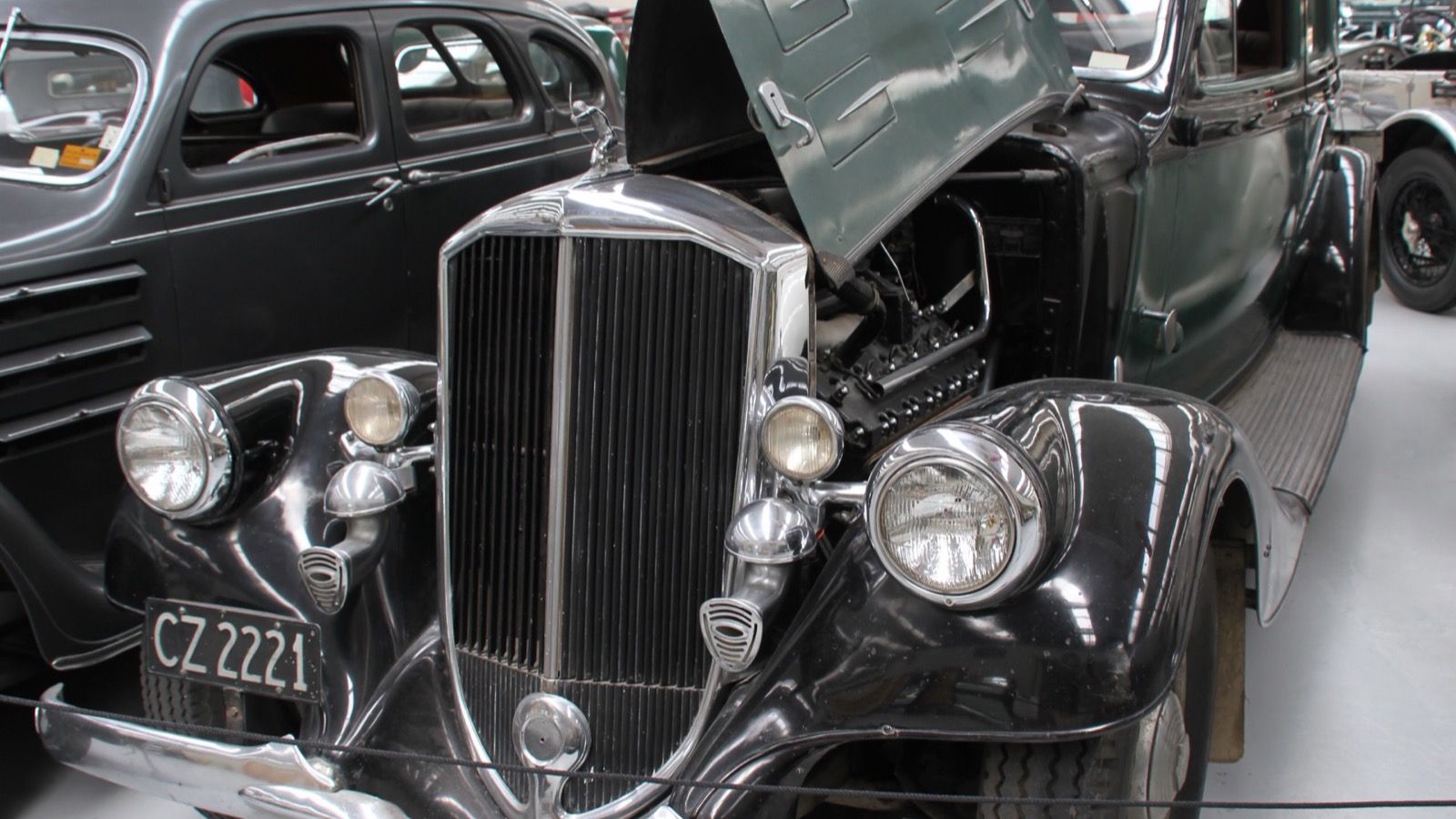
1934 Photo: “1934 Pierce-Arrow (31468470710).jpg” by Tony Hisgett from Birmingham, UK / Wikimedia Commons, licensed under CC BY 2.0. Cropped to 16:9.
Body styles
- Sedan
- Convertible Sedan
- Club Sedan
- Coupe
- Limousine
Related models
Collect the nameplate
Find a scale model of the Pierce-Arrow Twelve
Search Amazon across available years, colors, and scales. Exact releases vary, so confirm the listing before ordering.