
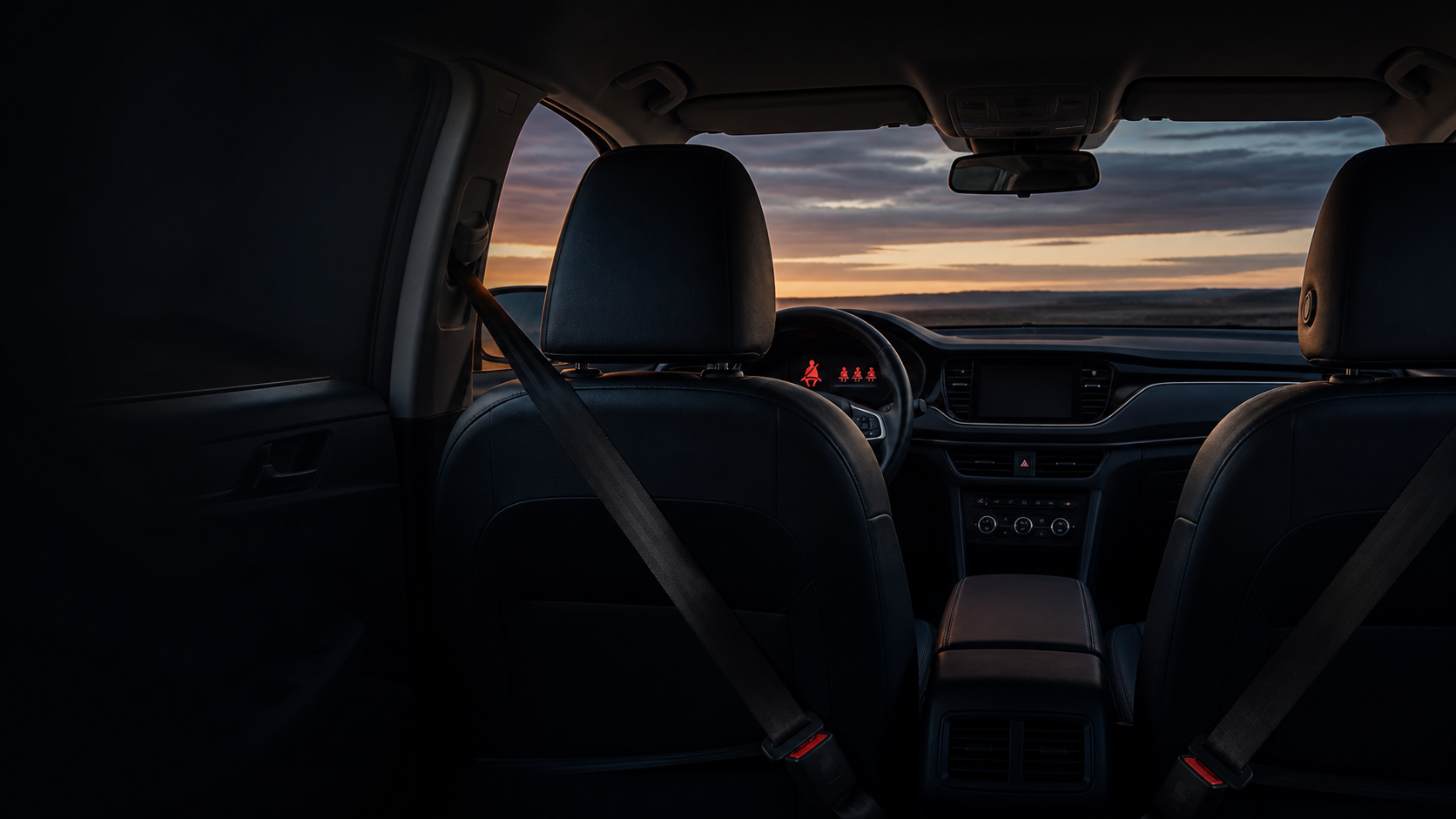
The new-car seat-belt warning deadline moved to 2028
A September 2026 deadline is still circulating, but NHTSA has already delayed the enhanced front- and rear-seat warning requirements. Here is what the effective rule now says.
Answer first
The seat belt warning rule does not require covered new vehicles to meet the enhanced front- and rear-seat reminder requirements in September 2026; NHTSA moved the unified compliance date to September 1, 2028.
What changed—and what did not
The seat belt warning rule 2028 deadline comes from NHTSA's update to Federal Motor Vehicle Safety Standard No. 208. The January 2025 final rule enhanced the warning for an unbelted driver, extended warning requirements to the front outboard passenger, and added rear-seat reminders for most passenger cars, trucks, multipurpose passenger vehicles, and buses rated at 10,000 pounds or less, subject to the rule's exceptions.
The original compliance dates were September 1, 2026 for the front-seat changes and September 1, 2027 for the rear-seat changes. In an interim final rule effective April 6, 2026, NHTSA delayed and unified both dates at September 1, 2028. Multi-stage manufacturers and alterers receive an additional year. The agency did not eliminate the warning requirements.
Why an interim final rule counts now
This is not a proposed delay waiting to take effect. NHTSA said the interim final rule became binding on its effective date and that no further regulatory action was required to make it effective. The agency found good cause to act immediately after manufacturers described validation, instrument-panel, occupant-detection, and software lead-time problems.
The word ‘interim’ still matters. NHTSA requested public comments and said it would later publish a final rule responding to them and make any appropriate changes. The accurate description today is therefore: an effective, binding interim final rule with a September 1, 2028 compliance date, still subject to a later response-to-comments rule.
What buyers will notice
The federal standard is directed at manufacturers and covered new vehicles, not at owners retrofitting older cars. A vehicle may already provide more extensive reminders voluntarily, so the dashboard behavior of a 2026 or 2027 model does not prove that the delayed federal requirement already applies to it.
When the updated requirements apply, drivers should expect longer and more capable front-seat alerts plus information about rear-seat belt status. The exact display, sound, occupant-detection strategy, and interface can vary as long as the vehicle satisfies the performance requirements.
- Do not assume a September 2026 build date automatically triggers the enhanced federal requirements.
- Do not confuse an automaker's voluntary reminder system with proof of federal applicability.
- Use the vehicle's model year, build information, owner's manual, and manufacturer documentation to understand the installed system.
- Watch the Federal Register for NHTSA's later response to comments before treating the 2028 details as permanently settled.
Evidence ledger
Primary sources
Time-sensitive claims were checked against the sources below on August 20, 2026. The linked source controls.
- Federal Register / NHTSAInterim final rule responding to petitions on seat-belt warning systems
- Federal Register / NHTSAJanuary 2025 final rule establishing enhanced seat-belt warning requirements
- NHTSASeat belts vehicle-safety guidance