
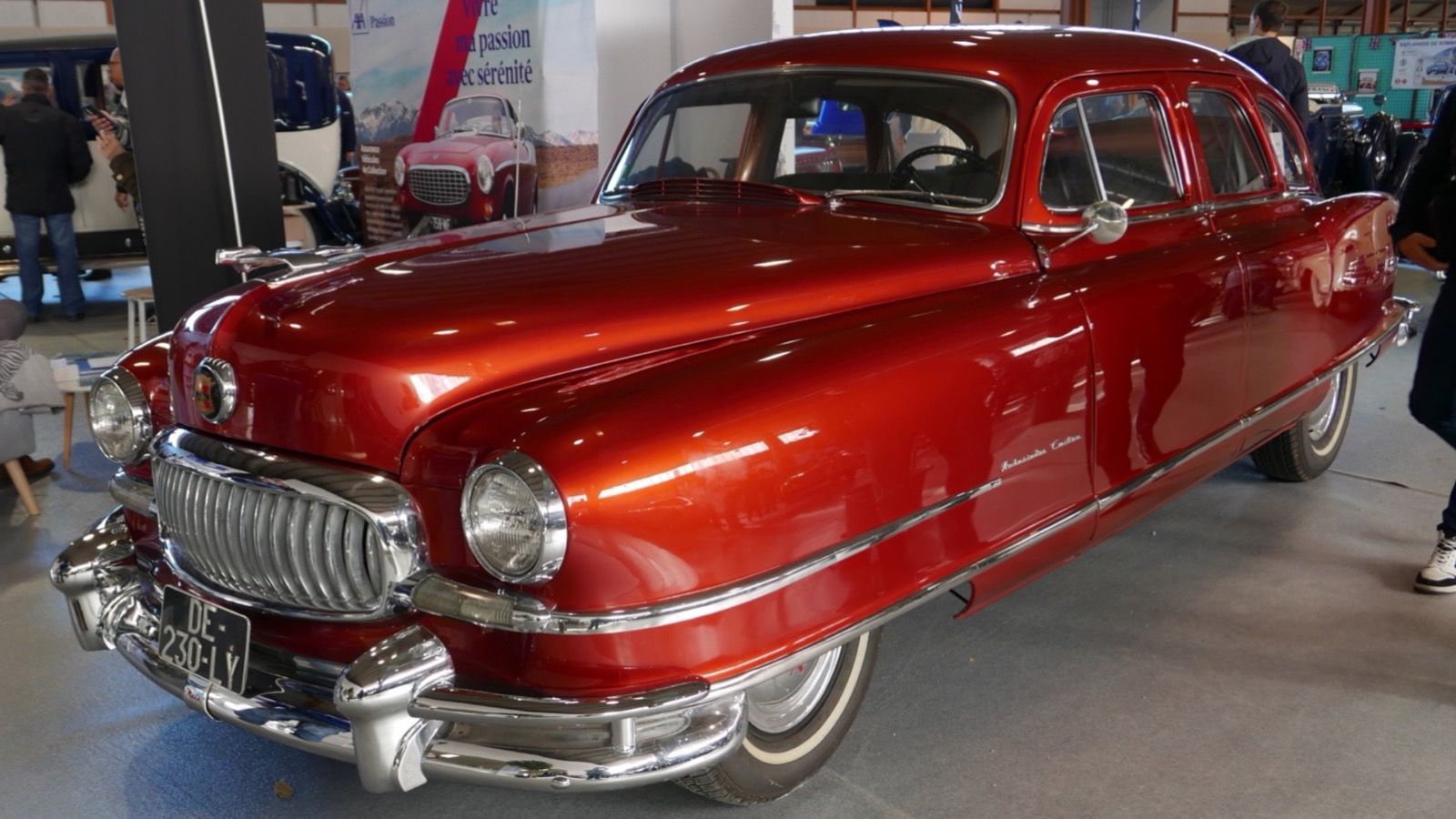
Nash Ambassador History
Nash's top-line full-size car (1932–1957) — one of the longest-lived nameplates in motoring, home of the 'bathtub' Airflyte and Pinin Farina styling.
Photo: “File:NASH Ambassador Custom sedan 1949c.jpg” by Finoskov / Wikimedia Commons, licensed under CC BY-SA 4.0. Cropped to 16:9.
Start with a make and model. Add a year where a detailed guide is available.
Model history available. Detailed year guides are not published for this model.
Browse this model's history and yearsHistory
The Ambassador name first appeared in 1927 as the top trim of the Nash Advanced Six and became a standalone model in 1932 as the straight-eight 'Ambassador Eight'. It served as Nash's senior, most luxurious full-size car for the rest of the marque's life, giving it one of the longest-running nameplates in automotive history.
Postwar Ambassadors led with Nash's signature innovations: the fresh-air 'Weather Eye' heating/ventilation system, the fold-flat 'Bed-In-A-Car' that let the seats convert into a sleeping space, and from 1949 the radically streamlined, enclosed-fender 'Airflyte' bodywork nicknamed the 'bathtub'. By 1954 the Ambassador offered an early integrated front-mounted air-conditioning setup tied to the Weather Eye.
For 1952 Nash introduced 'Golden Airflyte' styling penned with Italian coachbuilder Pinin Farina, a look that carried the Ambassador through its final Nash years. After Nash merged with Hudson to form AMC in 1954, the Ambassador continued as a Nash through the 1957 model year, after which the badge passed to AMC.
Generations
Airflyte ('bathtub') · Airflyte
Photo: “File:NASH Ambassador Custom sedan 1949c.jpg” by Finoskov / Wikimedia Commons, licensed under CC BY-SA 4.0. Cropped to 16:9.
The radically streamlined, enclosed-fender 'bathtub' Airflyte — the first all-new postwar Nash design, with unitized construction and the Weather Eye system.
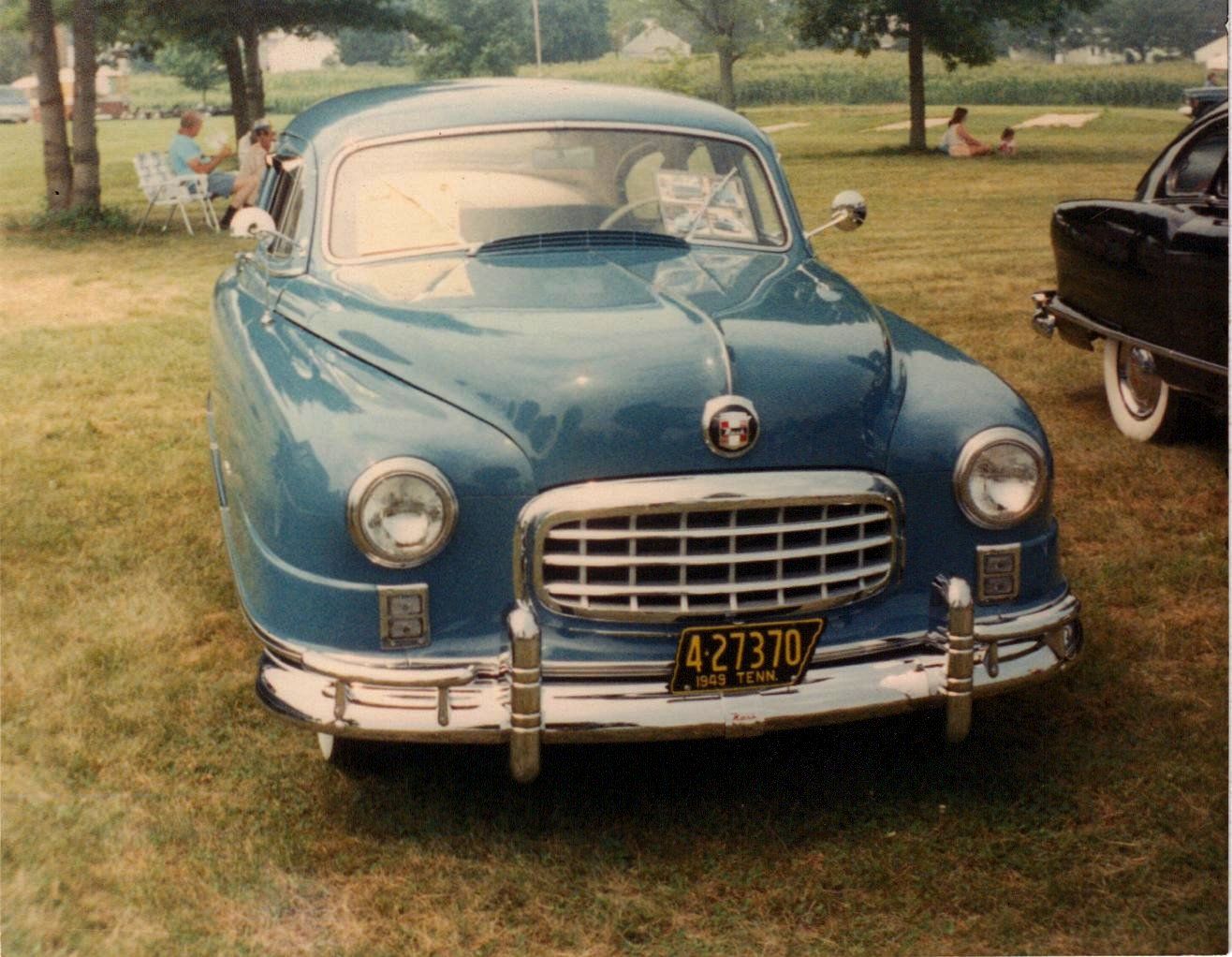
1949 Photo: “File:1949 Nash Ambassador (3889875269).jpg” by JOHN LLOYD from Concrete, Washington, United States / Wikimedia Commons, licensed under CC BY 2.0
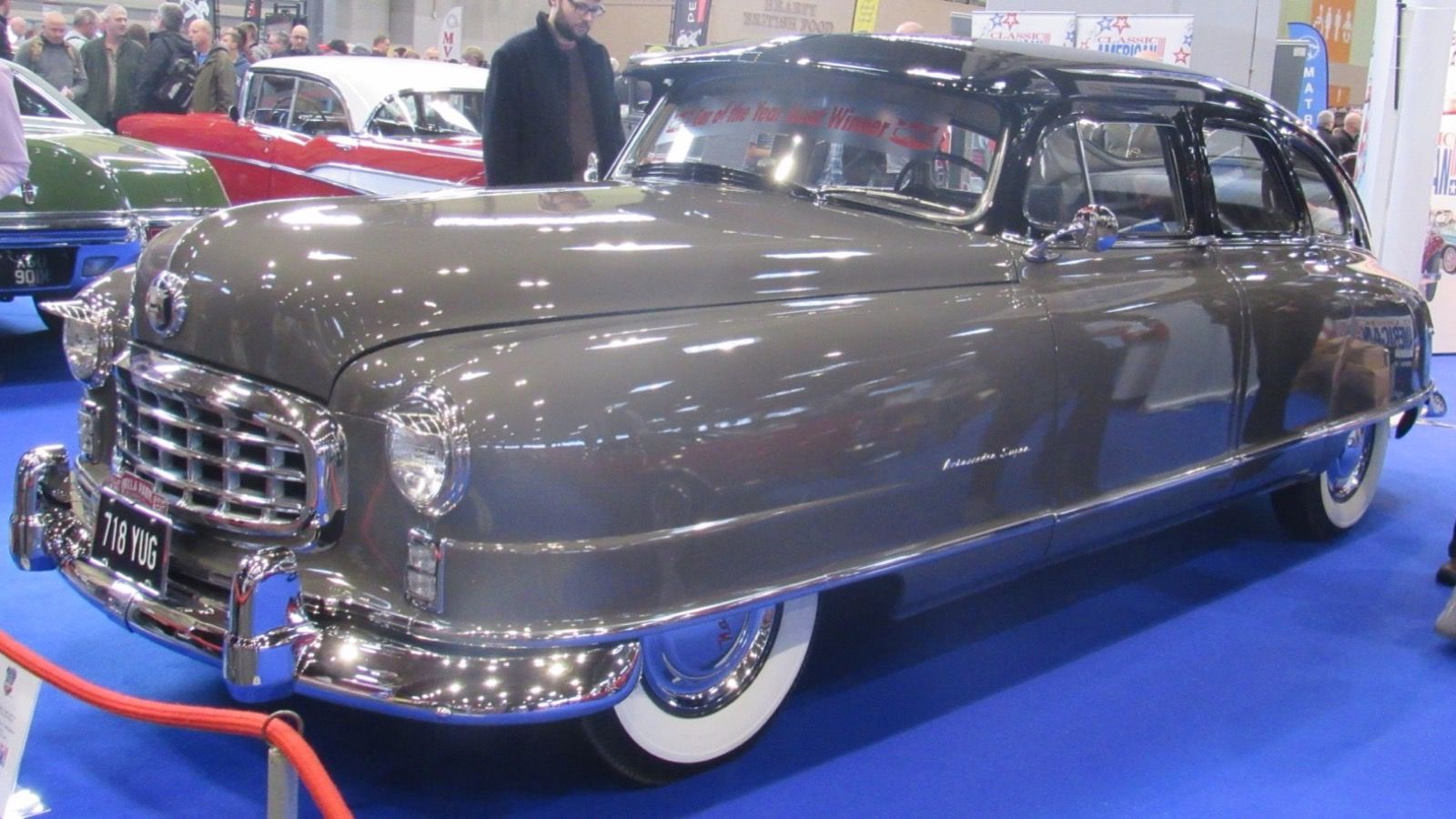
1950 Photo: “File:1950 Nash Ambassador Airflyte 3.8.jpg” by Vauxford / Wikimedia Commons, licensed under CC BY-SA 4.0. Cropped to 16:9.
Pinin Farina era · Golden Airflyte
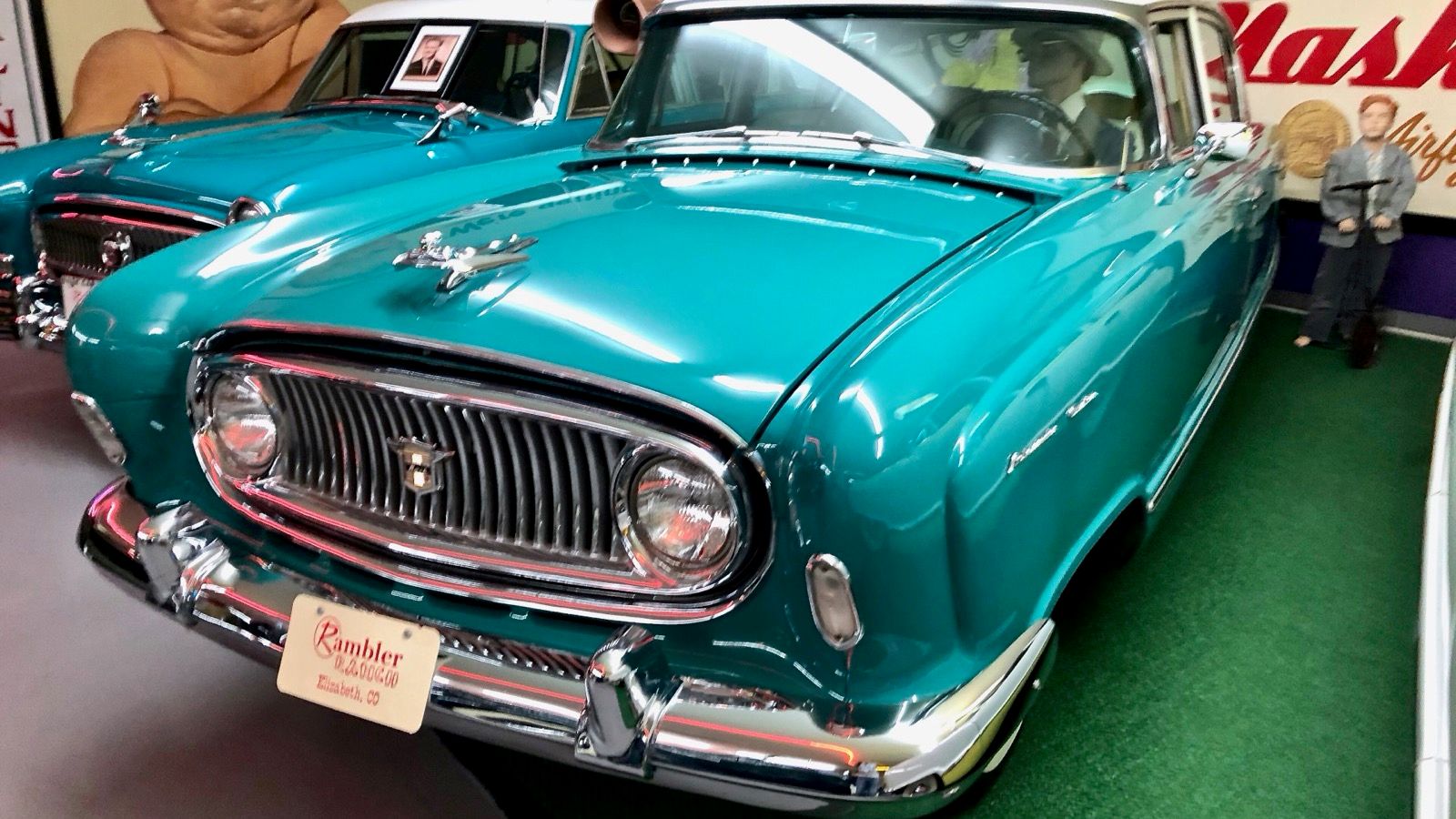
Photo: “File:1955 Nash Ambassador Custom four-door sedan in green and white at Rambler Ranch.jpg” by CZmarlin — Christopher Ziemnowicz, a photo credit would be appreciated if this image is used anywhere other than Wikipedia. Please also include the location of the image: the Rambler Ranch collection in Elizabeth, Colorado. See: https://www.ramblerranch.com / Wikimedia Commons, licensed under CC BY-SA 4.0. Cropped to 16:9.
Restyled with Italian coachbuilder Pinin Farina for Nash's 'Golden Anniversary' 1952 cars; the look that carried the Ambassador to the end of the Nash brand in 1957.
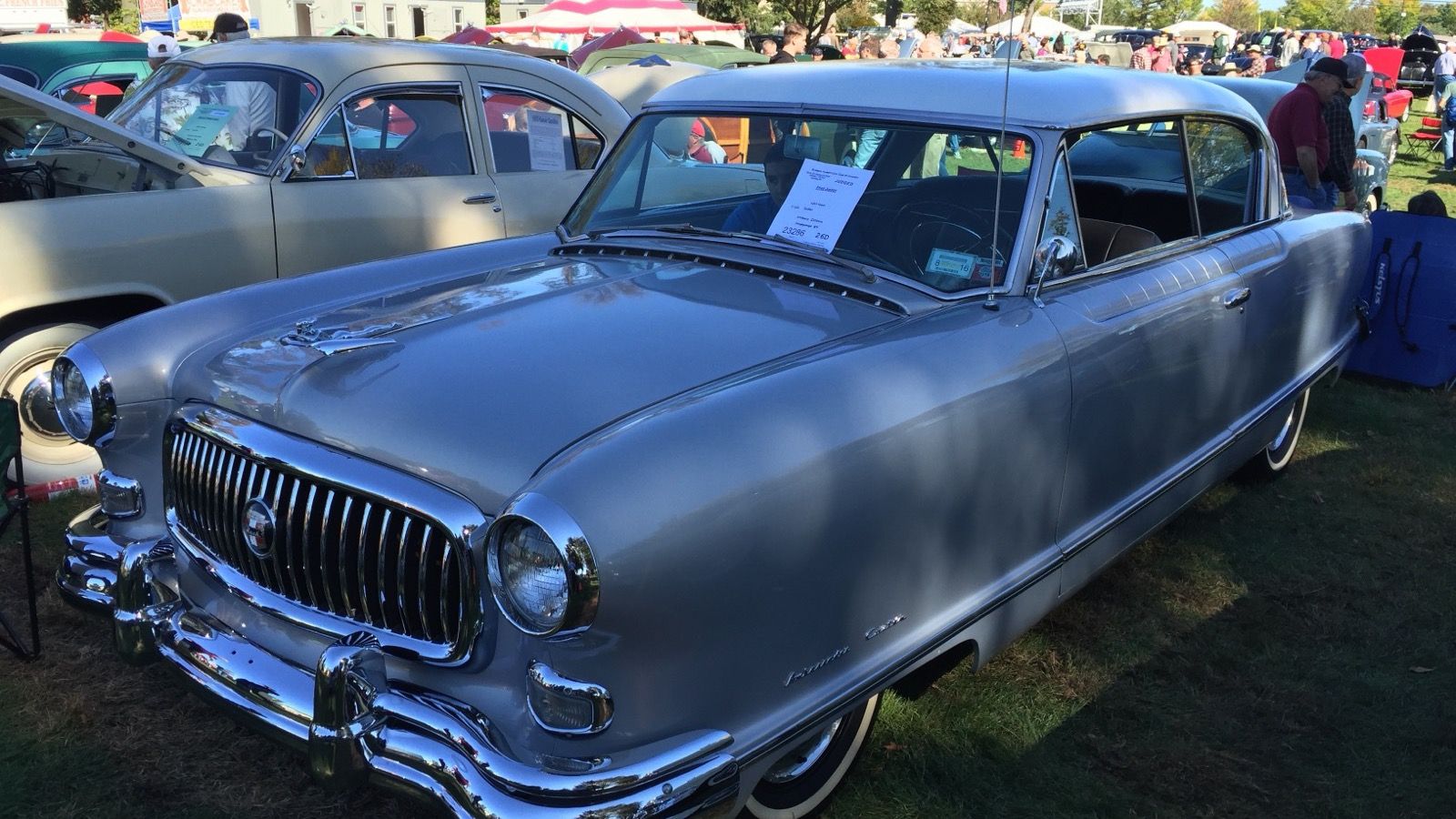
1953 Photo: “File:1953 Nash Ambassador hardtop Hershey 2015 - 1of6.jpg” by CZmarlin — Christopher Ziemnowicz — a photo credit is required if this image is used anywhere other than Wikipedia. / Wikimedia Commons, licensed under CC BY-SA 4.0. Cropped to 16:9.
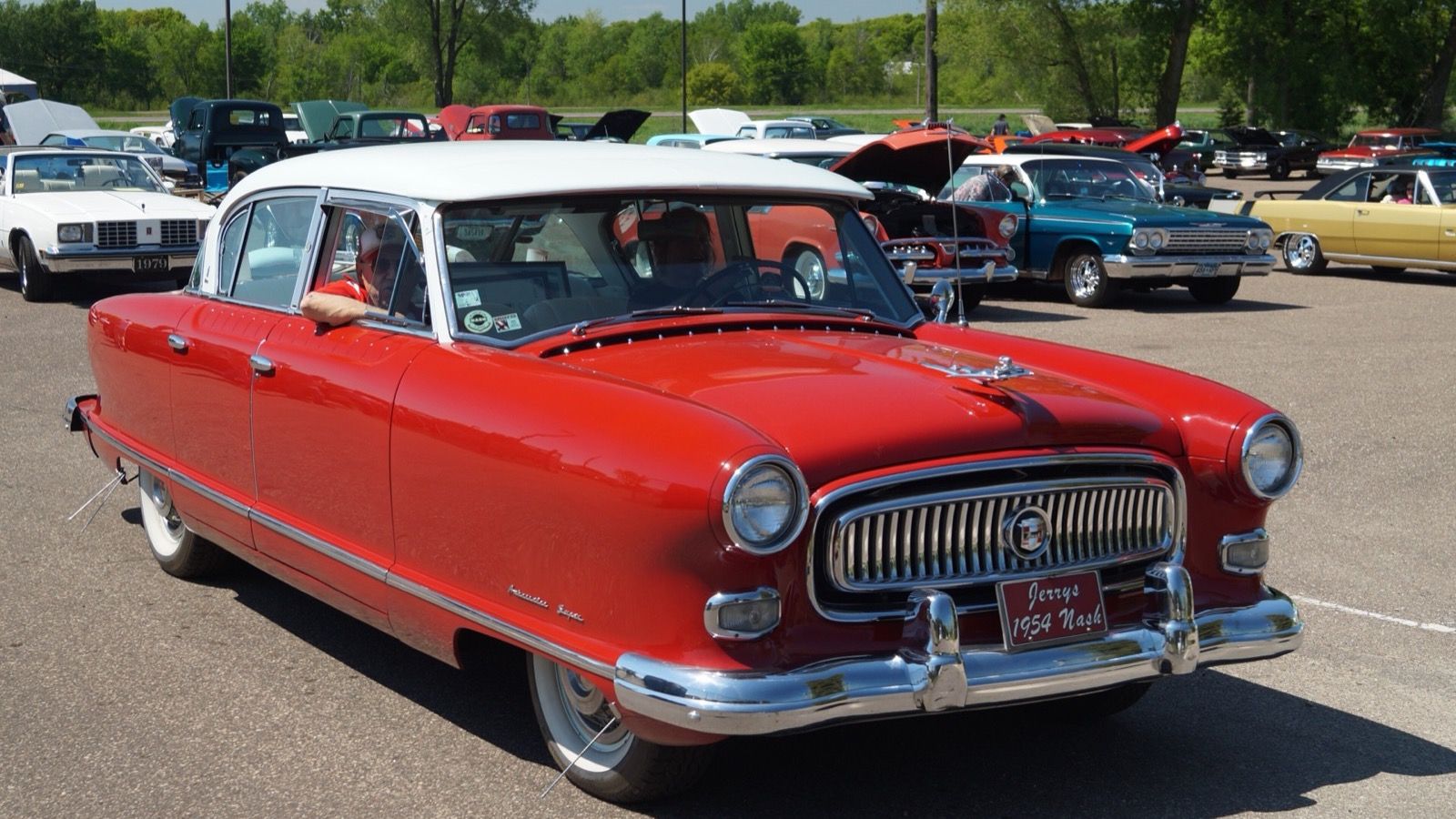
1954 Photo: “File:1954 Nash Ambassador Super (26557904283).jpg” by Greg Gjerdingen from Willmar, USA / Wikimedia Commons, licensed under CC BY 2.0. Cropped to 16:9.
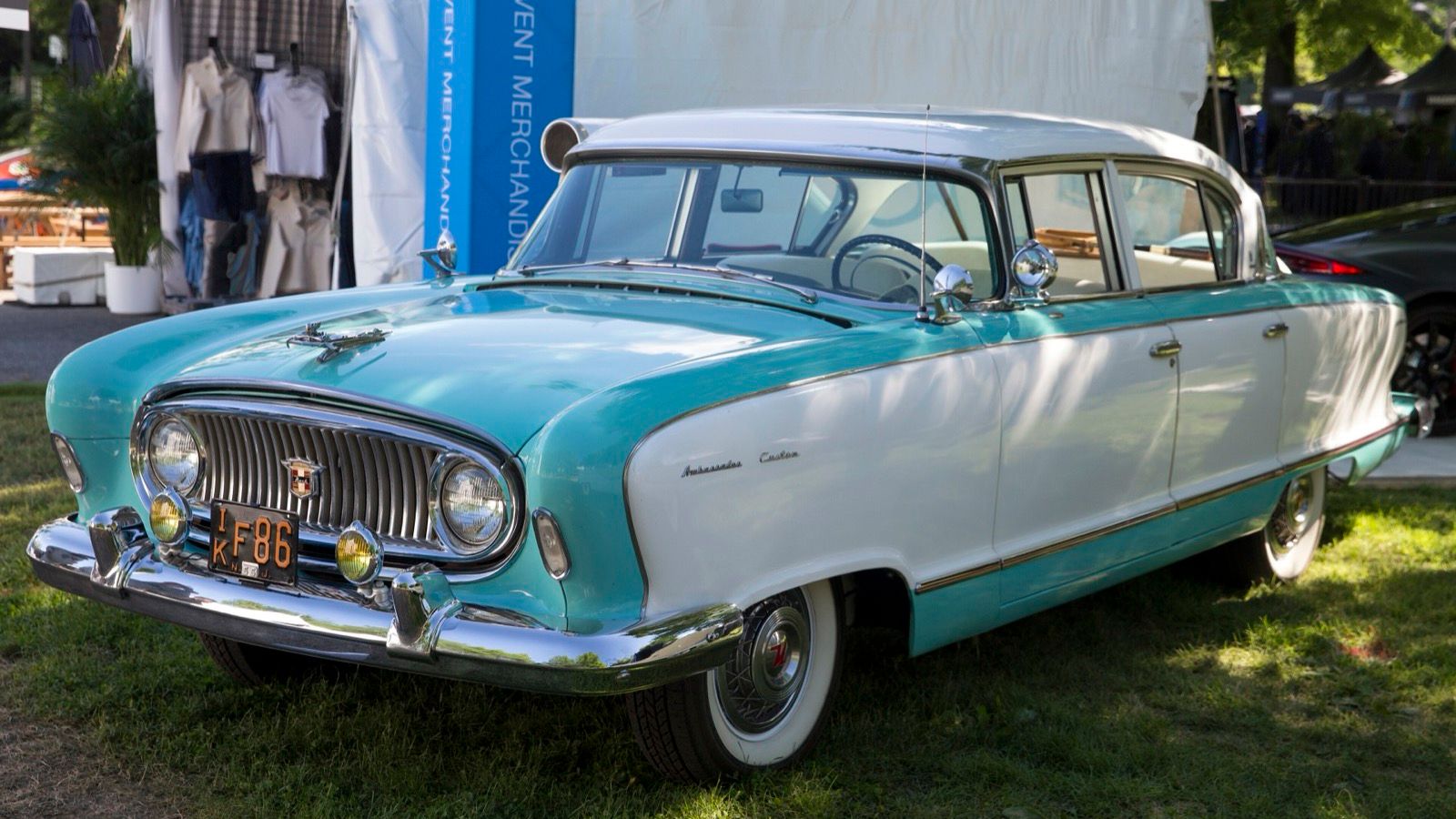
1955 Photo: “File:1955 Nash Ambassador Custom sedan in Turquoise and White, front left.jpg” by Mr.choppers / Wikimedia Commons, licensed under CC BY-SA 4.0. Cropped to 16:9.
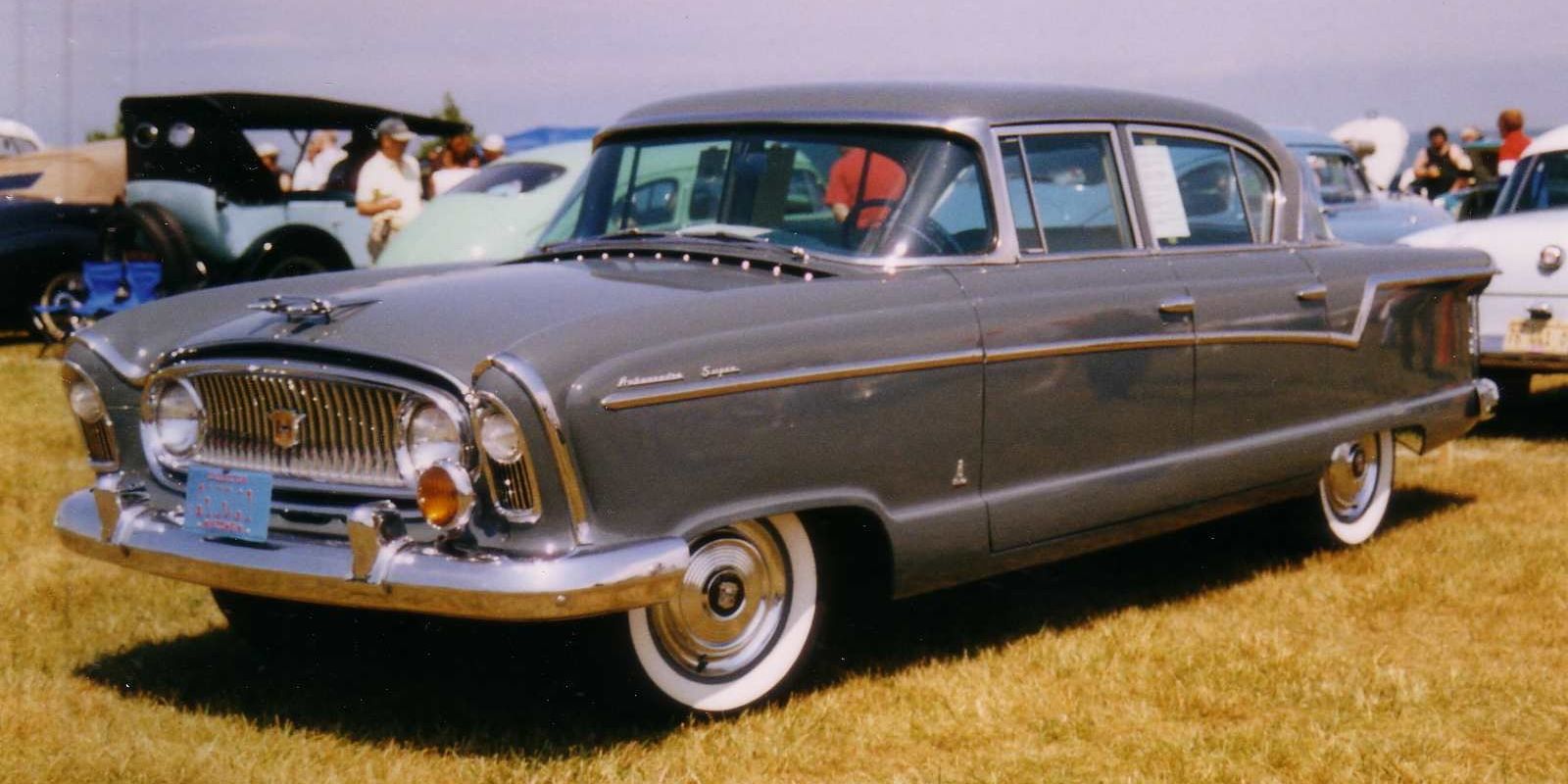
1956 Photo: “File:1956 Nash Ambassador Super four-door Sedan.jpg” by CZmarlin — Christopher Ziemnowicz, releases all rights but a photo credit would be appreciated if this image is used anywhere other than Wikipedia. Please leave a note at Wikipedia here . Thank you! / Wikimedia Commons — Public domain
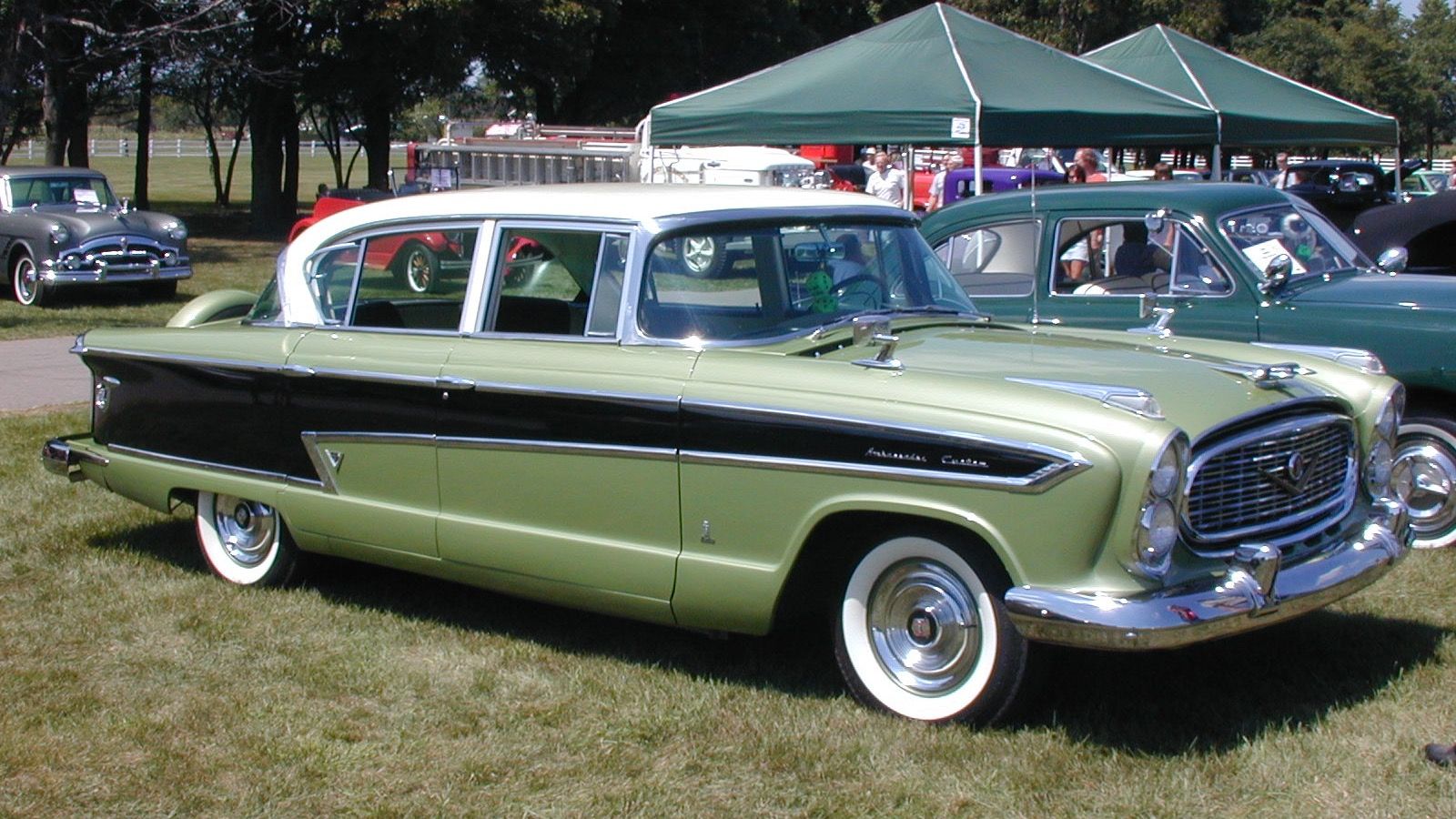
1957 Photo: “File:1957 Nash Ambassador (32464694).jpg” by Joe Ross from Lansing, Michigan / Wikimedia Commons, licensed under CC BY-SA 2.0. Cropped to 16:9.
Body styles
- Sedan
- Coupe
- Convertible
- Hardtop
- Wagon
Related models
Collect the nameplate
Find a scale model of the Nash Ambassador
Search Amazon across available years, colors, and scales. Exact releases vary, so confirm the listing before ordering.