
Mitsubishi Eclipse History
Catalog record
Photography for this nameplate has not yet cleared the archive’s licensing and identity checks. The researched text below remains available while the page stays out of search and advertising inventory.
History
The Eclipse arrived in the US for the 1990 model year — produced at the Diamond-Star Motors joint-venture plant in Normal, Illinois alongside the Eagle Talon and Plymouth Laser. Five trims were offered; only the GSX (all-wheel drive, turbocharged) and GS Turbo (front-drive, turbocharged) broke from the front-drive norm, and those AWD turbo models quickly became tuner and rally icons.
A voluptuous second generation debuted for 1995 with a new platform and a Spyder convertible option added for 1996. Third-generation (2000) Eclipses dropped the turbocharged four and AWD in favor of a 205-hp 3.0-liter V6, widening the car's footprint but alienating some enthusiasts. The fourth and final generation (2006) grew the coupe and Spyder further; Mitsubishi discontinued the Eclipse nameplate after the 2012 model year, later reviving the badge on an unrelated compact crossover (Eclipse Cross).
Across its life the Eclipse sold well over a million units globally and remains one of the most recognized Japanese sport coupes of the 1990s.
Generations
First generation (1G DSM) · 1G DSM
The Diamond-Star Motors era — turbocharged AWD GSX and FWD GS Turbo; built alongside Eagle Talon and Plymouth Laser.
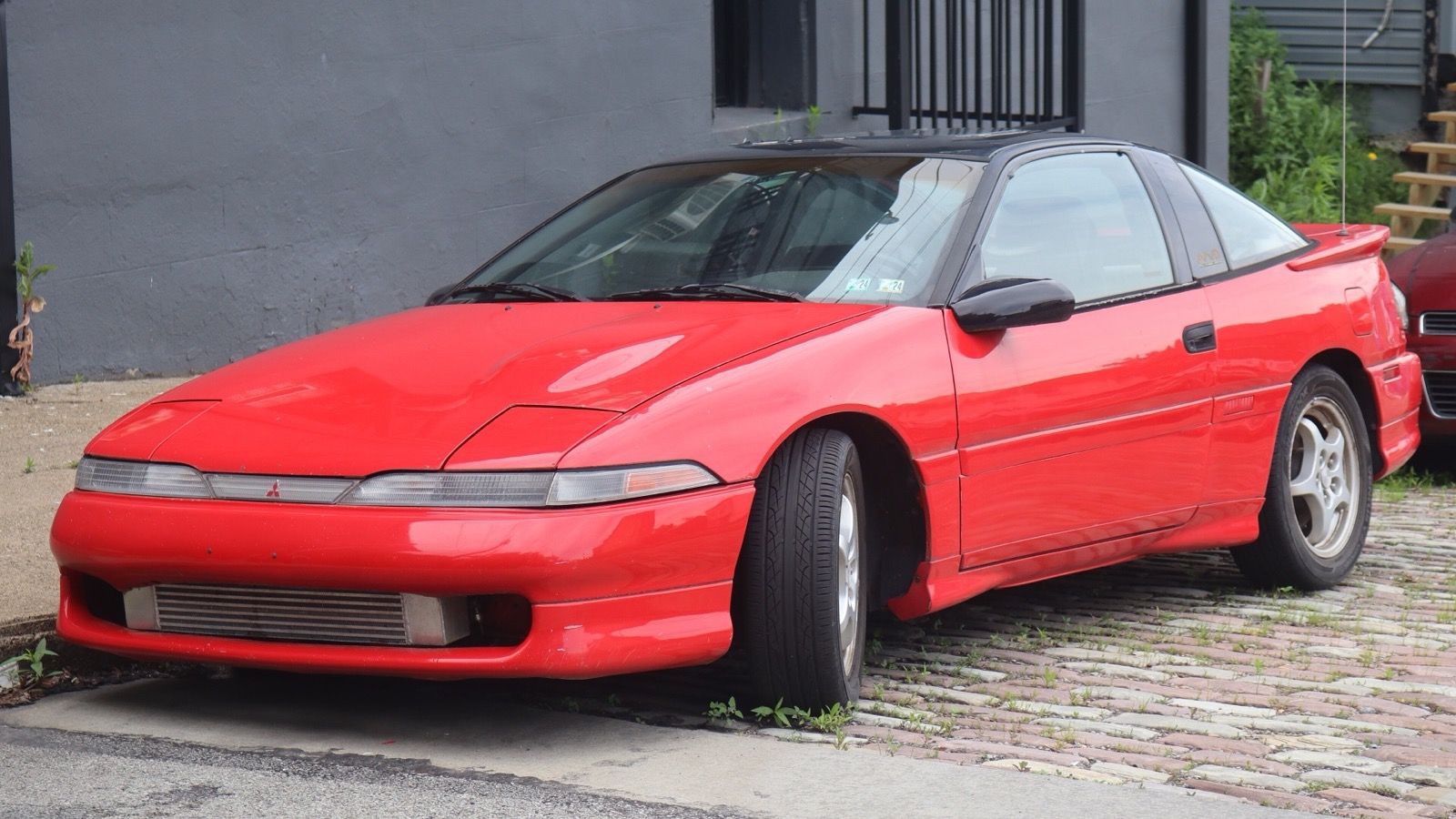
1990 Photo: “1990 Mitsubishi Eclipse GSX Turbo in Maranello Red, front left, 05-23-2026.jpg” by Cutlass / Wikimedia Commons — CC0 1.0. Cropped to 16:9.
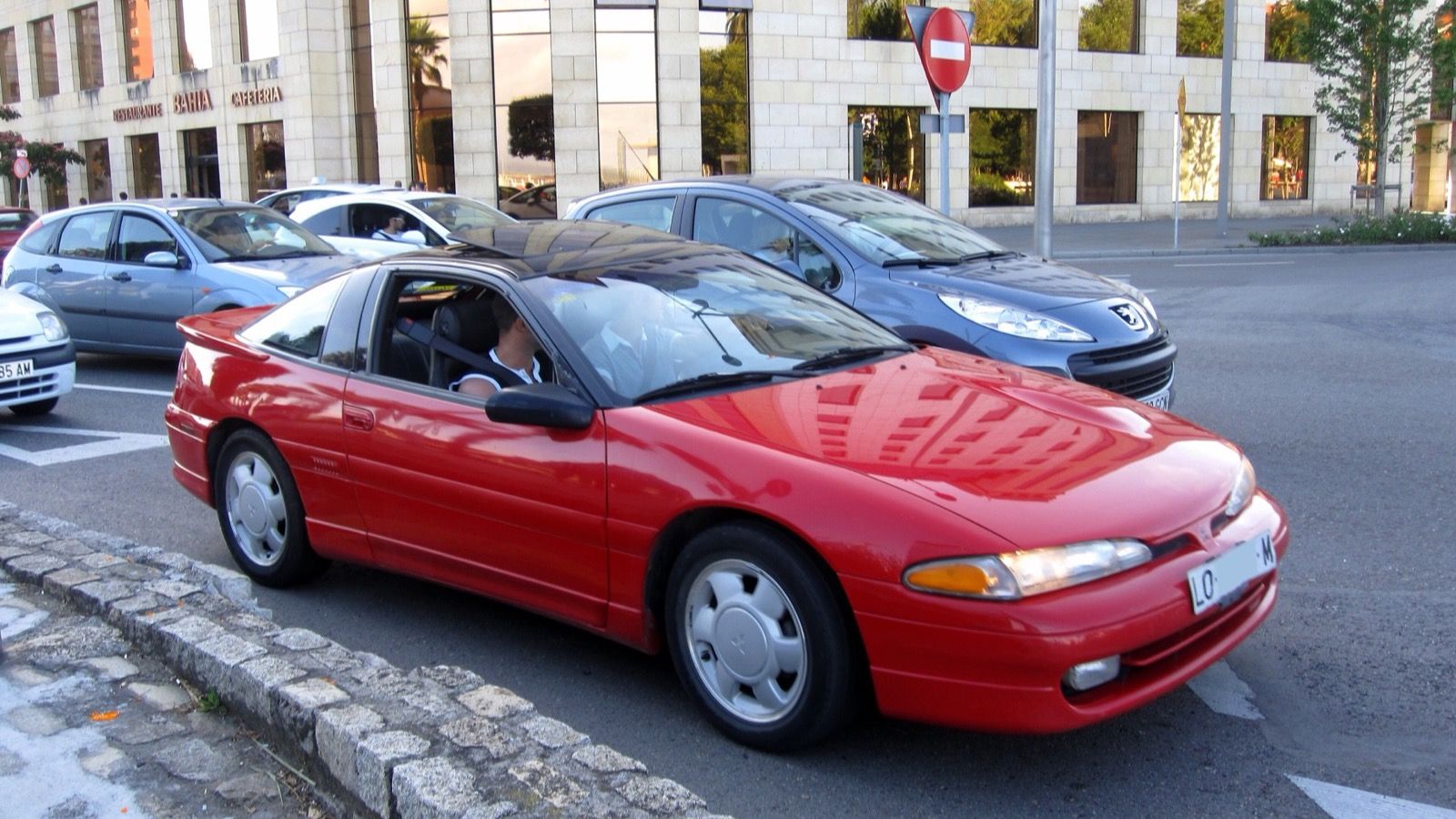
1993 Photo: “1993 Mitsubishi Eclipse GSX (4815542974).jpg” by Spanish Coches / Wikimedia Commons, licensed under CC BY 2.0. Cropped to 16:9.
Second generation (2G DSM) · 2G DSM
Curvaceous redesign with Spyder convertible added for 1996; still offered turbocharged and AWD variants.
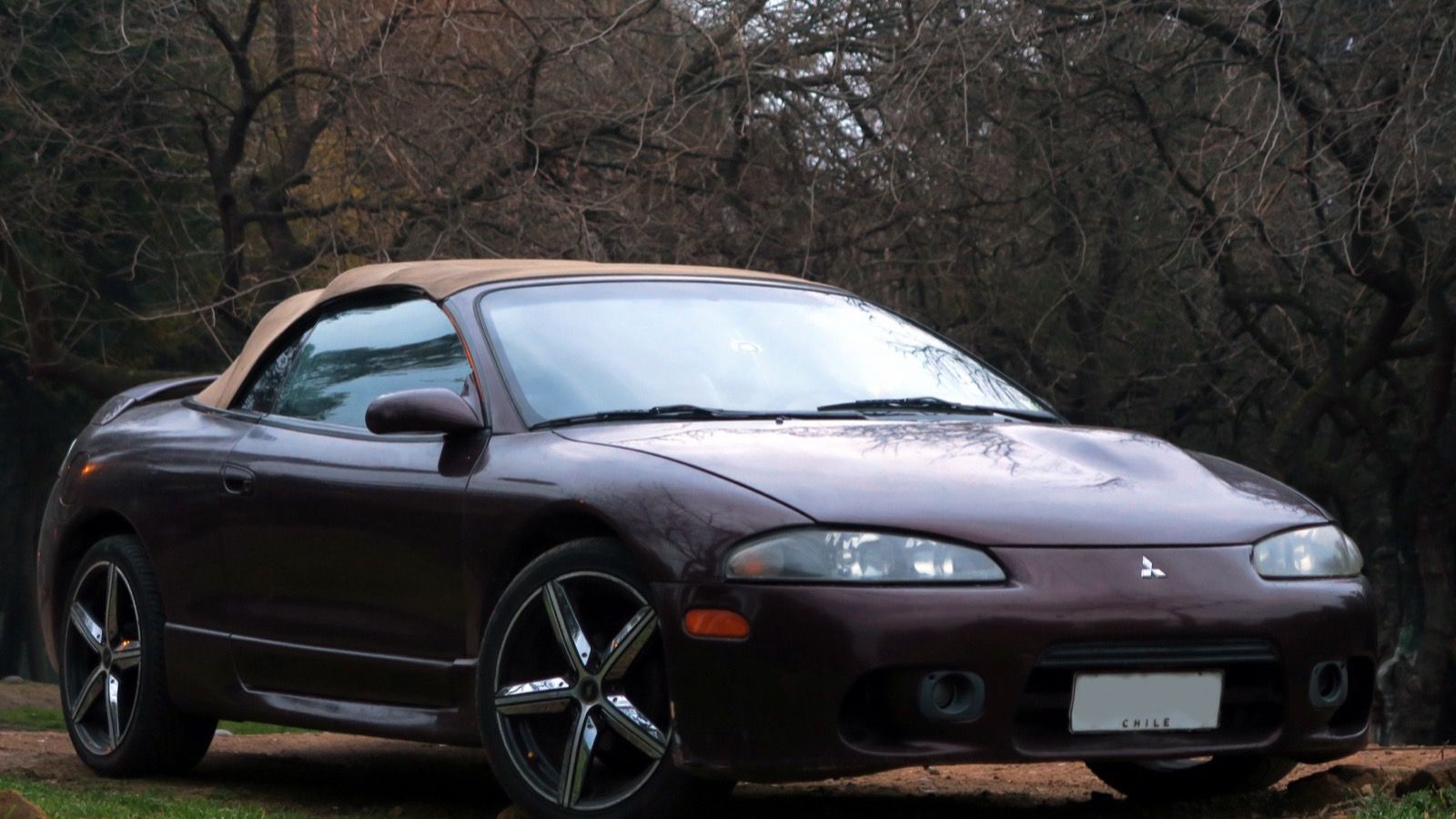
1999 Photo: “Mitsubishi Eclipse 2.4 GS Spyder 1999 (40193474705).jpg” by RL GNZLZ from Chile / Wikimedia Commons, licensed under CC BY-SA 2.0. Cropped to 16:9.
Third generation · 3G
Grew larger on a new Galant-derived platform; AWD and the turbo four dropped in favor of a V6.
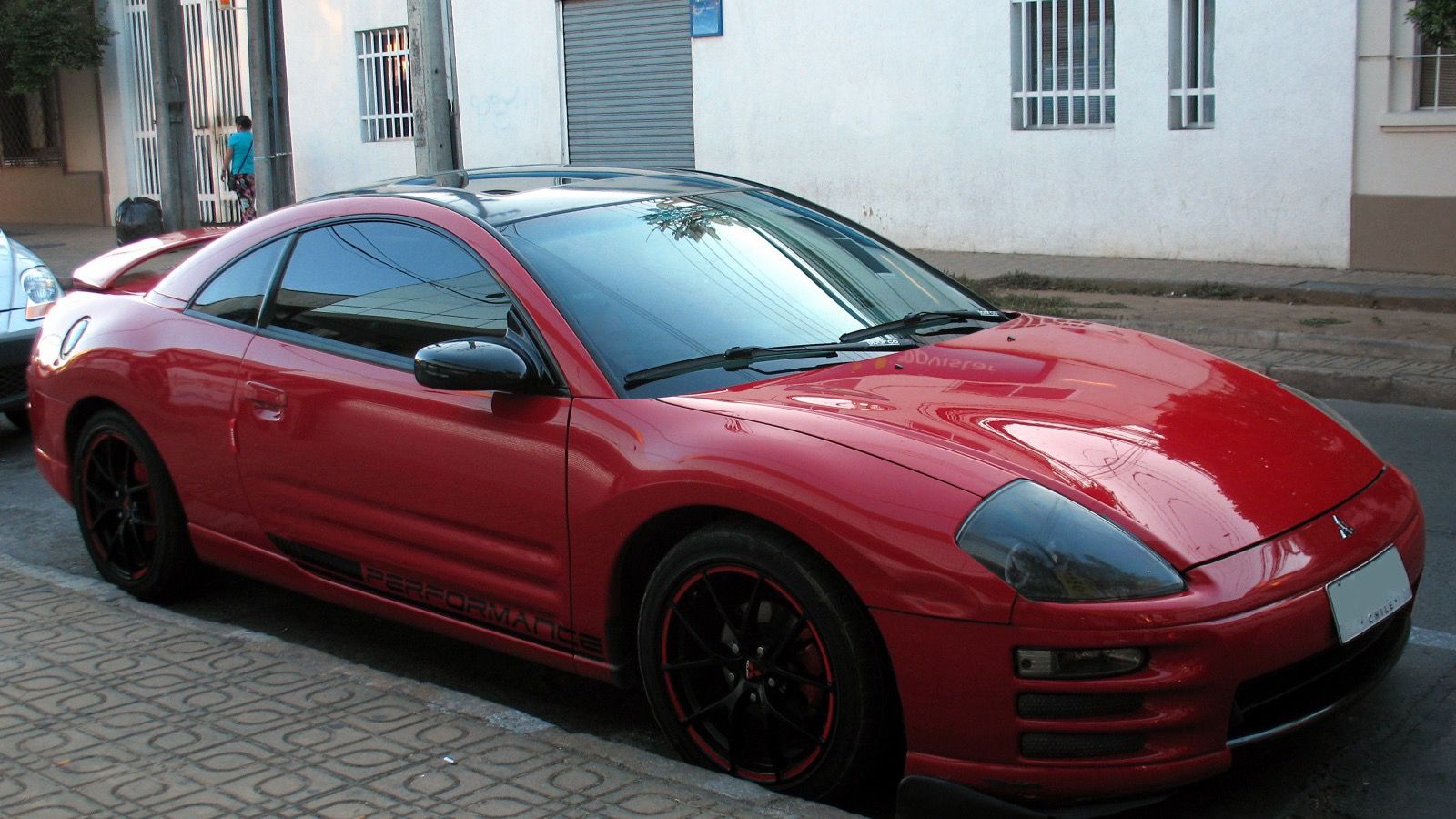
2002 Photo: “Mitsubishi Eclipse 2.4 RS 2002 (36402820102).jpg” by RL GNZLZ from Chile / Wikimedia Commons, licensed under CC BY-SA 2.0. Cropped to 16:9.
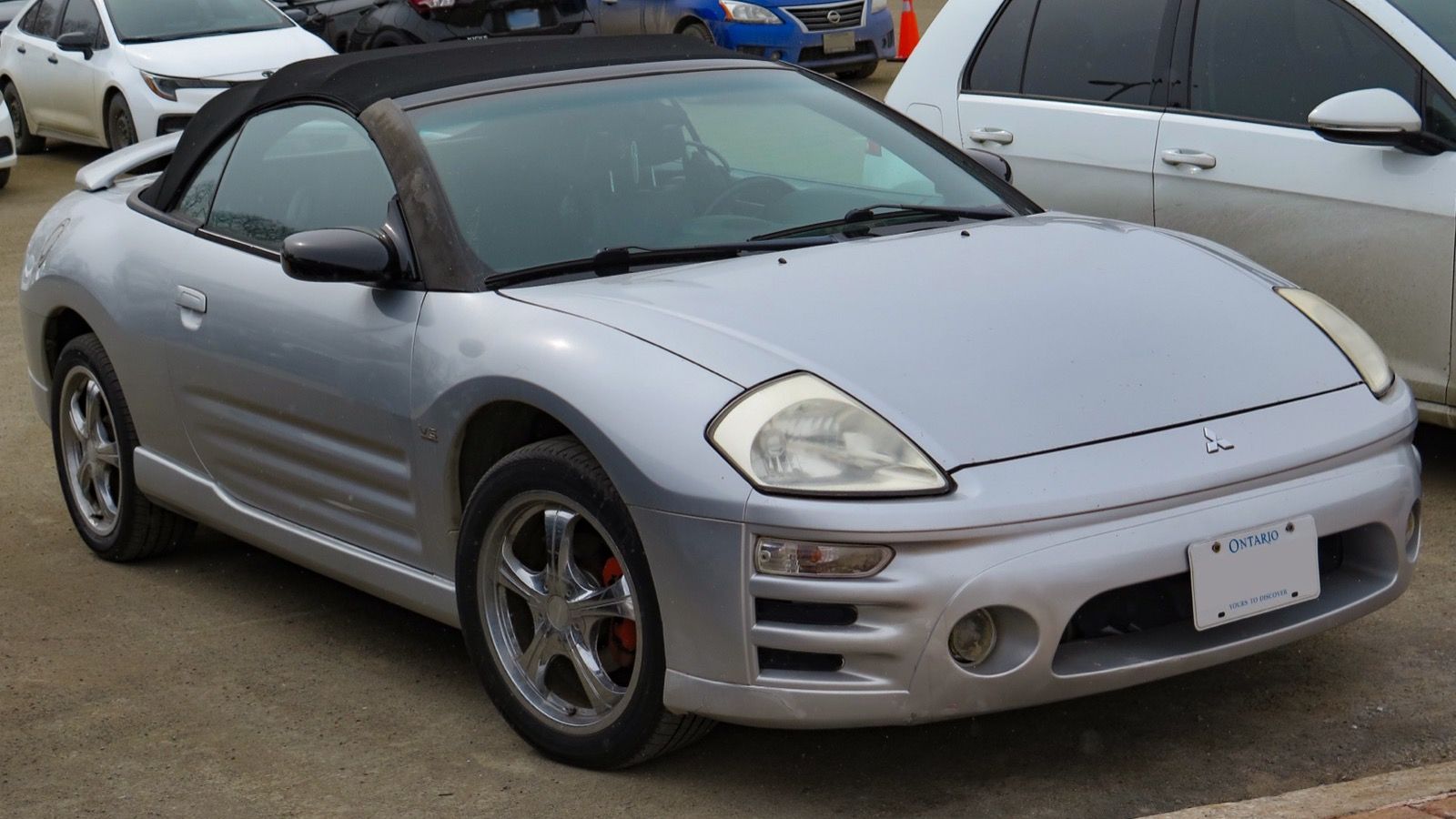
2003 Photo: “2003 Mitsubishi Eclipse Spyder GT in Sterling Silver Metallic, Front Right, 03-13-2023.jpg” by Elise240SX / Wikimedia Commons, licensed under CC BY-SA 4.0. Cropped to 16:9.
Fourth generation · 4G
Final generation — bigger, heavier coupe and Spyder; discontinued after 2012.
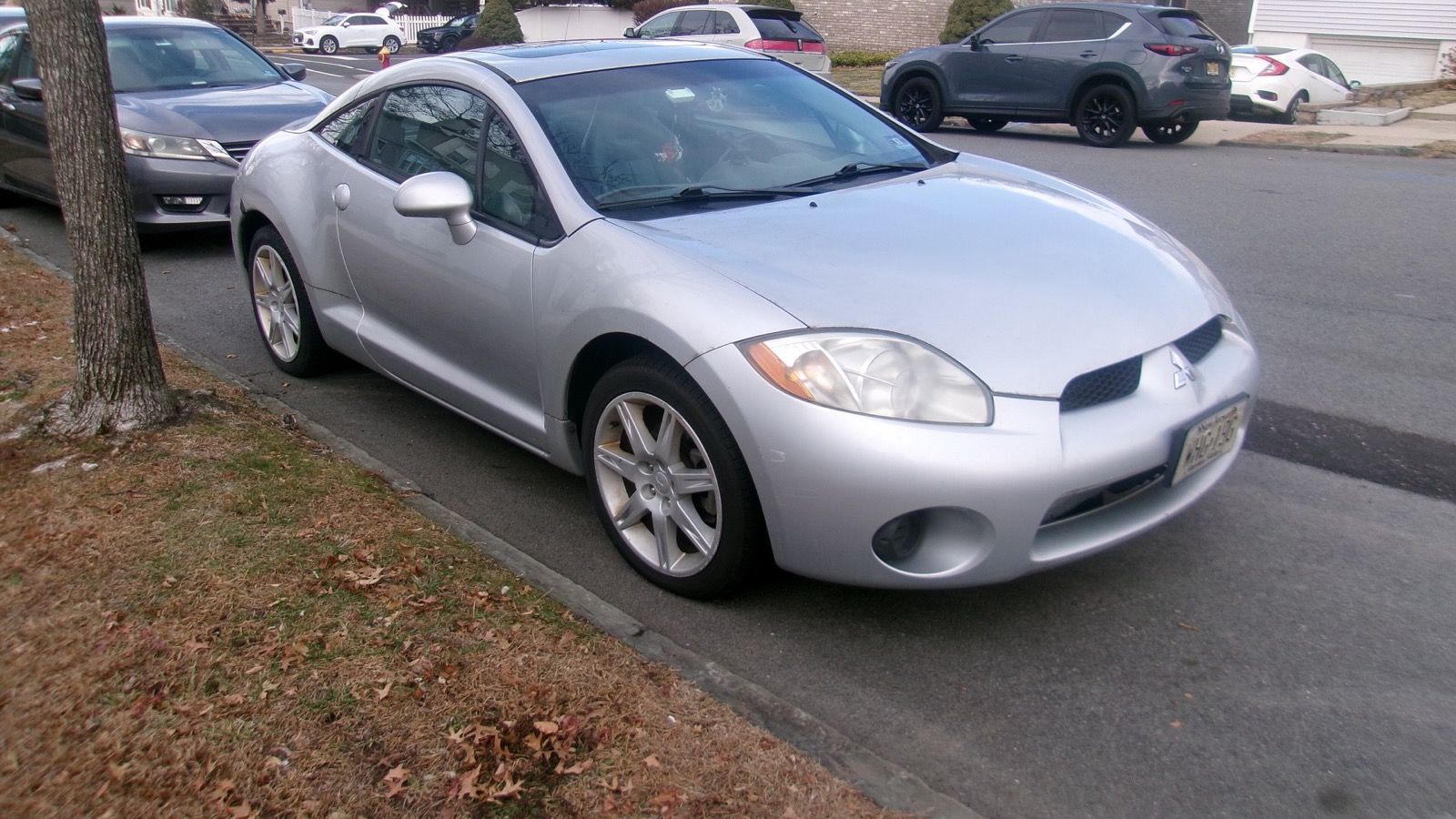
2007 Photo: “2007 Mitsubishi Eclipse GS Special Package.jpg” by 2000chevymontecarlo / Wikimedia Commons, licensed under CC BY-SA 4.0. Cropped to 16:9.
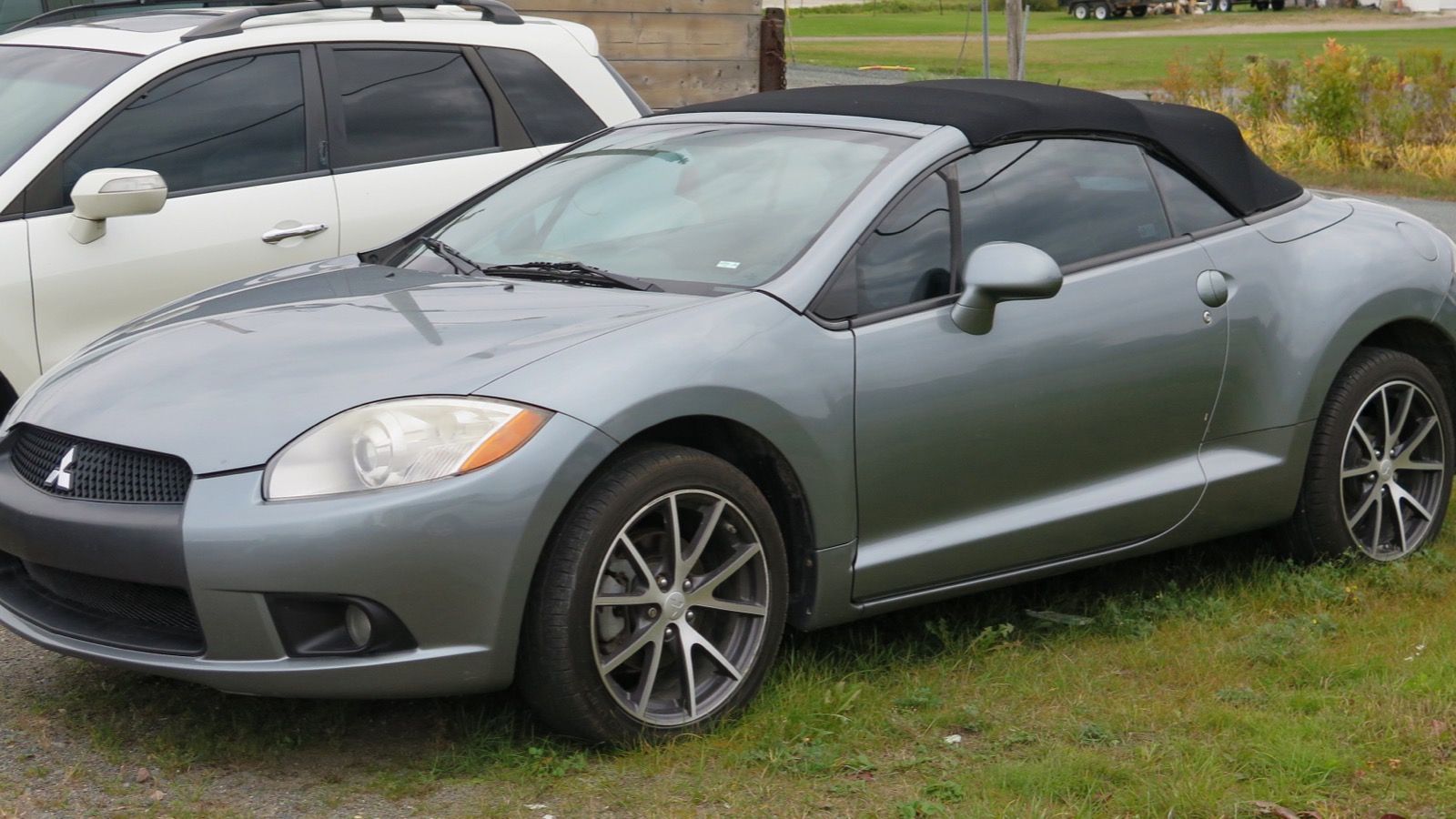
2009 Photo: “2009 Mitsubishi Eclipse Spyder GT in Satin Meisai Pearl, Front Left, 10-08-2022.jpg” by Elise240SX / Wikimedia Commons, licensed under CC BY-SA 4.0. Cropped to 16:9.
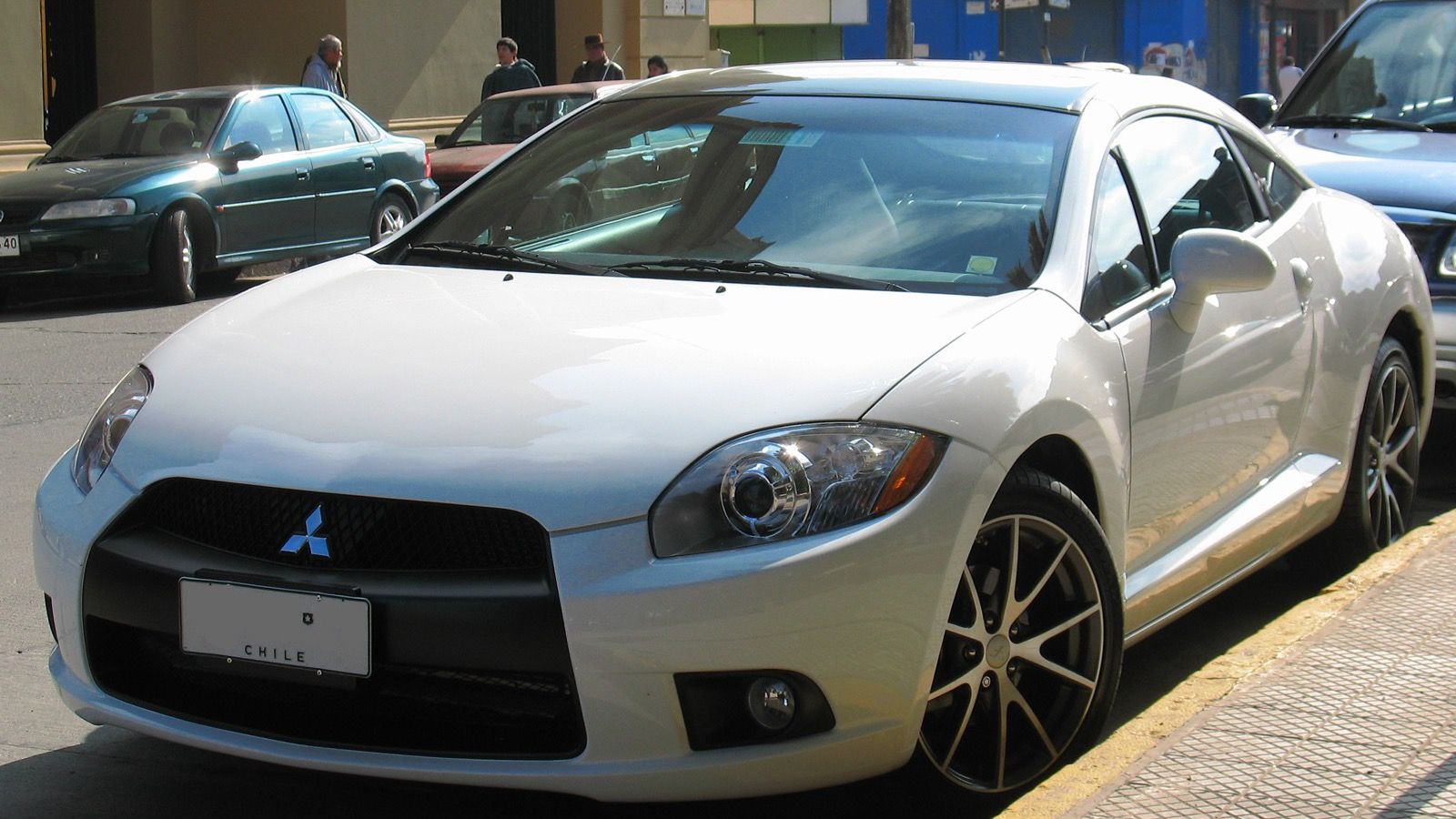
2011 Photo: “Mitsubishi Eclipse 2.4 GS Sport 2011 (14006799921).jpg” by order_242 from Chile / Wikimedia Commons, licensed under CC BY-SA 2.0. Cropped to 16:9.
Body styles
- Coupe
- Convertible (Spyder)
Notable special editions & performance variants
Eclipse GSX
All-wheel-drive, turbocharged version of the first two generations — the 'DSM' legend that spawned a huge tuner following.
Eclipse Spyder
Convertible (soft-top) variant introduced for 1996 as part of the second generation; continued through the fourth generation.
Related models
Collect the nameplate
Find a scale model of the Mitsubishi Eclipse
Search Amazon across available years, colors, and scales. Exact releases vary, so confirm the listing before ordering.