
Marussia B2 History
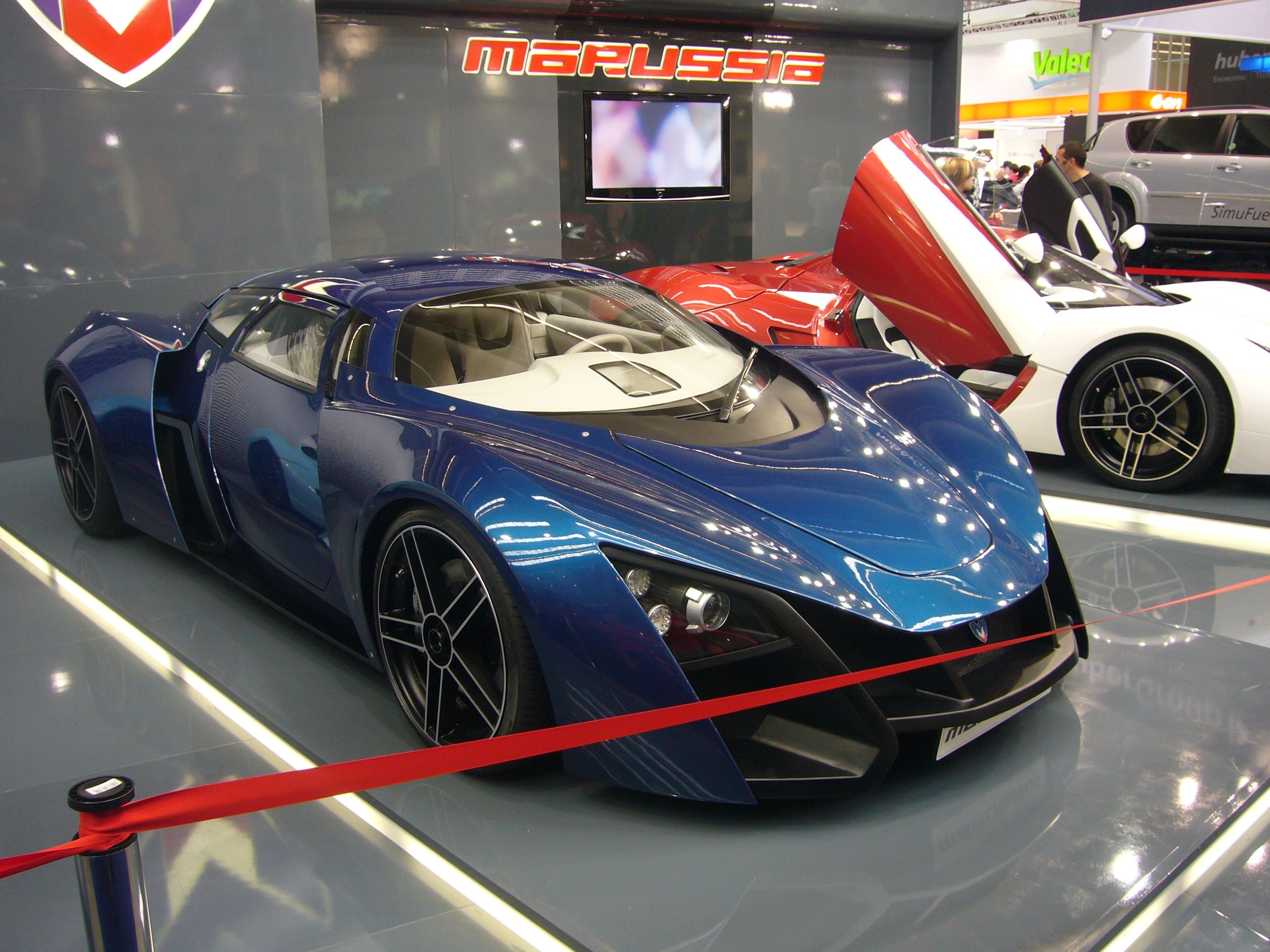
The harder-edged B2 debuted at the 2009 Frankfurt Motor Show, sharing the B1's Cosworth drivetrain in a more aggressive body with swan-wing doors.
Photo: “Marussia B2 (14309100749).jpg” by Rutger van der Maar from Leiden, The Netherlands / Wikimedia Commons, licensed under CC BY 2.0
History
Shown at the 2009 Frankfurt Motor Show, the Marussia B2 was positioned as the more extreme companion to the B1. It shared the aluminium semi-monocoque chassis, the same 3.5-litre and 2.8-litre turbocharged Cosworth V6 engine options, and near-identical dimensions and weight — but wore sharper, more angular bodywork referencing Marussia's own logo, with swan-wing doors in place of the B1's butterfly items.
The B2's top speed was quoted at 310 km/h (193 mph), a marginal increase over the B1, and the 0–100 km/h sprint time was the same 3.2 seconds. Marussia reported that the initial 500-unit allocation sold out within twelve months of announcement — though serial production, like that of the B1, remained a handbuilt affair in very small numbers.
The B2 gained wider recognition through appearances in the Need for Speed video game series (2012–2013) and the racing game Driveclub (2014), exposing the Russian marque to audiences well beyond those who could afford the car. Both the B1 and B2 ceased production when Marussia went bankrupt in April 2014, with a combined real-world output of approximately 48 cars total.
Generations
First (and only) generation · Marussia B2
Photo: “Marussia B2 (14309100749).jpg” by Rutger van der Maar from Leiden, The Netherlands / Wikimedia Commons, licensed under CC BY 2.0
Sharper, more angular sibling to the B1 with swan-wing doors, sharing the aluminium semi-monocoque chassis and the same 3.5-litre and 2.8-litre turbocharged Cosworth V6 options; debuted at the 2009 Frankfurt Motor Show with a quoted 310 km/h top speed.
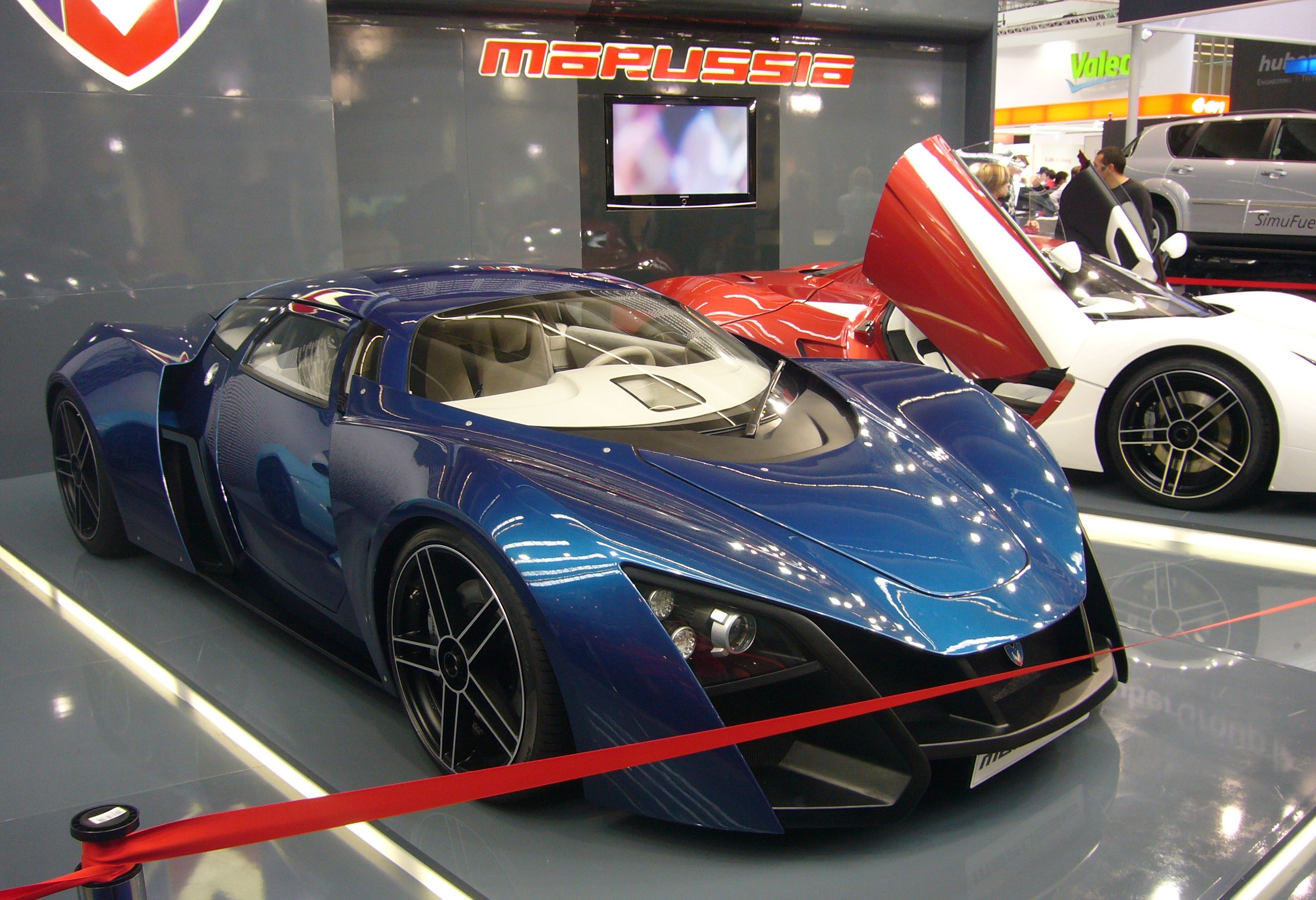
2009 Photo: “2009 Marussia B2.jpg” by Rutger van der Maar / Wikimedia Commons, licensed under CC BY 2.0
Body styles
- Coupé
Related models
Collect the nameplate
Find a scale model of the Marussia B2
Search Amazon across available years, colors, and scales. Exact releases vary, so confirm the listing before ordering.