
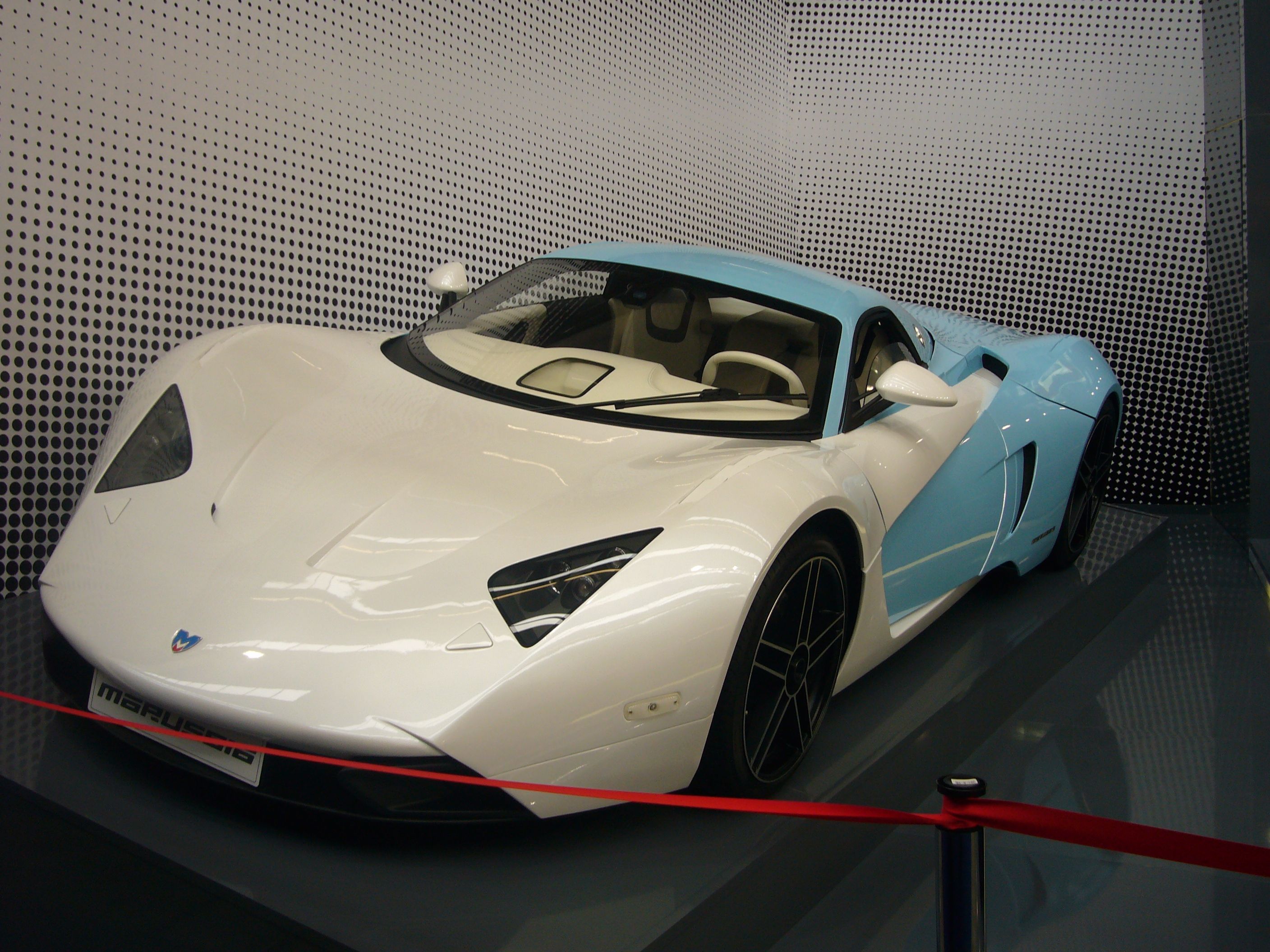
Marussia B1 History
Marussia's debut supercar — a mid-engine Cosworth-powered coupé with butterfly doors, unveiled in Moscow in December 2008.
Photo: “Marussia B1 (14472604416).jpg” by Rutger van der Maar from Leiden, The Netherlands / Wikimedia Commons, licensed under CC BY 2.0
History
The Marussia B1 was unveiled at a launch event in Moscow's Manege hall in December 2008, marking the first time a Russian company had presented a credible production supercar. Built around an aluminium semi-monocoque chassis, the B1 used Cosworth-sourced V6 engines in two states of tune — a 3.5-litre naturally aspirated unit producing around 300 hp, and a 2.8-litre turbocharged version producing 420 hp — driving the rear wheels from a mid-mounted position.
Dimensionally aggressive (4,635 mm long, 2,000 mm wide, just 1,100 mm tall) and weighing approximately 1,100 kg, the B1 claimed a 0–100 km/h time of 3.2 seconds and a top speed of 305 km/h. Butterfly doors and a dramatic glasshouse gave the car its visual identity. Assembly took place in Moscow, with Valmet Automotive in Finland involved in production support for some units.
Marussia built approximately 20 B1 examples across the company's seven-year life. The company initially planned as many as 2,999 units, a target never approached before bankruptcy was declared in April 2014. Despite the tiny production run, the B1 earned the distinction of being one of Russia's first purpose-built road supercars and attracted coverage in major automotive media worldwide.
Generations
First (and only) generation · Marussia B1
Photo: “Marussia B1 (14472604416).jpg” by Rutger van der Maar from Leiden, The Netherlands / Wikimedia Commons, licensed under CC BY 2.0
Aluminium semi-monocoque mid-engine coupé with butterfly doors, powered by Cosworth-sourced V6 engines (3.5-litre naturally aspirated ~300 hp or 2.8-litre turbo 420 hp); unveiled in Moscow in December 2008 and built in roughly 20 handmade examples.
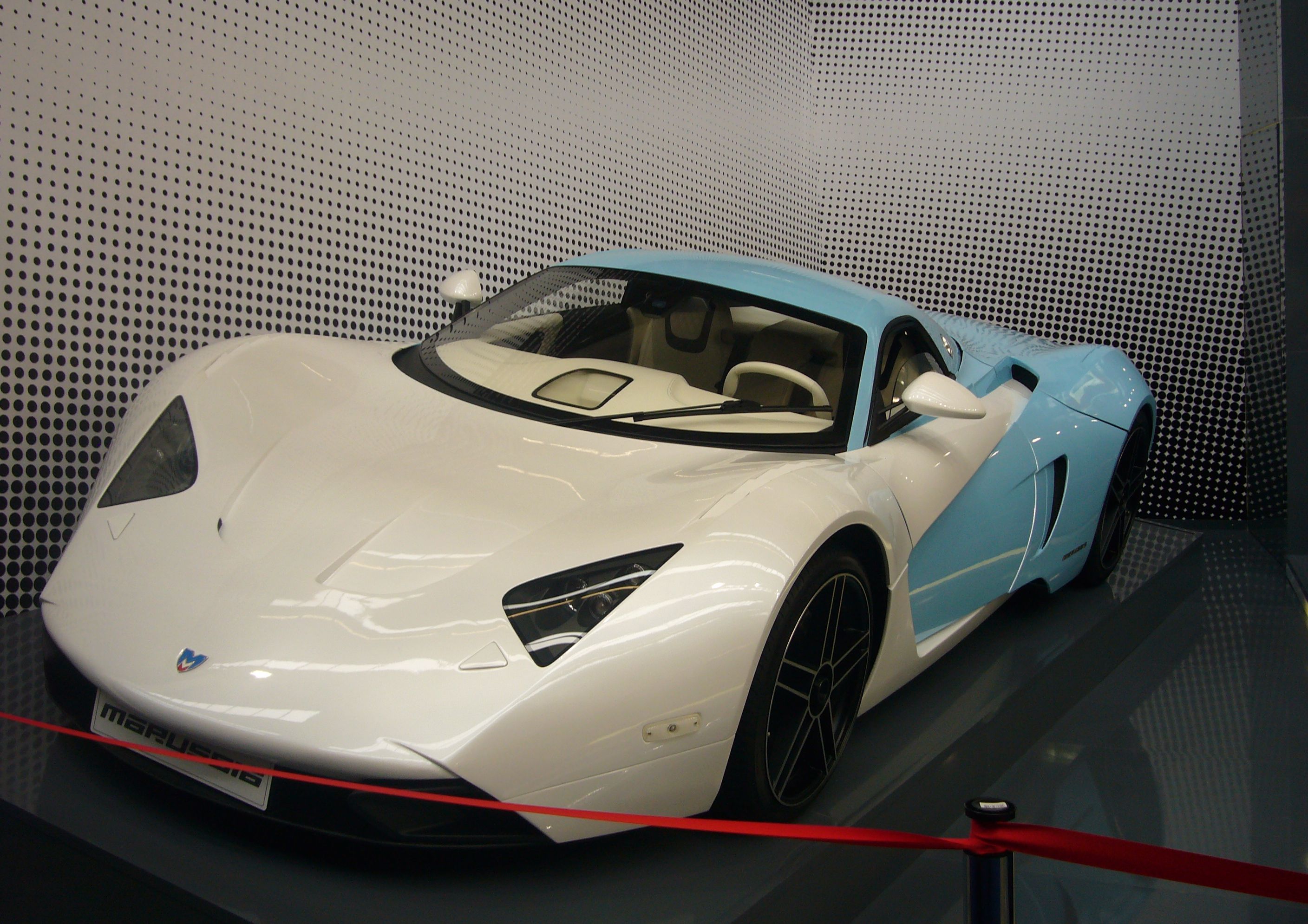
2009 Photo: “2009 Marussia B1.jpg” by Rutger van der Maar / Wikimedia Commons, licensed under CC BY 2.0
Body styles
- Coupé
Related models
Collect the nameplate
Find a scale model of the Marussia B1
Search Amazon across available years, colors, and scales. Exact releases vary, so confirm the listing before ordering.