
Lloyd LP 400 History
Catalog record
Photography for this nameplate has not yet cleared the archive’s licensing and identity checks. The researched text below remains available while the page stays out of search and advertising inventory.
History
For 1953 Lloyd replaced the fabric-skinned LP 300 with the LP 400, whose most significant change was the adoption of rolled steel body panels — a proper car body at last. The engine grew to 386 cc and 13 hp, still a two-cylinder two-stroke but now housed in a more conventional-looking shell that could also be ordered as a Cabriolet, estate (Kombi), or van.
The LP 400 sold in dramatically larger numbers than its predecessor: 109,878 units between 1953 and 1957. This volume pushed Lloyd to third place in German annual registration statistics — behind only Volkswagen and Opel — a remarkable achievement for a tiny Bremen manufacturer producing economy cars that were still technically simple by any measure.
By mid-decade Lloyd was also exploring a lower-cost spin-off. The short-lived Lloyd 250 (1956–1957), with a 250 cc engine, targeted buyers who wanted to avoid the full driving licence; it sold in small numbers and was quickly dropped. The LP 400's success instead pointed upward: for 1955 Lloyd launched the more sophisticated 600 series alongside the 400, beginning a deliberate move out of the microcar class.
Generations
Only generation · LP 400
Steel body replaces fabric, 386 cc two-stroke; 109,878 produced — Lloyd's best-selling two-stroke model.
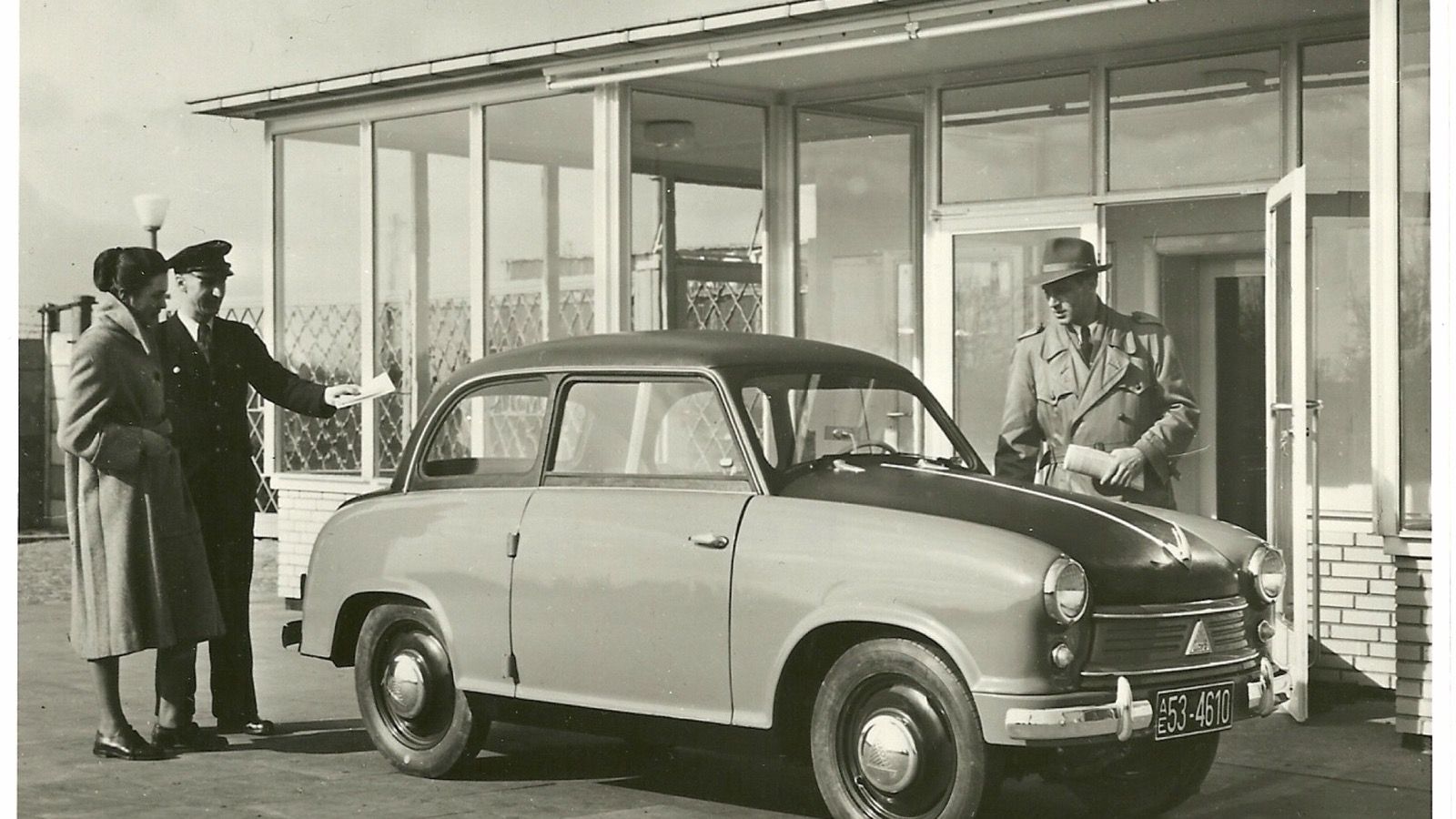
1953 Photo: “1953 Lloyd (4286668477).jpg” by JOHN LLOYD from Concrete, Washington, United States / Wikimedia Commons, licensed under CC BY 2.0. Cropped to 16:9.
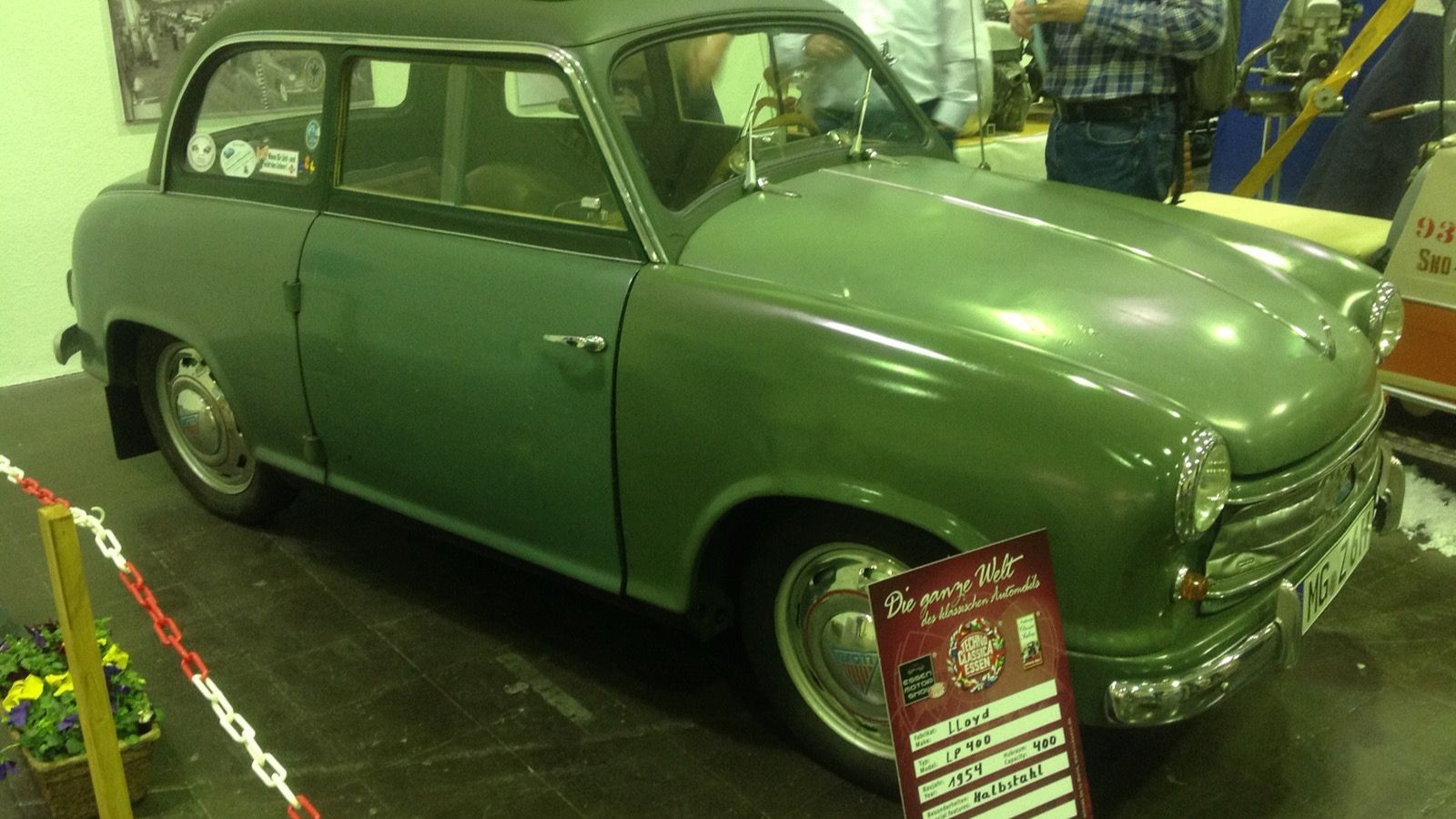
1954 Photo: “Lloyd LP400 (1954) (25816150374).jpg” by Andrew Bone from Weymouth, England / Wikimedia Commons, licensed under CC BY 2.0. Cropped to 16:9.
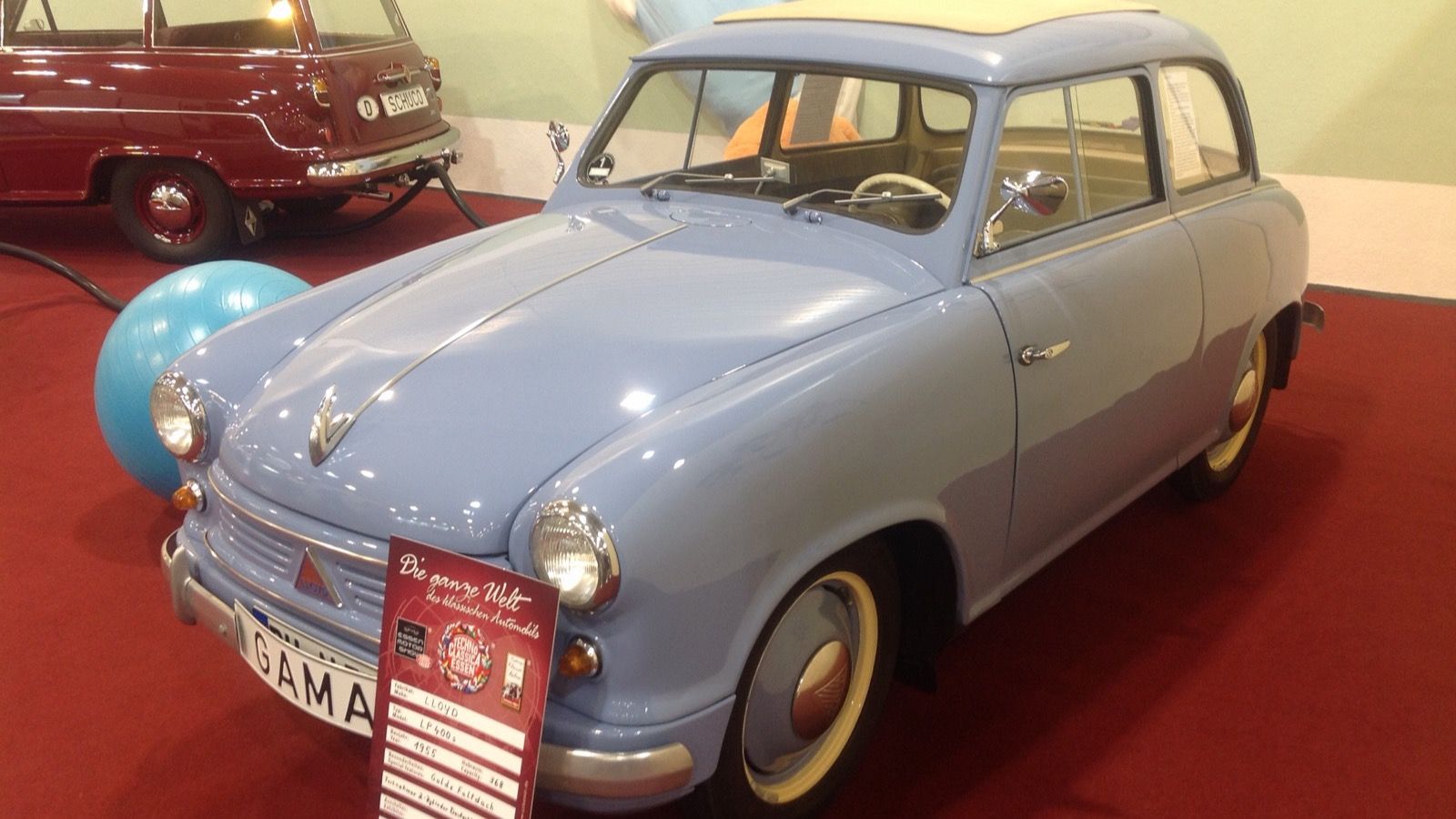
1955 Photo: “Lloyd LP400 S (1955) (26150571660).jpg” by Andrew Bone from Weymouth, England / Wikimedia Commons, licensed under CC BY 2.0. Cropped to 16:9.
Body styles
- Saloon
- Estate
- Van
- Convertible
Related models
Collect the nameplate
Find a scale model of the Lloyd LP 400
Search Amazon across available years, colors, and scales. Exact releases vary, so confirm the listing before ordering.