
Lloyd LP 300 History
Catalog record
Photography for this nameplate has not yet cleared the archive’s licensing and identity checks. The researched text below remains available while the page stays out of search and advertising inventory.
History
Introduced in April 1950, the LP 300 was Lloyd's answer to post-war Germany's desperate need for cheap personal transport. With steel in short supply, engineer Hermann Mathern's design used a plywood frame covered in kunstleder (synthetic vinyl fabric), completely sidestepping the need for large body presses. Its 293 cc two-cylinder two-stroke engine produced just 10 hp, yet the 75 km/h top speed was adequate for city errands, and at DM 3,334 the LP 300 undercut the Volkswagen Beetle by roughly 25 percent.
The car's combination of fabric bodywork and the sticking-plaster repairs that owners inevitably made to minor tears gave it the affectionate but pointed nickname 'Leukoplastbomber' — 'Band-Aid bomber' — a label that became part of West German automotive folklore. Power reached the front wheels through a chain drive and a three-speed unsynchronised gearbox. Windows slid horizontally rather than winding down, saving the cost of winder mechanisms.
Production ran from mid-1950 through end-1952 and totalled 18,087 units, peaking at 9,981 cars in 1952. Despite its limitations the LP 300 proved that there was a mass market for ultra-economy transport, validating Lloyd's product strategy and clearing the path for the more refined LP 400.
Generations
Only generation · LP 300
Plywood-and-fabric body, 293 cc two-stroke, chain drive to front wheels; 18,087 built.
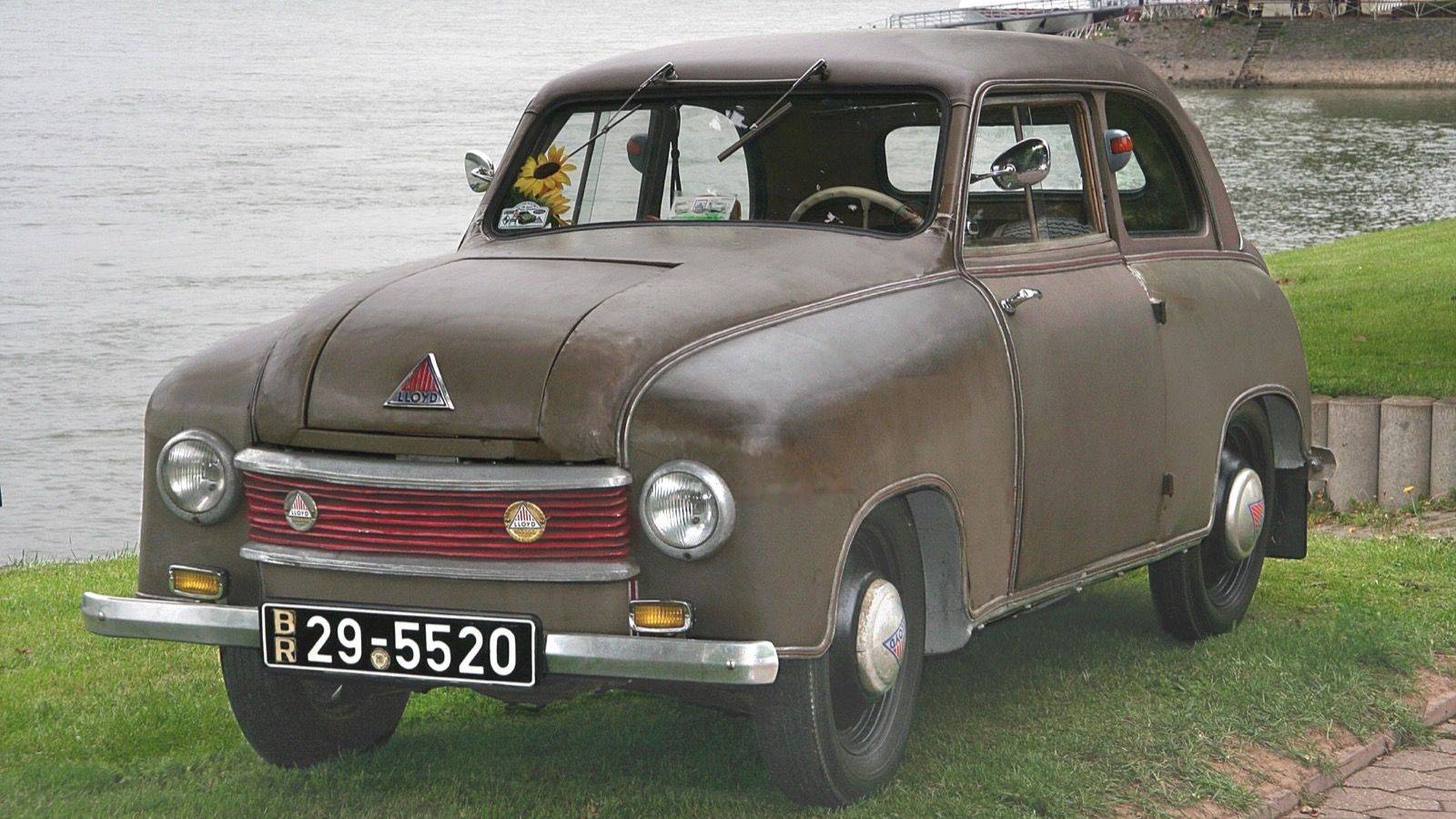
1950 Photo: “2007-09-08 2636 Lloyd 300, Modell 1950-1951 (ret).jpg” by Lothar Spurzem / Wikimedia Commons, licensed under CC BY-SA 2.0 de. Cropped to 16:9.
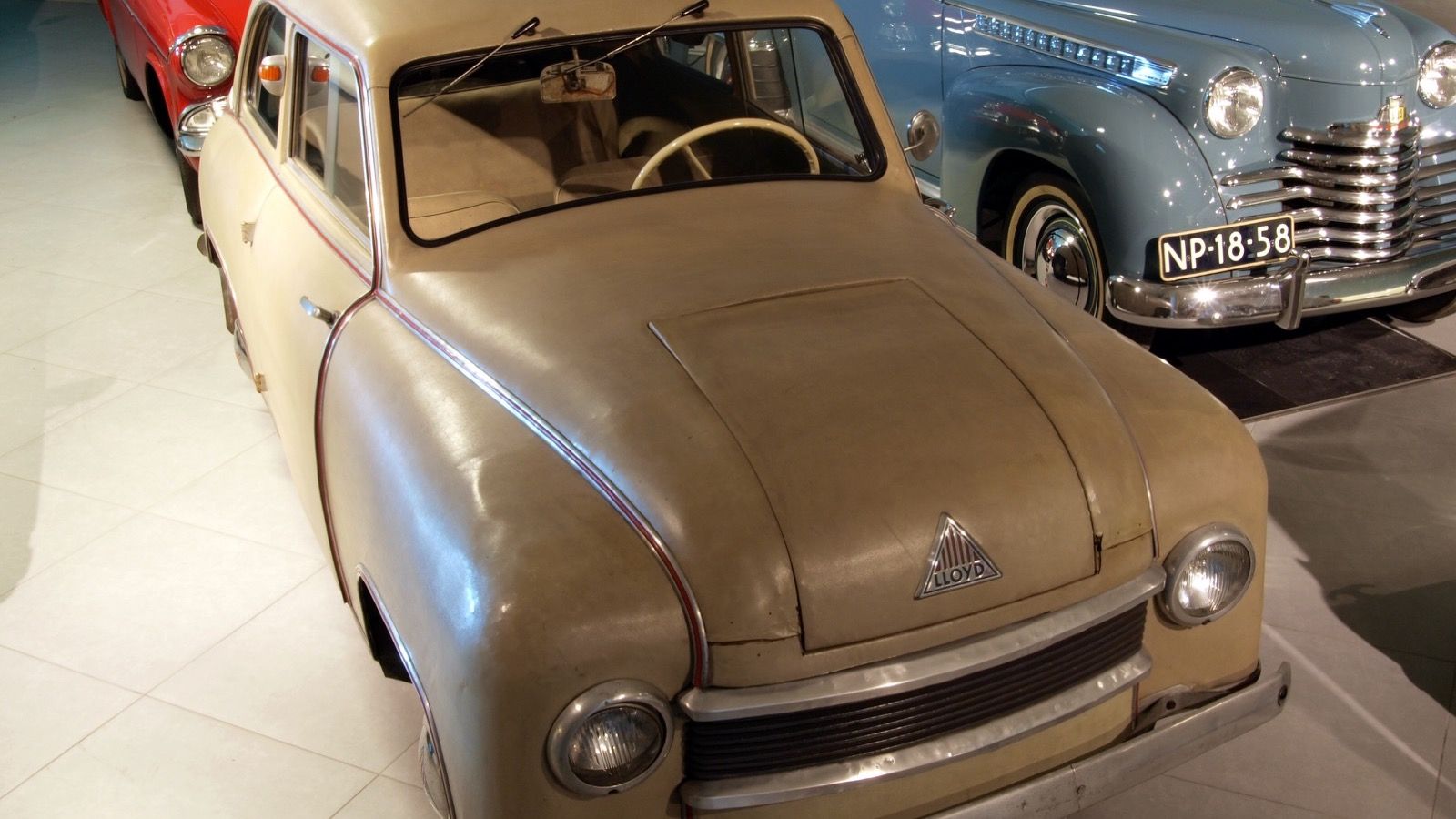
1951 Photo: “1951 LLoyd LP 300 p1.JPG” by AlfvanBeem / Wikimedia Commons — CC0 1.0. Cropped to 16:9.
Body styles
- Saloon
- Estate
- Van
- Coupé
Related models
Collect the nameplate
Find a scale model of the Lloyd LP 300
Search Amazon across available years, colors, and scales. Exact releases vary, so confirm the listing before ordering.