
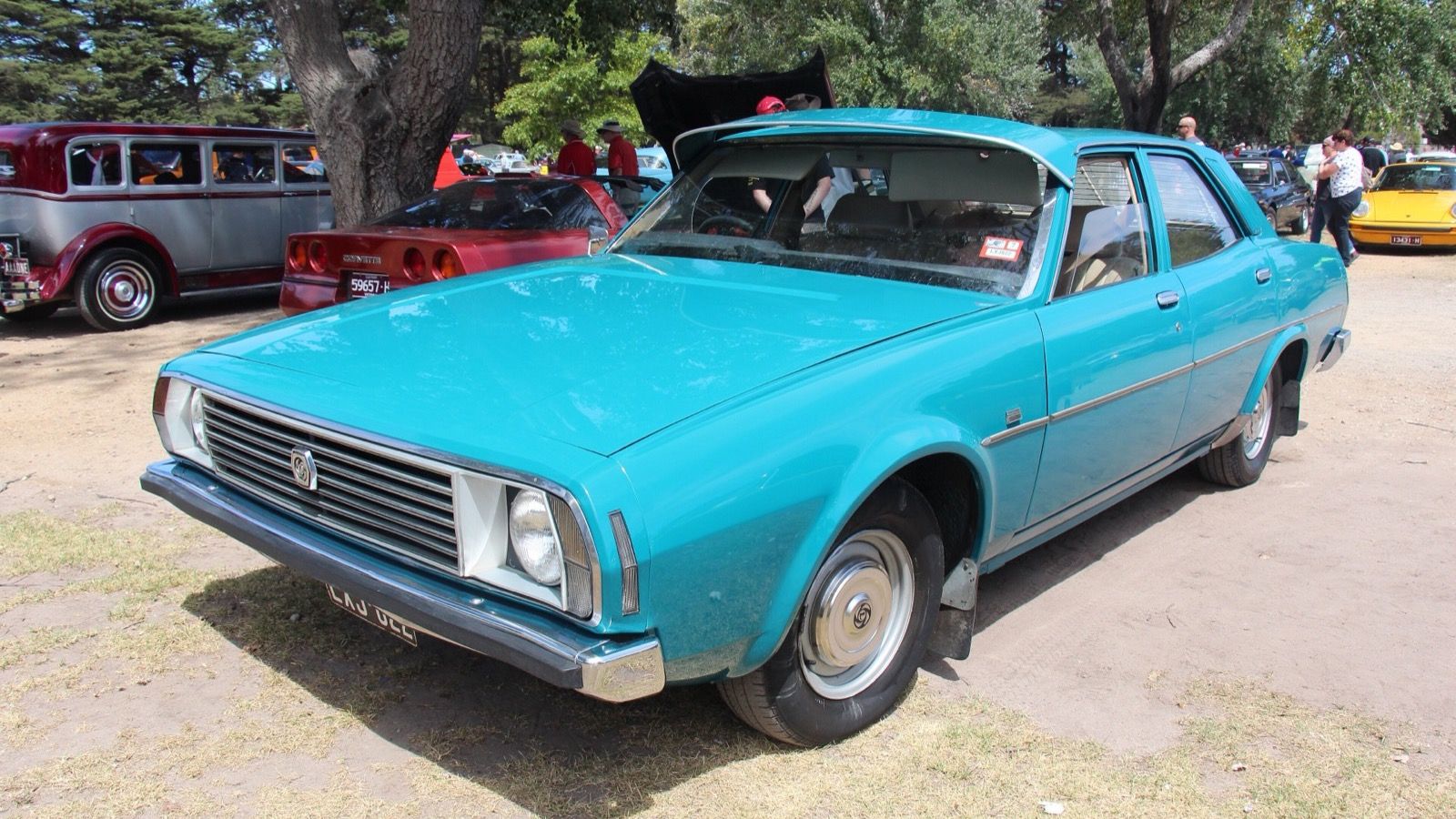
Leyland Australia P76 History
Leyland's locally designed Australian large car — a 1973 Wheels Car of the Year that became one of the country's most famous automotive failures.
Photo: “File:1974 Leyland P76 Deluxe Sedan (24529835335).jpg” by Sicnag / Wikimedia Commons, licensed under CC BY 2.0. Cropped to 16:9.
History
Launched on 26 June 1973, the Leyland P76 was a genuine attempt to build a full-size Australian car from the ground up, intended to take sales from the Ford Falcon, Holden Kingswood, and Chrysler Valiant. The 'P76' project name simply reflected its development code. With a 111-inch wheelbase (standard for the class) and a distinctive hatchback boot large enough to swallow a 44-gallon drum, the car offered two powertrains: a 2.6-litre inline-six derived from the Austin Kimberley and a 4.4-litre all-aluminium Rover V8 producing around 192 bhp — the latter being rare in an Australian large car at the time.
The V8 model won Wheels magazine's prestigious Car of the Year award for 1973, and initial public interest was strong. But the car's timing proved catastrophic: the 1973 oil crisis sent fuel prices soaring just as the P76 hit showrooms, suppressing demand for thirsty large cars across the market. Worse, Leyland's Zetland assembly plant rushed production to meet early orders, resulting in poor build quality and a wave of warranty problems that damaged the brand's reputation before it could recover.
British Leyland's worsening financial position in the UK sealed the P76's fate. The Zetland factory closed in October 1974 after just 18 months of production, with approximately 18,007 units built. A planned Force 7 fastback coupé variant — designed to carry the V8 and seat five — was announced in 1974 but never reached volume production; only around 10 pre-production examples survived the factory closure. The P76 is now a sought-after Australian classic, its brief career a case study in the difficulty of competing against entrenched volume manufacturers.
Generations
First (and only) generation · P76
Photo: “File:1974 Leyland P76 Deluxe Sedan (24529835335).jpg” by Sicnag / Wikimedia Commons, licensed under CC BY 2.0. Cropped to 16:9.
Produced from June 1973 to October 1974 at Zetland, Sydney; ~18,007 units across Deluxe, Super, and Executive trim lines with six-cylinder and V8 engines.
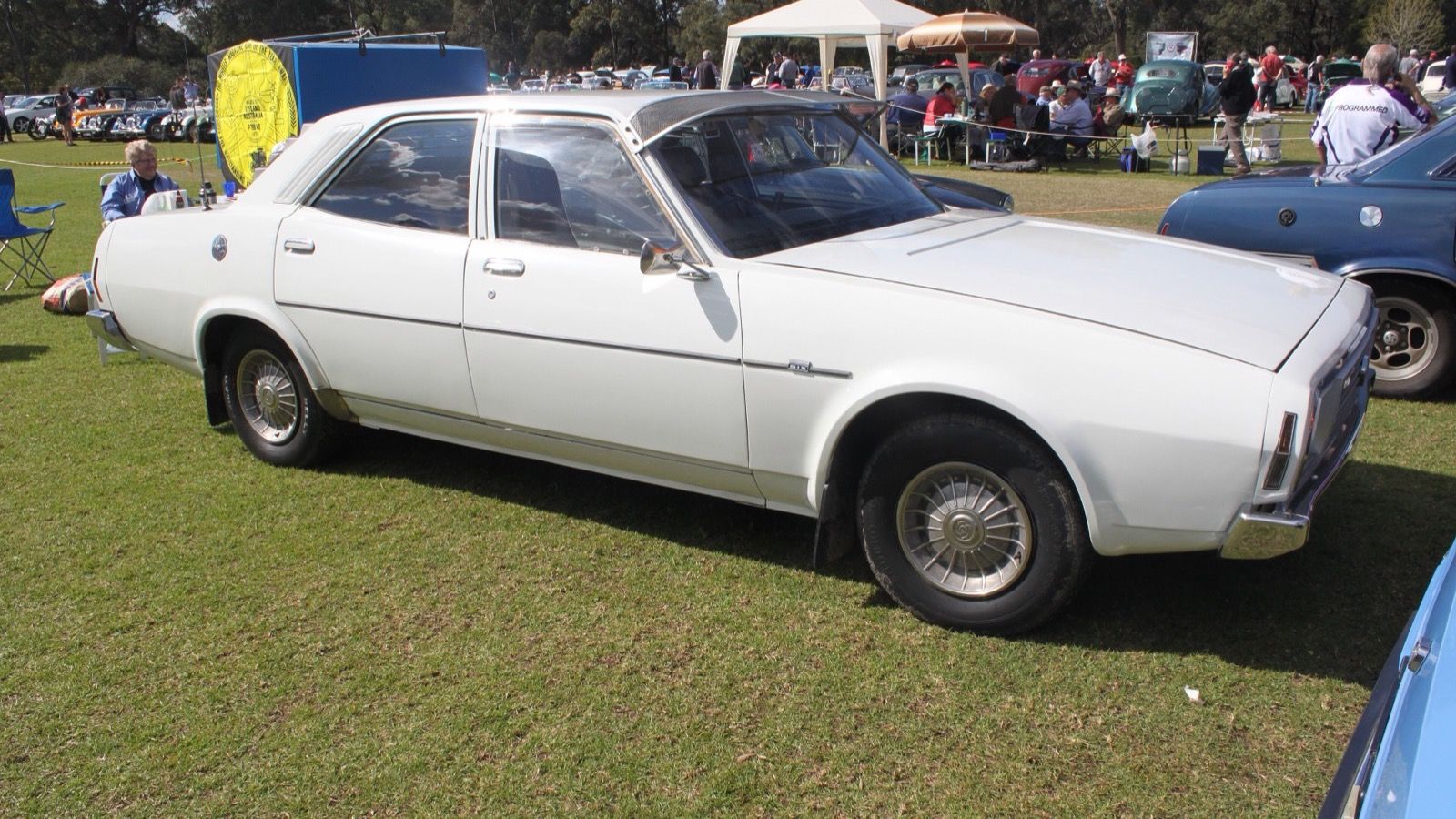
1973 Photo: “File:1973 Leyland P76 Deluxe (21445966604).jpg” by Jeremy from Sydney, Australia / Wikimedia Commons, licensed under CC BY 2.0. Cropped to 16:9.
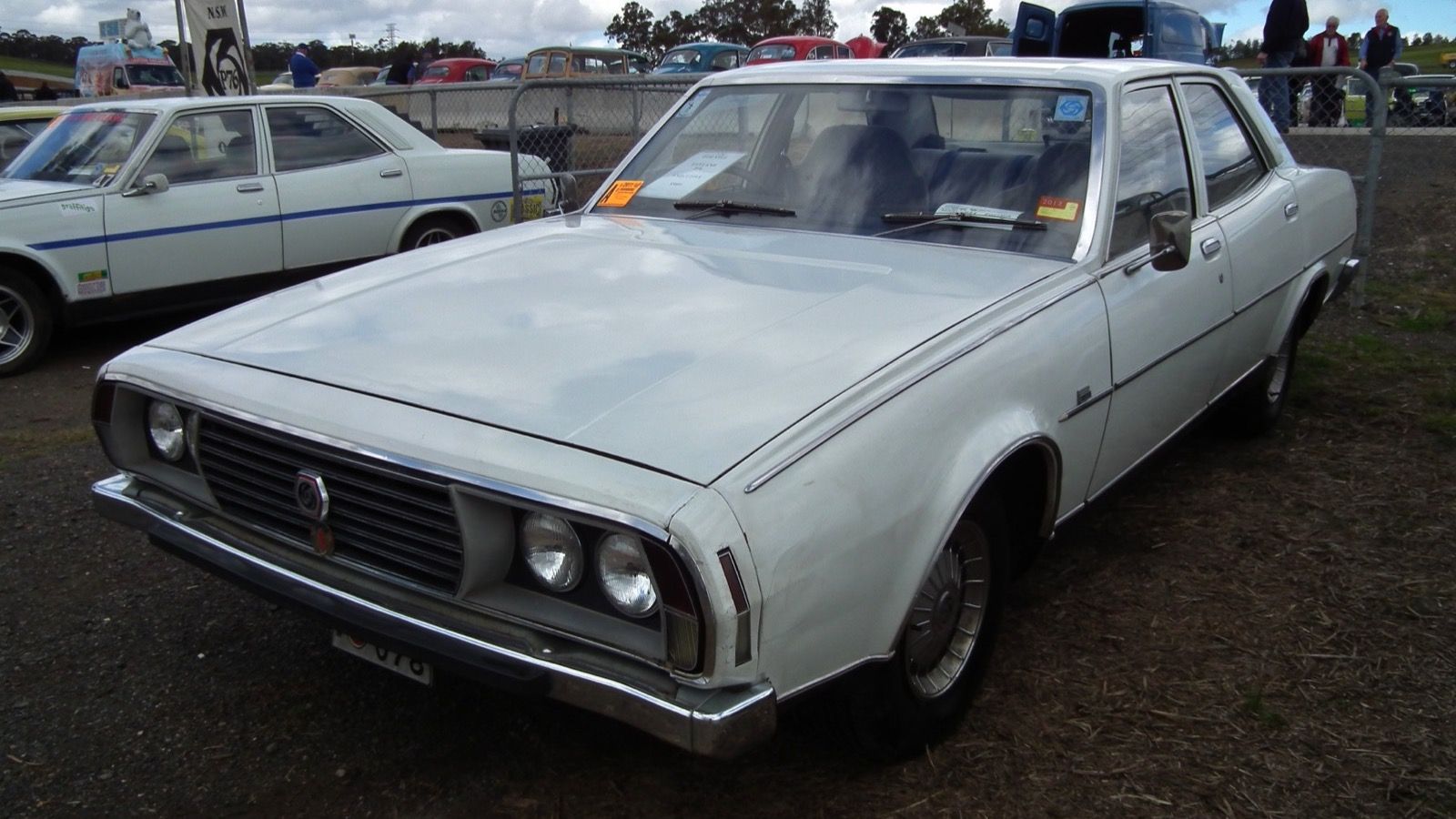
1974 Photo: “File:1974 Leyland P76 Executive sedan (6108742776).jpg” by sv1ambo / Wikimedia Commons, licensed under CC BY 2.0. Cropped to 16:9.
Body styles
- Sedan
Notable special editions & performance variants
Force 7 Coupé
Announced fastback coupé variant with V8 power and full five-seat capacity; factory closure before production commenced — approximately 10 pre-production cars survived.
Related models
Collect the nameplate
Find a scale model of the Leyland Australia P76
Search Amazon across available years, colors, and scales. Exact releases vary, so confirm the listing before ordering.