
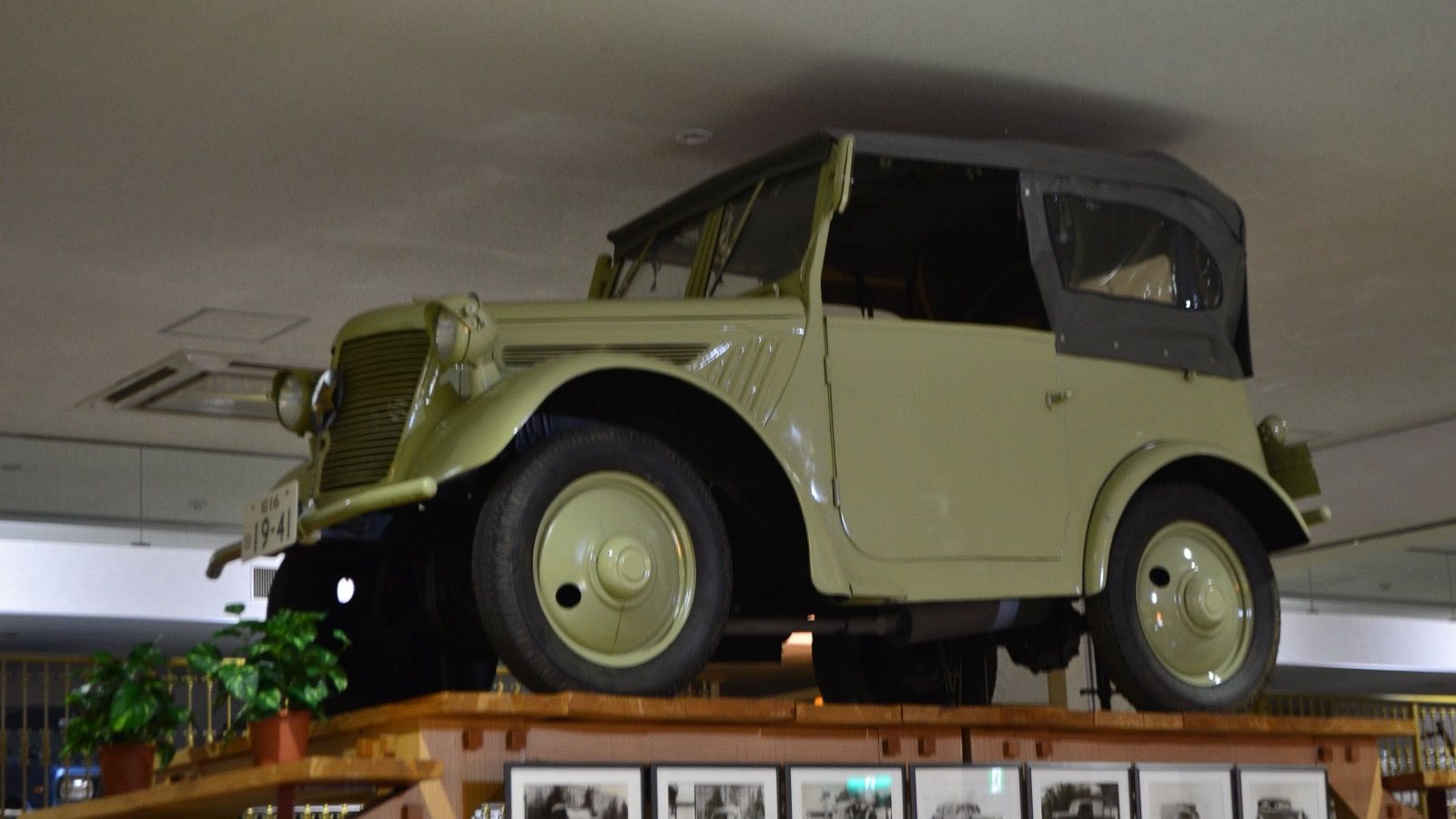
Kurogane Type 95 History
Japan's only fully indigenous WWII reconnaissance car — one of the world's first mass-produced four-wheel-drive vehicles, built 1936–1944.
Photo: “File:Nihon Nainenki 95-shiki Kogata Jōyōsha (23110313404).jpg” by 先従隗始 / Wikimedia Commons — CC0 1.0. Cropped to 16:9.
History
Conceived in 1934 by the Imperial Japanese Army as a compact reconnaissance and messenger vehicle, the Type 95 was developed by Kurogane under lead designer (and company founder) Tetsuji Makita. The military enlisted Toyota, Hatsudoki Seizo, Rikuo Internal Combustion Engine, and Okamoto as collaborators, but the final design was distinctly Kurogane's: a front-engine, four-wheel-drive layout with double-wishbone independent front suspension and an air-cooled V-twin engine — a configuration that drew on the company's existing motorcycle engineering expertise. Mass production commenced in 1936.
The Type 95 is recognized as one of the world's first four-wheel-drive vehicles to enter mass production, predating the French Laffly V15 (1937–1938), the Soviet GAZ-61 (1938), and the American Willys MB jeep (1941). It was also the only completely Japanese-designed reconnaissance car used by the Imperial Japanese Army, which otherwise relied on modified civilian vehicles. Approximately 4,775 units were built between 1936 and 1944. Soldiers nicknamed it the 'Yonki' (from the Japanese term for all-wheel drive) and affectionately the 'daruma' after the rounded Buddhist figurine.
Production ran through three main variants: the Type A (1937–1938) used a 1,300 cc engine in a three-seat roadster body; the Type B (1939–1943) grew to 1,400 cc and a four-seat phaeton configuration, representing the majority of production; and the Type C (1944) was a two-seat pickup truck variant. A four-door prototype with an extended wheelbase was trialed in 1939 but not produced. The Type 95 saw combat from the Nomonhan Incident through the Pacific War. Between four and seven examples survive worldwide.
Generations
Type A · Type A (1,300 cc)
First production variant — 1,300 cc air-cooled V-twin, three-seat roadster body with oval grille and bumper.
Type B · Type B (1,400 cc)
Photo: “File:Nihon Nainenki 95-shiki Kogata Jōyōsha (23110313404).jpg” by 先従隗始 / Wikimedia Commons — CC0 1.0. Cropped to 16:9.
Main production run — 1,400 cc engine, four-seat phaeton body, square grille; the bulk of the ~4,775 total built.
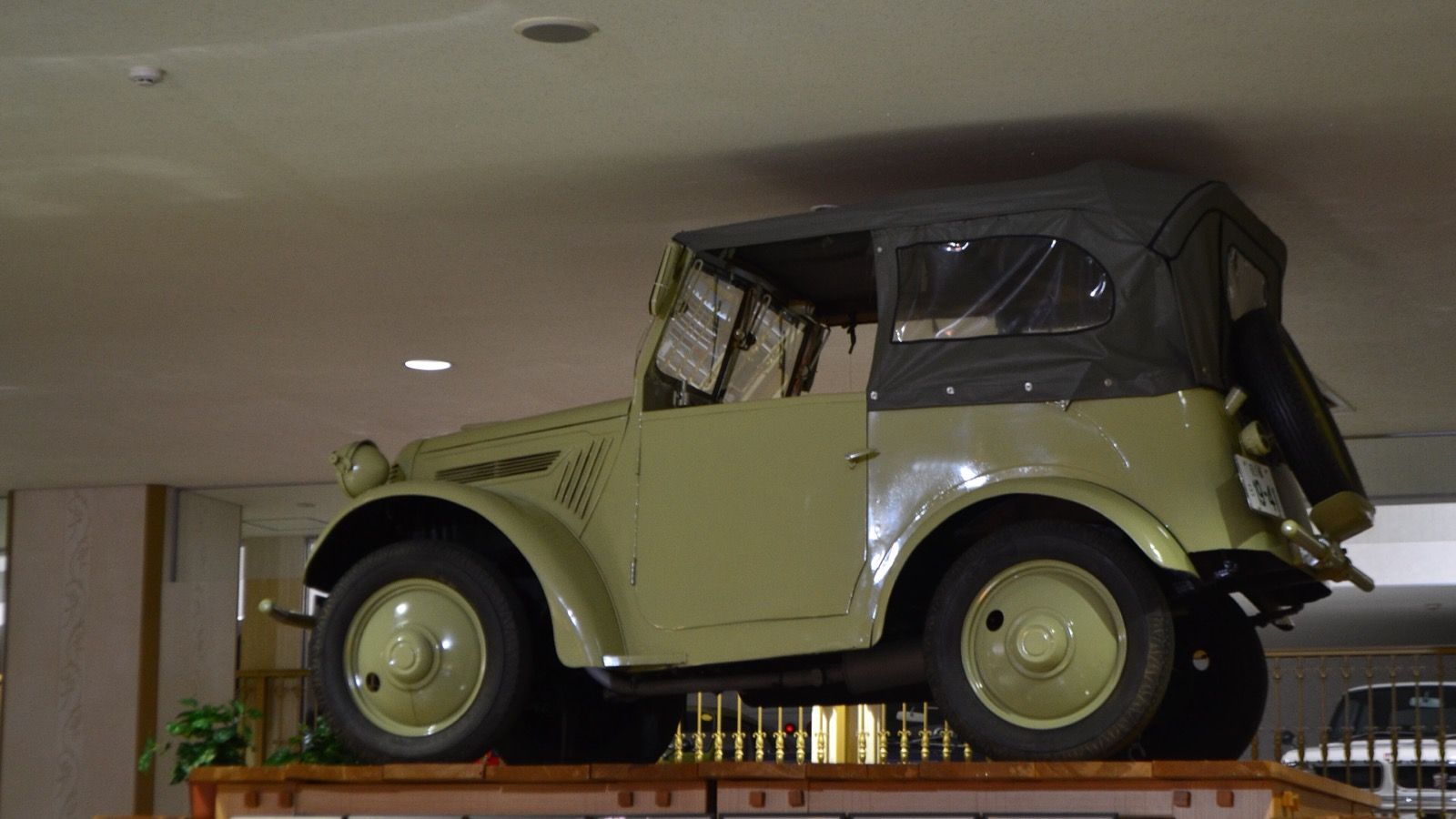
1941 Photo: “File:Nihon Nainenki 95-shiki Kogata Jōyōsha (23110313401).jpg” by 先従隗始 / Wikimedia Commons — CC0 1.0. Cropped to 16:9.
Type C · Type C pickup
Late-war two-seat pickup truck variant, 1,400 cc; last production configuration before wartime output ceased.
Body styles
- Roadster
- Phaeton
- Pickup
Related models
Collect the nameplate
Find a scale model of the Kurogane Type 95
Search Amazon across available years, colors, and scales. Exact releases vary, so confirm the listing before ordering.