
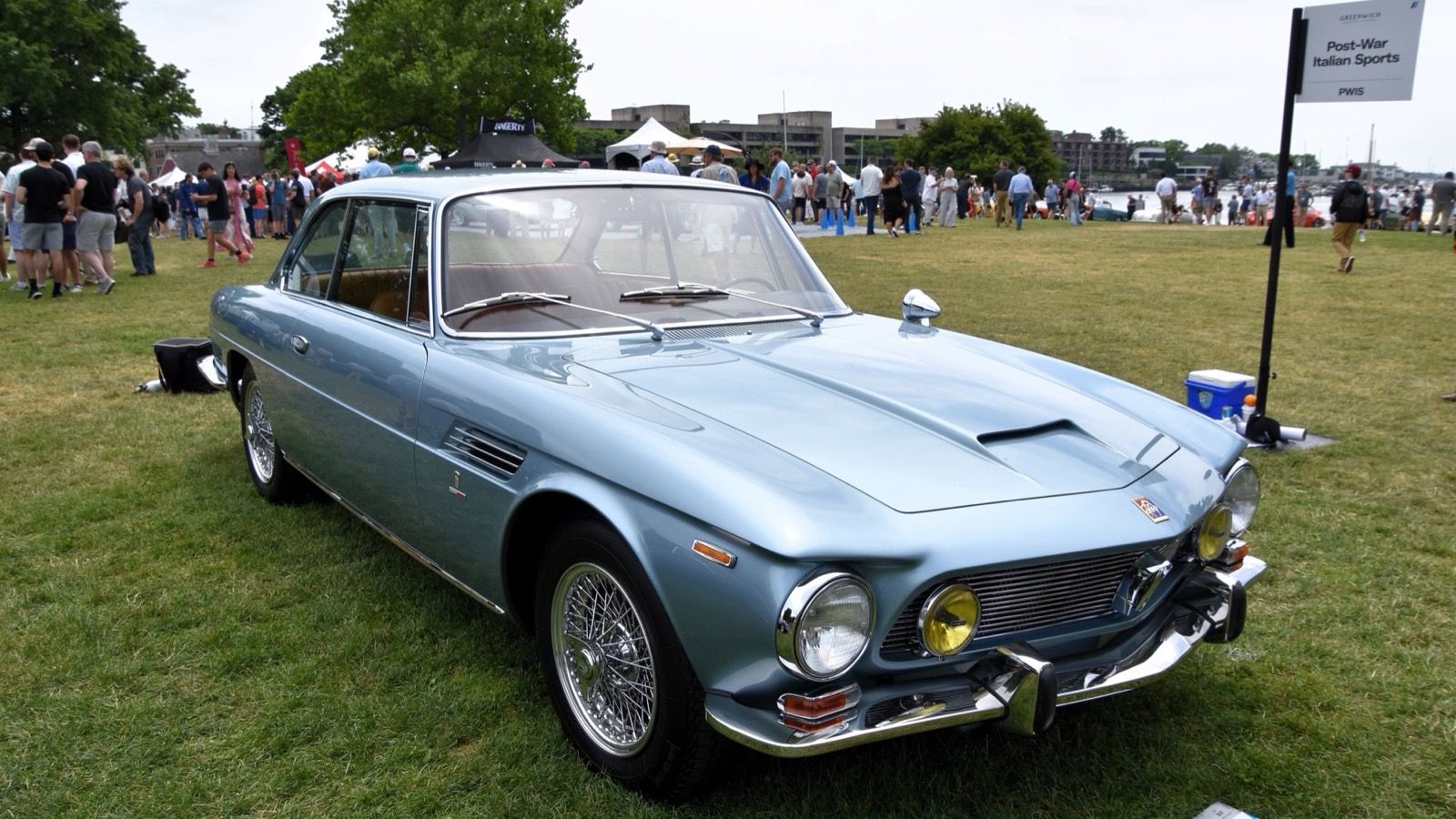
Iso Rivolta IR 300 History
Iso's founding GT (1962–1970) — a Bertone-styled 2+2 coupe with a Corvette V8, designed to out-cruise a Ferrari at lower cost.
Photo: “Iso Rivolta IR 300 (1965) (53772441761)” by Charles from Port Chester, New York / Wikimedia Commons, licensed under CC BY 2.0. Cropped to 16:9.
History
Presented at the 1962 Turin Motor Show, the IR 300 marked Iso's transformation from microcar maker to luxury sportscar house. Renzo Rivolta wanted a practical grand tourer — refined enough for daily use, quick enough to shame more exotic Italian rivals, and priced between a Jaguar E-Type and a Ferrari. The styling was entrusted to a young Giorgetto Giugiaro, then working at Carrozzeria Bertone, who produced a clean, elegant 2+2 coupe body. Chassis engineering was led by Giulio Alfieri (later of Maserati fame), with early input from former Ferrari engineer Giotto Bizzarrini.
The key to the IR 300's performance and price was its drivetrain: a 5.4-litre Chevrolet small-block V8 producing 300 hp, mated to a BorgWarner four-speed manual or a three-speed automatic. The combination gave the 1,300 kg car a top speed of around 220 km/h. A higher-output IR 340 variant followed, tuned to 340 hp. Of the 797 total units produced, 630 were IR 300 specification and 167 were the IR 340.
Production ran until 1970, at which point Iso replaced the IR 300 with the more modern Lele 2+2. The IR 300 established the template every subsequent Iso would follow: bespoke Italian coachwork over an American V8, offering a compelling alternative to prancing-horse orthodoxy.
Generations
IR 300 / IR 340 · IR 300
Photo: “Iso Rivolta IR 300 (1965) (53772441761)” by Charles from Port Chester, New York / Wikimedia Commons, licensed under CC BY 2.0. Cropped to 16:9.
Single-generation 2+2 GT; 797 built (630 IR 300, 167 IR 340); Bertone body by Giugiaro, Chevy small-block V8.
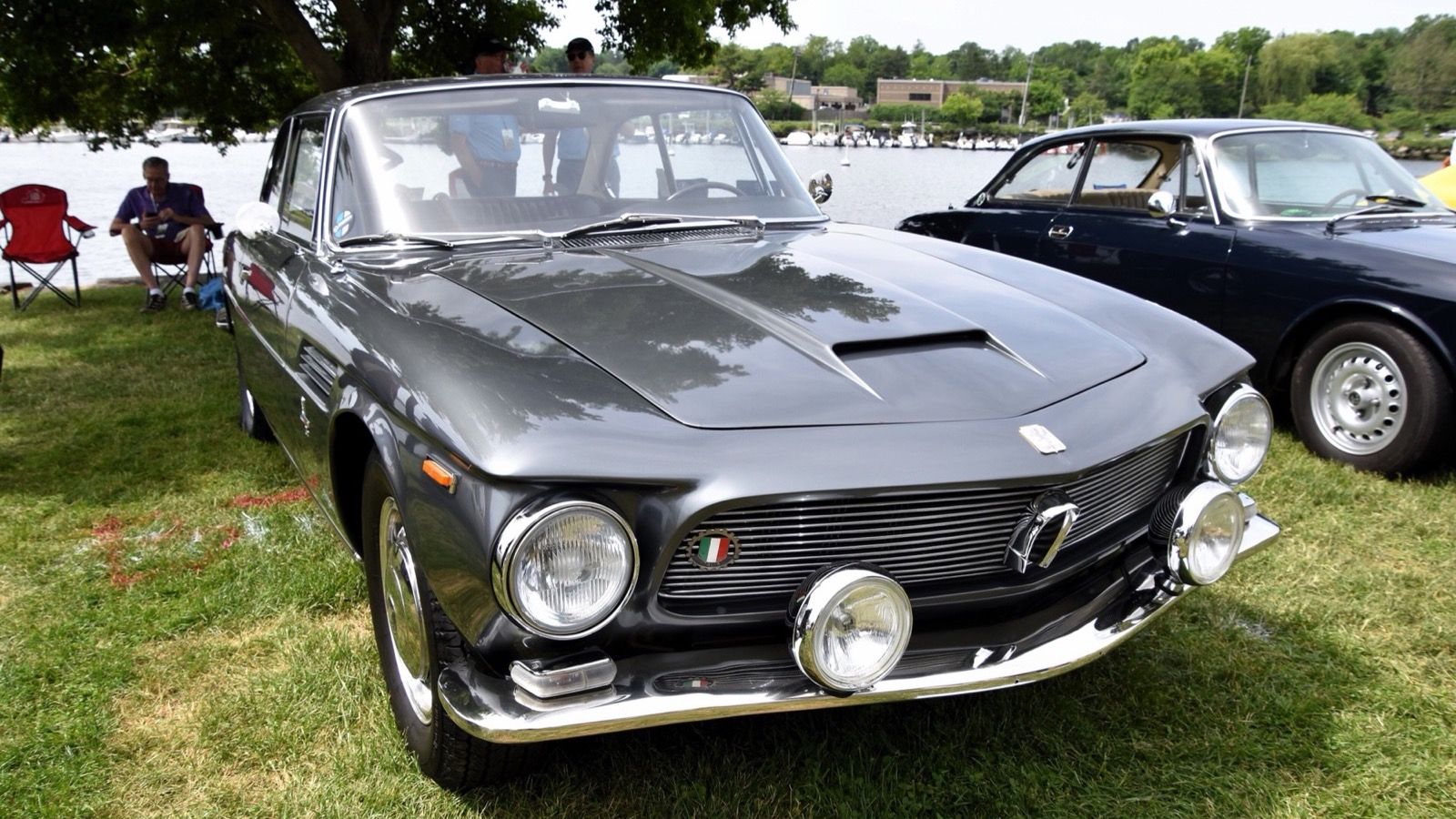
1964 Photo: “Iso Rivolta IR 300 (1964) (53772773269)” by Charles from Port Chester, New York / Wikimedia Commons, licensed under CC BY 2.0. Cropped to 16:9.
1965 Photo: “Iso Rivolta IR 300 (1965) (53772441761)” by Charles from Port Chester, New York / Wikimedia Commons, licensed under CC BY 2.0. Cropped to 16:9.
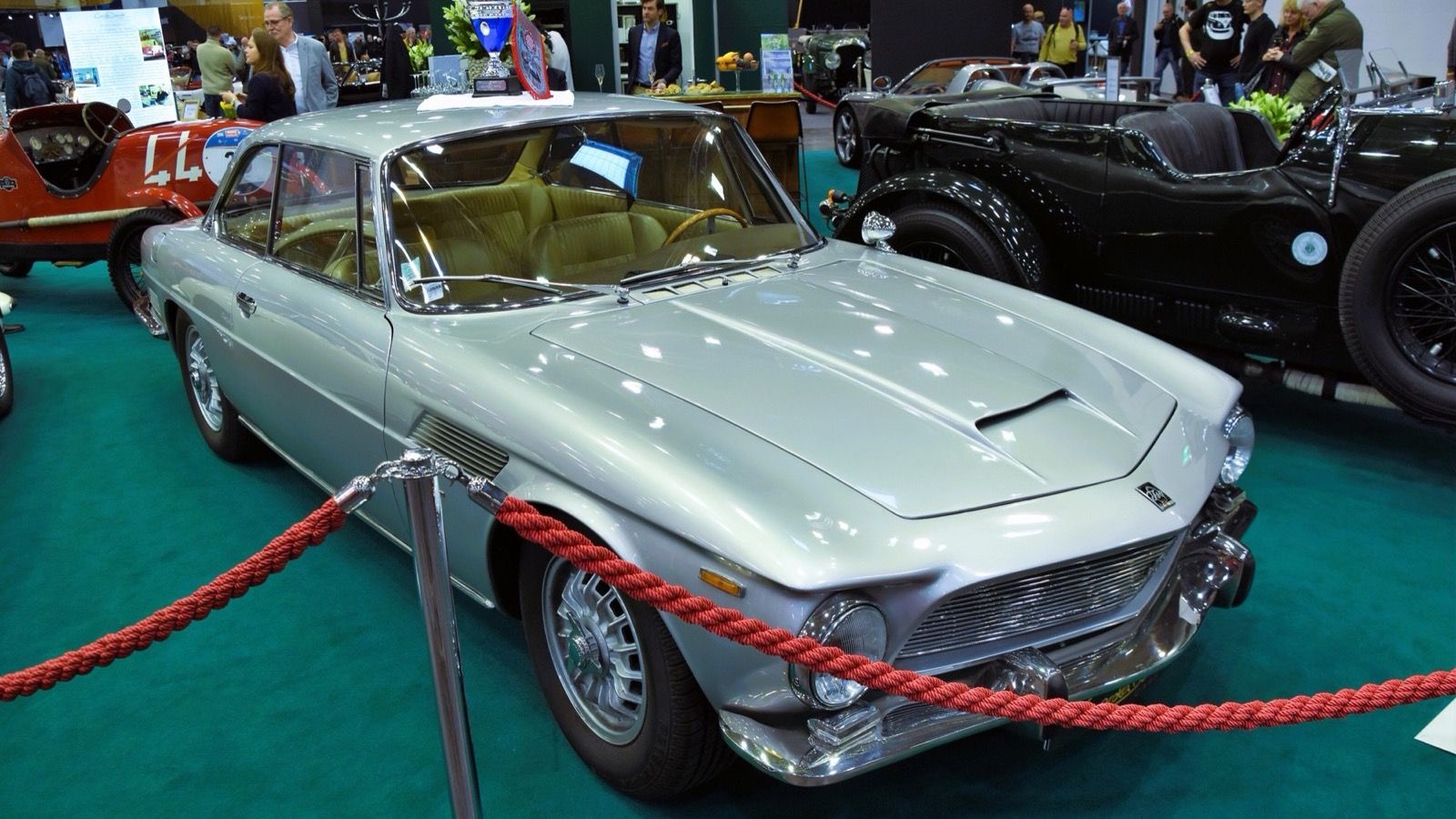
1966 Photo: “Iso Rivolta IR 300 (1966) (52865801801)” by Charles from Port Chester, New York / Wikimedia Commons, licensed under CC BY 2.0. Cropped to 16:9.
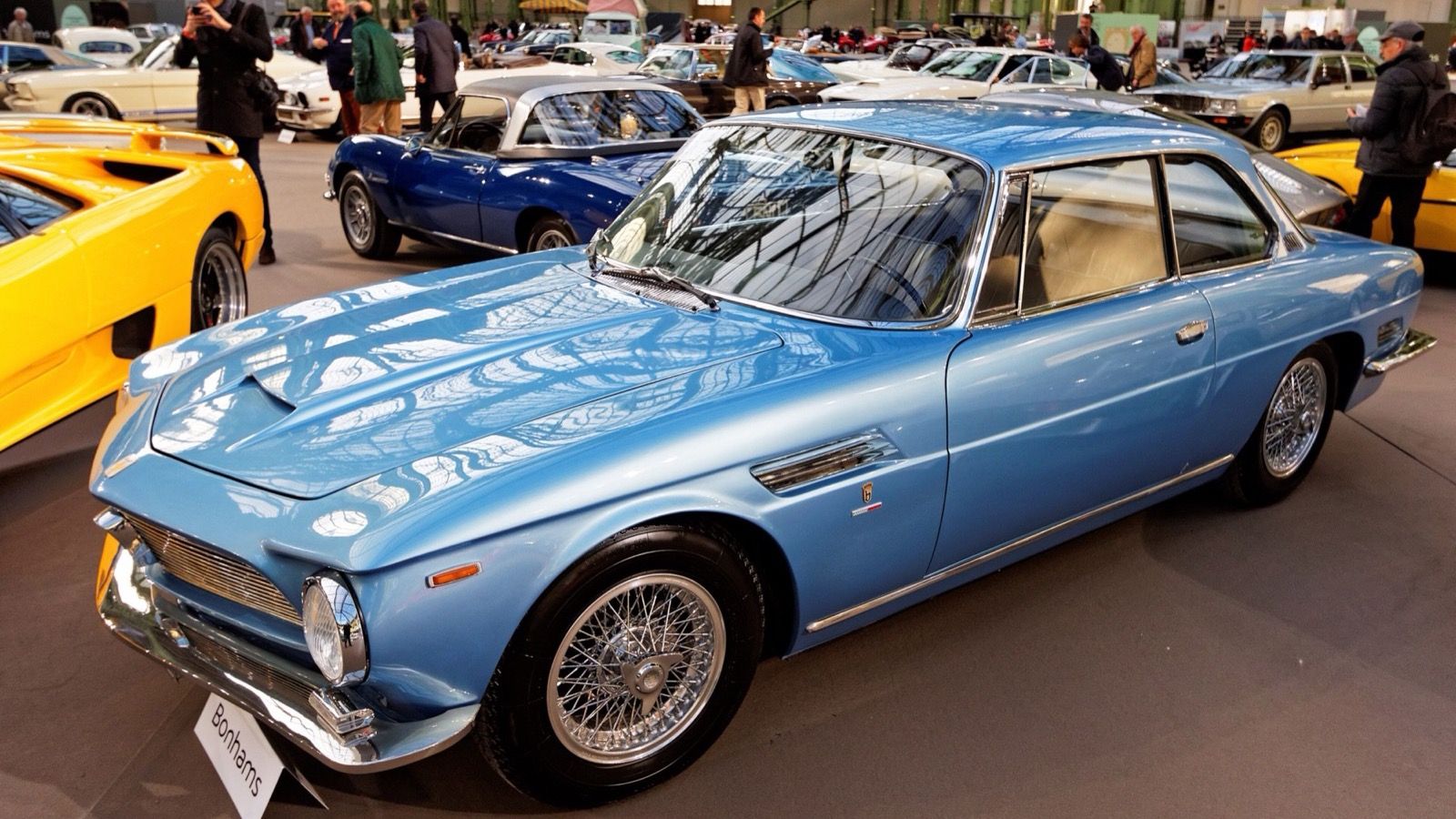
1967 Photo: “Paris - Bonhams 2016 - Iso Rivolta IR 300 coupé - 1967 - 001” by Thesupermat / Wikimedia Commons, licensed under CC BY-SA 4.0. Cropped to 16:9.
Body styles
- Coupe
Notable special editions & performance variants
IR 340
Higher-output variant with 340 hp Chevrolet V8; 167 of the 797 total IR 300-series cars built to this spec.
Related models
Collect the nameplate
Find a scale model of the Iso Rivolta IR 300
Search Amazon across available years, colors, and scales. Exact releases vary, so confirm the listing before ordering.