
Imperial History
Catalog record
Photography for this nameplate has not yet cleared the archive’s licensing and identity checks. The researched text below remains available while the page stays out of search and advertising inventory.
History
For 1955 Chrysler Corporation split Imperial off from the Chrysler Division and registered it as a separate make, aiming it squarely at Cadillac and Lincoln. The first cars carried Virgil Exner's styling and Chrysler's first-generation Hemi V8 (331 cu in for 1955, 354 cu in for 1956), establishing Imperial as the corporation's prestige flagship.
Exner's bold 'Forward Look' shaped the long-running second generation (1957–1966), with soaring tailfins, big Wedge V8s (413 and 440 cu in) and the Custom / Crown / LeBaron trim ladder; Elwood Engel took over the design for 1964 and squared the styling off. Engel's unibody third generation (1967–1968) ended the convertible after 1968, and his 'fuselage'-styled fourth generation (1969–1973) grew to enormous size — the 1973 car stretched to roughly 235 inches long.
The fifth-generation Imperial (1974–1975) shared its body with the Chrysler New Yorker, and the marque was retired after 1975 as the luxury market reeled from the first oil crisis. Chrysler revived the Imperial name for 1981–1983 as a bustle-backed personal-luxury coupe on the J-body (shared with the Cordoba/Mirada), fitted with a fuel-injected 318 V8 and Mark Cross leather; troublesome EFI and a steep price held sales back, and the name was dropped again after 1983.
Generations
First generation · Exner Hemi (1955–1956)
The debut of Imperial as a separate make — Virgil Exner styling on Chrysler's first-gen Hemi V8 (331 cu in for 1955, 354 cu in for 1956), with the freestanding 'gunsight' taillights.
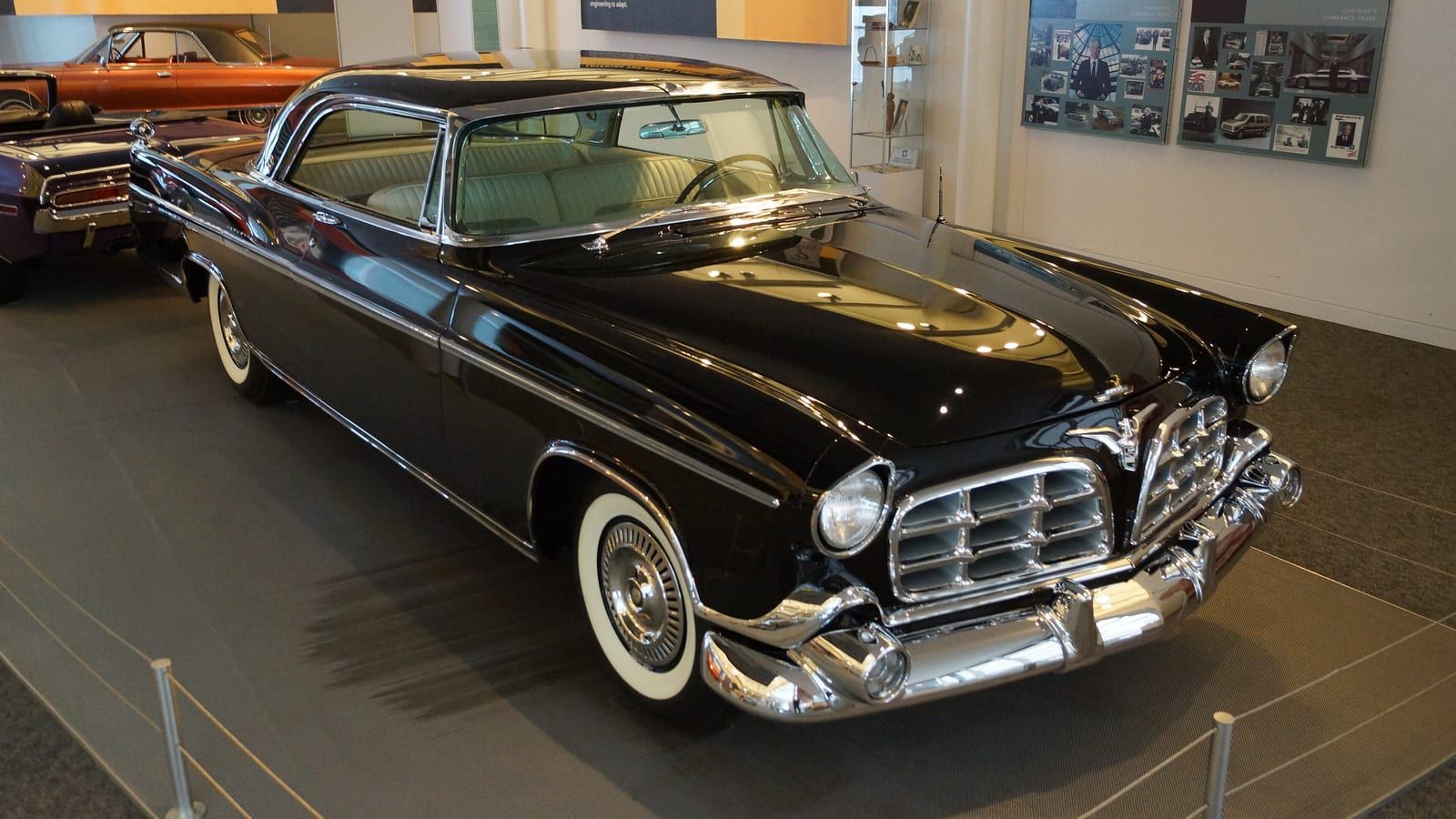
1956 Photo: “File:1956 Imperial Southampton (31787557321).jpg” by Greg Gjerdingen from Willmar, USA / Wikimedia Commons, licensed under CC BY 2.0. Cropped to 16:9.
Second generation · Forward Look (1957–1966)
Exner's finned 'Forward Look' (Engel facelift from 1964), the longest-running Imperial generation; big Wedge V8s and the Custom / Crown / LeBaron trim ladder, body-on-frame through 1966.
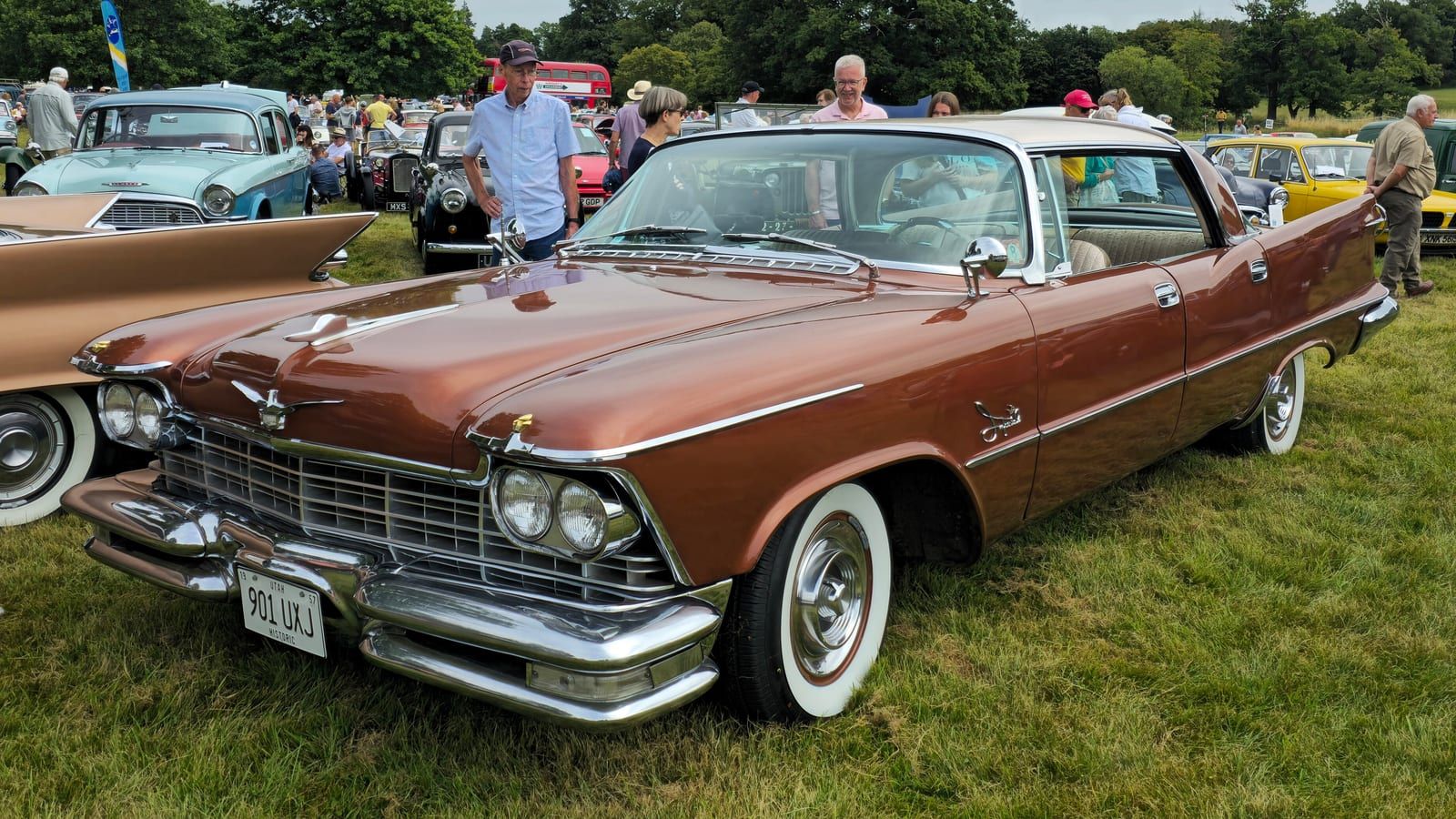
1957 Photo: “File:1957 Chrysler Imperial Crown 6.3L V8.jpg” by Calreyn88 / Wikimedia Commons, licensed under CC BY-SA 4.0. Cropped to 16:9.
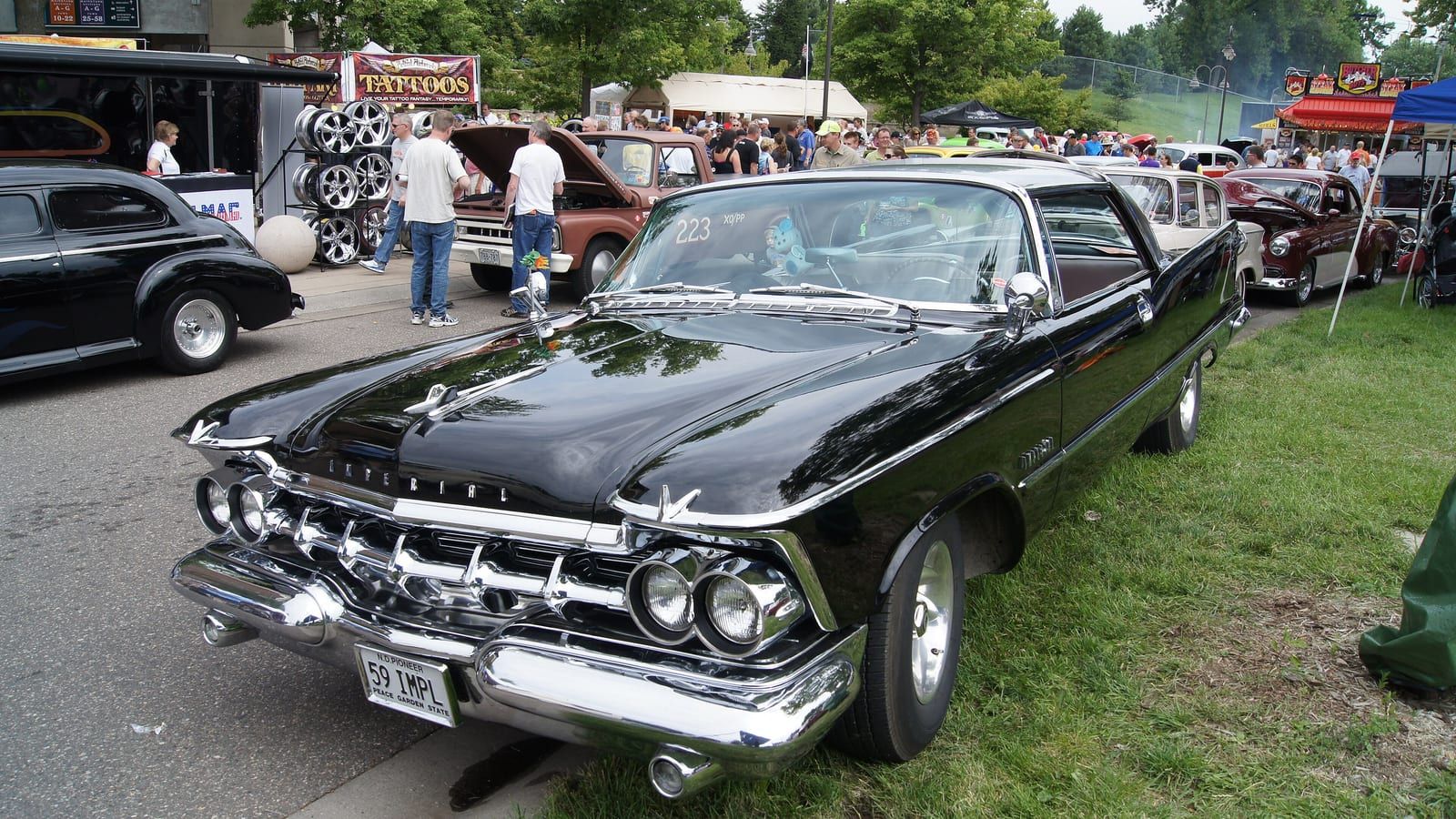
1959 Photo: “File:Imperial Quiz (7437351376).jpg” by Greg Gjerdingen from Willmar, USA / Wikimedia Commons, licensed under CC BY 2.0. Cropped to 16:9.
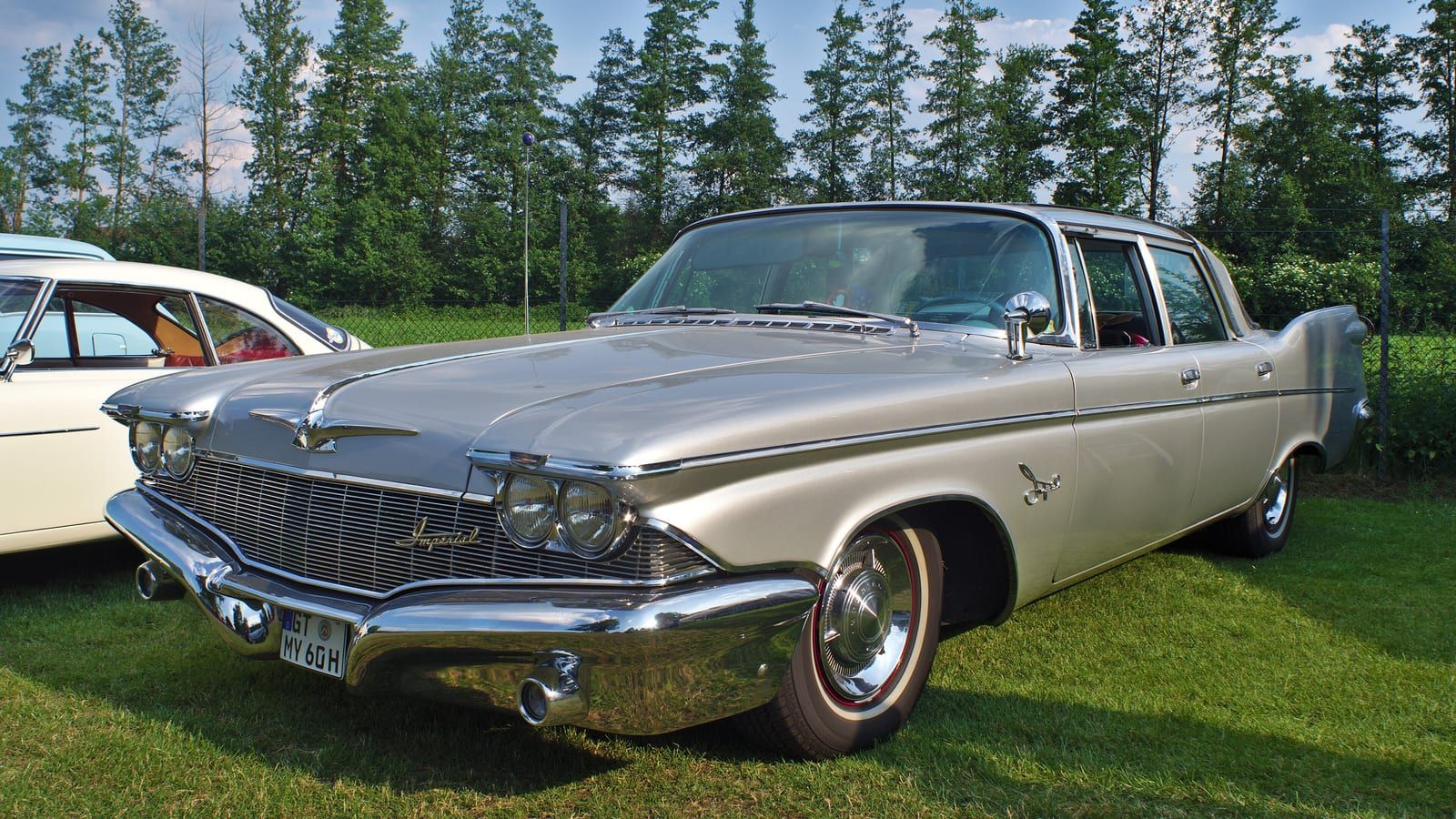
1960 Photo: “File:Imperial, 1960 (40710395070).jpg” by Thomas Vogt from Paderborn, Deutschland / Wikimedia Commons, licensed under CC BY-SA 2.0. Cropped to 16:9.
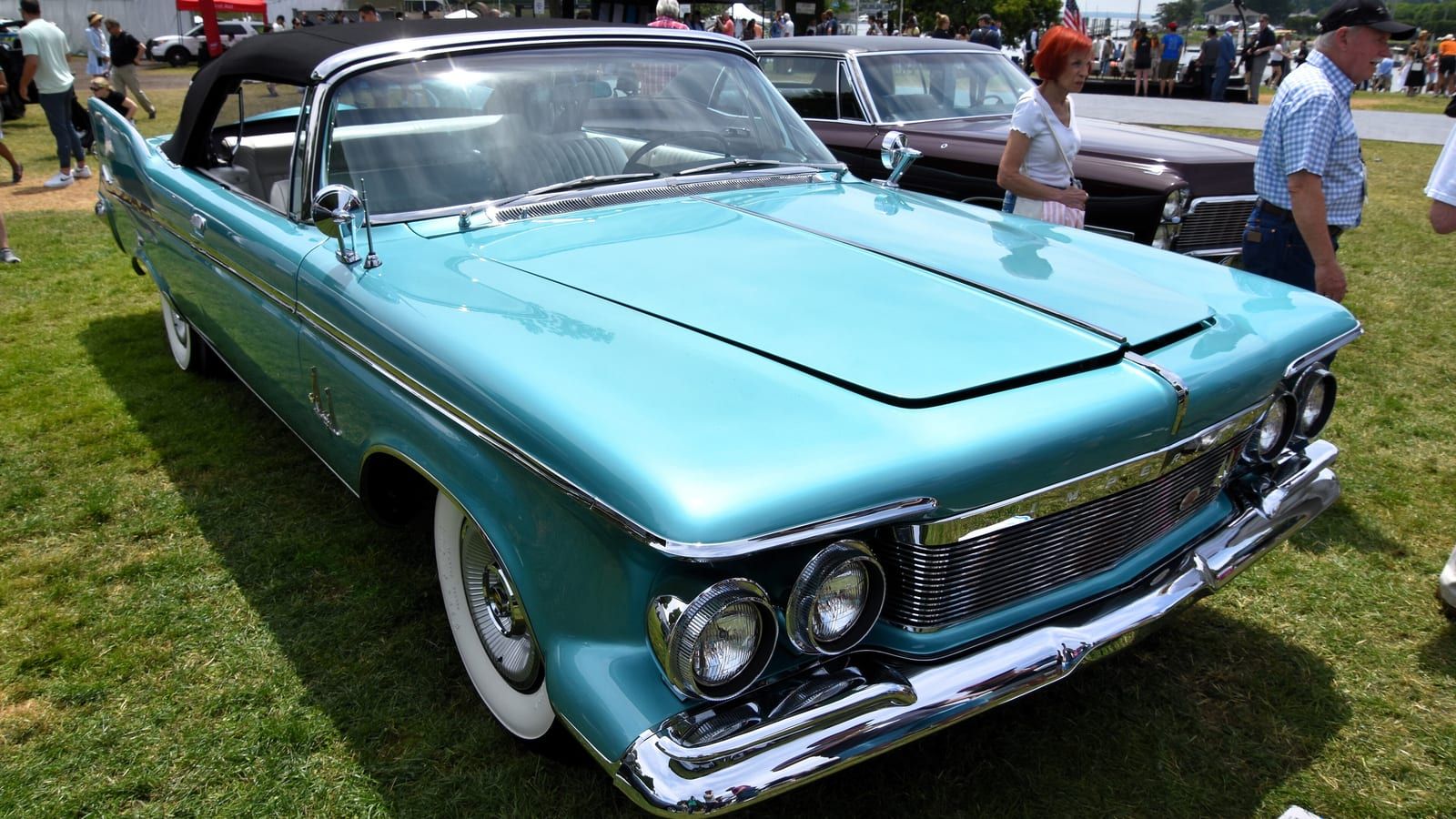
1961 Photo: “File:Chrysler Imperial Crown Cabriolet (1961) (53770217244).jpg” by Charles from Port Chester, New York / Wikimedia Commons, licensed under CC BY 2.0. Cropped to 16:9.
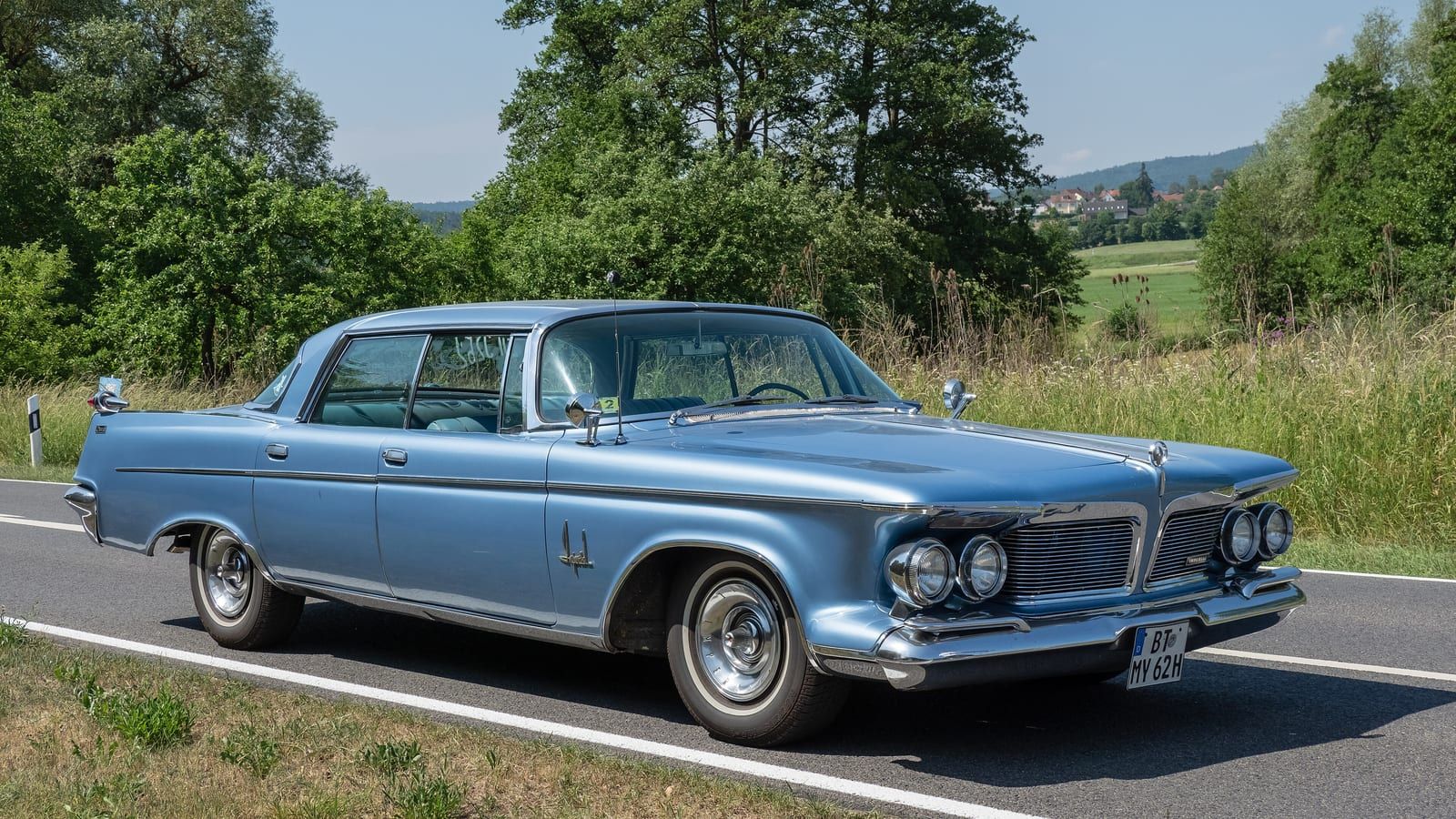
1962 Photo: “File:Chrysler Imperial Crown 1962 5311470.jpg” by Ermell / Wikimedia Commons, licensed under CC BY-SA 4.0. Cropped to 16:9.
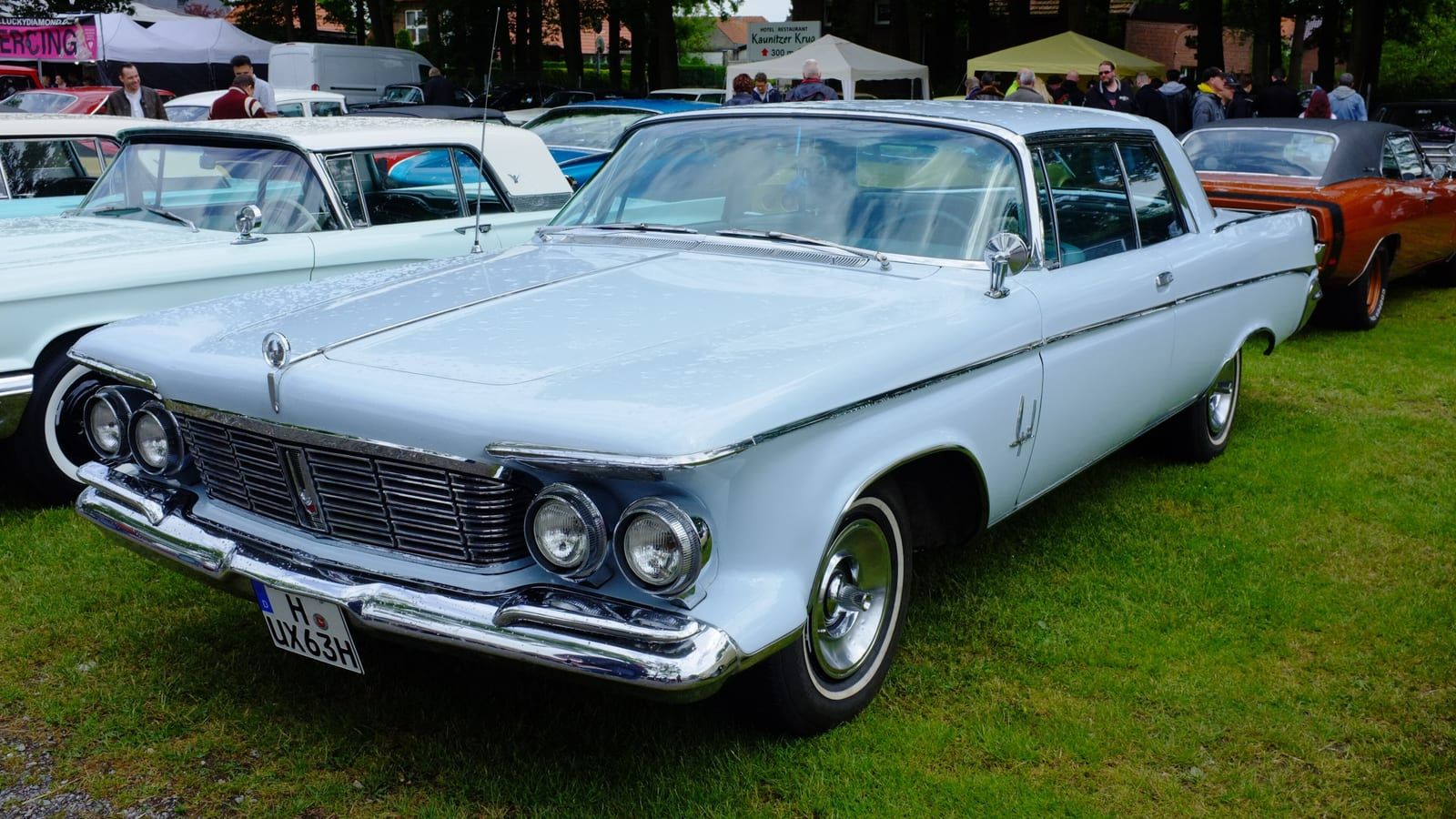
1963 Photo: “File:Imperial Coupe 1963 (25523070898).jpg” by Triple-green / Wikimedia Commons, licensed under CC BY-SA 2.0. Cropped to 16:9.
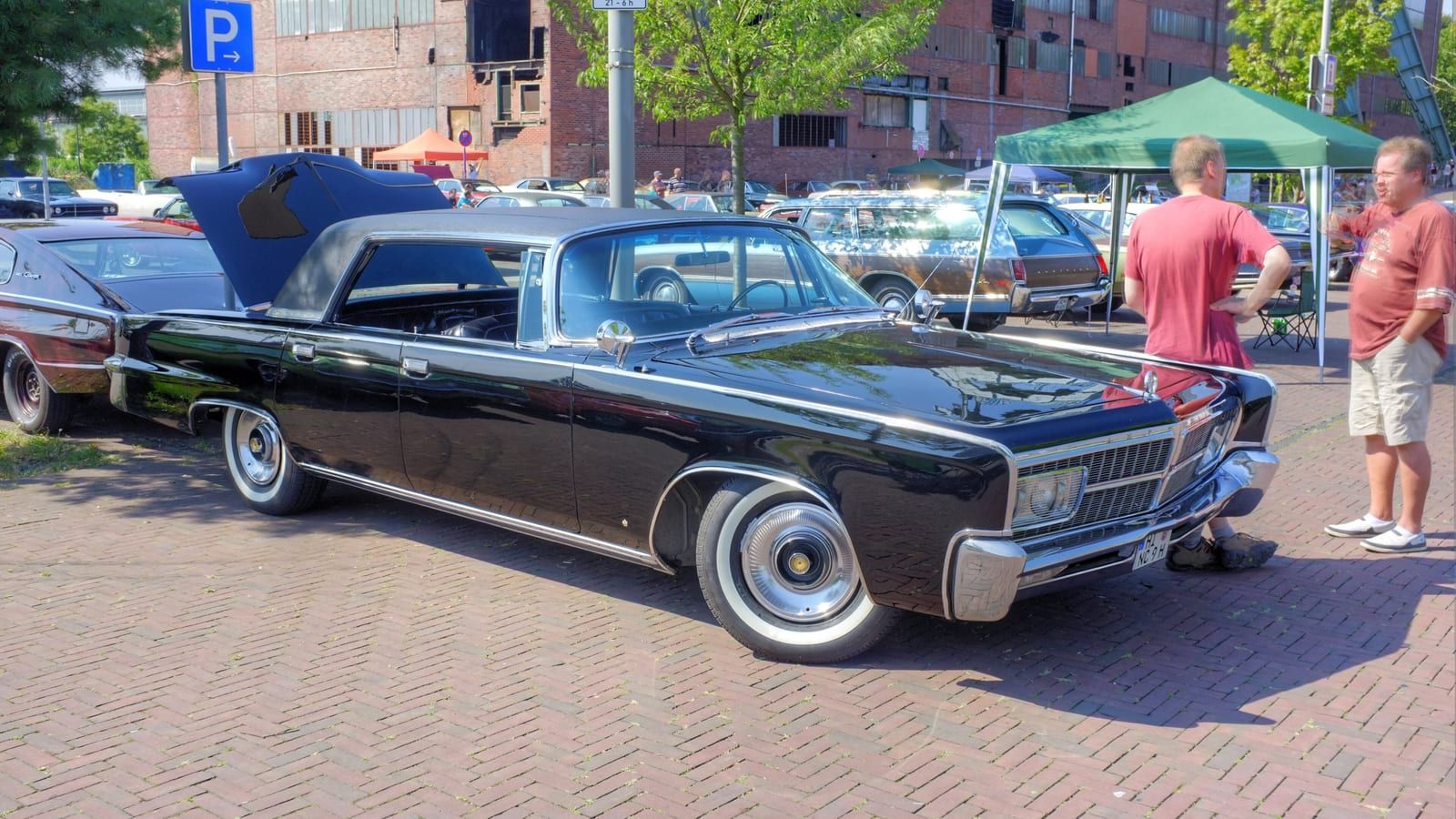
1965 Photo: “File:Mopar Nationals 2014, Herten (36911352900).jpg” by Triple-green / Wikimedia Commons, licensed under CC BY-SA 2.0. Cropped to 16:9.
Third generation · Engel unibody (1967–1968)
Elwood Engel's first Imperial on a unibody C-platform, powered by the 440 Wedge V8; 1968 was the final year for the Imperial convertible.
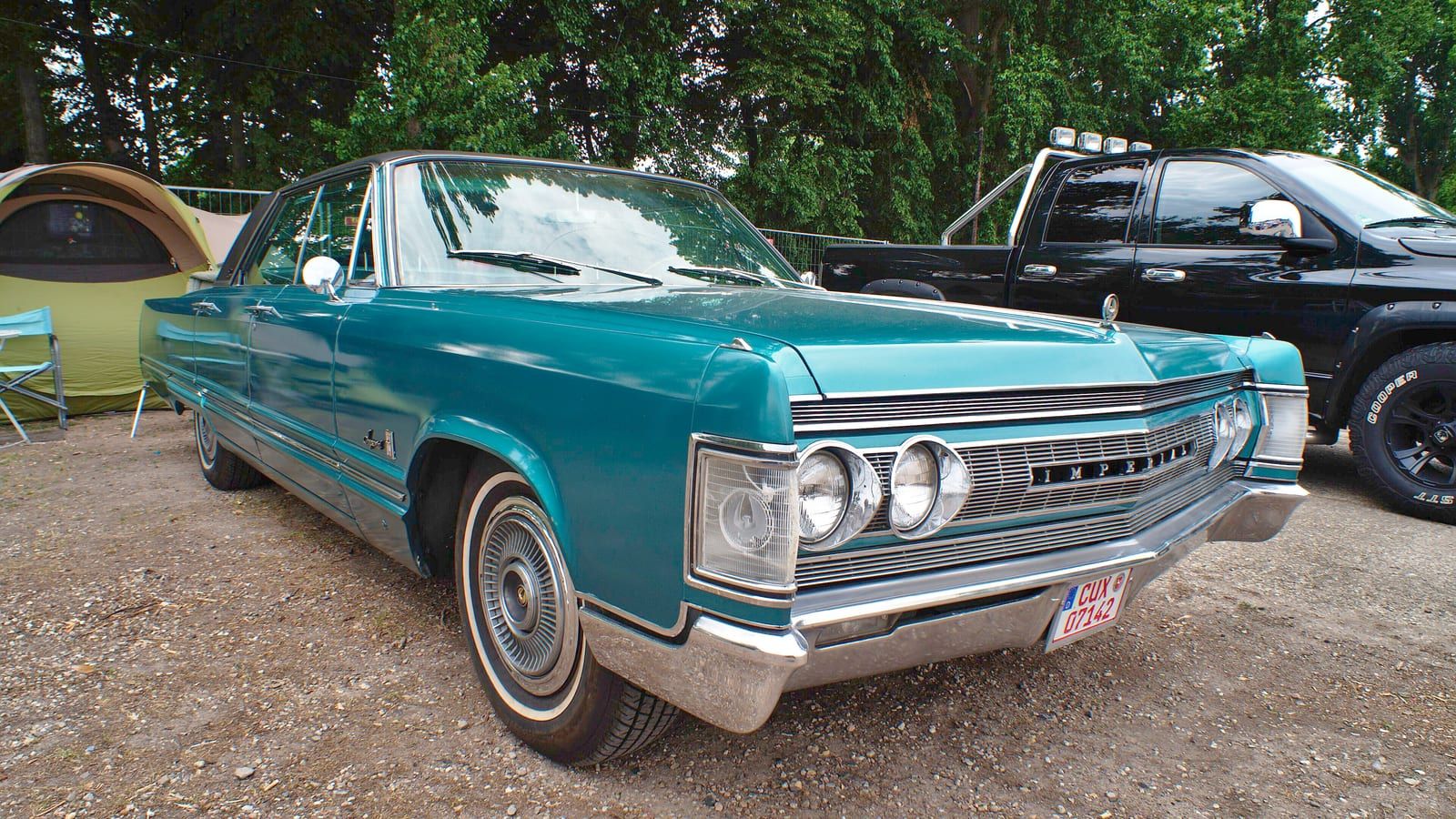
1967 Photo: “File:Imperial 1967 (42878448034).jpg” by Thomas Vogt from Paderborn, Deutschland / Wikimedia Commons, licensed under CC BY-SA 2.0. Cropped to 16:9.
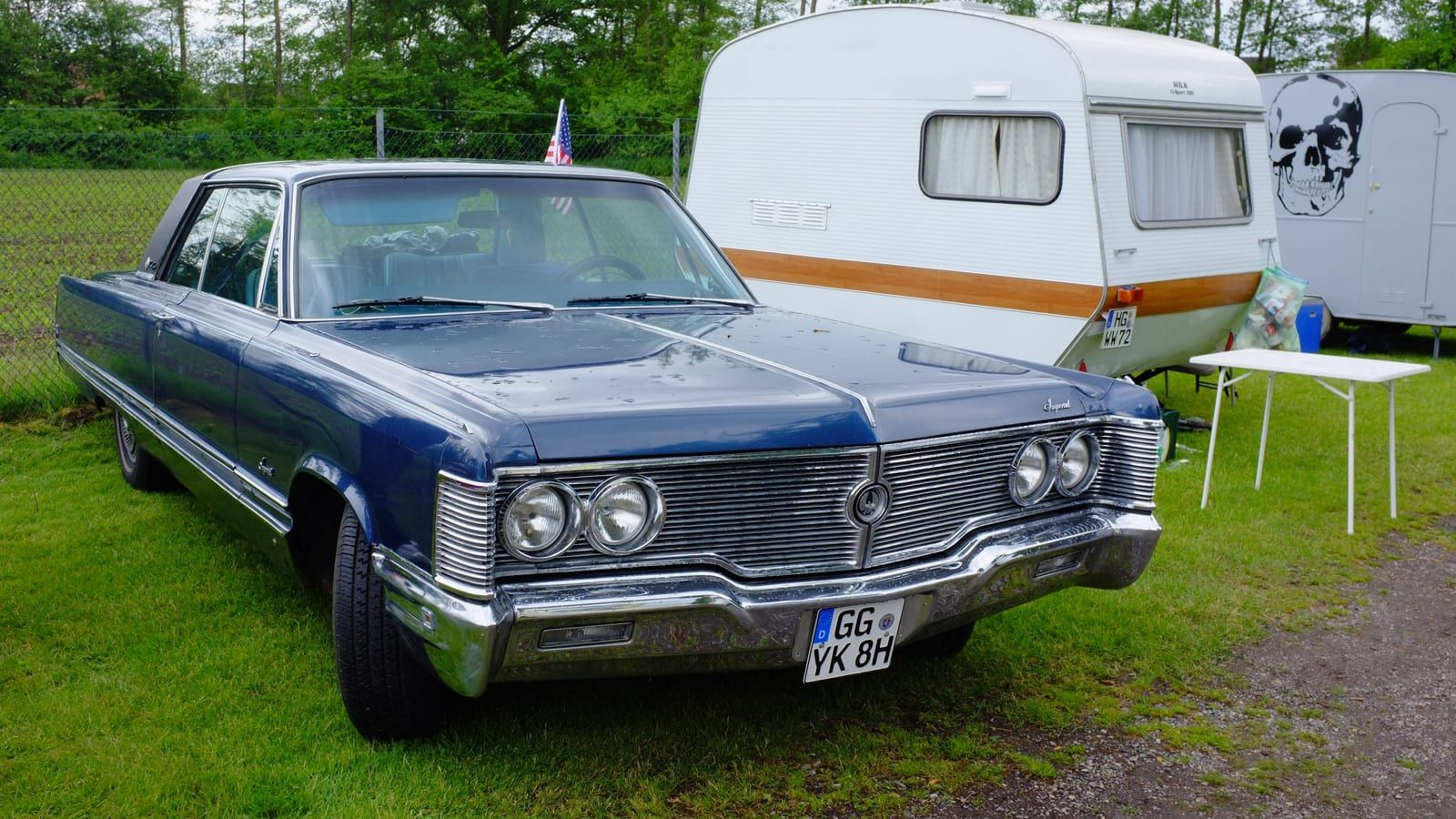
1968 Photo: “File:Imperial Crown Coupe (24540984027).jpg” by Triple-green / Wikimedia Commons, licensed under CC BY-SA 2.0. Cropped to 16:9.
Fourth generation · Fuselage (1969–1973)
Engel's curved-sided 'fuselage' styling and peak size — the 1973 car reached roughly 235 inches long, among the largest postwar non-limousine American cars.
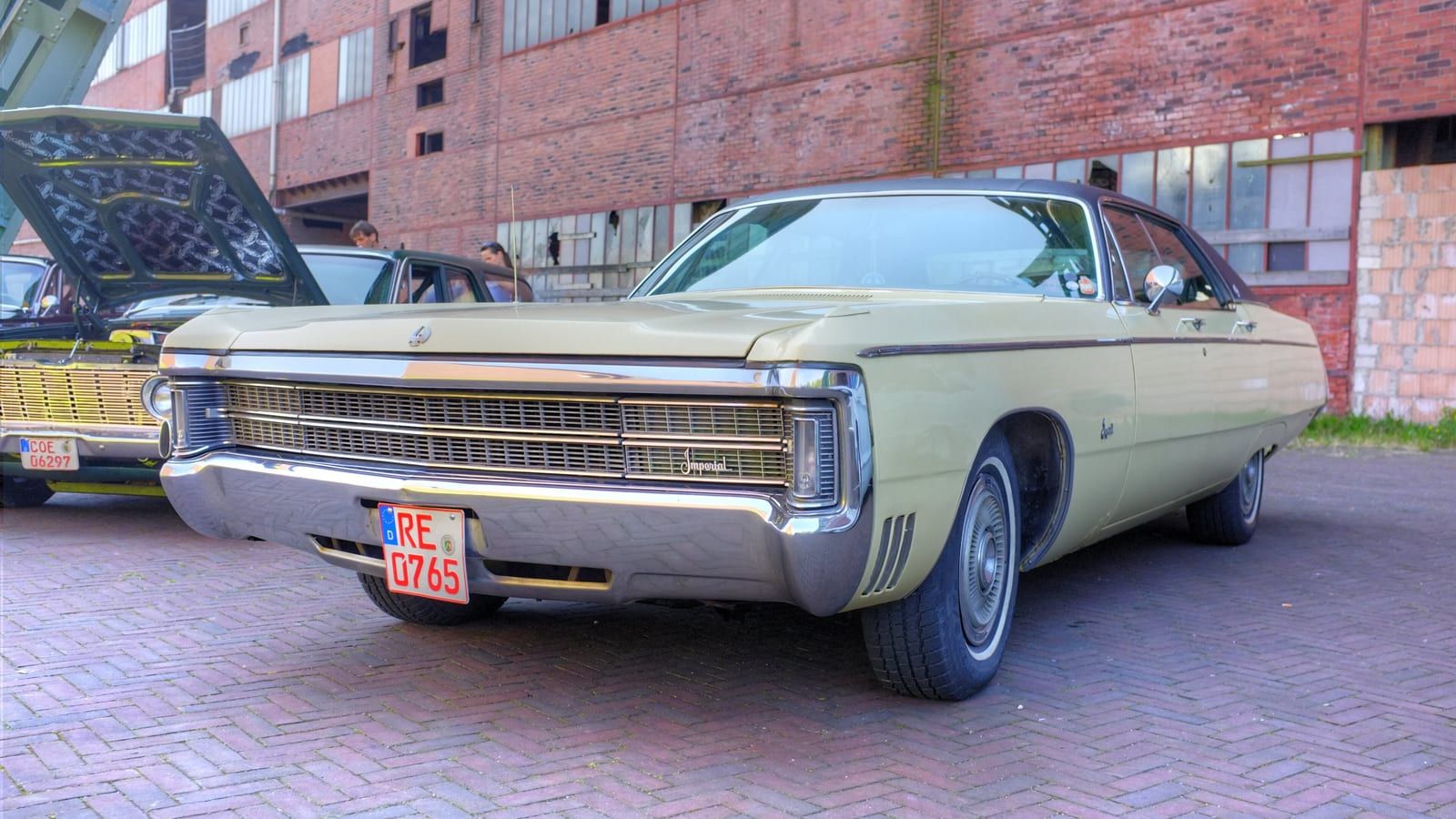
1969 Photo: “File:Mopar Nationals 2014, Herten (36471500074).jpg” by Triple-green / Wikimedia Commons, licensed under CC BY-SA 2.0. Cropped to 16:9.
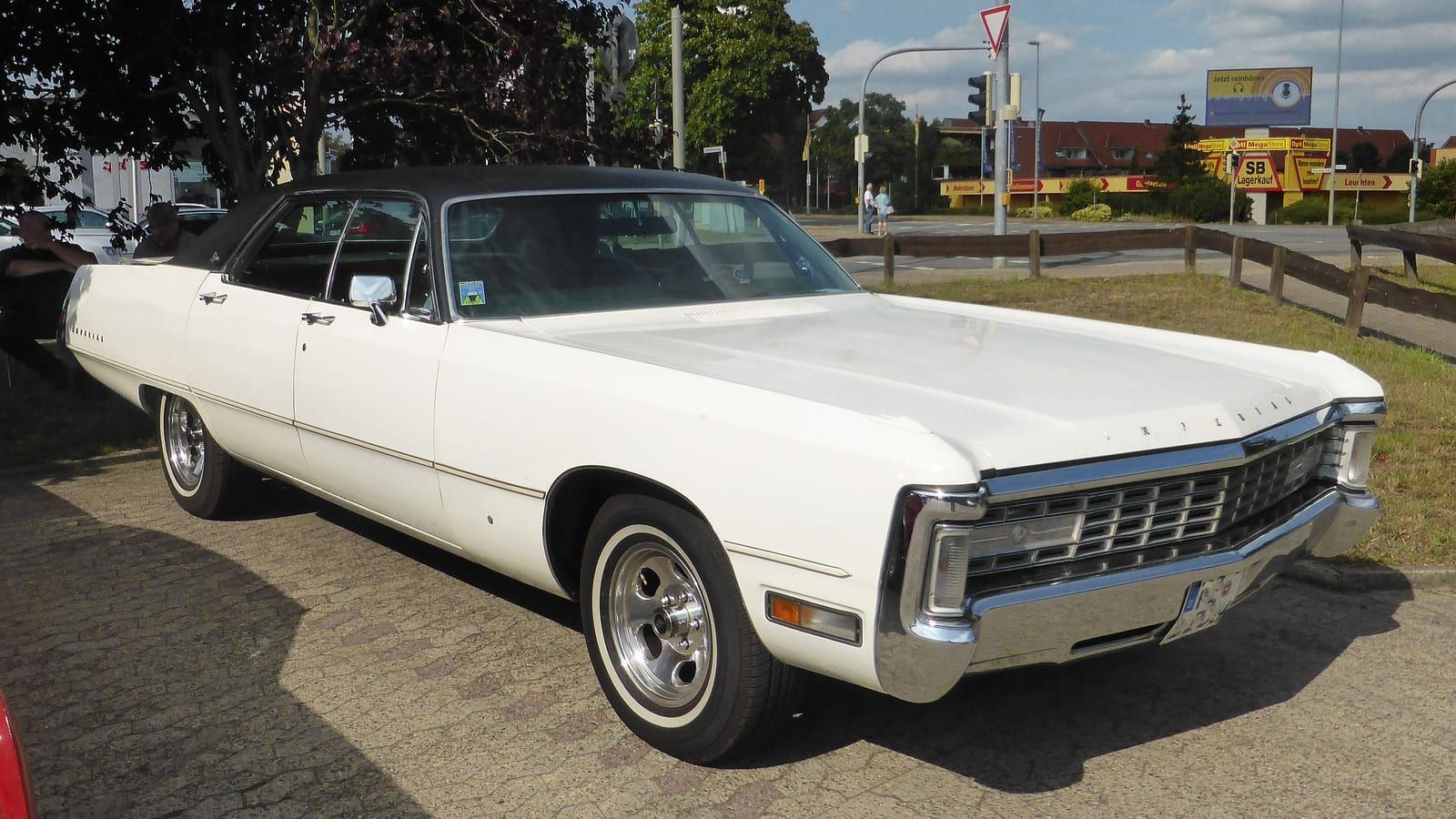
1971 Photo: “File:Imperial Lim.jpg” by Kirchenfan / Wikimedia Commons — CC0 1.0. Cropped to 16:9.
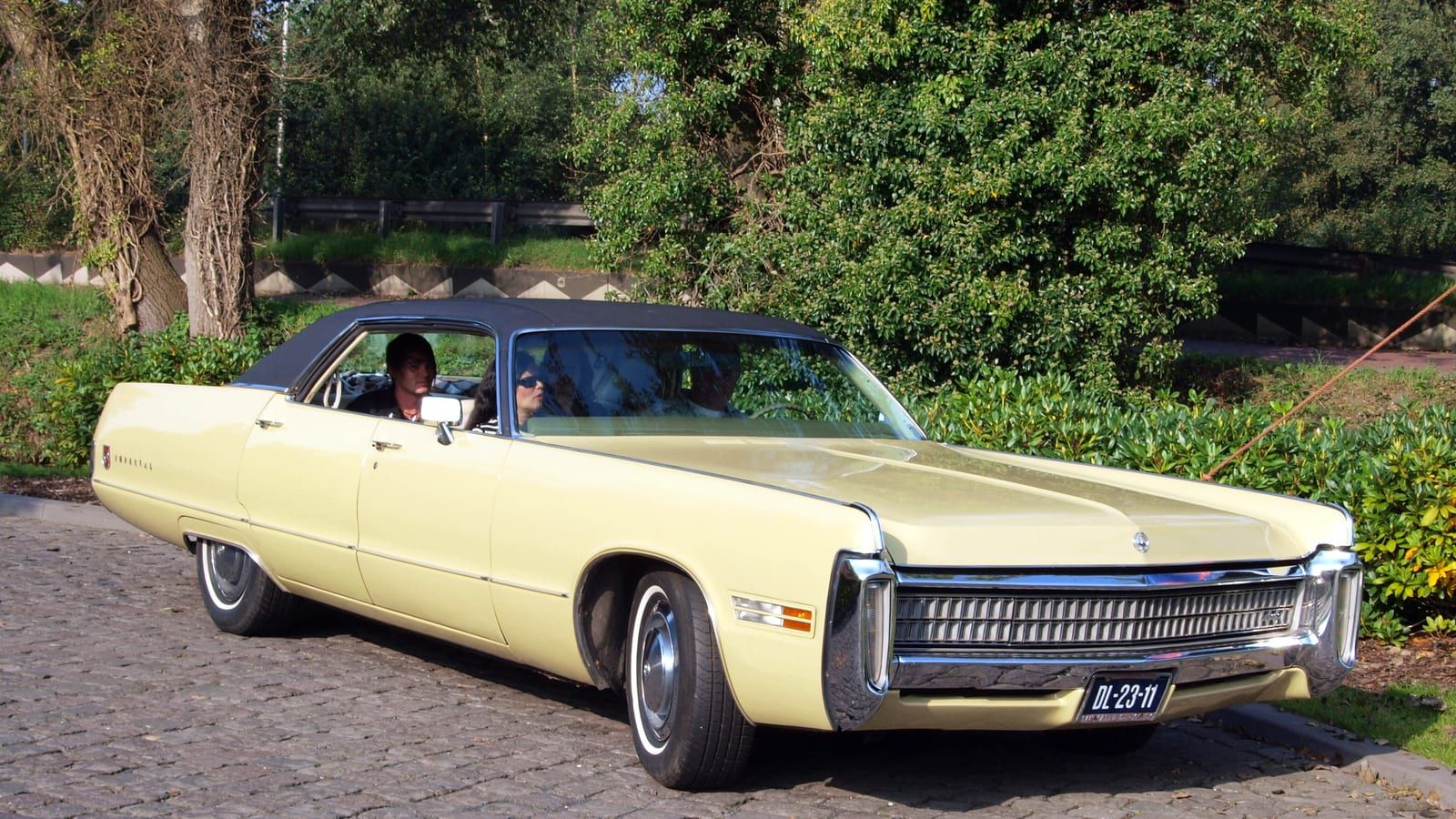
1972 Photo: “File:1972 Chrysler Imperial Le Baron photo-2.JPG” by AlfvanBeem / Wikimedia Commons — CC0 1.0. Cropped to 16:9.
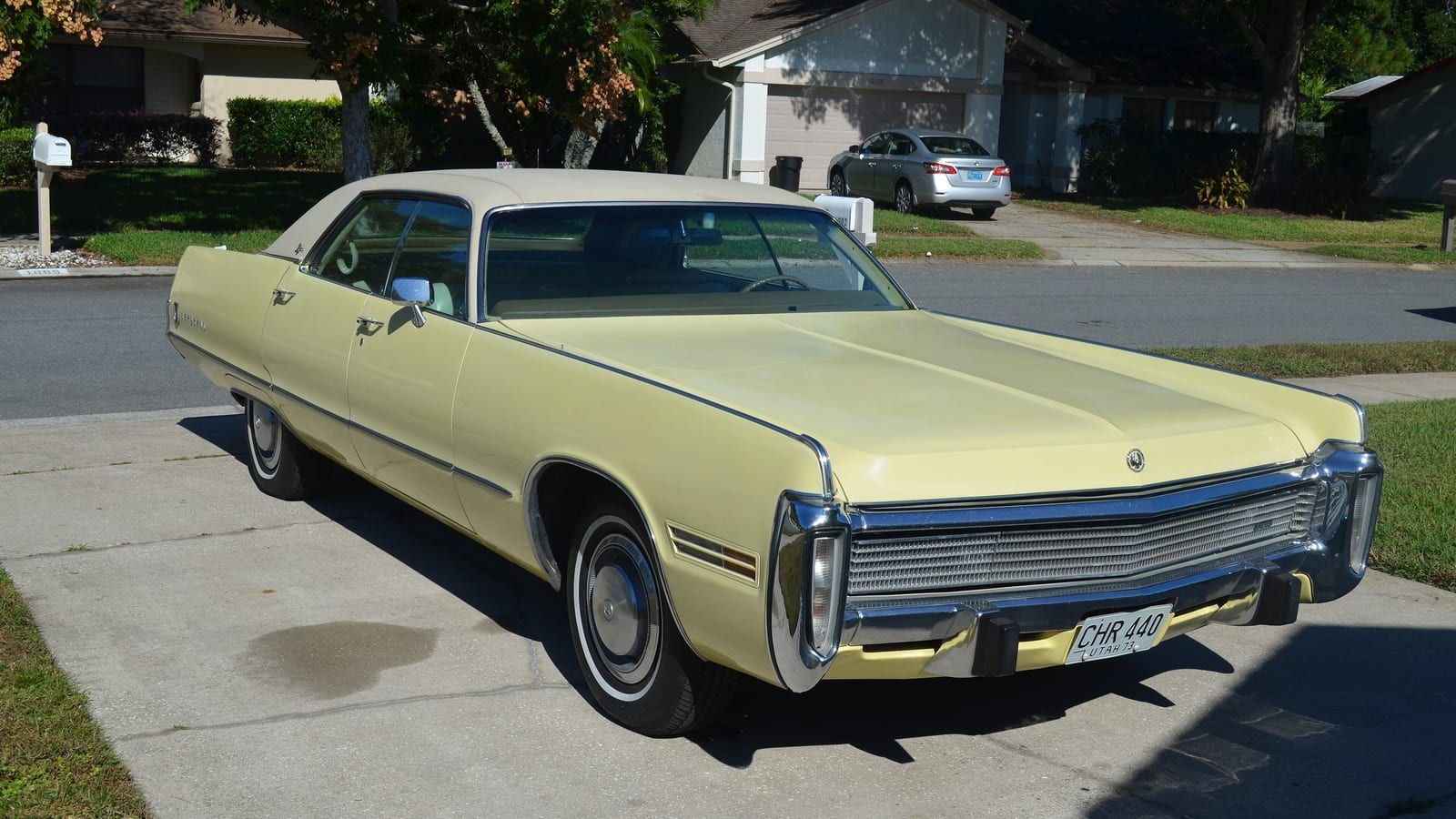
1973 Photo: “File:1973 Chrysler Imperial Le Baron 02.JPG” by Nickmix01 / Wikimedia Commons, licensed under CC BY-SA 4.0. Cropped to 16:9.
Fifth generation · New Yorker-bodied (1974–1975)
Shared its body with the Chrysler New Yorker; the last of the original Imperial marque, retired after 1975 as the luxury market contracted.
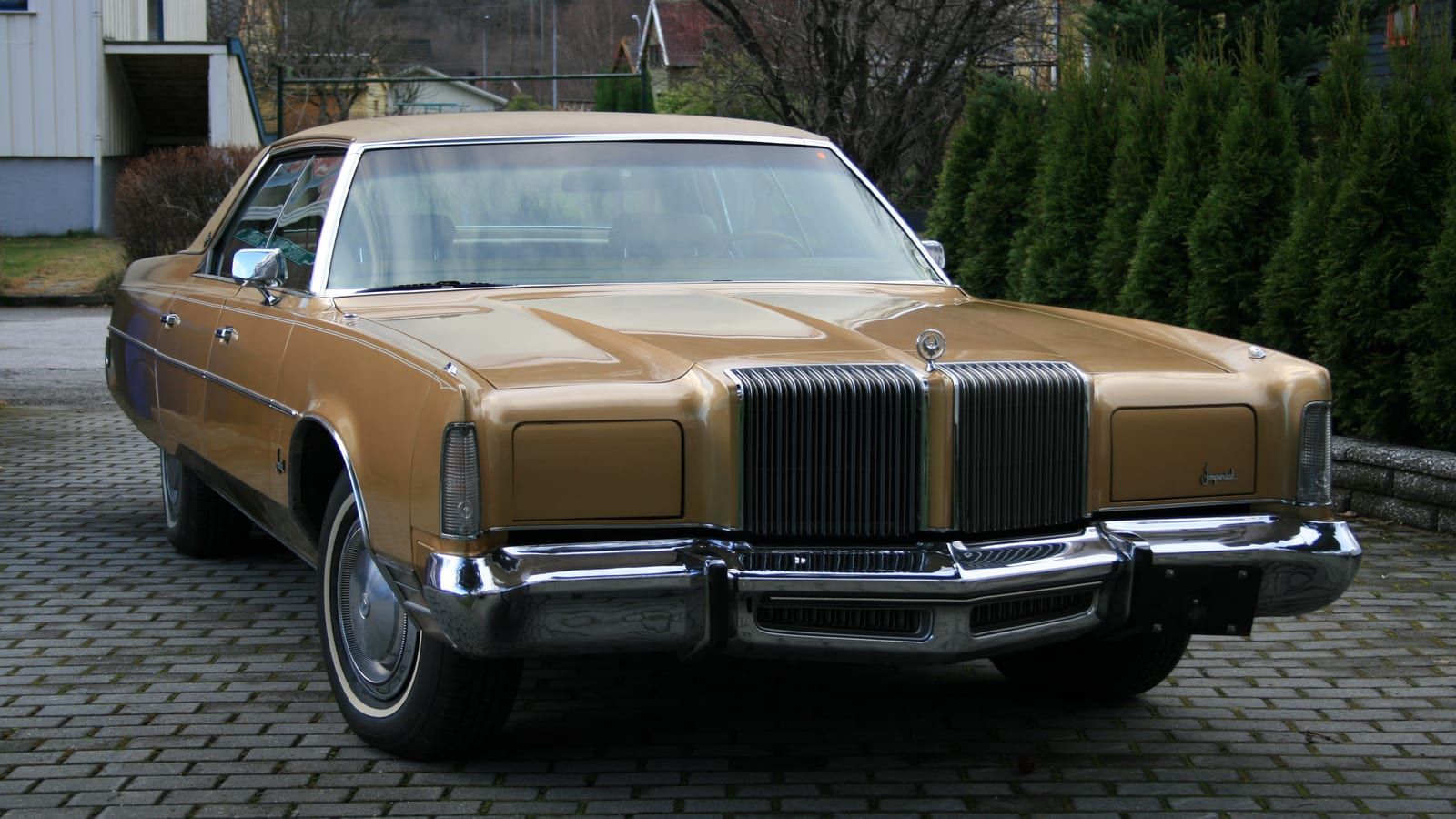
1975 Photo: “File:Imperial 1975.png” by TheMercMan / Wikimedia Commons — Public domain. Cropped to 16:9.
Sixth generation · J-body bustle-back (1981–1983)
The revival — a bustle-backed personal-luxury coupe on the J-body (shared with the Cordoba/Mirada), with a fuel-injected 318 V8 and Mark Cross leather; approximately 10,981–12,340 built across three years (figures vary by source and whether Canadian production is included).
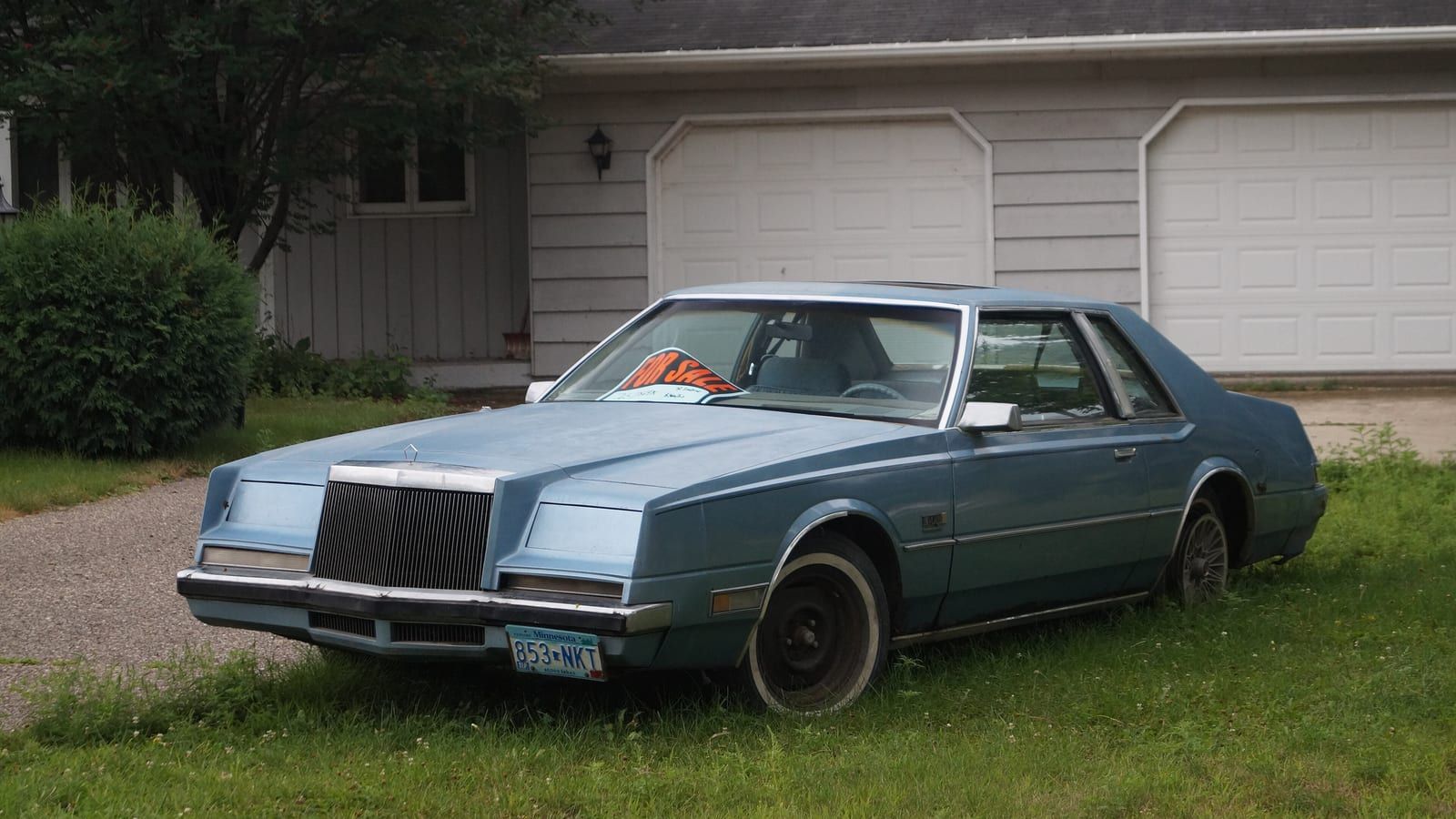
1981 Photo: “File:1981 Chrysler Imperial Frank Sinatra Edition (36723517135).jpg” by Greg Gjerdingen from Willmar, USA / Wikimedia Commons, licensed under CC BY 2.0. Cropped to 16:9.
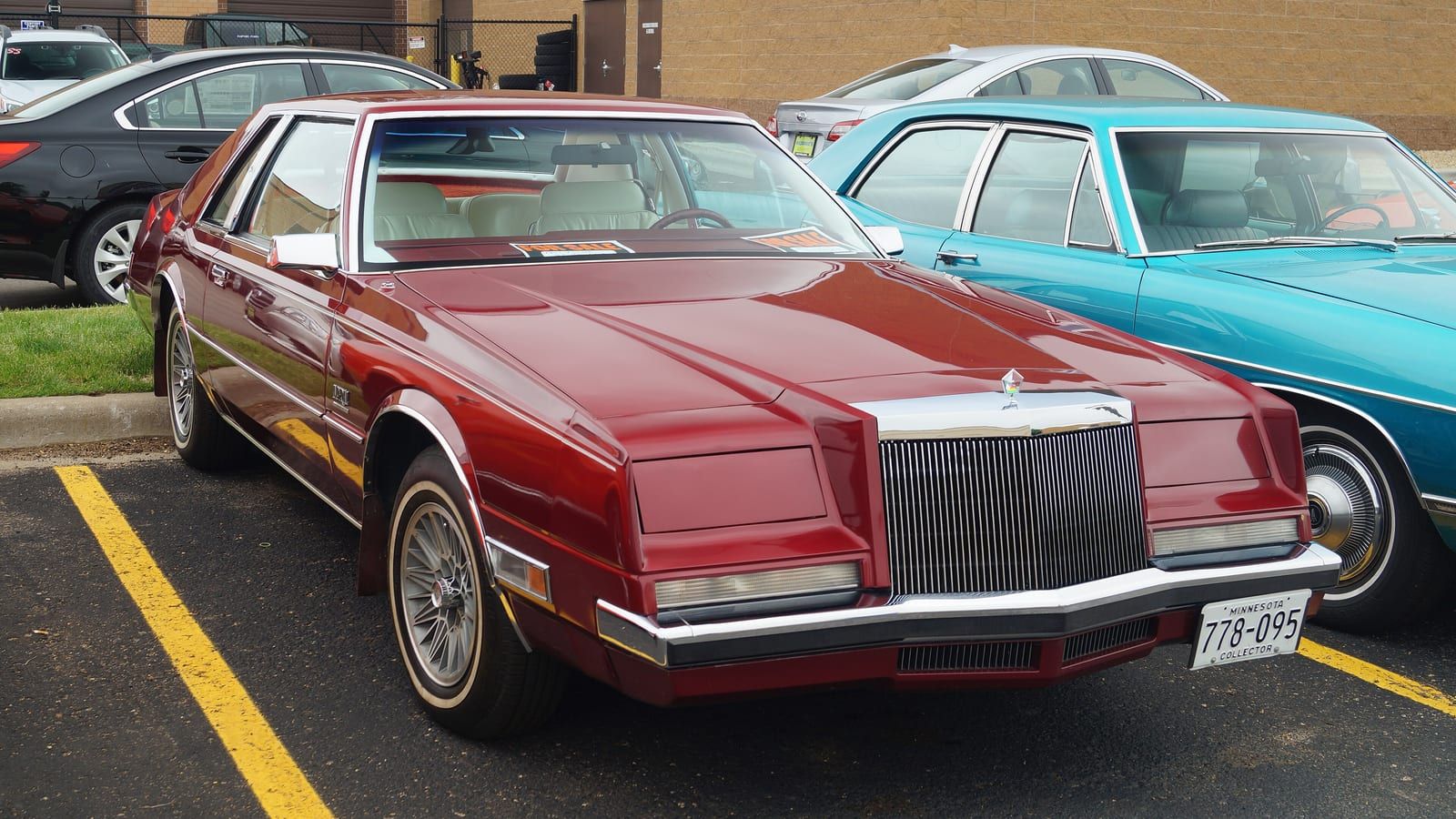
1982 Photo: “File:1982 Chrysler Imperial (27260440421).jpg” by Greg Gjerdingen from Willmar, USA / Wikimedia Commons, licensed under CC BY 2.0. Cropped to 16:9.
Body styles
- 2-door hardtop
- 2-door convertible
- 4-door sedan
- 4-door hardtop
- 2-door coupe (1981–1983)
Notable special editions & performance variants
Imperial LeBaron
The top Imperial trim through the marque's first era, named for the LeBaron coachbuilding house; the most luxurious and best-appointed Imperials carried the LeBaron designation.
Imperial Crown
The mid/upper trim line below LeBaron and above the base Custom, including the Crown convertible and four-door hardtops.
Frank Sinatra Edition (FS)
Limited package on the revived J-body coupe with exclusive 'Glacier Blue' paint, matching trim, and a Mark Cross case of Sinatra cassettes. Production is disputed and figures vary widely by source — commonly cited as roughly 148 cars for 1981 and around 279 for 1982 (some tallies instead give ~271 per year, or ~516 total including Canadian output).
Related models
Collect the nameplate
Find a scale model of the Imperial
Search Amazon across available years, colors, and scales. Exact releases vary, so confirm the listing before ordering.