
Humber Super Snipe History
Catalog record
Photography for this nameplate has not yet cleared the archive’s licensing and identity checks. The researched text below remains available while the page stays out of search and advertising inventory.
History
Introduced in October 1938, the Super Snipe was created by combining the four-litre six-cylinder engine from the big Pullman with the lighter chassis and body of the Snipe, producing a large car that was unusually quick for its day. It earned lasting fame as a British Army staff car during the Second World War.
Post-war Super Snipes ran through Marks I to IV (1945–1958), then were reborn in May 1957–58 as a unitary-construction car sharing its shell with the new Hawk. These later cars (Series I–V/Va) used a new overhead-valve six based on an Armstrong Siddeley design — 2.6 litres at first, then enlarged to roughly 3.0 litres — and offered disc brakes and automatic transmission as upmarket executive transport.
The Super Snipe was the senior Humber of its era, joined from 1964 by a plusher Imperial version. Production ended in 1967 when, under new owner Chrysler, Rootes discontinued the traditional large Humbers.
Generations
Pre-war Super Snipe · Original Super Snipe
Pullman's four-litre six in the lighter Snipe body; fast for its day and the basis of the WWII staff car.
Mark I–IV · Separate-chassis post-war
Post-war body-on-chassis Super Snipes, sold above the four-cylinder Hawk through four marks.
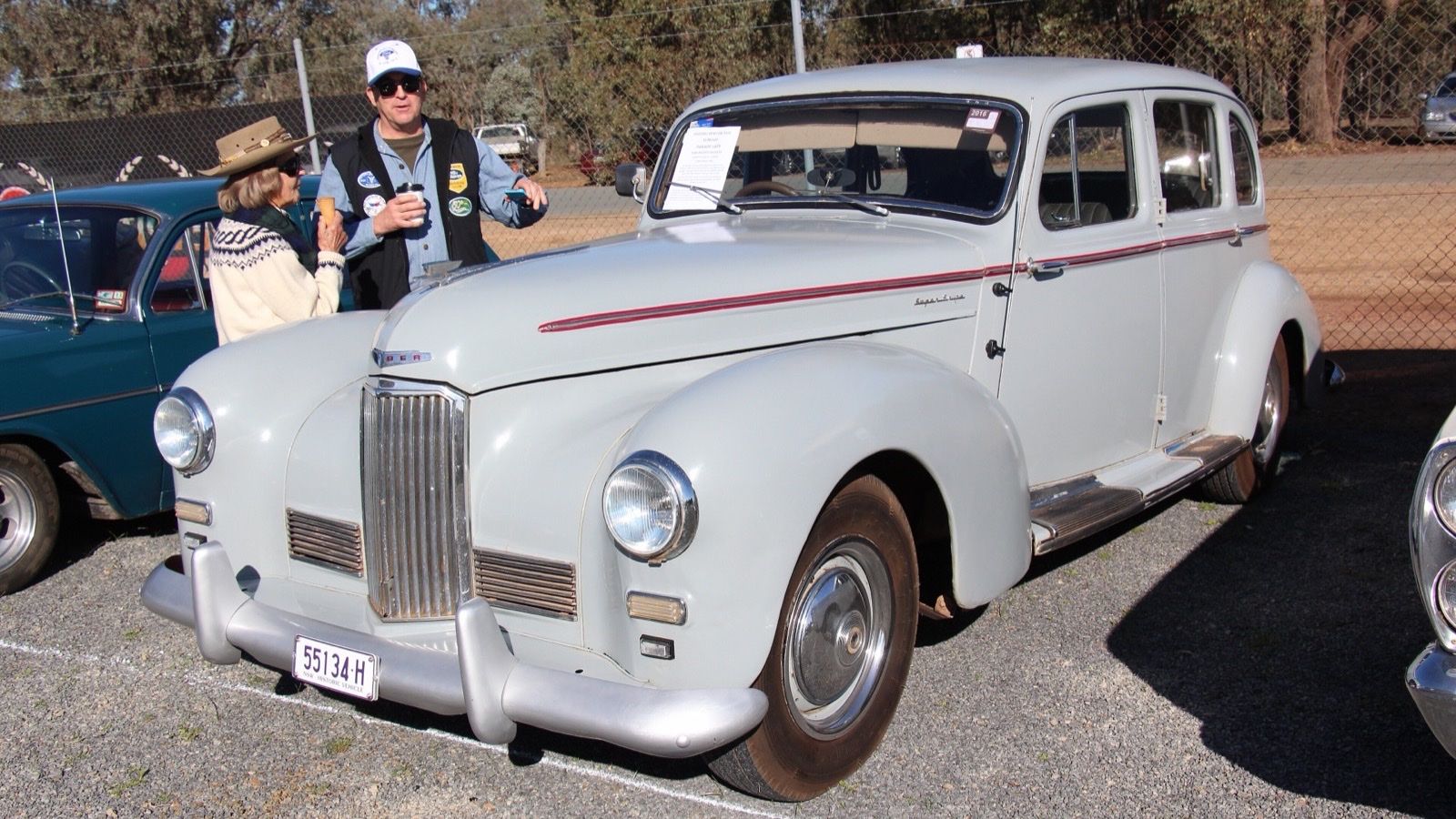
1949 Photo: “File:1949 Humber Super Snipe MkII Saloon (27368813555).jpg” by Sicnag / Wikimedia Commons, licensed under CC BY 2.0. Cropped to 16:9.
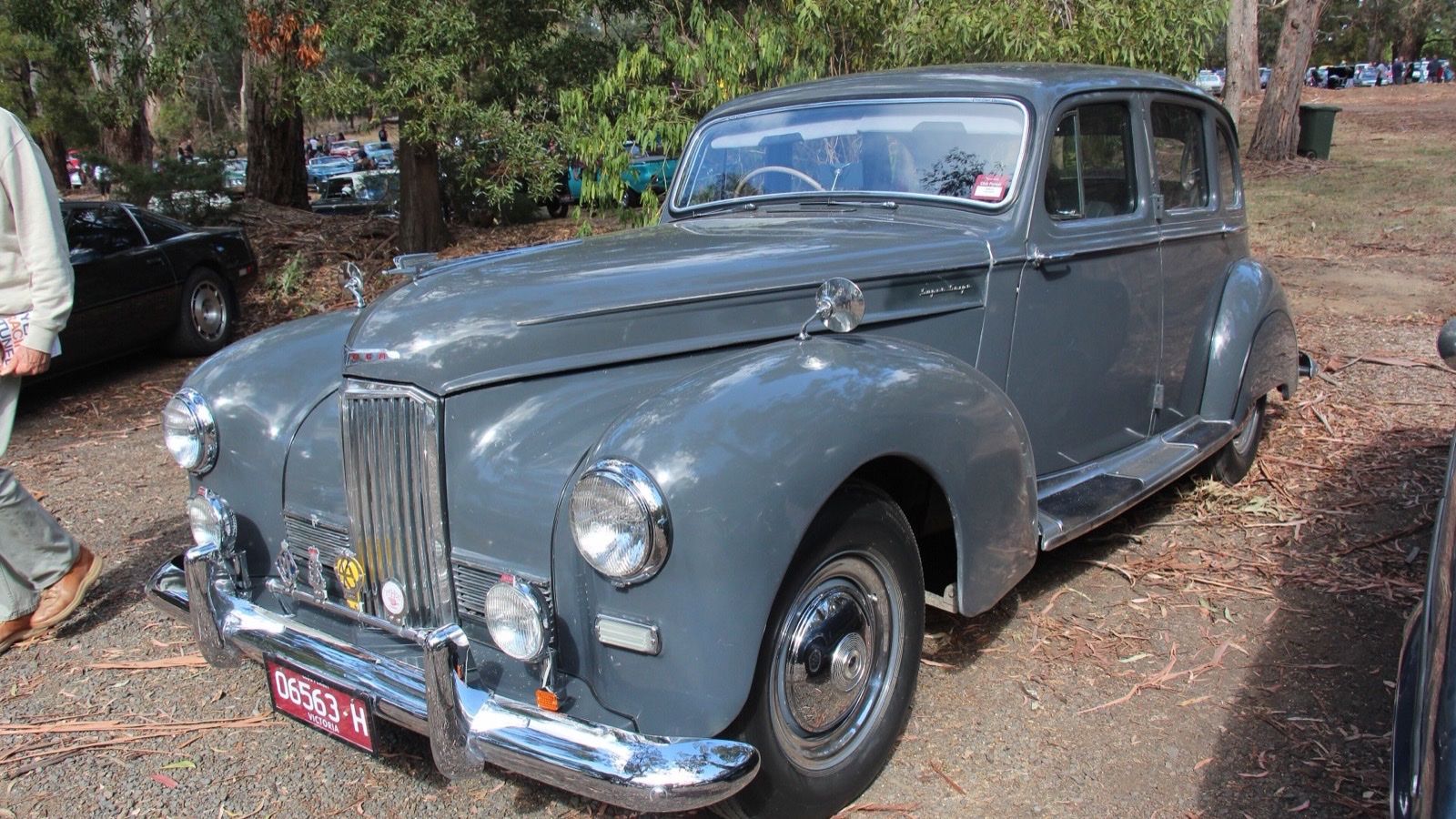
1951 Photo: “File:1951 Humber Super Snipe MkIII Saloon (24487023173).jpg” by Sicnag / Wikimedia Commons, licensed under CC BY 2.0. Cropped to 16:9.
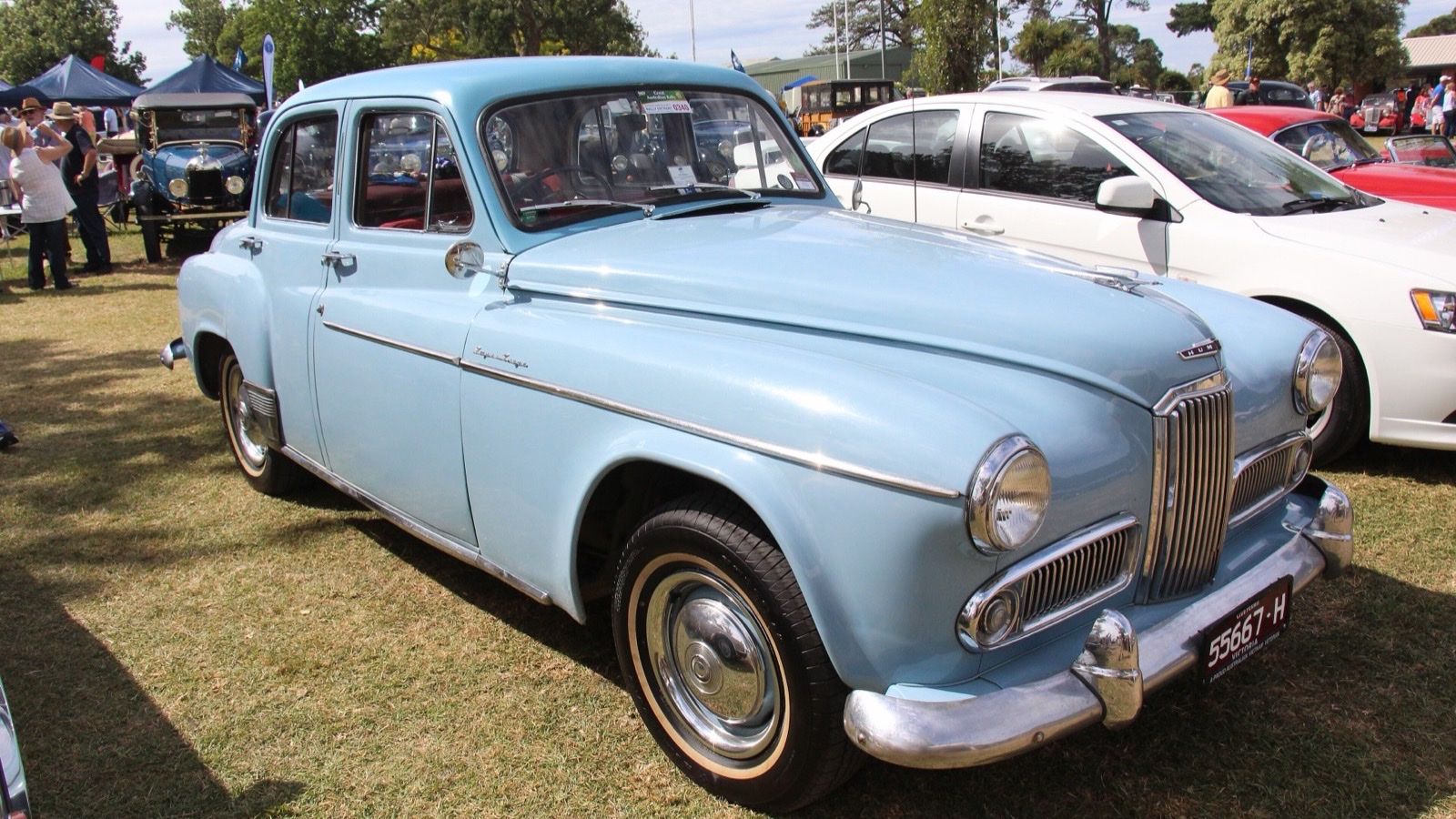
1953 Photo: “File:1953 Humber Super Snipe Mk IV Saloon (32674820931).jpg” by Sicnag / Wikimedia Commons, licensed under CC BY 2.0. Cropped to 16:9.
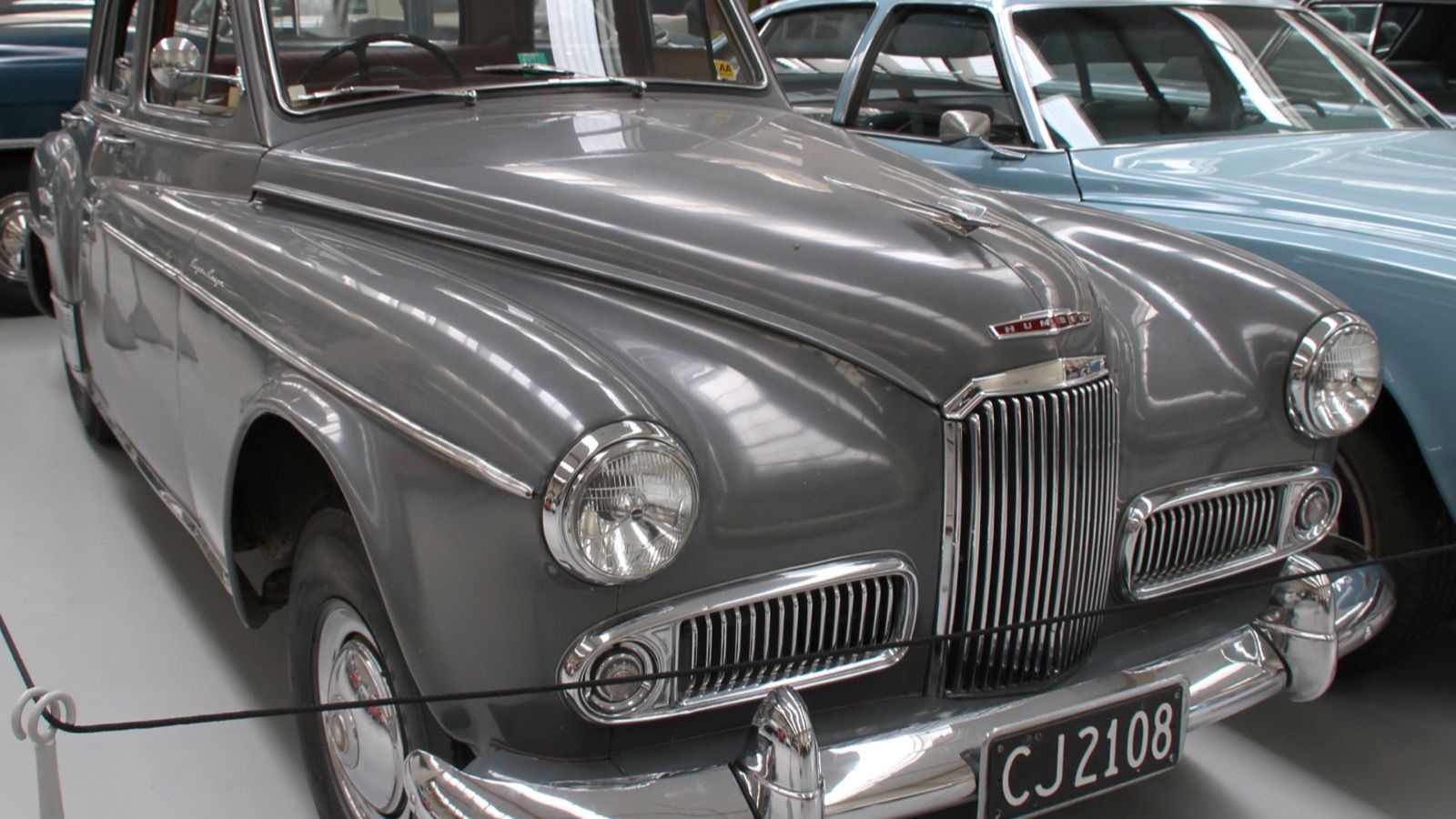
1955 Photo: “File:1955 Humber Super Snipe mark IV (31841110465).jpg” by Tony Hisgett from Birmingham, UK / Wikimedia Commons, licensed under CC BY 2.0. Cropped to 16:9.
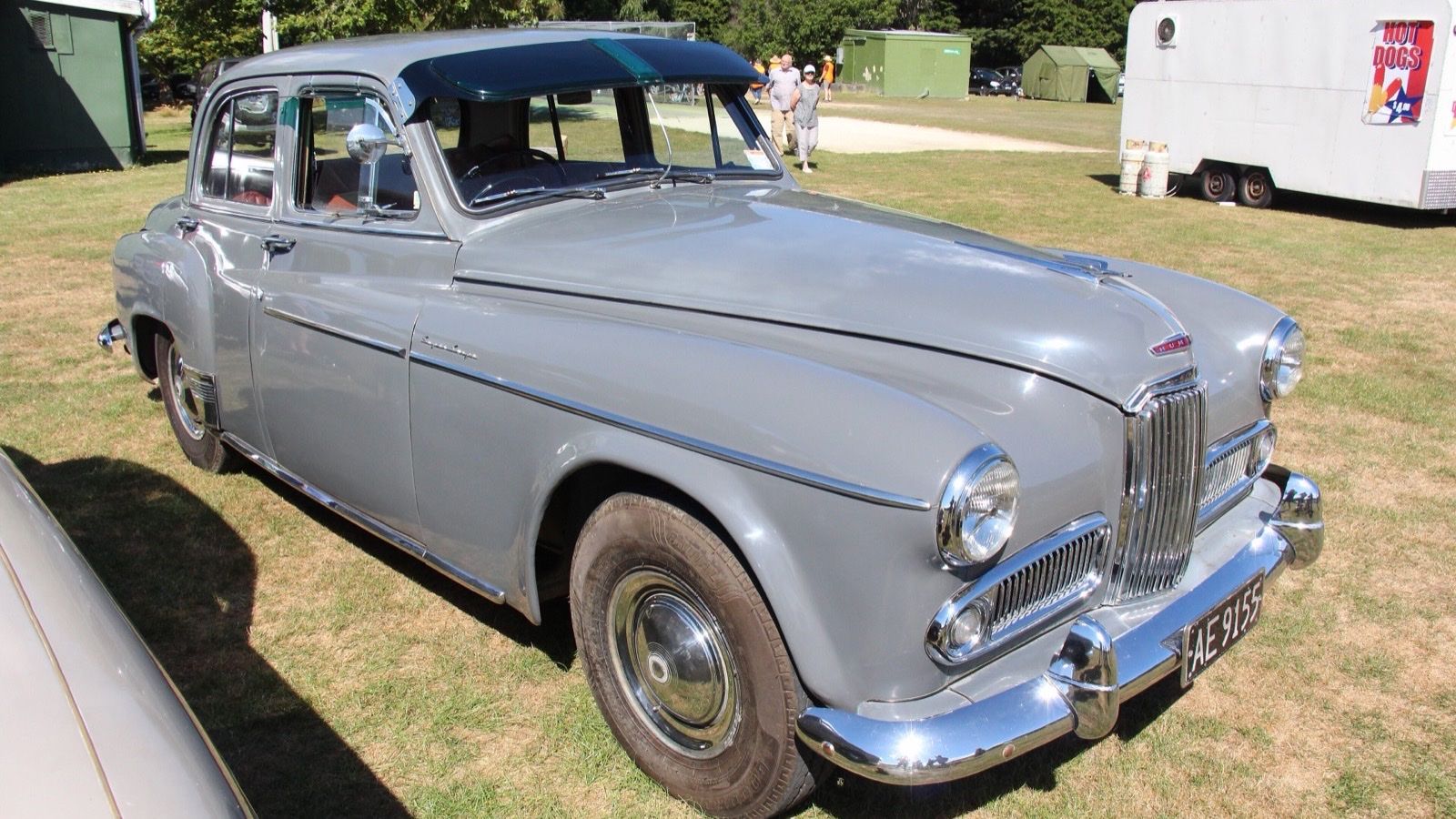
1957 Photo: “File:1957 Humber Super Snipe Mk IV Saloon (46476022914).jpg” by Sicnag / Wikimedia Commons, licensed under CC BY 2.0. Cropped to 16:9.
Series I–V/Va · Unitary Super Snipe
Unitary-construction car sharing the Hawk shell, with a new Armstrong Siddeley-derived OHV six (2.6 then ~3.0 litres); built until 1967.
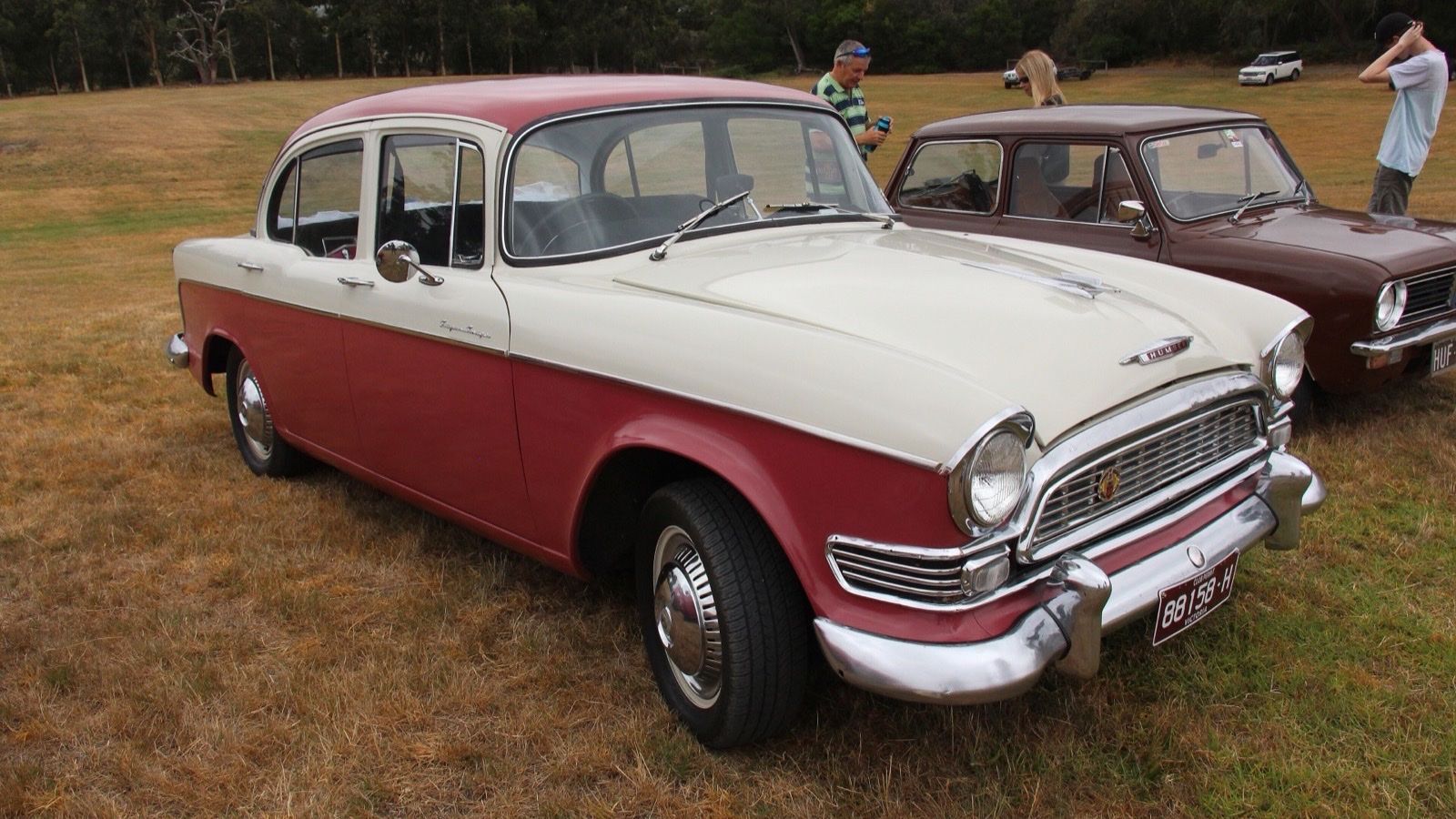
1959 Photo: “File:1959 Humber Super Snipe series I saloon (46851238822).jpg” by Sicnag / Wikimedia Commons, licensed under CC BY 2.0. Cropped to 16:9.
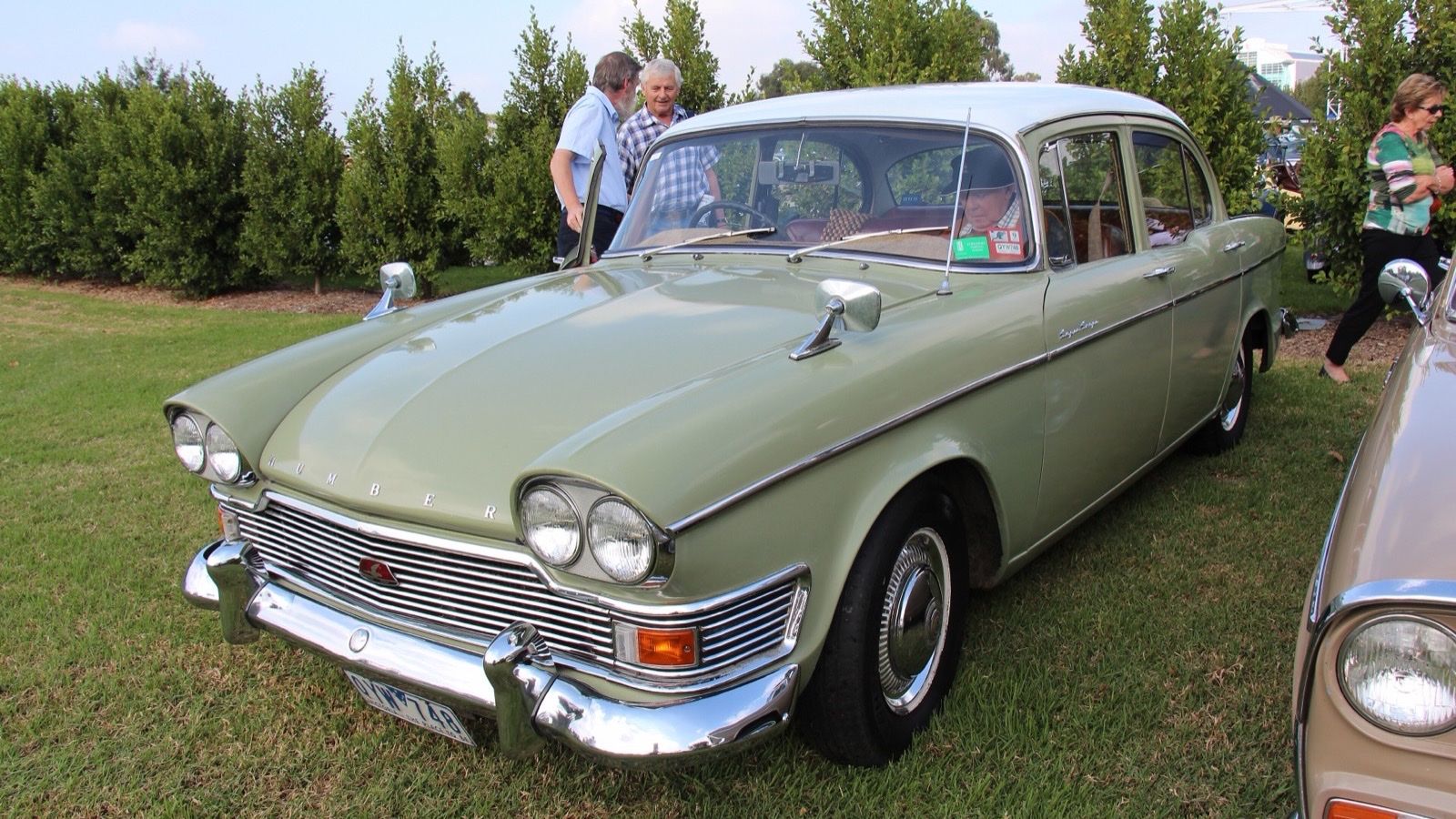
1963 Photo: “File:1963 Humber Super Snipe Series IV Saloon (14285212626).jpg” by Sicnag / Wikimedia Commons, licensed under CC BY 2.0. Cropped to 16:9.
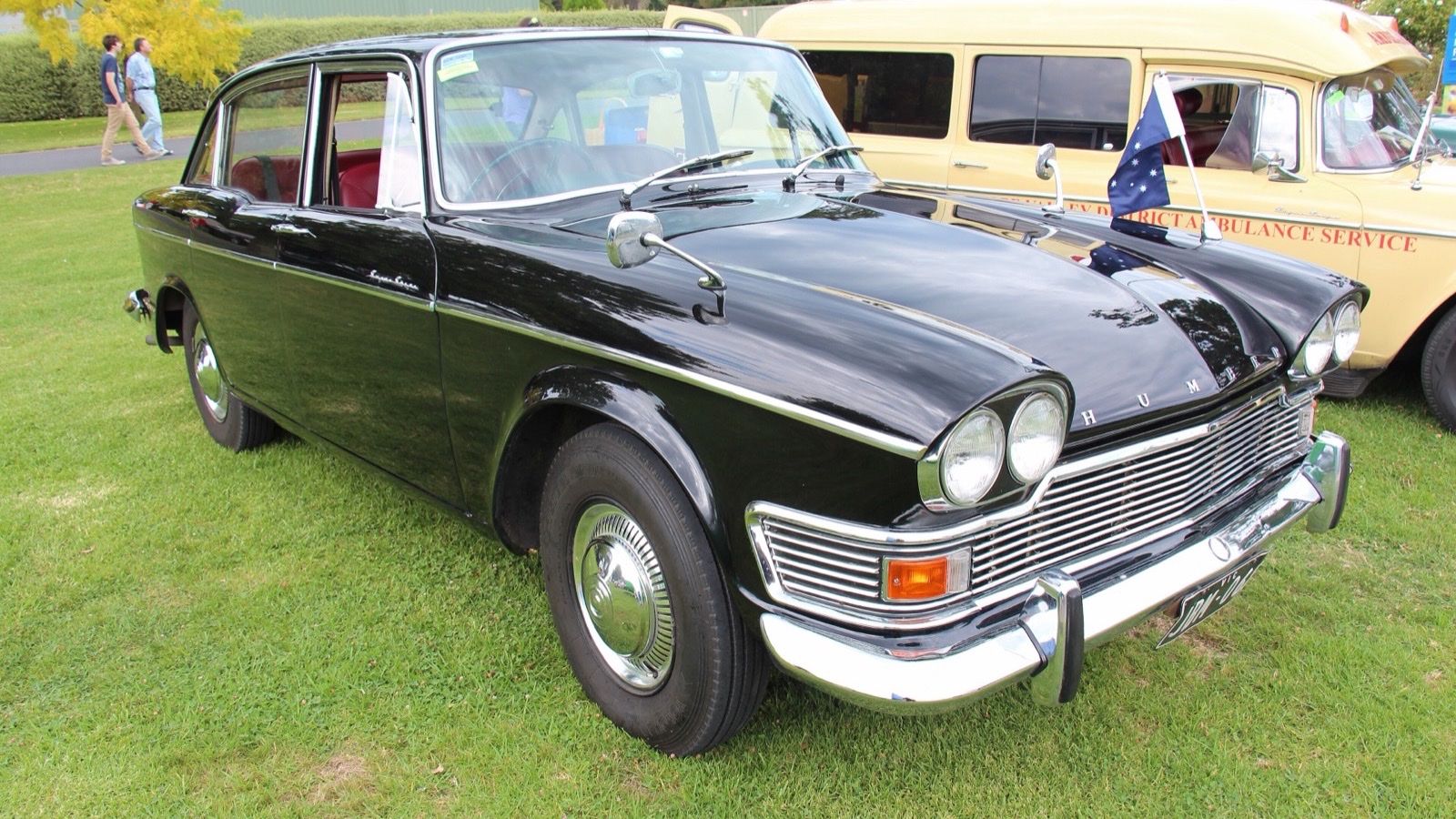
1965 Photo: “File:1965 Humber Super Snipe Series V Saloon (16524026700).jpg” by Sicnag / Wikimedia Commons, licensed under CC BY 2.0. Cropped to 16:9.
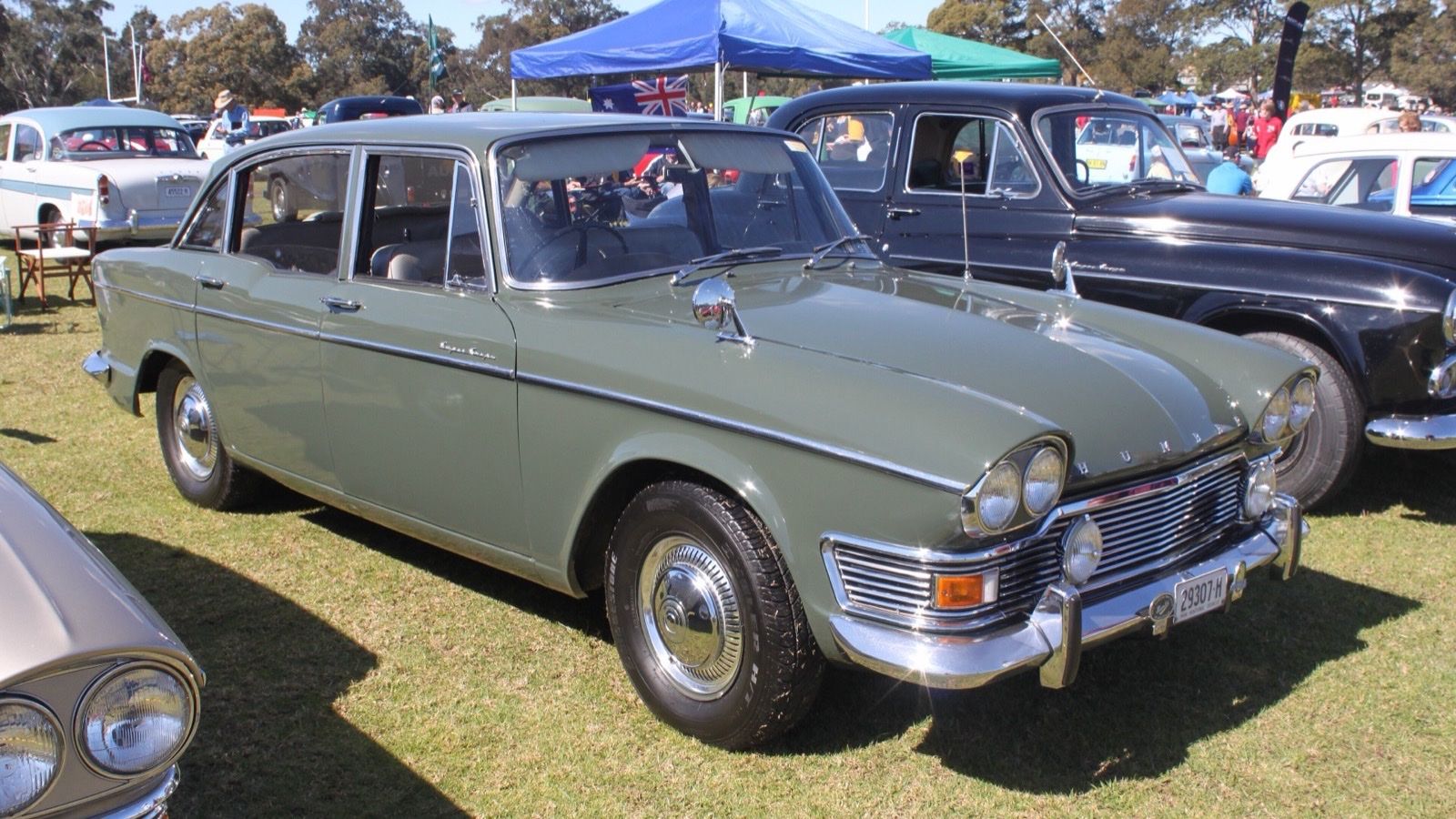
1967 Photo: “File:1967 Humber Super Snipe Series V (21721321449).jpg” by Jeremy from Sydney, Australia / Wikimedia Commons, licensed under CC BY 2.0. Cropped to 16:9.
Body styles
- Saloon
- Estate
- Limousine
Notable special editions & performance variants
Humber Imperial (1964–1967)
The top-of-the-range, more luxurious Super Snipe derivative with a lower vinyl-clad coupe-like roofline and standard automatic transmission.
Related models
Collect the nameplate
Find a scale model of the Humber Super Snipe
Search Amazon across available years, colors, and scales. Exact releases vary, so confirm the listing before ordering.