
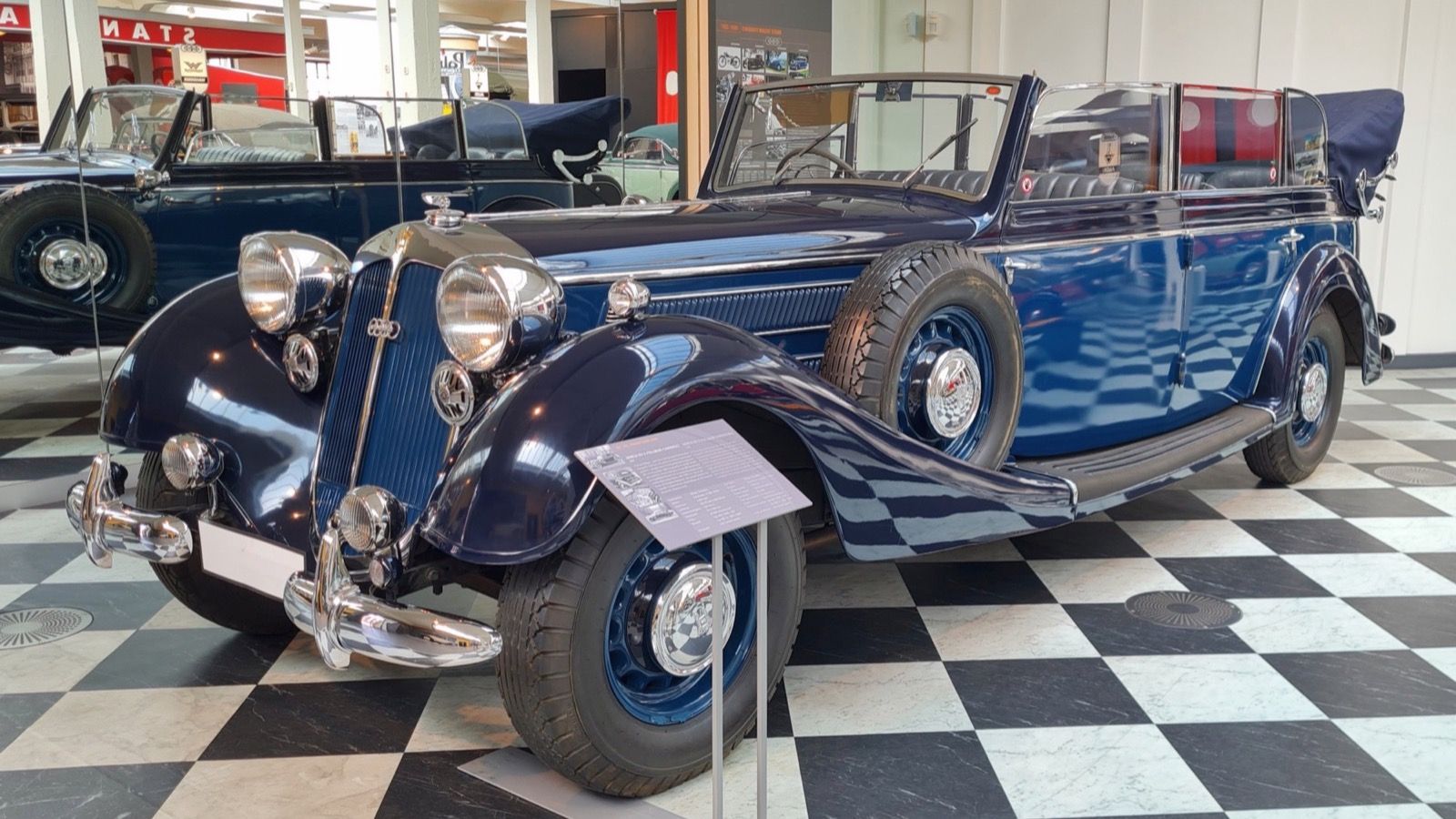
Horch 853 History
Horch's ultimate pre-war flagship (1935–1940) — a 5-litre straight-eight sport cabriolet that is today among the most coveted German classics.
Photo: “File:Horch 951 A Pullman-Cabriolet 01.jpg” by Derbrauni / Wikimedia Commons, licensed under CC BY 4.0. Cropped to 16:9.
History
The 850/851/853 family represented the absolute pinnacle of Horch engineering and coachwork. Introduced progressively from 1935, all variants shared a 4,944 cc single-overhead-camshaft straight-eight engine designed by Fritz Fiedler — initially producing 100 hp, upgraded to 120 hp in the 853 A of 1937. The chassis featured servo-assisted hydraulic drum brakes and, from the 853 onward, a De Dion-type fully independent rear axle pioneered on the Porsche-designed Auto Union Grand Prix racers.
The 853 Sport Cabriolet, bodied by Erdmann & Rossi and other coachbuilders, became the car most associated with the Horch name: long, low, and lavishly appointed, with a four-speed overdrive gearbox and a top speed exceeding 135 km/h. It was the closest German contemporary to the Mercedes-Benz 540K, and examples routinely appear in international concours events. Fewer than 1,000 vehicles across the 850 Sport, 853, and 853 A left the factory.
The parallel 951/951 A (1937–1940) was a longer-wheelbase Pullman variant on the same 5-litre straight-eight platform — the 951 A added a standard overdrive — intended for heads of state and senior officials. The Pullman models (850/851 and 951/951 A combined) were built approximately 1,200 times. Civilian production across all Horch lines ceased in March 1940 as Germany's war economy absorbed the Zwickau factory.
Generations
Type 850 / 851 · 850 / 851
First of the 5-litre straight-eight flagships: 100 hp, 3.75 m wheelbase, Pullman and cabriolet bodies; 146 units of the 851 variant confirmed.
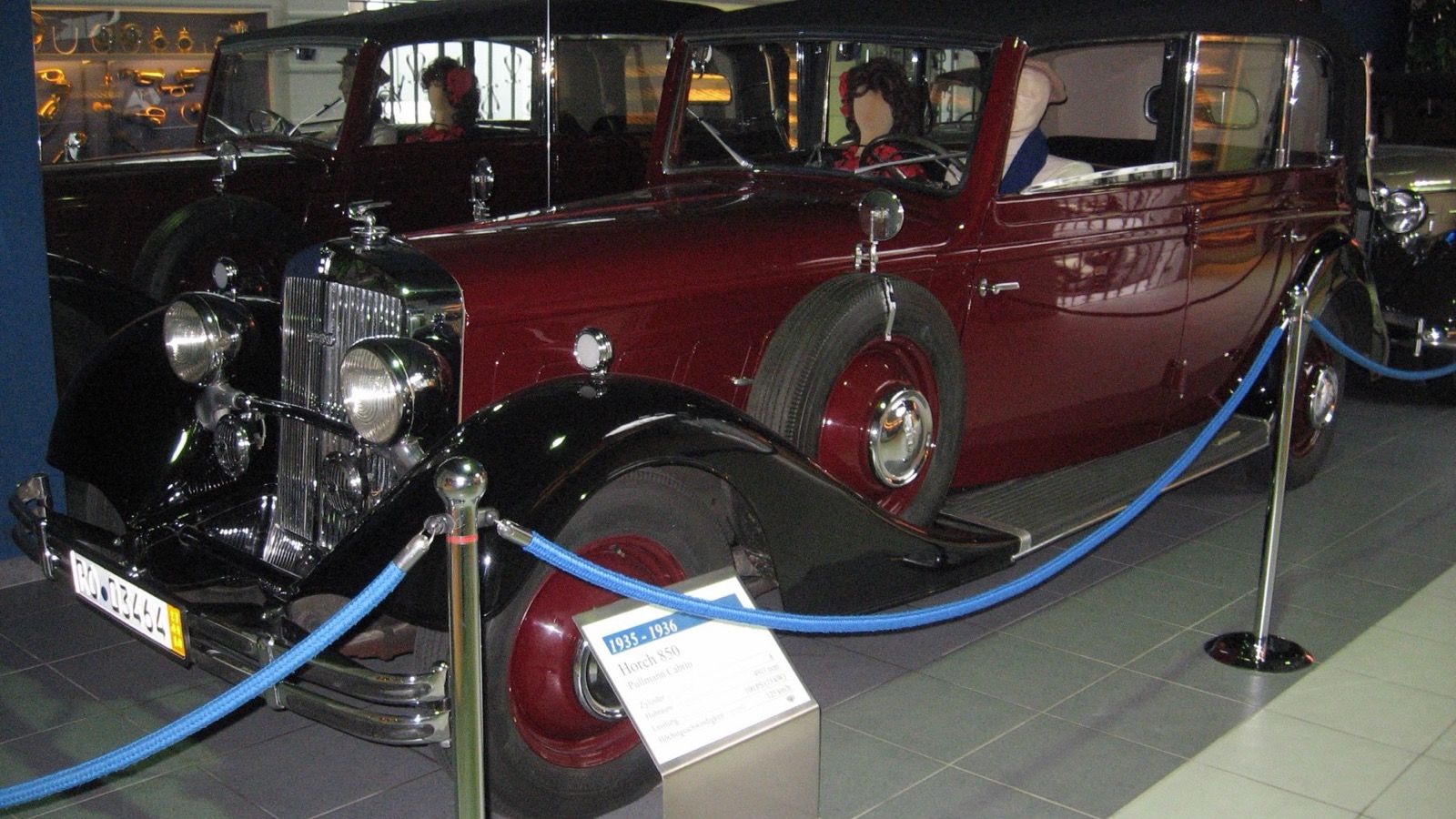
1935 Photo: “File:Horch-850 Front.JPG” by Luc106 / Wikimedia Commons — Public domain. Cropped to 16:9.
Type 853 / 853 A · 853 / 853 A
The sport cabriolet icon; 853 A from 1937 raised output to 120 hp and added the De Dion rear axle; fewer than 1,000 built across both sub-types.
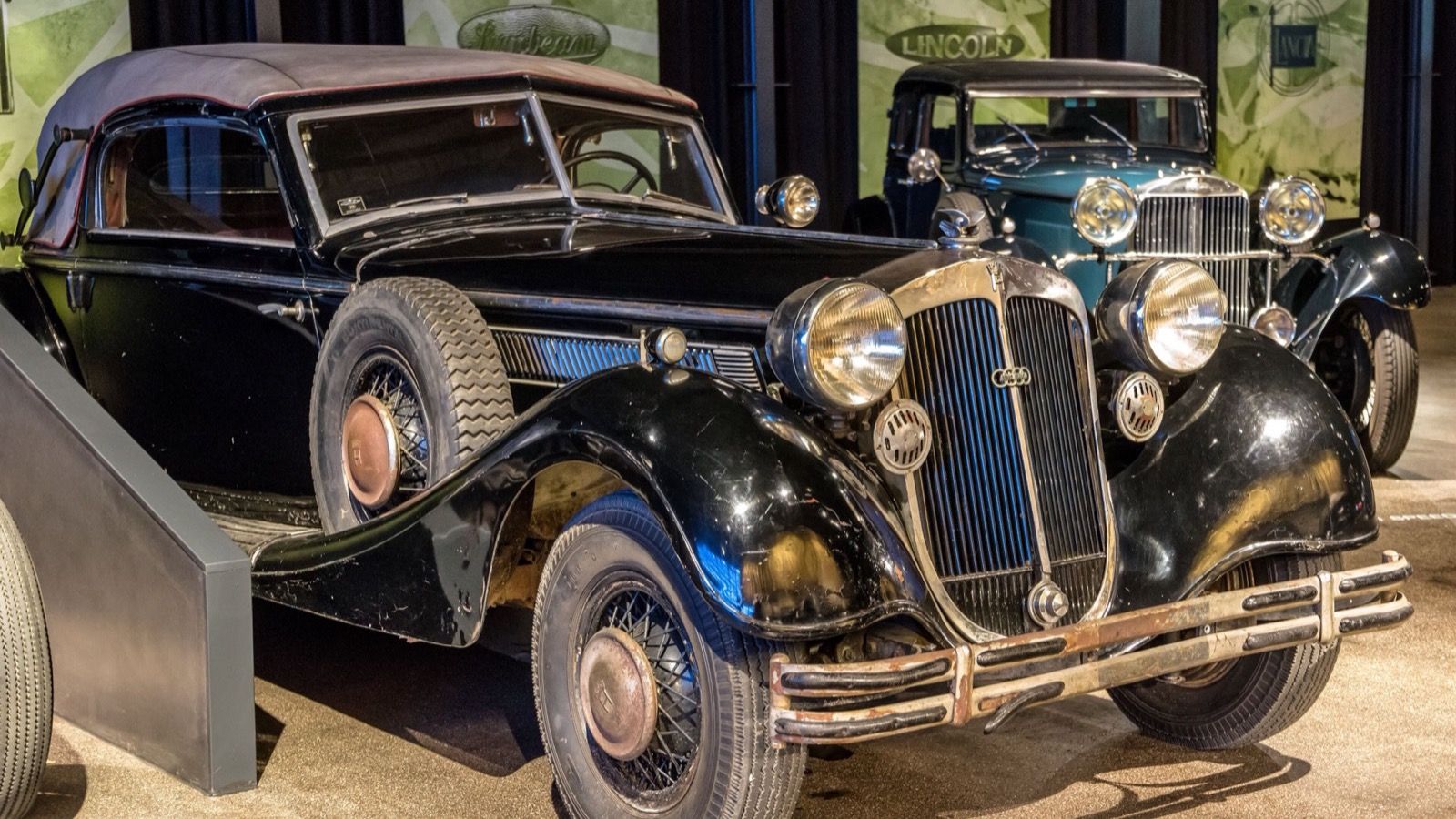
1937 Photo: “File:Horch 853 Sport 1937 (Volante) jm20557.jpg” by joergens.mi / Wikimedia Commons, licensed under CC BY-SA 3.0. Cropped to 16:9.
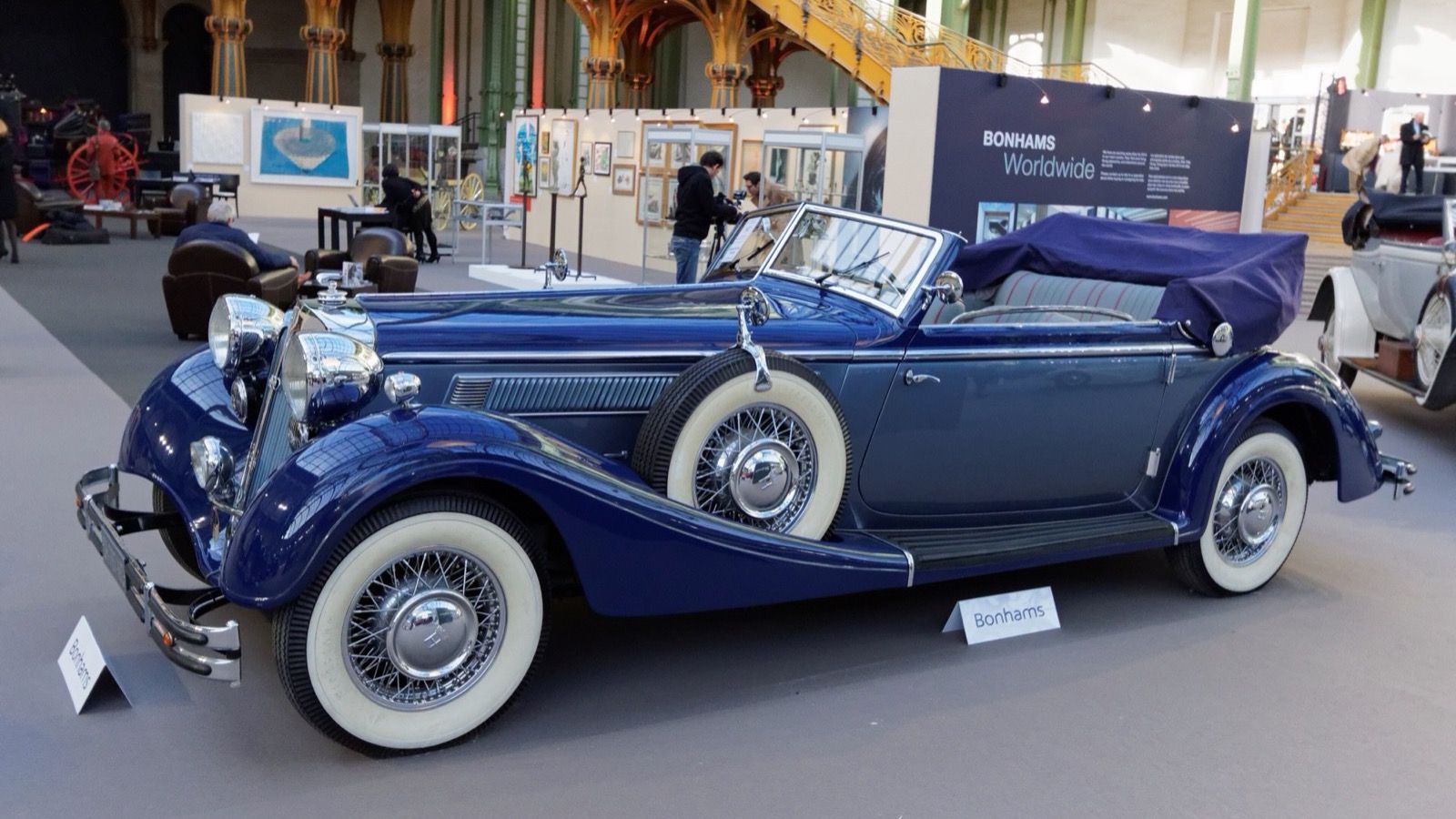
1938 Photo: “File:Paris - Bonhams 2015 - Horch 853 Cabriolet - 1938 - 003.jpg” by Thesupermat / Wikimedia Commons, licensed under CC BY-SA 4.0. Cropped to 16:9.
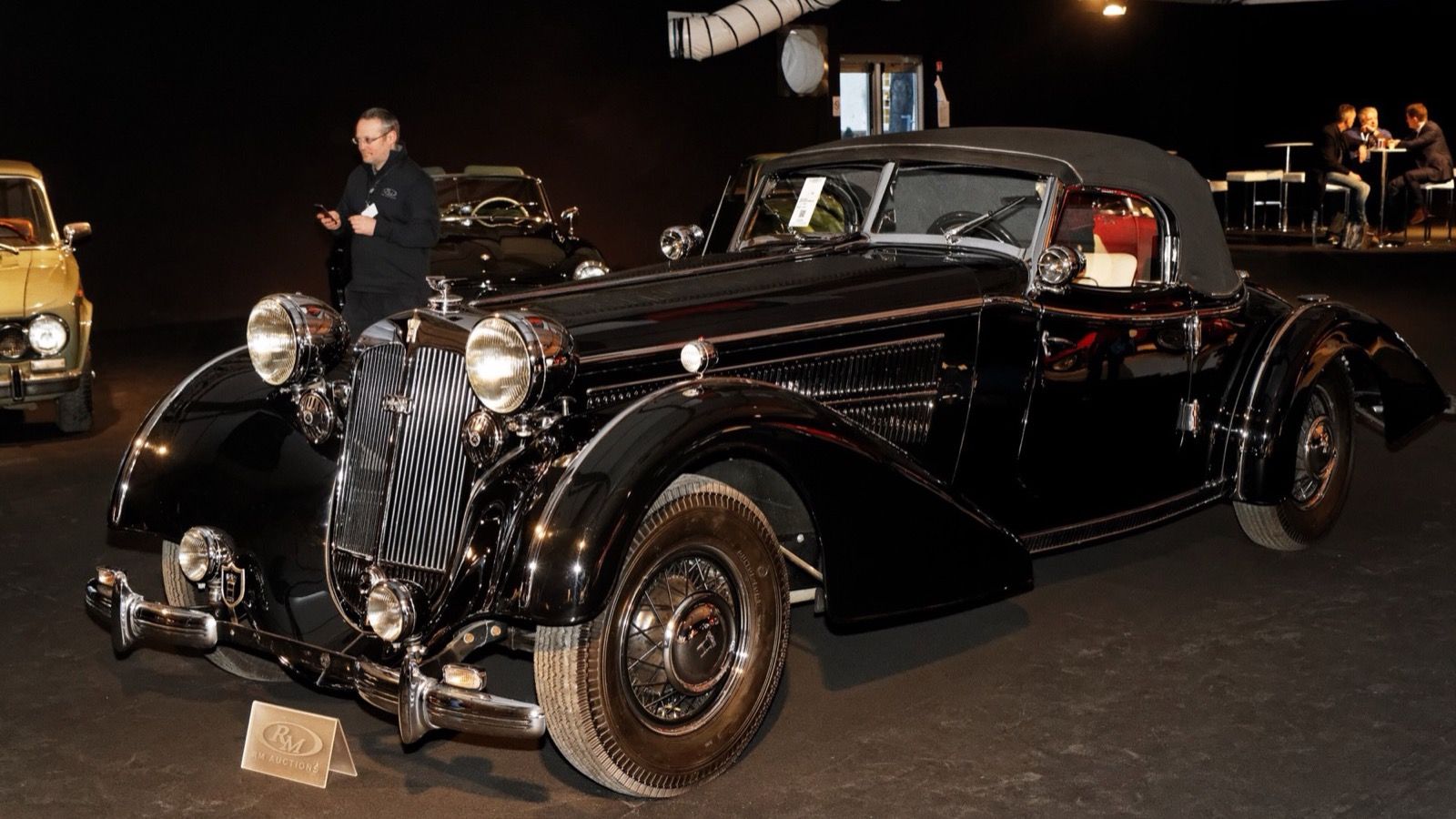
1940 Photo: “File:Paris - RM Auctions - 5 février 2014 - Horch 853A Sportcabriolet - 1940 - 002.jpg” by Thesupermat / Wikimedia Commons, licensed under CC BY-SA 3.0. Cropped to 16:9.
Type 951 / 951 A · 951 / 951 A
Photo: “File:Horch 951 A Pullman-Cabriolet 01.jpg” by Derbrauni / Wikimedia Commons, licensed under CC BY 4.0. Cropped to 16:9.
Long-wheelbase (5.64 m) Pullman flagship on the same 5-litre straight-eight; 951 A added standard overdrive; combined Pullman production ~1,200 units.
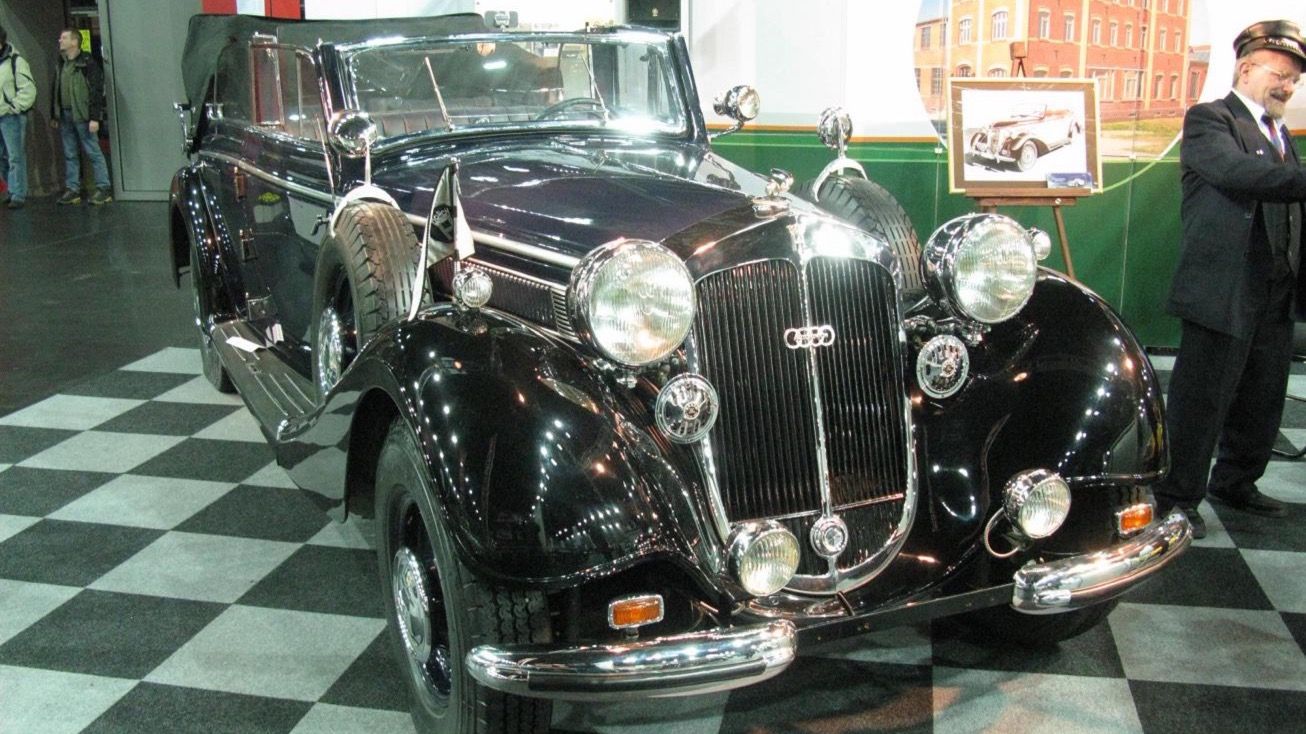
1940 Photo: “File:Horch 951A Sedan Cabriolet 1940 (5472656112).jpg” by nakhon100 / Wikimedia Commons, licensed under CC BY 2.0. Cropped to 16:9.
Body styles
- Sport Cabriolet
- Cabriolet
- Pullman Limousine
- Roadster
Notable special editions & performance variants
853 Sport Cabriolet (Erdmann & Rossi)
The most famous Horch body — long, flowing two-door cabriolet coachwork by Berlin's Erdmann & Rossi; among the most valuable German pre-war classics at auction today.
853 Voll & Ruhrbeck Sport Cabriolet
Alternative coachbuilt sport cabriolet body by Voll & Ruhrbeck on the 853 chassis.
Related models
Collect the nameplate
Find a scale model of the Horch 853
Search Amazon across available years, colors, and scales. Exact releases vary, so confirm the listing before ordering.