
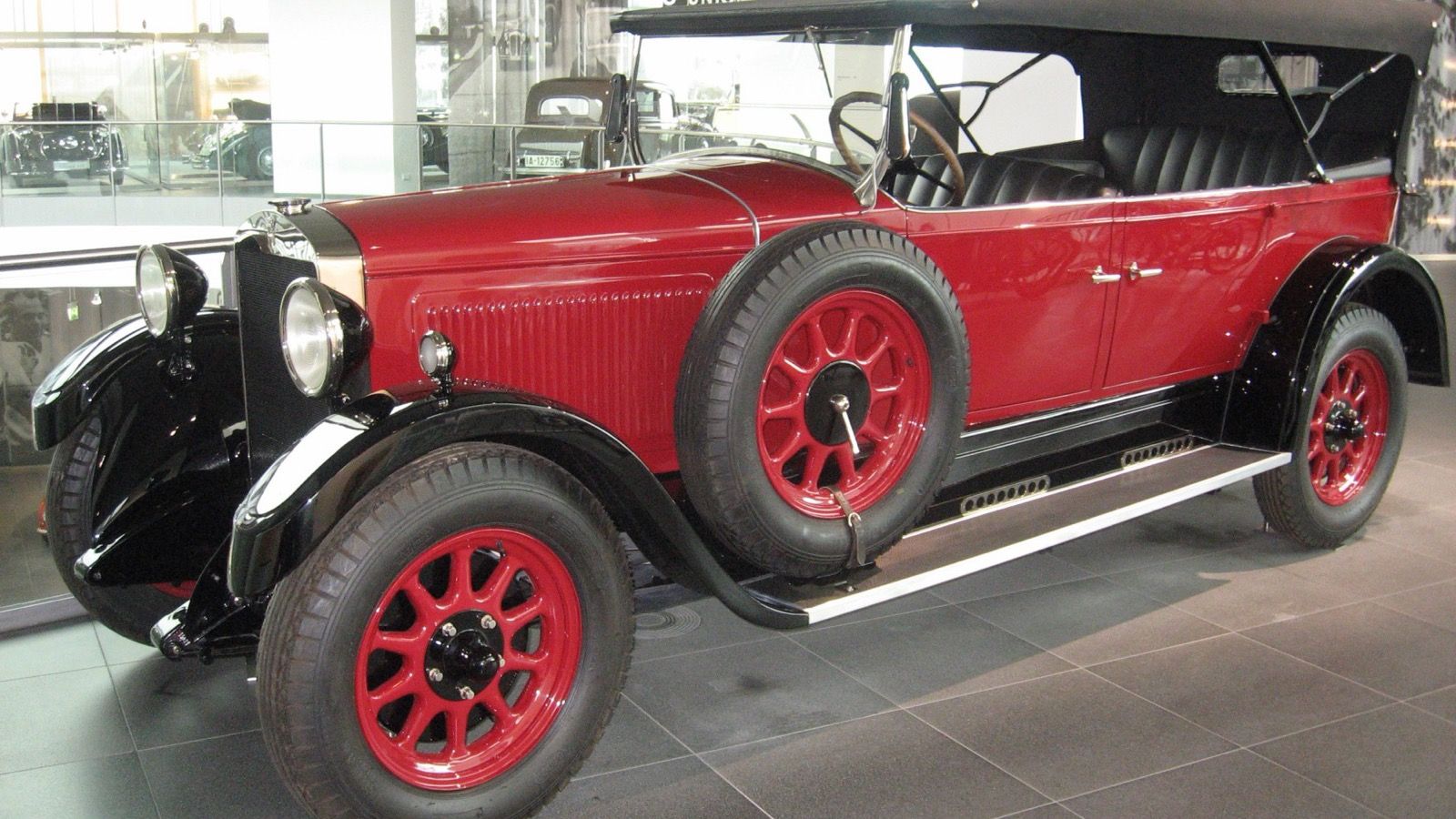
Horch 8 History
Germany's first production straight-eight (1926–1935) — debuted as the Type 303 and grew into a full range of large-displacement luxury tourers.
Photo: “File:Horch 303.JPG” by No machine-readable author provided. Luc106 assumed (based on copyright claims). / Wikimedia Commons — Public domain. Cropped to 16:9.
History
Paul Daimler — son of Gottlieb Daimler — joined Horch as chief engineer and designed the Type 303, the first German series-production car powered by an eight-cylinder engine. Unveiled at the 1926 German Motor Show in Berlin, the reaction was immediately enthusiastic; contemporary observers stressed that this was a historic milestone for the German industry. The initial 3.1-litre engine produced around 60 hp.
The straight-eight lineup expanded through the late 1920s and early 1930s under subsequent type designations: the Type 350 and 375 (from 1928) used a 4.0-litre unit producing 80 hp; the Type 400 and 405 (from 1931) followed; larger-displacement variants — the Type 420, 450, and 470 — stretched to 4.5 litres and 90 hp. Body styles ranged from standard limousines and phaetons to long-wheelbase Pullman limousines.
Approximately 12,000 Horch 8 cars were built across the series' nine-year run. Even after the 1932 Auto Union merger — which brought Horch, Audi, DKW, and Wanderer together under one corporate roof — Horch continued as a distinct luxury brand within the group, sustaining the straight-eight lineage into the second generation of models.
Generations
First generation · Type 303/304/305/306
Photo: “File:Horch 303.JPG” by No machine-readable author provided. Luc106 assumed (based on copyright claims). / Wikimedia Commons — Public domain. Cropped to 16:9.
The original straight-eight Horchs; 3.1-litre debuting at the 1926 Berlin Motor Show as Germany's first production eight-cylinder passenger car.
Second generation · Type 350/375/400/405/470
Expanded engine range (4.0–4.5 litres, 80–90 hp); Pullman and cabriolet bodies added; approximately 12,000 units built across the full Horch 8 run.
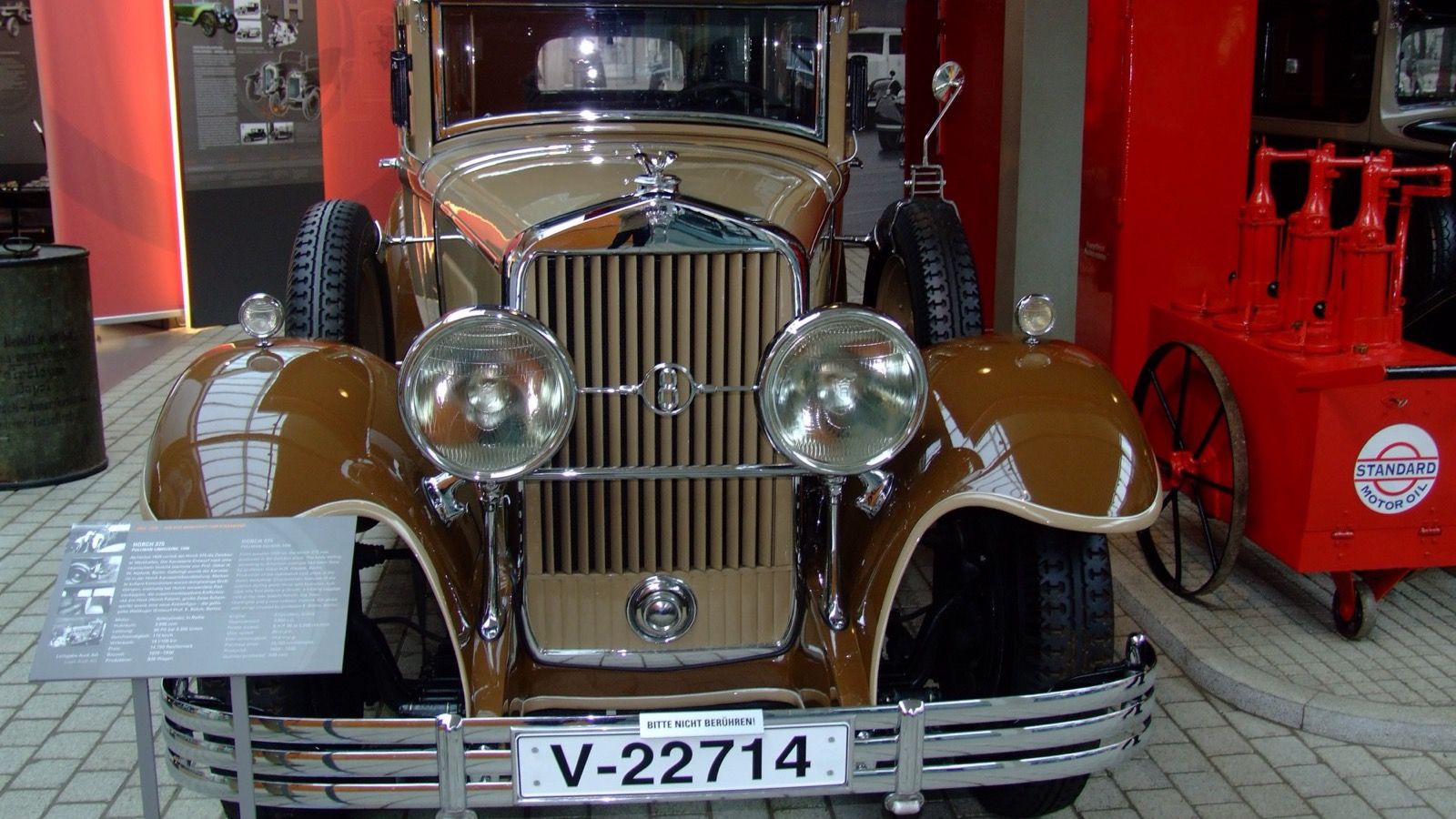
1929 Photo: “File:August Horch Museum Zwickau - gravitat-OFF - Horch 379 von 1929.jpg” by gravitat-OFF from Germany / Wikimedia Commons, licensed under CC BY 2.0. Cropped to 16:9.
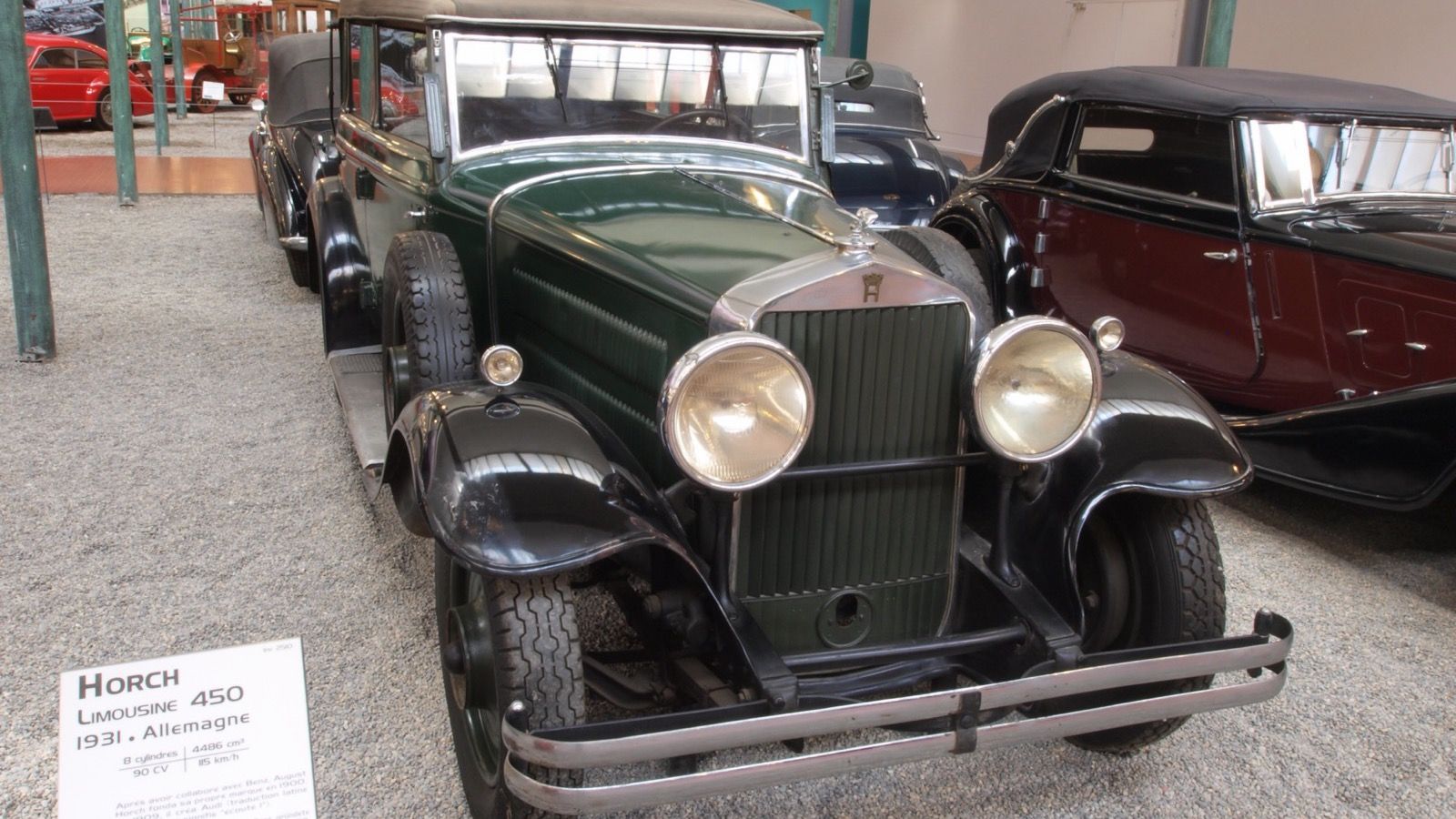
1931 Photo: “File:Horch Limousine 450 (1931) pic1.JPG” by AlfvanBeem / Wikimedia Commons — CC0 1.0. Cropped to 16:9.
Body styles
- Limousine
- Phaeton
- Cabriolet
- Pullman limousine
Related models
Collect the nameplate
Find a scale model of the Horch 8
Search Amazon across available years, colors, and scales. Exact releases vary, so confirm the listing before ordering.