
Healey Nash-Healey History
Catalog record
Photography for this nameplate has not yet cleared the archive’s licensing and identity checks. The researched text below remains available while the page stays out of search and advertising inventory.
History
The Nash-Healey originated from a chance meeting in 1949 between Donald Healey and Nash-Kelvinator president George Mason aboard the RMS Queen Elizabeth. The two men agreed on a joint sports car: Healey would supply the chassis and body, Nash the 3.8-litre straight-six Ambassador engine (fitted with twin SU carburettors) and gearbox. A prototype appeared at the Paris Motor Show in September 1950, and the production model debuted at the Chicago Auto Show in February 1951.
For 1952, Pininfarina in Turin took over body styling and final assembly, producing a handsome Italian-influenced two-seater of considerably greater elegance than the original. The engine was simultaneously enlarged to 4.1 litres. A new 108-inch-wheelbase hardtop coupe variant, the Le Mans, was added for 1953 — named to honour the Nash-Healey's first-in-class finish at the 1952 24 Hours of Le Mans.
By 1954, only the Le Mans coupe remained in production; the roadster had been dropped. Total production across all years was 507 units: 104 in 1951, 150 in 1952, 162 in 1953, and 90 in 1954. Despite its Le Mans pedigree and Pininfarina body, the Nash-Healey's high price limited sales and it was discontinued in August 1954.
Generations
First series · Healey-bodied roadster
Original in-house Healey body on the Nash Ambassador 3.8-litre six; 104 built.
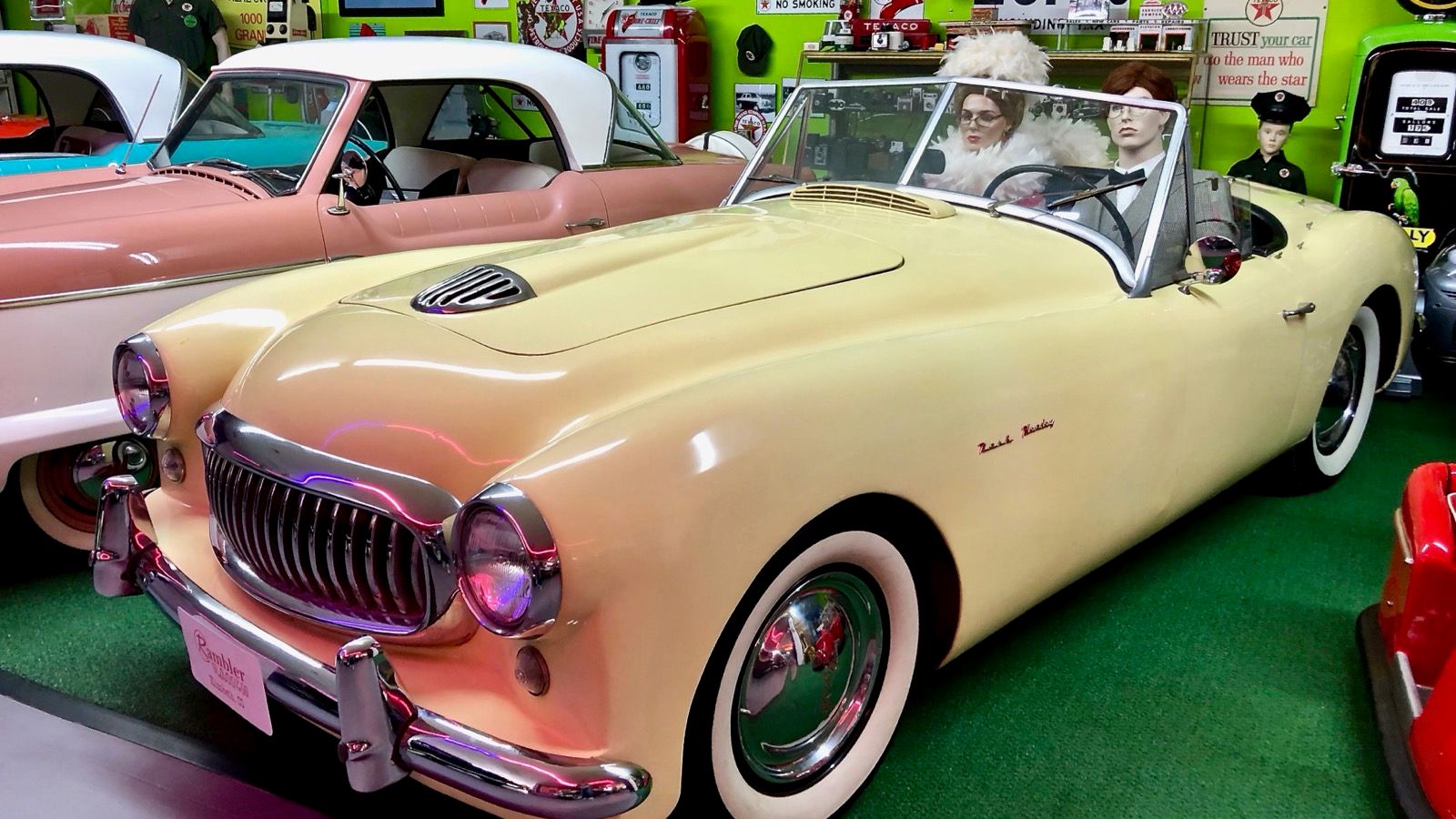
1951 Photo: “File:1951 Nash-Healey luxury sports gran turismo car at Rambler Ranch 1of6.jpg” by CZmarlin — Christopher Ziemnowicz, a photo credit would be appreciated if this image is used anywhere other than Wikipedia. Please also include the location of the image: the Rambler Ranch collection in Elizabeth, Colorado. See: https://www.ramblerranch.com / Wikimedia Commons, licensed under CC BY-SA 4.0. Cropped to 16:9.
Pininfarina roadster · Pininfarina-bodied roadster
Italian Pininfarina restyling and final assembly; larger 4.1-litre engine; roadster production peaked at 150 cars in 1952.
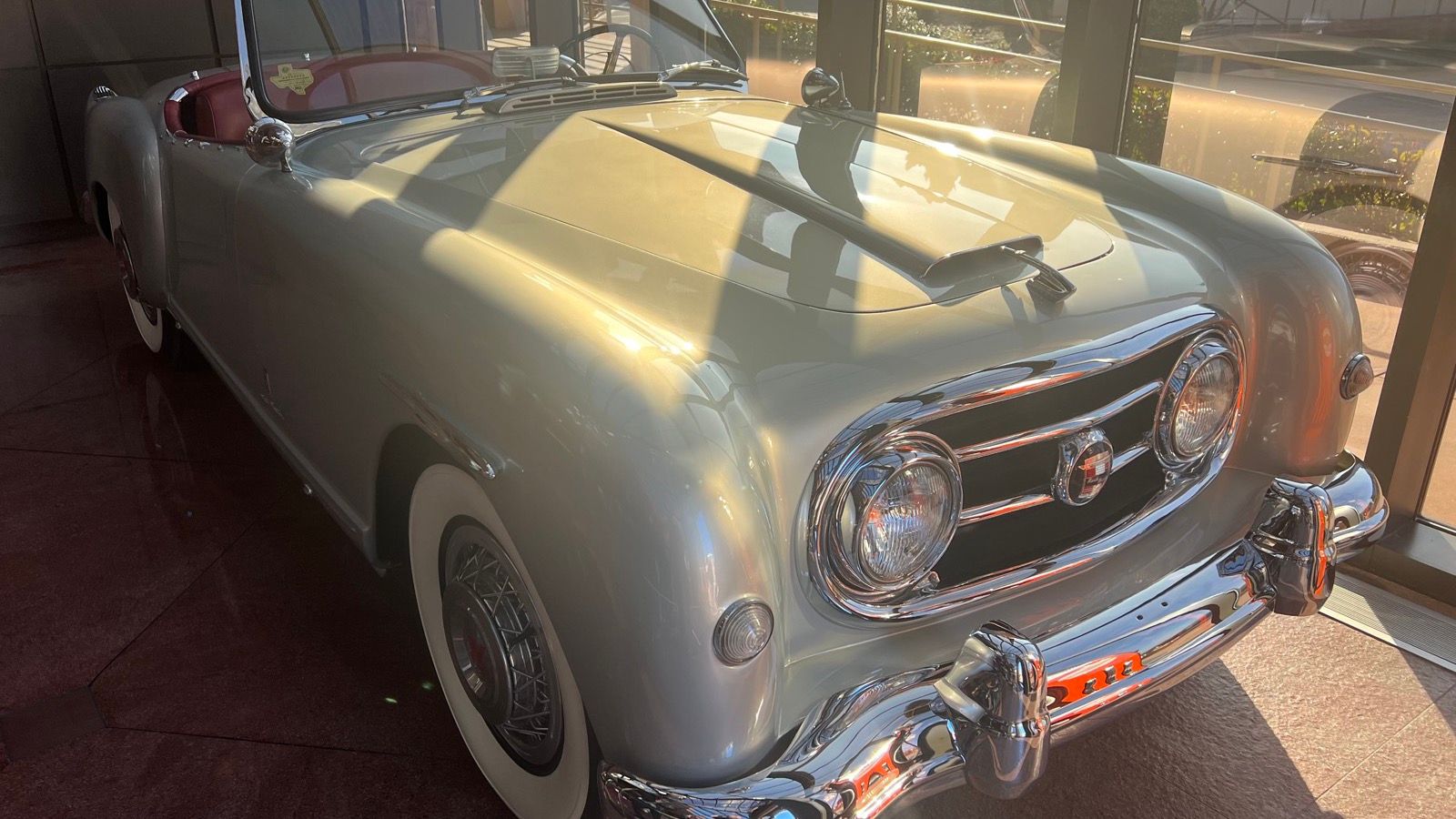
1953 Photo: “File:1953 Nash-Healey Roadster Blackhawk Museum.jpg” by TaurusEmerald / Wikimedia Commons, licensed under CC BY-SA 4.0. Cropped to 16:9.
Le Mans coupe · Le Mans Hardtop Coupe
Longer 108-inch wheelbase hardtop coupe added 1953, named for the 1952 Le Mans class win; the sole body style in 1954.
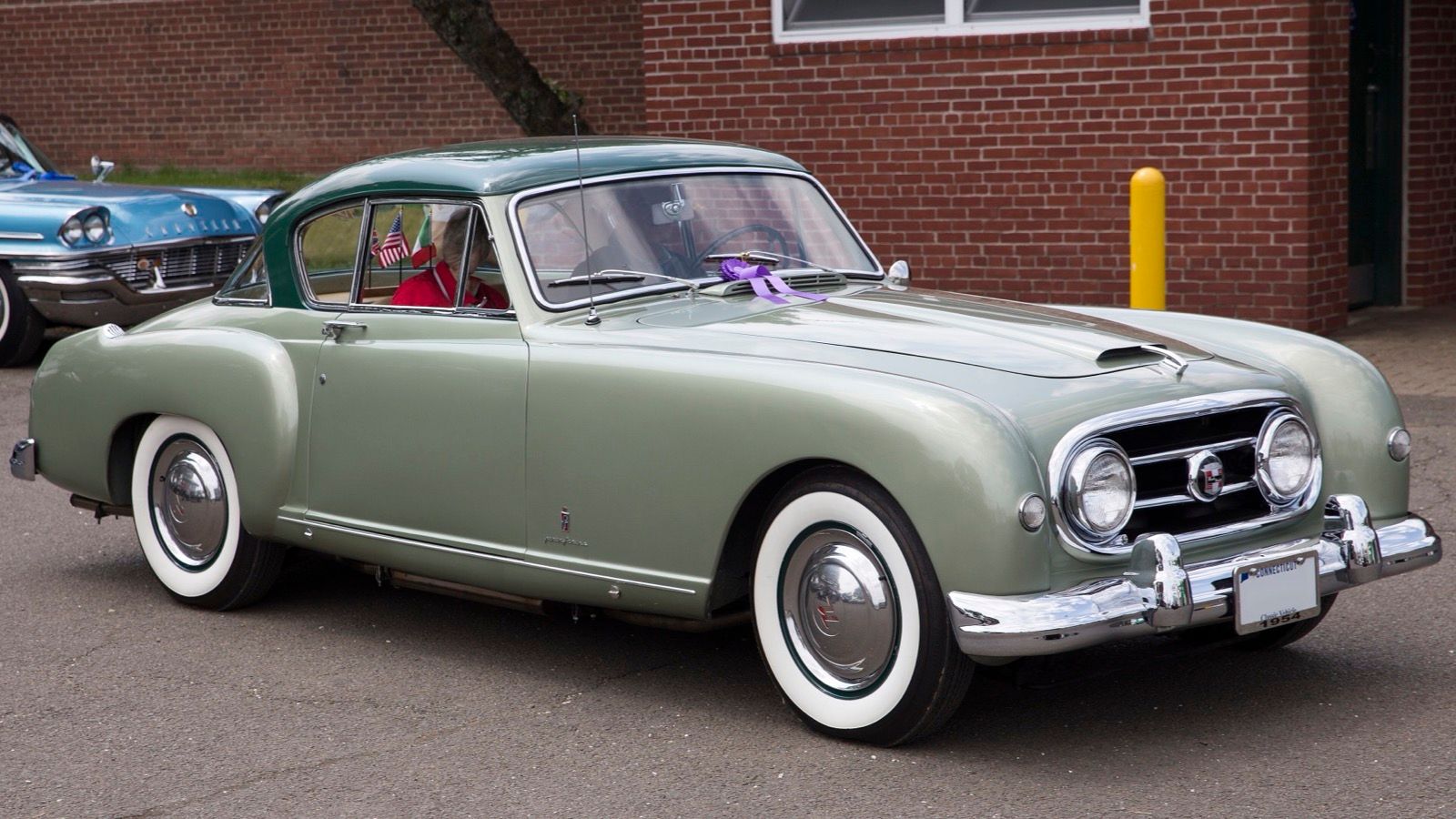
1954 Photo: “File:1954 Nash-Healey LeMans Coupe in two-tone Green, front right.jpg” by Mr.choppers / Wikimedia Commons, licensed under CC BY-SA 4.0. Cropped to 16:9.
Body styles
- Roadster
- Hardtop coupe
Notable special editions & performance variants
Le Mans class winner
A Nash-Healey finished first in class at the 1952 24 Hours of Le Mans, motivating the addition of the 'Le Mans' coupe model name for 1953.
Related models
Collect the nameplate
Find a scale model of the Healey Nash-Healey
Search Amazon across available years, colors, and scales. Exact releases vary, so confirm the listing before ordering.