
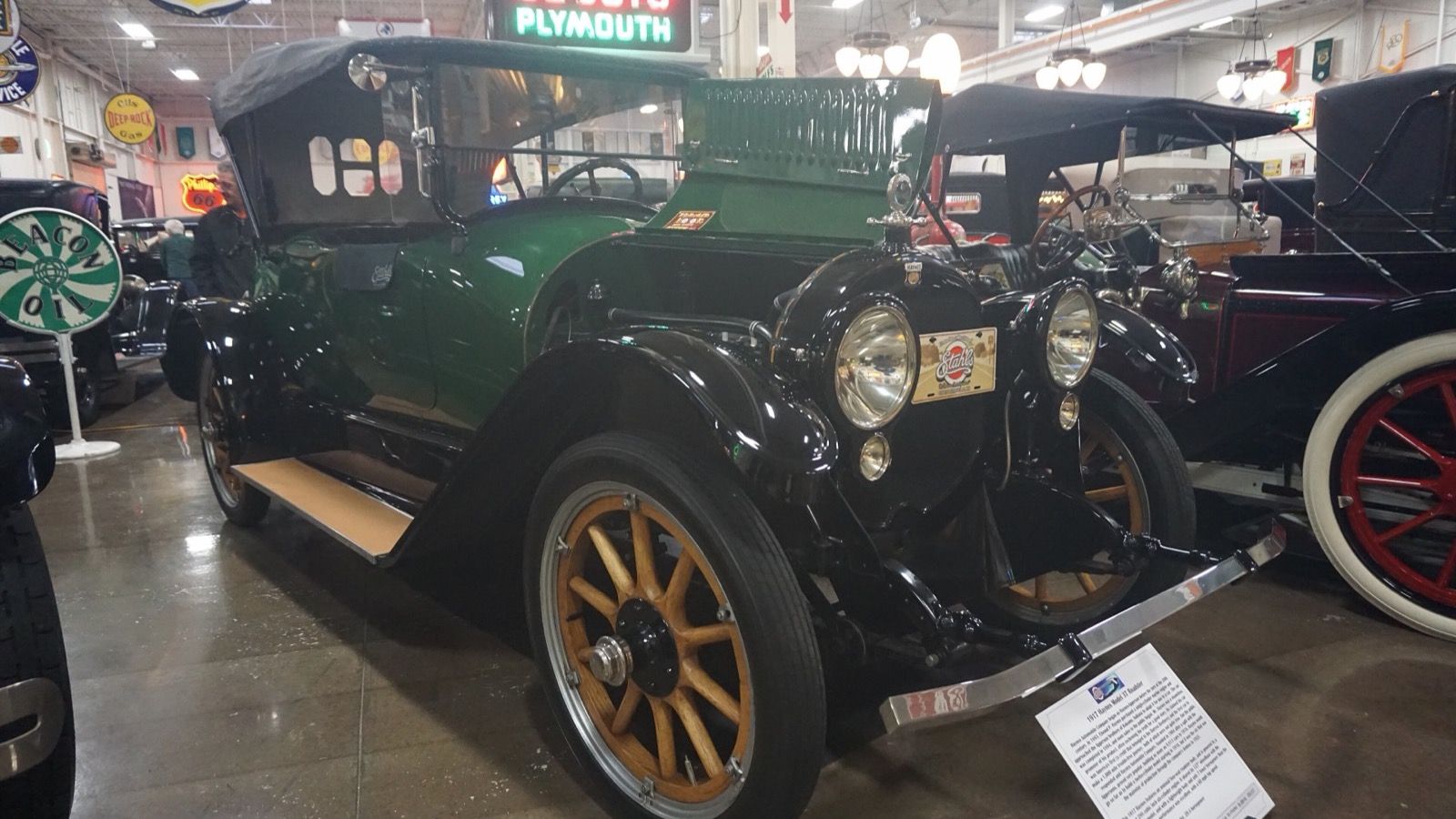
Haynes Light Six History
Haynes' long-running six-cylinder car, advertised as 'America's Greatest Light Six' from 1914 — the marque's volume model through to its 1924 collapse.
Photo: “File:Stahls Automotive Collection December 2021 033 (1917 Haynes Model 37 Roadster).jpg” by Michael Barera / Wikimedia Commons, licensed under CC BY-SA 4.0. Cropped to 16:9.
History
The Light Six was the Haynes Automobile Company's mainstream six-cylinder car, introduced for 1914 at around $1,485 and advertised as 'America's Greatest Light Six.' Period ads claimed 55 horsepower, 22 to 25 miles per gallon, and more than 1 horsepower to every 55 pounds of weight. The line was offered across body styles — typically a five-passenger touring or sedan, a three-passenger coupelet, and a two-passenger roadster — and carried various model numbers over the years (Models 26, 36, 37, 47, 55, 57, and later 75).
For 1916 Haynes refined the Light Six into new series Models 36 and 37: the Model 36 was a four-door tourer on a ~3,073 mm wheelbase, the Model 37 a two-door roadster on a slightly longer ~3,226 mm wheelbase, both powered by a 4.7-liter inline-six. The company built a new factory with a moving assembly line capable of turning out up to 60 cars per day; production peaked at just over 6,000 units in 1921.
Rising costs, an aging lineup, and the early-1920s recession overwhelmed the firm. The Light Six remained the range staple when the Haynes Automobile Company declared bankruptcy in September 1924 and ceased production in 1925; total output across all Haynes models (1894–1924) is estimated at approximately 58,761 vehicles.
Generations
First generation · Models 26–37 (four-cylinder to six transition)
Photo: “File:Stahls Automotive Collection December 2021 033 (1917 Haynes Model 37 Roadster).jpg” by Michael Barera / Wikimedia Commons, licensed under CC BY-SA 4.0. Cropped to 16:9.
Introduced the six-cylinder at ~$1,485; Models 36 and 37 for 1916 offered a 4.7-liter six in tourer and roadster form.
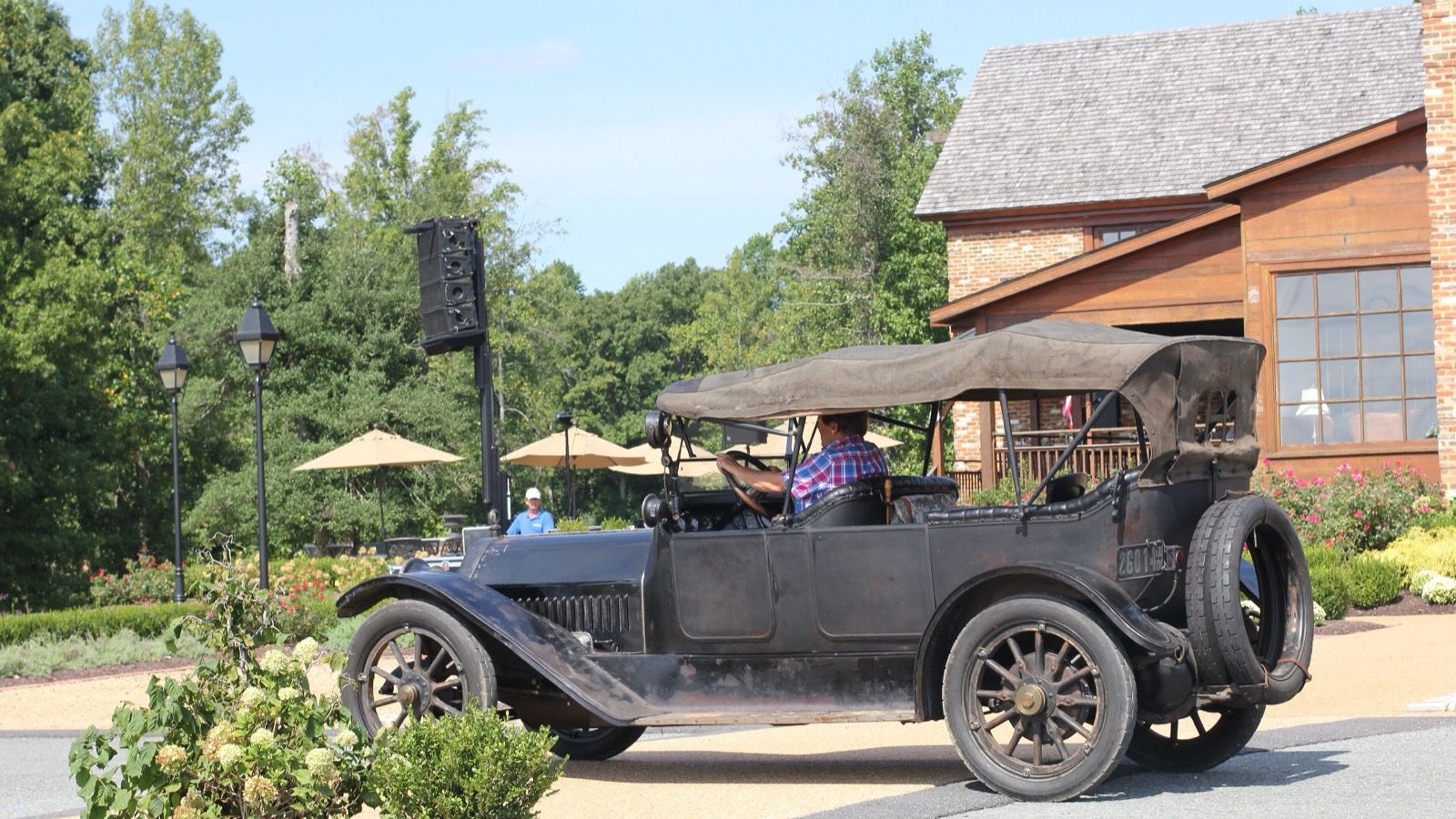
1914 Photo: “File:1914 Haynes Model 27 (21582901065).jpg” by Eli Christman from Richmond, VA, USA / Wikimedia Commons, licensed under CC BY 2.0. Cropped to 16:9.
1917 Photo: “File:Stahls Automotive Collection December 2021 033 (1917 Haynes Model 37 Roadster).jpg” by Michael Barera / Wikimedia Commons, licensed under CC BY-SA 4.0. Cropped to 16:9.
Second generation · Numbered series (Models 40–55)
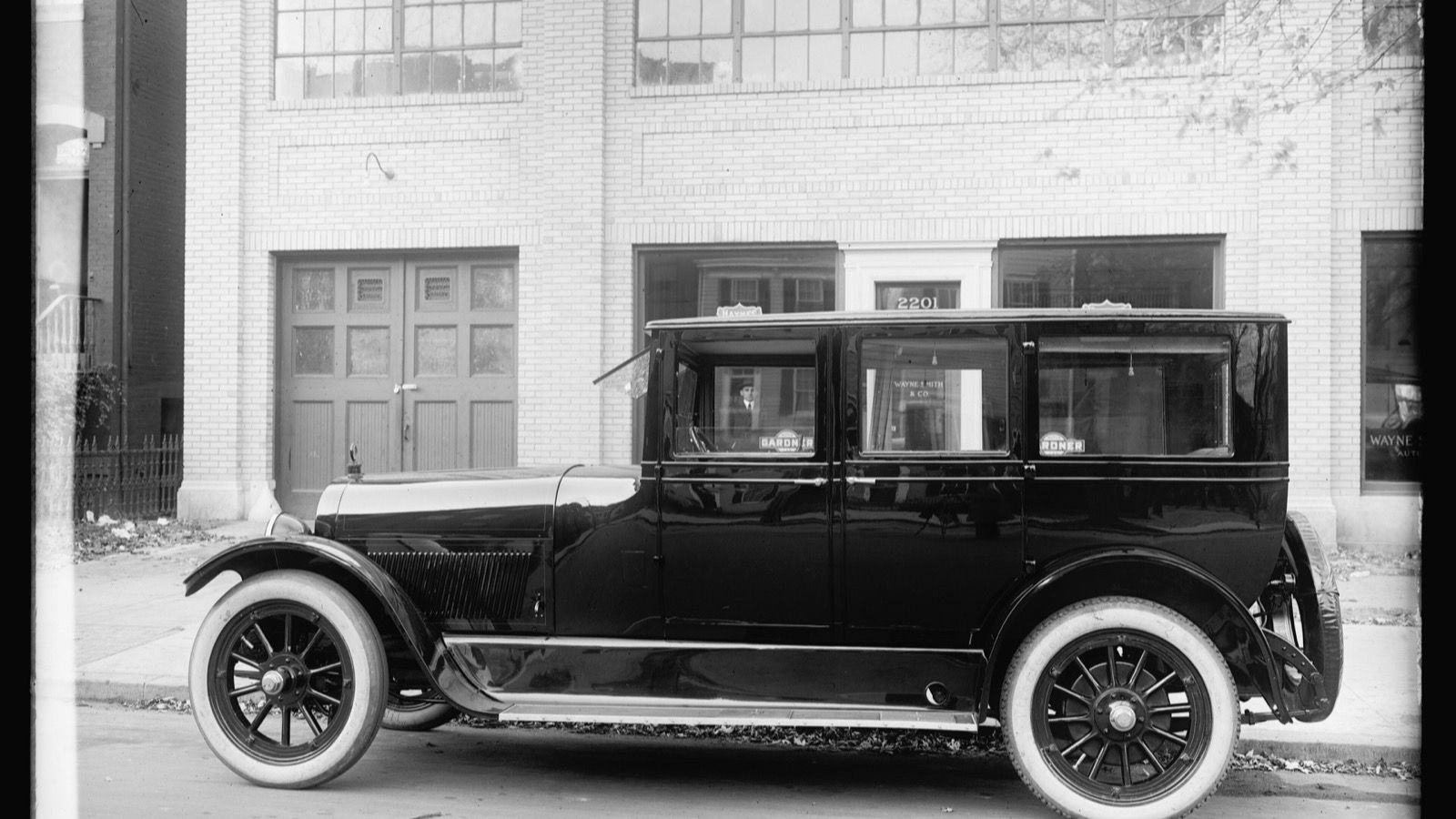
Photo: “File:Haynes sedan, 1920 LCCN2016852336.jpg” by National Photo Company Collection / Wikimedia Commons — Public domain. Cropped to 16:9.
Volume era; peak production of ~6,000 cars in 1921; Light Six competed directly with Overland and Dodge in the middle market.
1920 Photo: “File:Haynes sedan, 1920 LCCN2016852336.jpg” by National Photo Company Collection / Wikimedia Commons — Public domain. Cropped to 16:9.
Third generation · Models 57–75 final series
Last Haynes sixes; the Model 57 (1923) offered sedan, coupelet, and roadster on a 121-inch wheelbase; bankruptcy declared September 1924.
Body styles
- Touring
- Sedan
- Coupelet
- Roadster
Notable special editions & performance variants
Blue Ribbon Speedster
A sporty two-seat roadster aimed at the Stutz Bearcat and Mercer Raceabout; wire wheels, luggage carrier, and Spanish leather seats; won the NY Auto Club Silver Cup on its first competitive outing.
Related models
Collect the nameplate
Find a scale model of the Haynes Light Six
Search Amazon across available years, colors, and scales. Exact releases vary, so confirm the listing before ordering.