
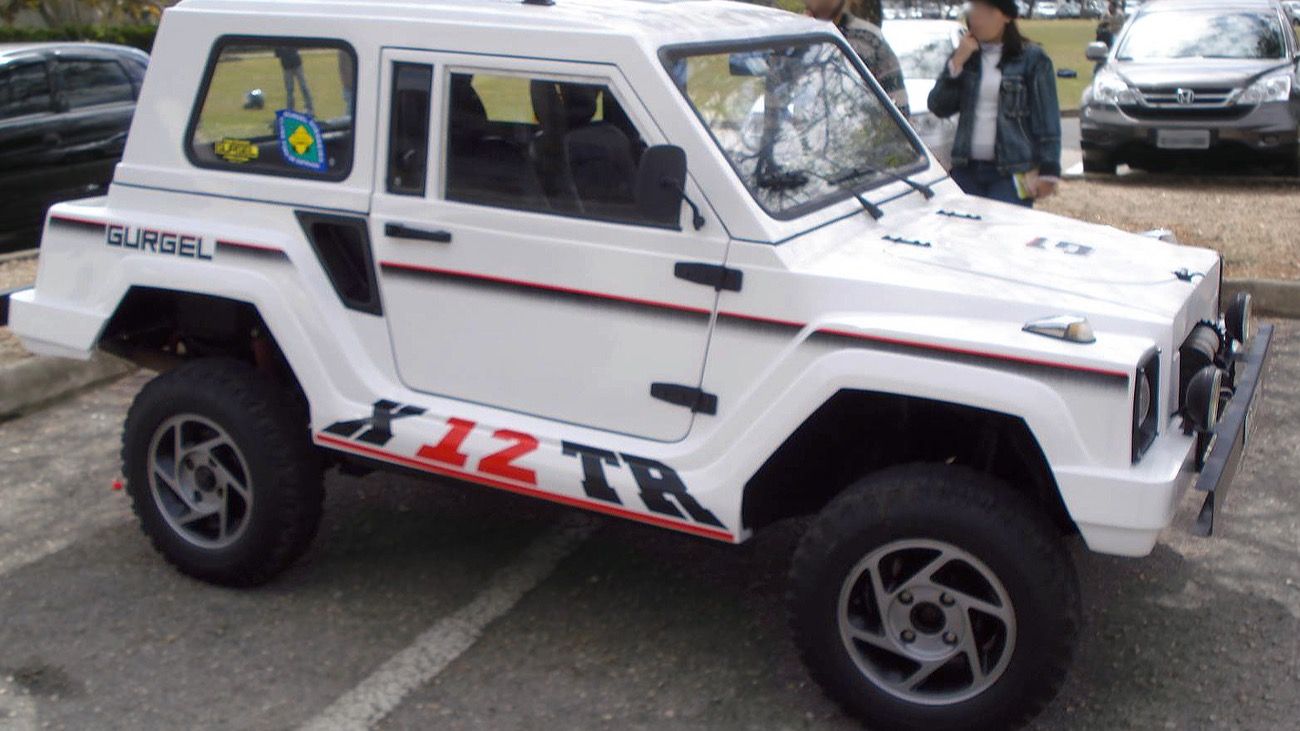
Gurgel Xavante (X-10 / X-11 / X-12) History
Gurgel's defining nameplate — a Plasteel-bodied off-roader that became the company's greatest commercial success and was exported to 40 countries as the Tocantins.
Photo: “File:Gurgel X-12 TR.jpg” by Marcelo Bezerra Cavalcanti ; cropped and otherwise altered by uploader Mr.choppers / Wikimedia Commons, licensed under CC BY 3.0. Cropped to 16:9.
History
The Xavante X-10 launched in 1973 as the first Gurgel model built with Plasteel — a patented composite of steel and fiberglass that was highly resistant to corrosion, deformation, and impact. It used the VW Beetle's rear-mounted air-cooled engine and chassis, but Gurgel's own body construction gave it properties that conventional steel bodies could not match in Brazil's harsh backcountry conditions.
A novel 'Selectraction' system fitted dual hand-operated rear-wheel brakes, allowing the driver to apply braking force independently to either rear wheel — a rudimentary but effective form of traction control on loose or muddy surfaces. The X-10 was followed by the X-11 (a late-1970s variant) and then the X-12, which became the greatest commercial success in the company's history during the 1980s.
In 1988 the X-12 received a revised front end with rectangular headlights and an enlarged cabin, adopting the name Tocantins. This final evolution was exported to approximately 40 countries, making Gurgel between 1977 and 1978 the leading Brazilian exporter in the special-vehicle category, with about 25 percent of production going abroad.
Generations
First generation · X-10 (Xavante)
The original Plasteel off-roader on the VW Beetle platform, with the patented Selectraction dual rear-brake traction system; the exact X-10-to-X-11 changeover in the late 1970s is not precisely documented.
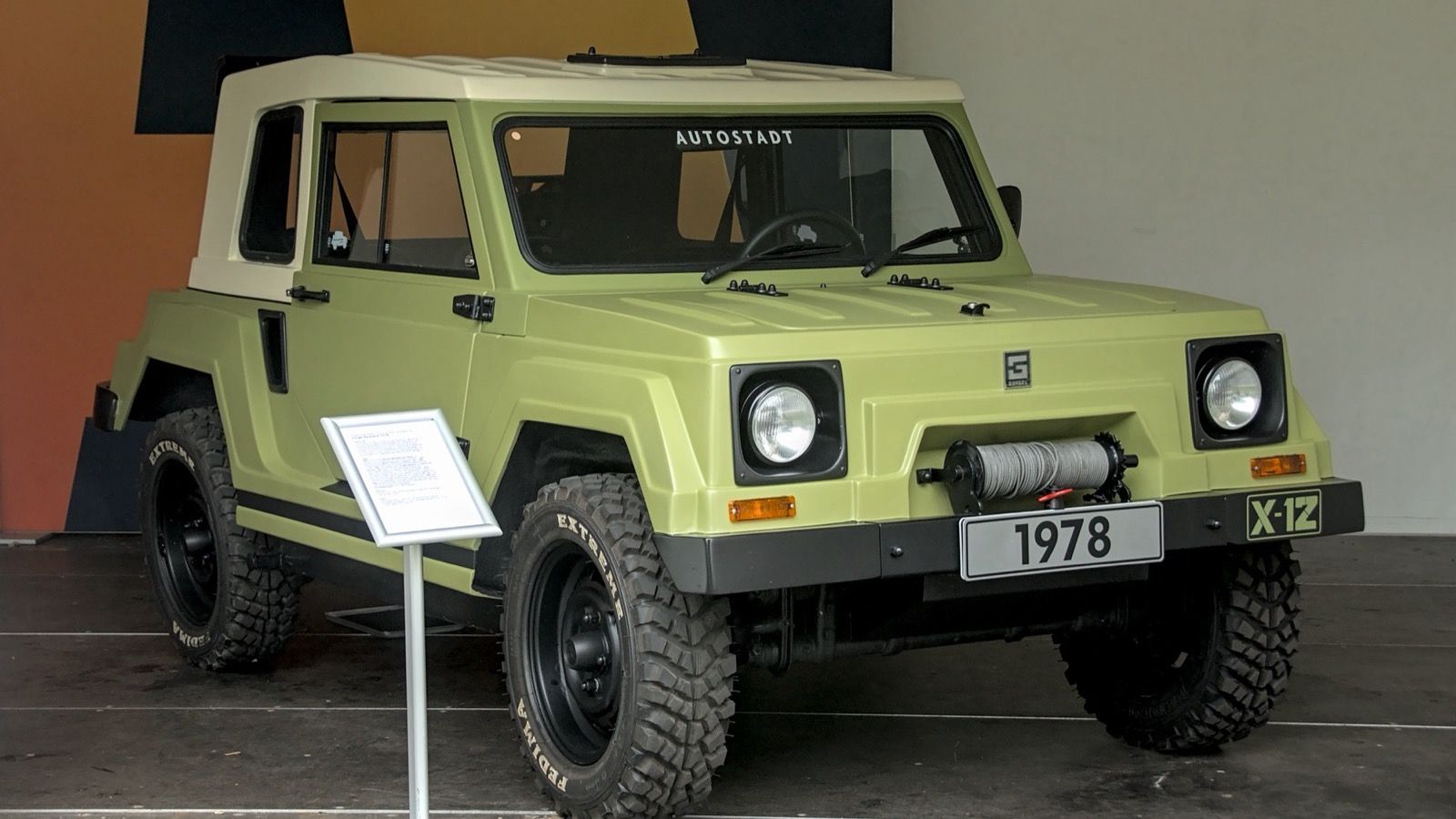
1978 Photo: “File:Gurgel X12 TR (1978) Classic-Days 2022 DSC 0107.jpg” by Alexander Migl / Wikimedia Commons, licensed under CC BY-SA 4.0. Cropped to 16:9.
Second generation · X-11 / X-12
Photo: “File:Gurgel X-12 TR.jpg” by Marcelo Bezerra Cavalcanti ; cropped and otherwise altered by uploader Mr.choppers / Wikimedia Commons, licensed under CC BY 3.0. Cropped to 16:9.
Refined iterations of the Xavante formula; the X-12 became the company's best-seller through the 1980s.
Third generation · X-12 Tocantins
Revised front end, rectangular headlights, enlarged cabin, and bigger engine; exported to ~40 countries under the Tocantins name.
Body styles
- 2-door off-road utility
- Van
Related models
Collect the nameplate
Find a scale model of the Gurgel Xavante (X-10 / X-11 / X-12)
Search Amazon across available years, colors, and scales. Exact releases vary, so confirm the listing before ordering.