
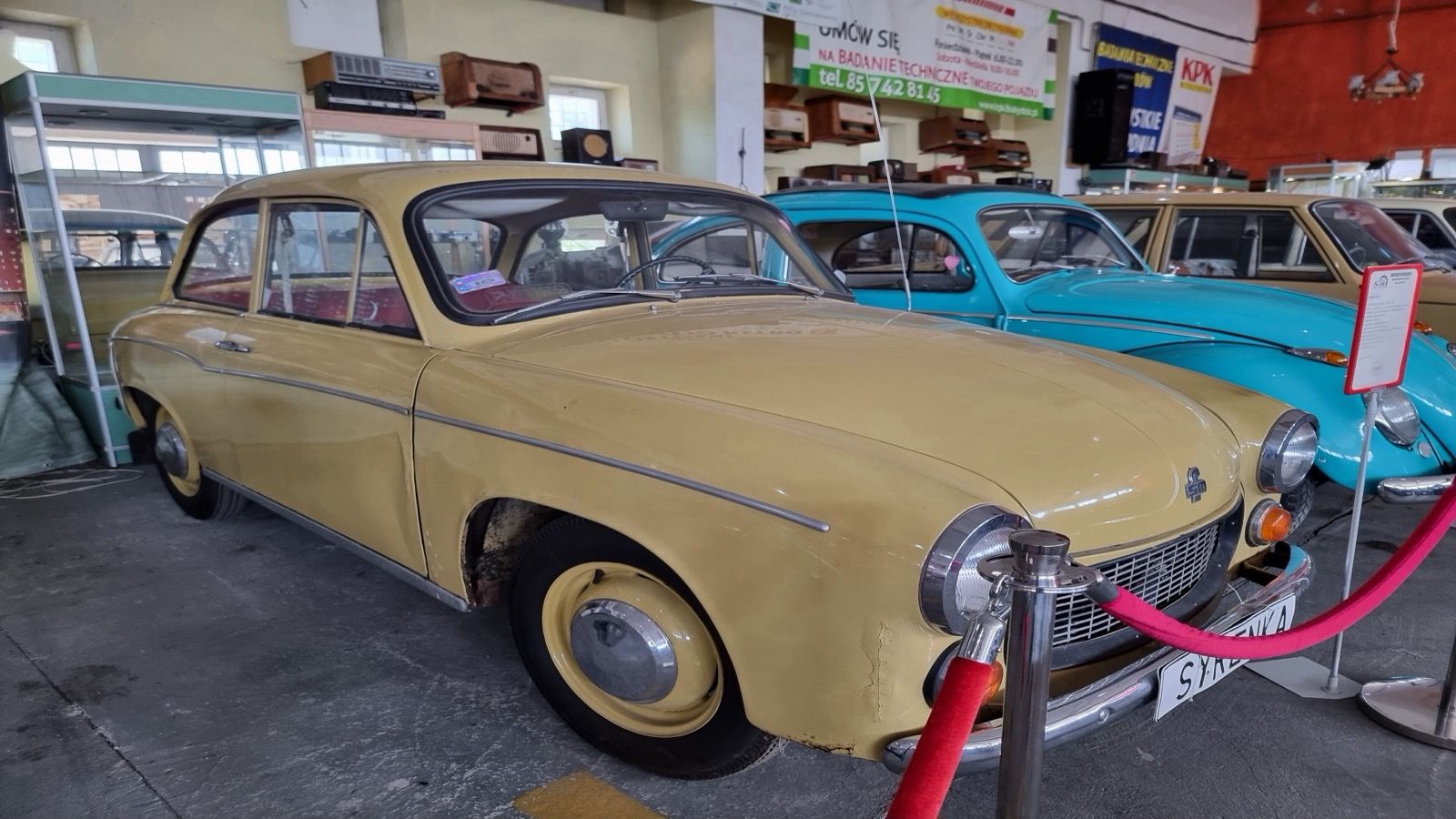
FSM Syrena 105 History
The final generation of Poland's home-grown Syrena — a 2-stroke three-cylinder saloon produced at FSM in Bielsko-Biała until June 1983.
Photo: “File:FSM Syrena 105 MnW 01.jpg” by Zala / Wikimedia Commons, licensed under CC BY-SA 4.0. Cropped to 16:9.
History
The Syrena 105 was the last and most refined variant of the FSO Syrena lineage, a car that had been Poland's primary home-grown passenger vehicle since 1957. When FSM was established in 1971, Syrena production transferred from FSO Warsaw to the new Bielsko-Biała factory. The 105 differed visibly from its predecessors by replacing the notorious rear-hinged 'suicide' front doors with conventional forward-opening ones, a long-overdue safety improvement.
Power came from the same 842 cc two-stroke inline-three that had defined the Syrena since the 1960s, producing around 27 hp — modest even by the standards of the era but adequate for the light car. A 'Lux' (105L) variant introduced in 1974 moved the gear lever and handbrake to a centre console between the front seats, giving the cabin a slightly more modern feel.
FSM produced 344,077 Syrena 105 and 105L units before closing the line in June 1983. Derivatives — the Syrena R-20 pick-up and the Bosto van — extended the platform's commercial usefulness into the early 1980s. The 105 holds a special place in Polish automotive heritage as the last original Polish-designed car built at mass scale before licence-built Fiat products came to dominate the market.
Generations
Syrena 105 · Base model
Photo: “File:FSM Syrena 105 MnW 01.jpg” by Zala / Wikimedia Commons, licensed under CC BY-SA 4.0. Cropped to 16:9.
Initial FSM-built variant with conventional front doors; retained column gear-change.
Syrena 105L (Lux) · Lux variant
Centre-console gear lever and handbrake; modest interior upgrade that remained in production until June 1983.
Body styles
- Saloon
- Pick-up (R-20)
- Van (Bosto)
Related models
Collect the nameplate
Find a scale model of the FSM Syrena 105
Search Amazon across available years, colors, and scales. Exact releases vary, so confirm the listing before ordering.