
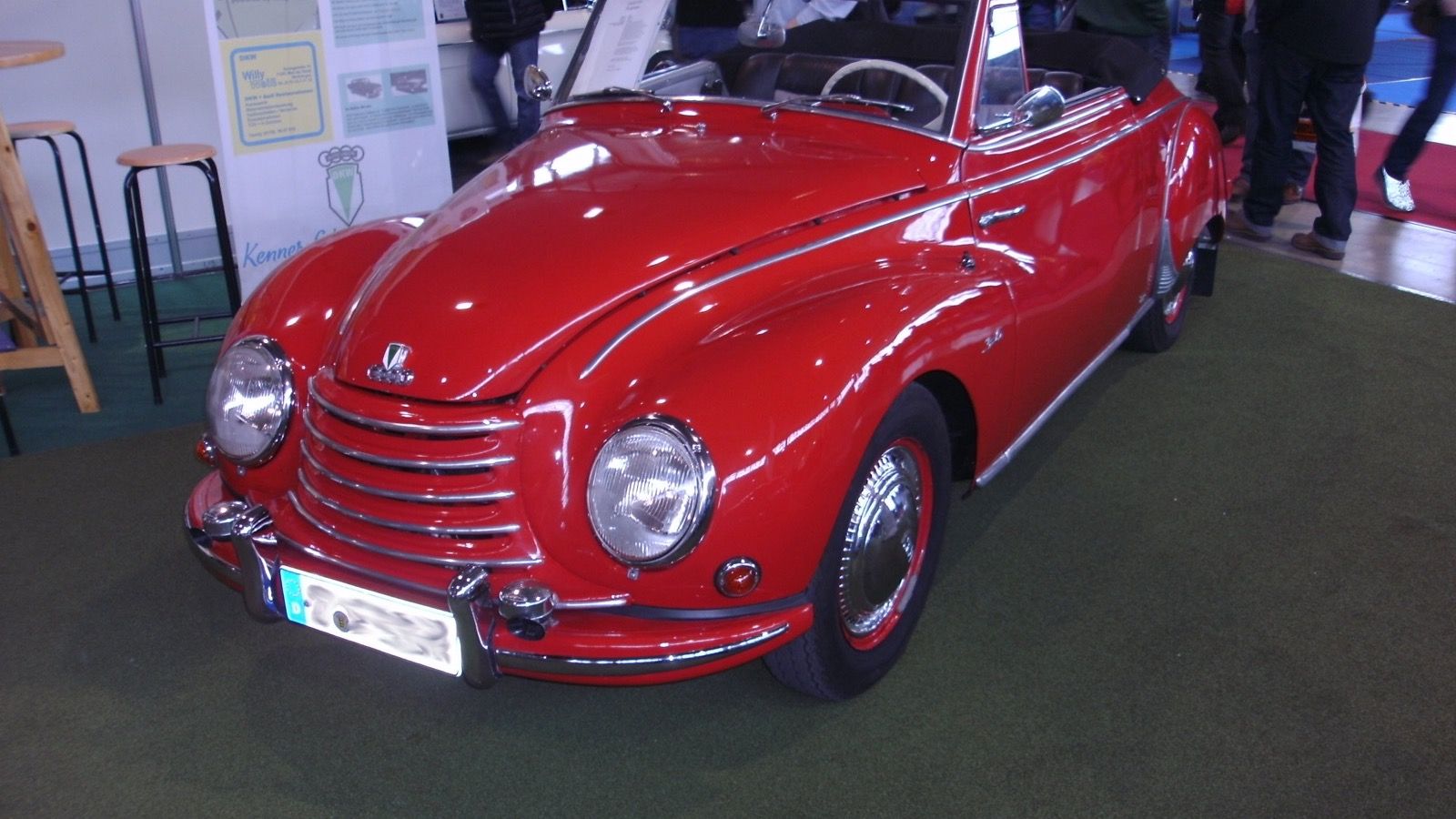
DKW Sonderklasse (F91/F93/F94) History
The three-cylinder step-up — DKW's larger 900 cc Sonderklasse debuted at the 1953 Frankfurt IAA and ran in various forms through 1959.
Photo: “DKW F91 Sonderklasse Cabriolet (1955, 34 PS).JPG” by Wleiter / Wikimedia Commons, licensed under CC BY-SA 3.0. Cropped to 16:9.
History
Presented at the International Motor Show in Frankfurt in March 1953, the Sonderklasse (internal designation F91) took a meaningful step up from the two-cylinder F89 by adopting a three-cylinder two-stroke engine displacing 903 cc and producing 34 PS. The layout was directly derived from the three-cylinder F9 that DKW had designed before the war but never put into series production.
Karmann built 1,550 cabriolets alongside Düsseldorf sedan and coupé production, giving the range a softer-top option. The model evolved through revised body designations (F93, F94) between 1955 and 1959, with incremental engine and equipment improvements. Total production of the F91 sedan and coupé from March 1953 to September 1955 alone was 57,407 units.
The Sonderklasse marked the point at which the resurrected West German DKW moved from a minimal wartime revival into a genuine product range. Its three-cylinder formula — refined, enlarged, and rebadged — formed the mechanical basis of the Auto Union 1000 that followed.
Generations
First series · F91
Photo: “DKW F91 Sonderklasse Cabriolet (1955, 34 PS).JPG” by Wleiter / Wikimedia Commons, licensed under CC BY-SA 3.0. Cropped to 16:9.
Debut three-cylinder DKW; 903 cc, 34 PS; sedan and Karmann cabriolet; 57,407 sedans/coupes built.
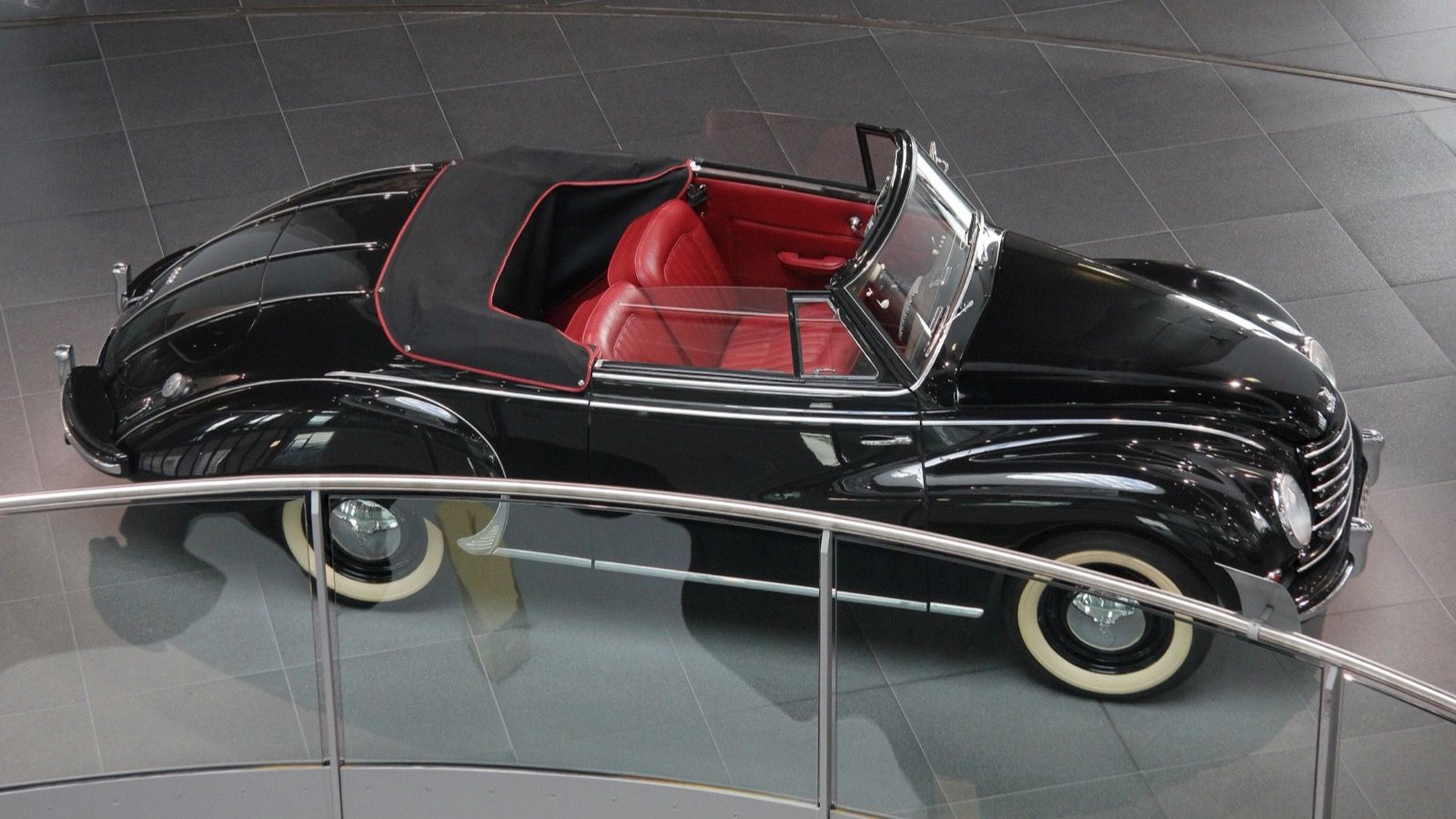
1953 Photo: “DKW F91 Cabrio, Bj. 1953, re. Seite.JPG” by Lothar Spurzem / Wikimedia Commons, licensed under CC BY-SA 2.0 de. Cropped to 16:9.
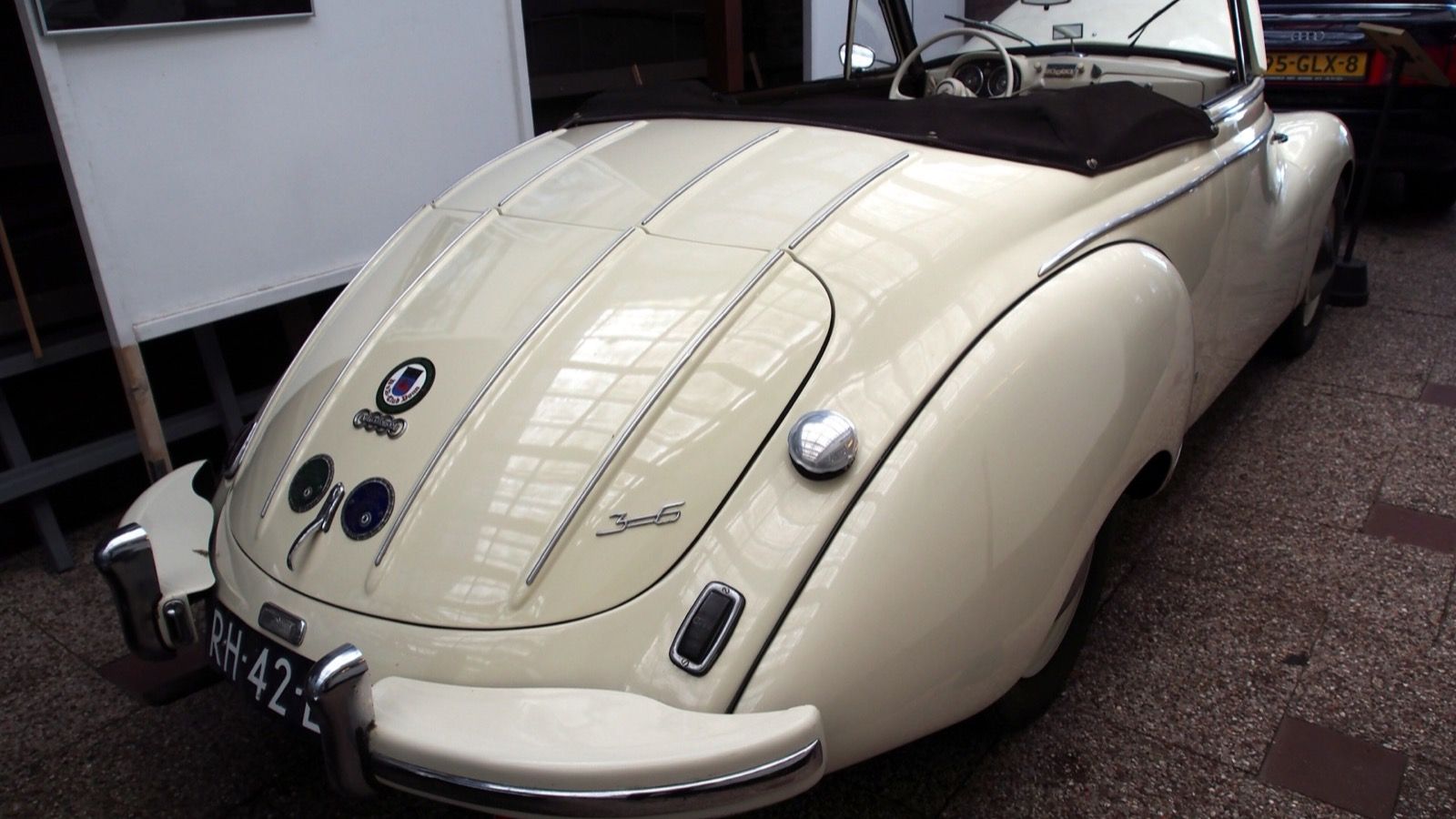
1954 Photo: “1954 DKW F 91 Sonderklasse Cabriolet Karmann, pic01.JPG” by Alf van Beem / Wikimedia Commons — CC0 1.0. Cropped to 16:9.
1955 Photo: “DKW F91 Sonderklasse Cabriolet (1955, 34 PS).JPG” by Wleiter / Wikimedia Commons, licensed under CC BY-SA 3.0. Cropped to 16:9.
Second series · F93/F94
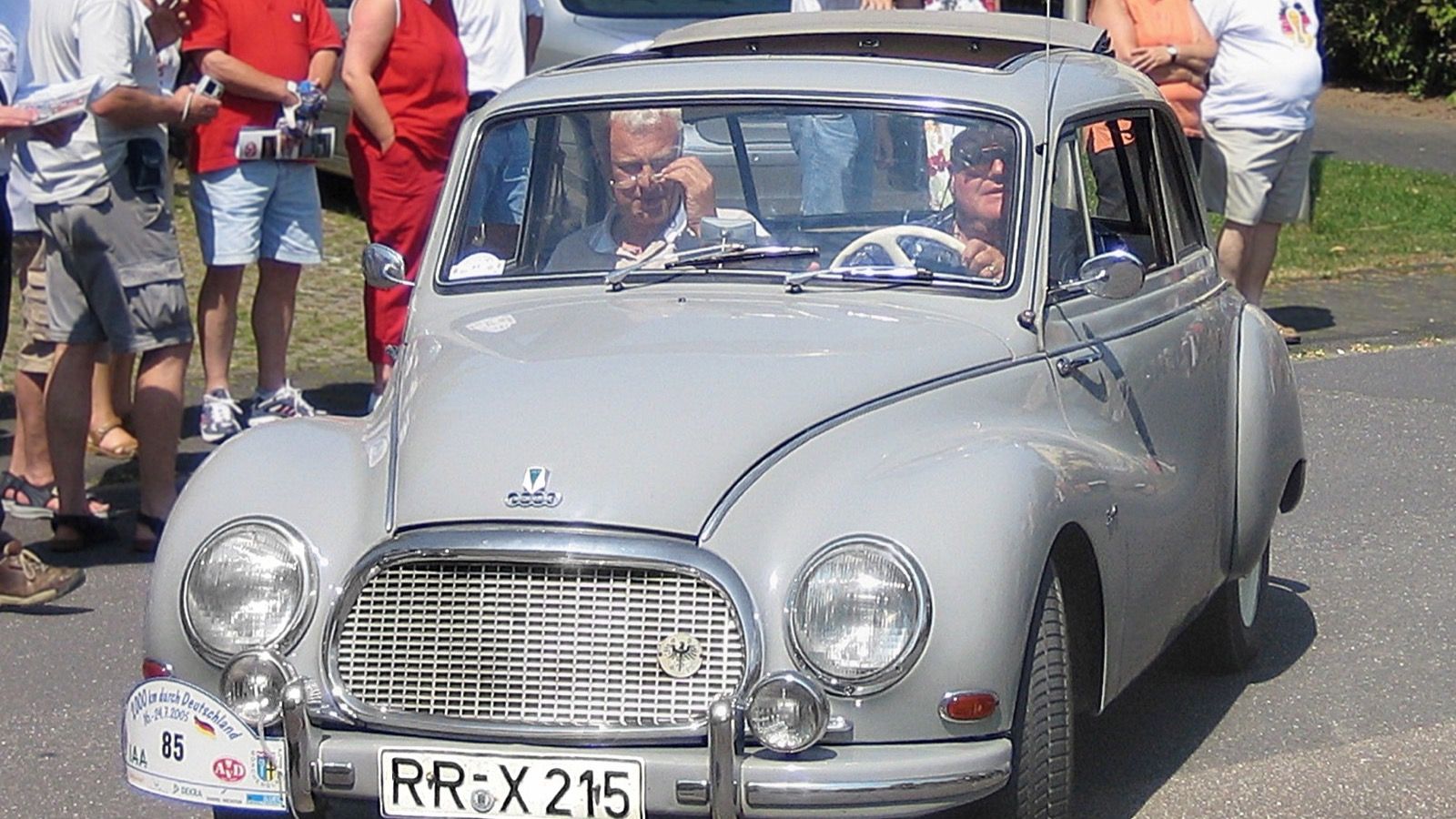
Photo: “DKW F 93, Bj. 1957, 2000 km durch Deutschland (2005-07-17 Sp R).jpg” by Lothar Spurzem / Wikimedia Commons, licensed under CC BY-SA 2.0 de. Cropped to 16:9.
Revised body and equipment; estate (Universal) added; mechanical continuity with the F91 engine family.
1957 Photo: “DKW F 93, Bj. 1957, 2000 km durch Deutschland (2005-07-17 Sp R).jpg” by Lothar Spurzem / Wikimedia Commons, licensed under CC BY-SA 2.0 de. Cropped to 16:9.
Body styles
- Sedan
- Coupe
- Cabriolet
- Estate
Related models
Collect the nameplate
Find a scale model of the DKW Sonderklasse (F91/F93/F94)
Search Amazon across available years, colors, and scales. Exact releases vary, so confirm the listing before ordering.