
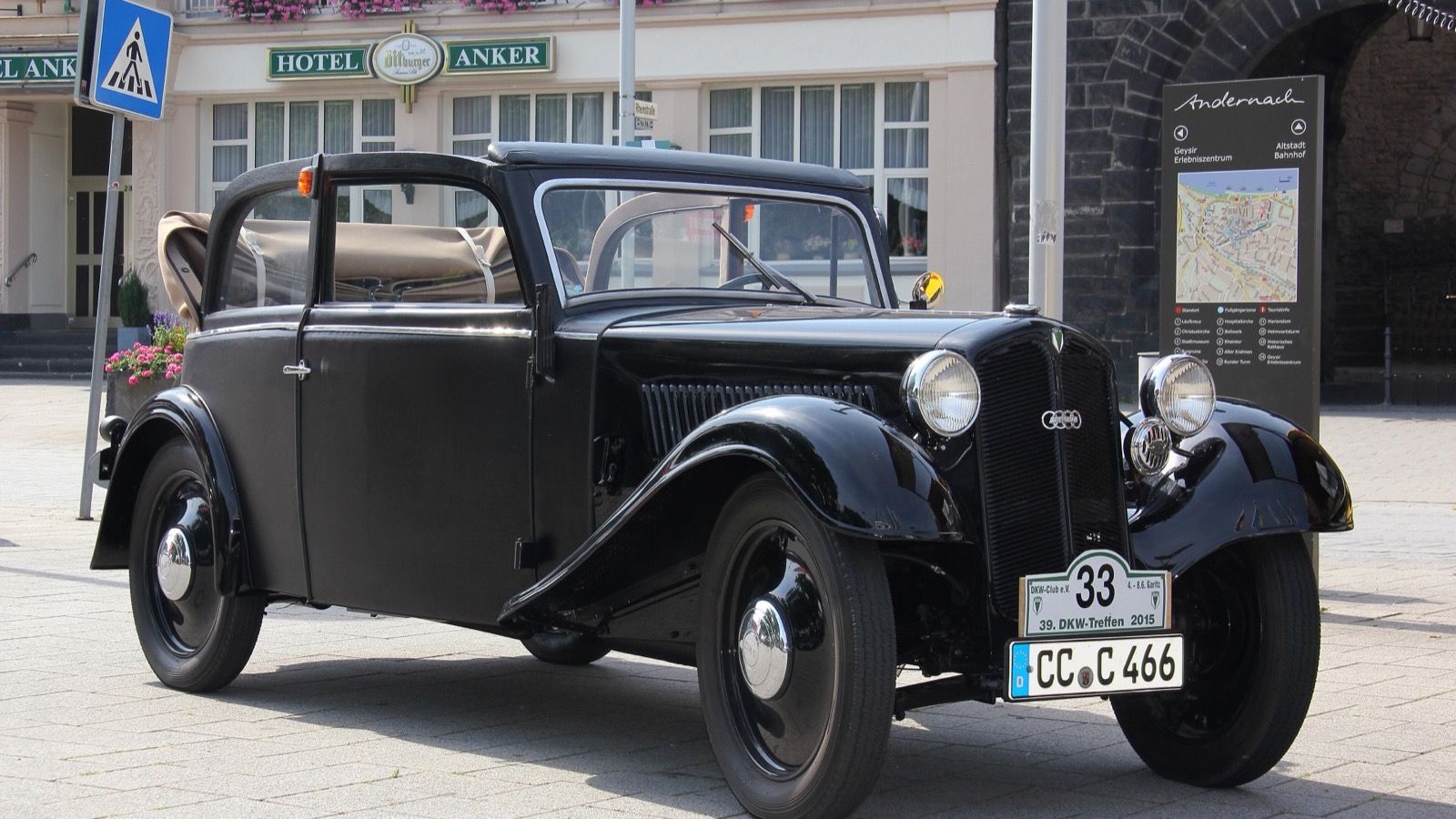
DKW F-Series (F1–F8) History
Europe's first volume front-wheel-drive cars — transversely mounted two-stroke twins in wood-and-steel bodies, built in Zwickau from 1931 to 1942.
Photo: “DKW F5 Cabriolimousine, Bj. 1936 (2015-07-04 r).JPG” by Lothar Spurzem / Wikimedia Commons, licensed under CC BY-SA 2.0 de. Cropped to 16:9.
History
DKW's F-series, spanning F1 through F8, were the first volume-production front-wheel-drive cars in Europe. Introduced in 1931 at the height of the Depression, the small, affordable front-drivers used transversely mounted two-cylinder two-stroke engines — a layout that anticipated the packaging solutions later generations would call conventional.
The F5 (1935–1936) and F7 (1937–1938) were the volume sellers of the era, with the F5 alone accounting for roughly 60,000 units and placing DKW among Germany's top-selling marques. The F7 gained steel body panels in place of the earlier timber-frame construction and was offered as a sedan, cabriolet, and coupé. The F8, the last of the line, continued in reduced wartime production until 1942.
Across the entire F1–F8 run the Zwickau plant produced approximately 218,000 front-wheel-drive cars — a remarkable total for the era. After World War II the tooling and designs were absorbed by the East German IFA (as the F9/IFA F9), while the West German Auto Union rebuilt DKW passenger-car production from scratch in Düsseldorf.
Generations
First generation · F1–F4 (wood-frame era)
Pioneering front-drivers with timber-reinforced bodies; established the transverse two-stroke layout DKW would keep for three decades.
Second generation · F5–F8 (steel-body era)
Photo: “DKW F5 Cabriolimousine, Bj. 1936 (2015-07-04 r).JPG” by Lothar Spurzem / Wikimedia Commons, licensed under CC BY-SA 2.0 de. Cropped to 16:9.
Steel construction replaced the timber frame; F5 and F7 were volume hits, F8 carried on into wartime before production halted.
1936 Photo: “DKW F5 Cabriolimousine, Bj. 1936 (2015-07-04 r).JPG” by Lothar Spurzem / Wikimedia Commons, licensed under CC BY-SA 2.0 de. Cropped to 16:9.
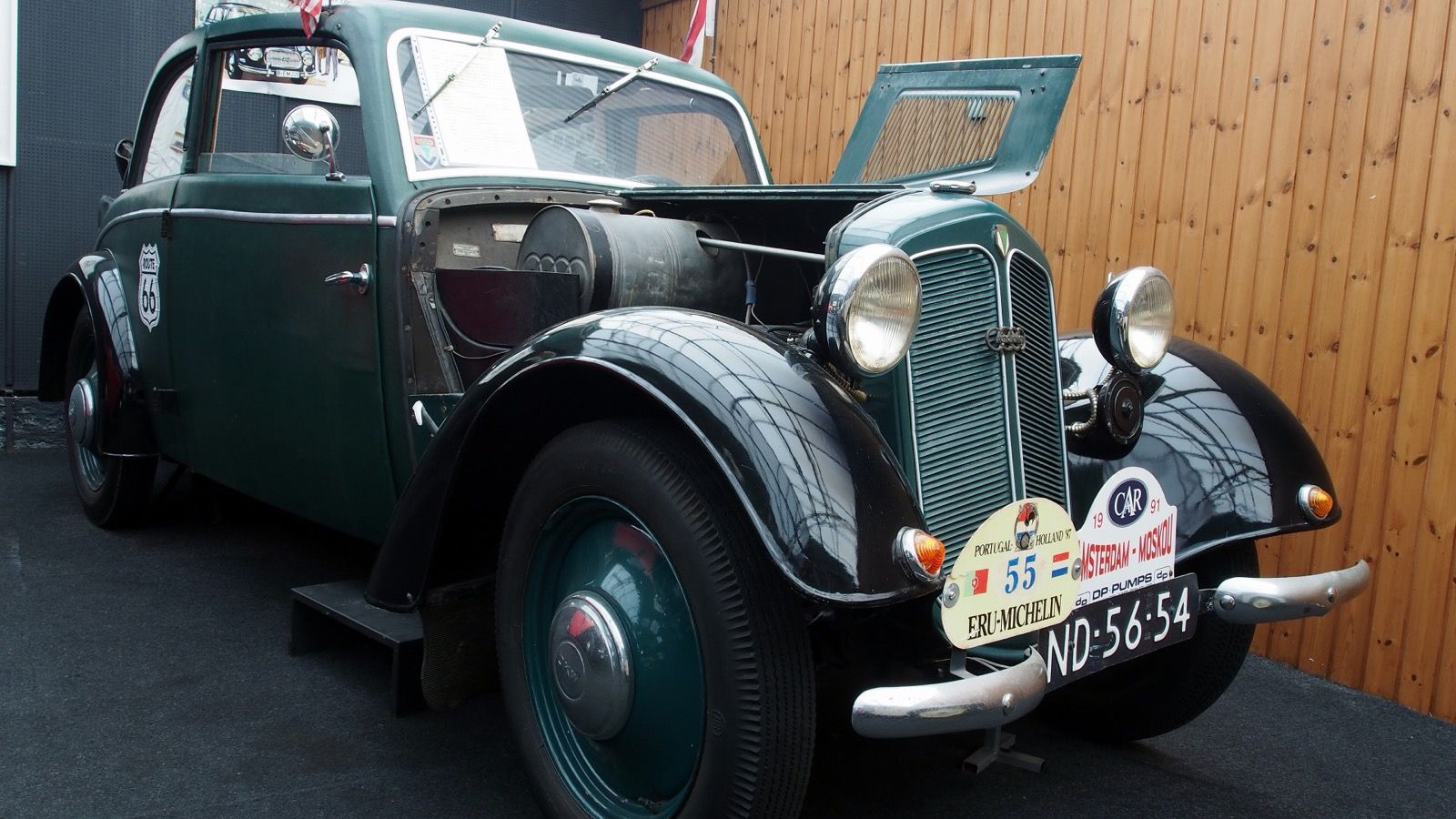
1937 Photo: “1937 DKW F7 Reichsklasse pic1.JPG” by Alf van Beem / Wikimedia Commons — CC0 1.0. Cropped to 16:9.
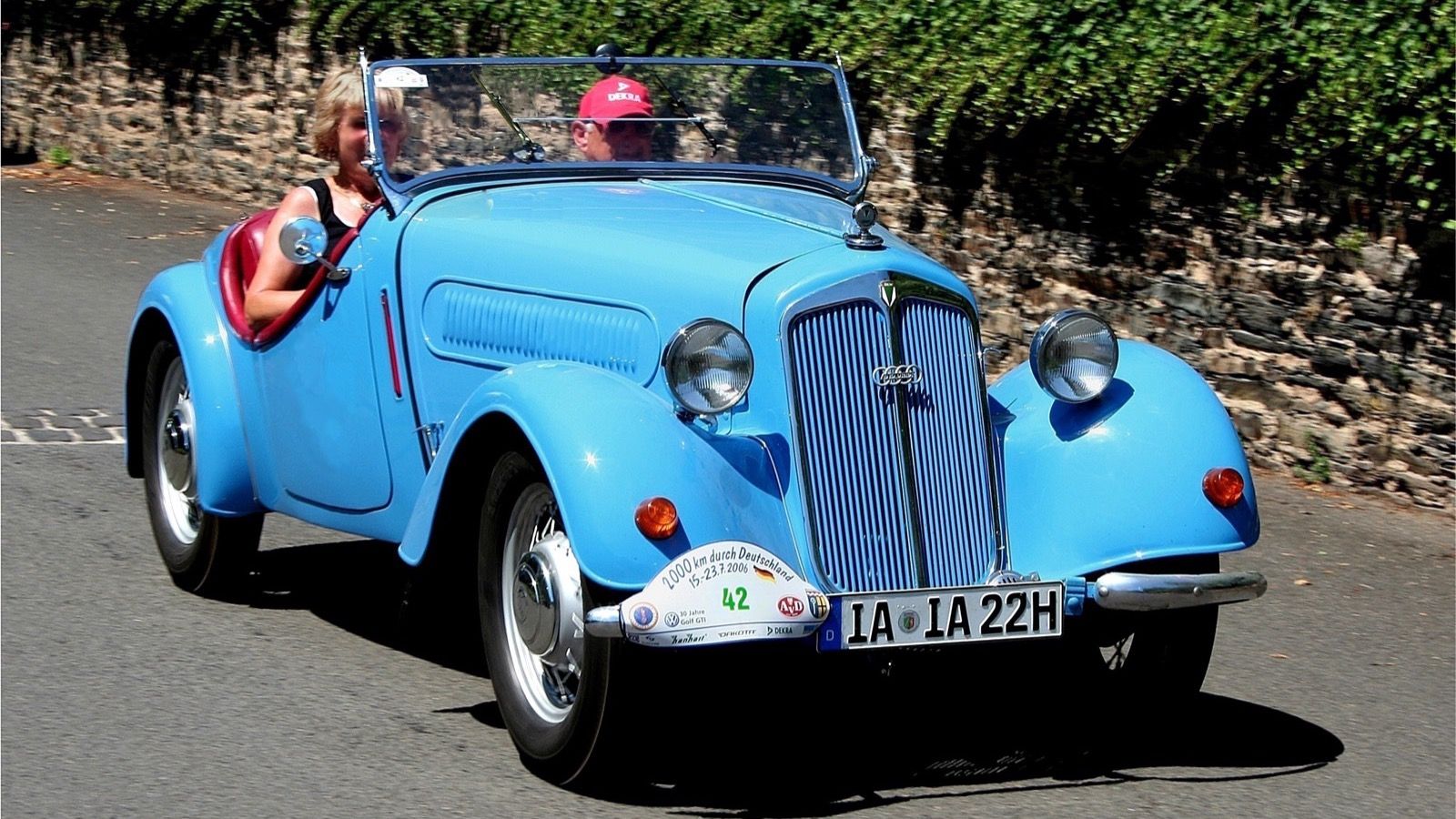
1938 Photo: “DKW F5 Sport-Roadster, Bj. 1938 (2006-07-16 Sp).jpg” by Lothar Spurzem / Wikimedia Commons, licensed under CC BY-SA 2.0 de. Cropped to 16:9.
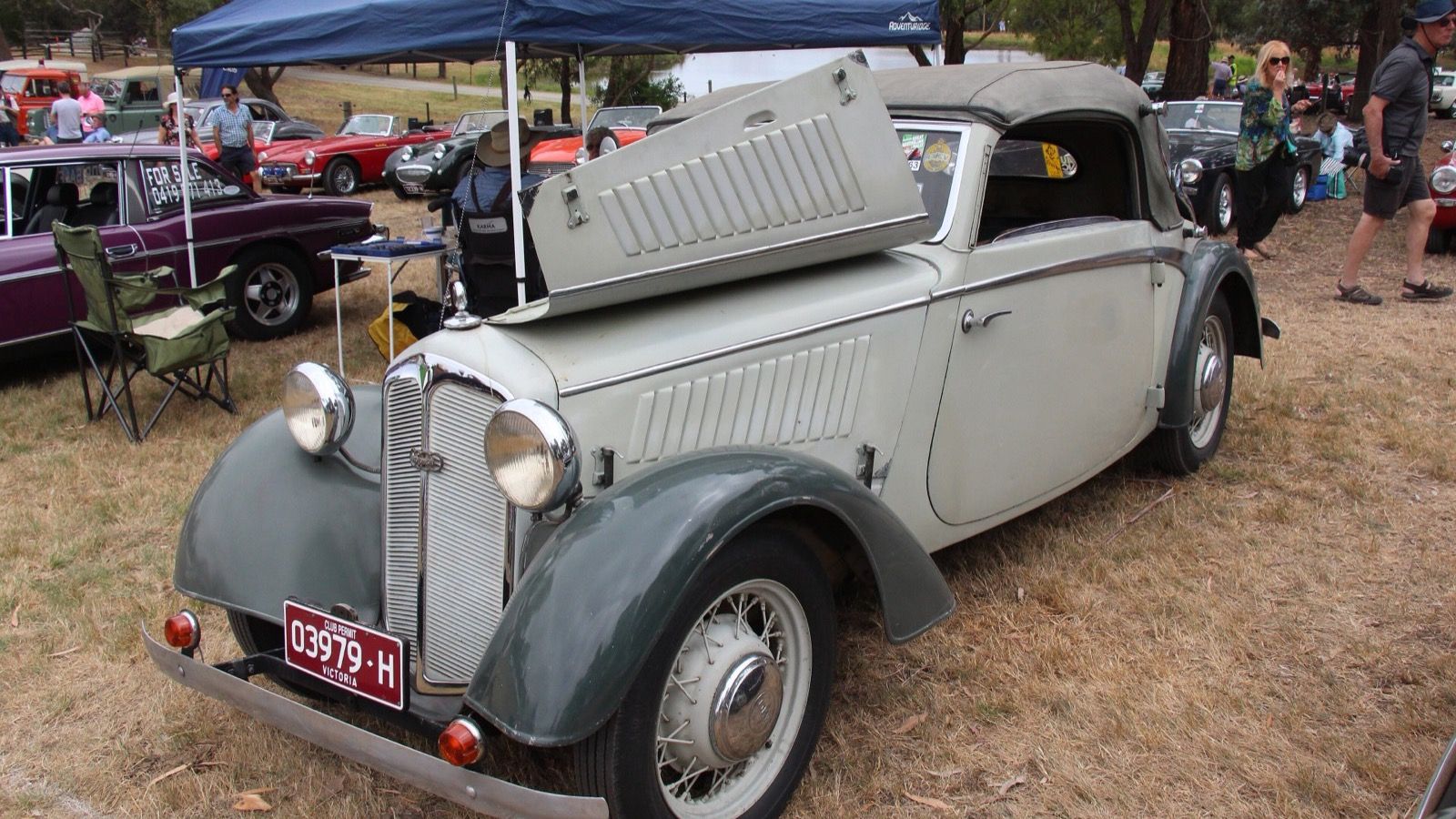
1941 Photo: “1941 Auto Union DKW F8 Cabriolet (46132682394).jpg” by Sicnag / Wikimedia Commons, licensed under CC BY 2.0. Cropped to 16:9.
Body styles
- Sedan
- Cabriolet
- Roadster
- Van
Related models
Collect the nameplate
Find a scale model of the DKW F-Series (F1–F8)
Search Amazon across available years, colors, and scales. Exact releases vary, so confirm the listing before ordering.