
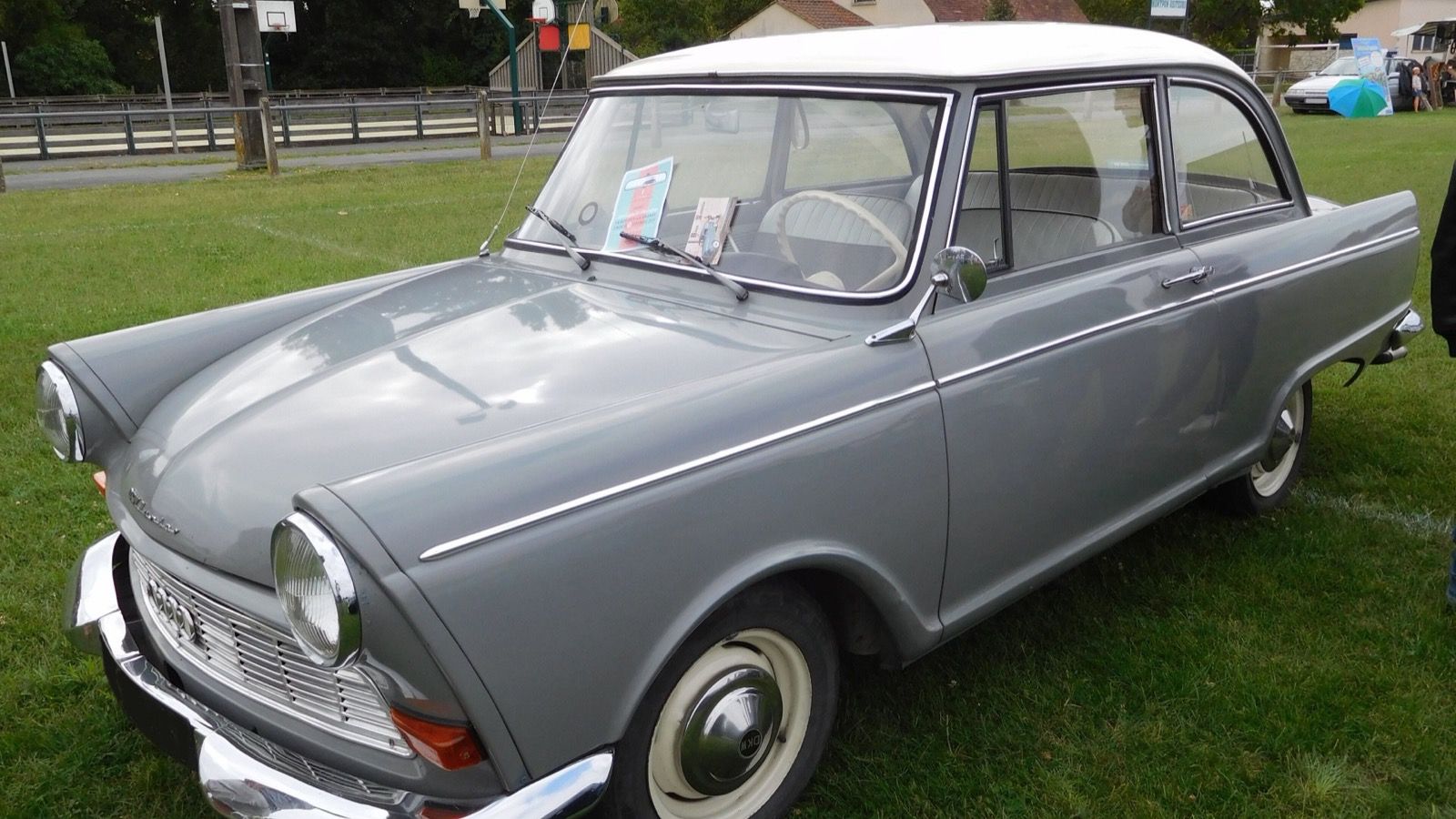
DKW Junior / F11 / F12 History
DKW's successful small three-cylinder — the Junior debuted in 1959, evolved into the F11/F12, and became the best-selling small car in West Germany of its era.
Photo: “DKW Junior de Luxe, 1962 (1).jpg” by Cjp24 / Wikimedia Commons, licensed under CC BY-SA 4.0. Cropped to 16:9.
History
Shown at the 1957 Frankfurt Motor Show as the DKW 600, the model reached series production in 1959 under the Junior name, powered by a 741 cc three-cylinder two-stroke producing 34 bhp. A Junior de Luxe variant with a 796 cc engine followed, adding a 'fresh oil automatic' lubrication system that removed the need to mix oil into the fuel — a key convenience step for the two-stroke formula.
By December 1962 exactly 118,986 Juniors had been built, plus 118,619 Junior de Luxe cars, making it one of the most successful small cars in West Germany during that period. In January 1963 the range was reorganised into the F12 (889 cc, 40 bhp, front disc brakes — a class first) and F11 (a simplified 796 cc de Luxe variant introduced June 1965). The F12 also offered a roadster body on a shortened wheelbase.
The Junior/F11/F12 family demonstrated that buyers still accepted the two-stroke if the package was right — economical, front-wheel drive, and practical. Production ended in 1965 as the larger F102 was meant to carry the brand upmarket, though in practice the Junior outlasted DKW's reputation for relevance.
Generations
Junior · Junior / Junior de Luxe
Photo: “DKW Junior de Luxe, 1962 (1).jpg” by Cjp24 / Wikimedia Commons, licensed under CC BY-SA 4.0. Cropped to 16:9.
741 cc / 796 cc three-cylinder; 237,000+ units in four years; became West Germany's top-selling small car.
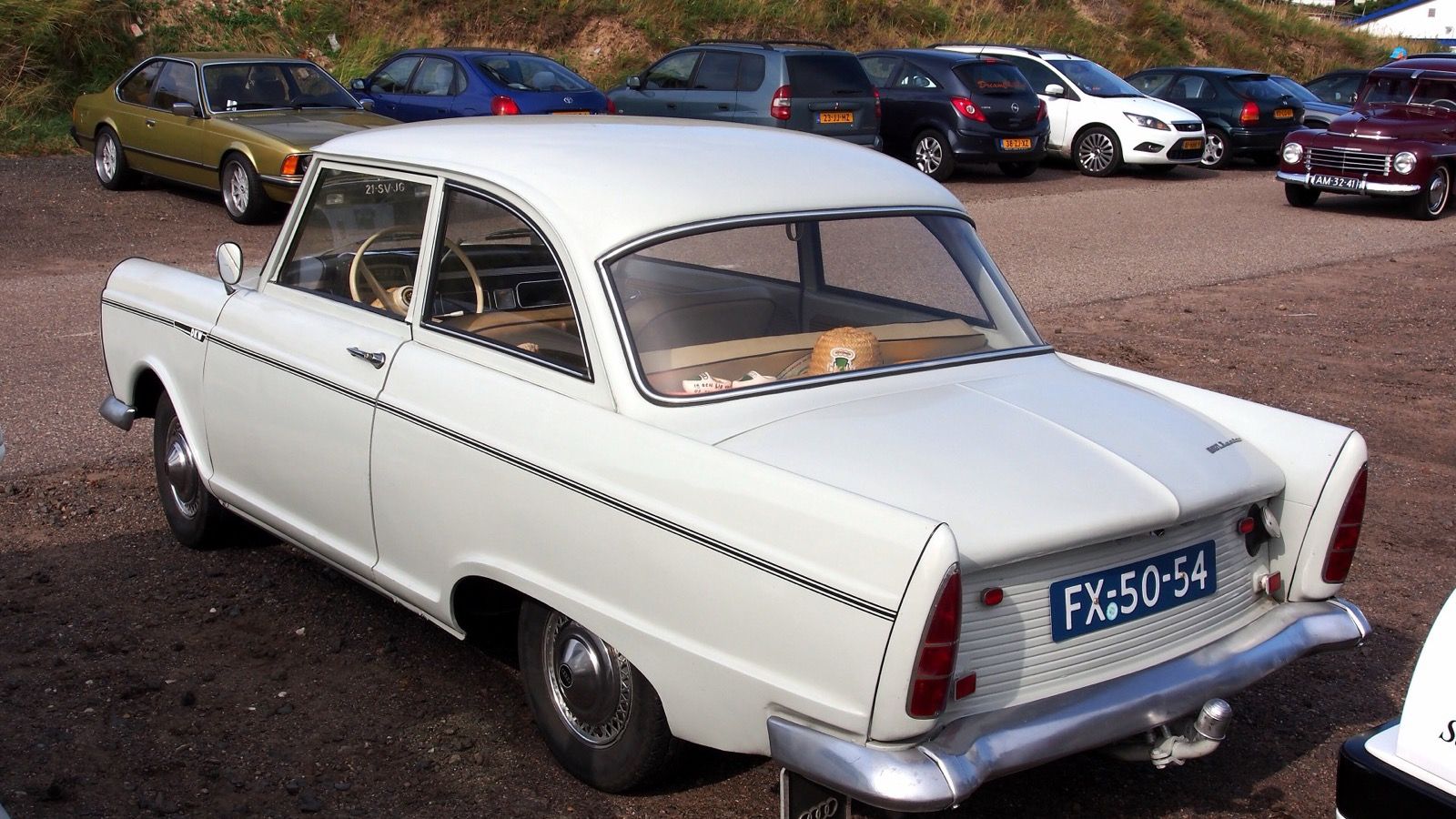
1961 Photo: “1961 DKW Junior pic2.JPG” by Alf van Beem / Wikimedia Commons — CC0 1.0. Cropped to 16:9.
1962 Photo: “DKW Junior de Luxe, 1962 (1).jpg” by Cjp24 / Wikimedia Commons, licensed under CC BY-SA 4.0. Cropped to 16:9.
F11 / F12
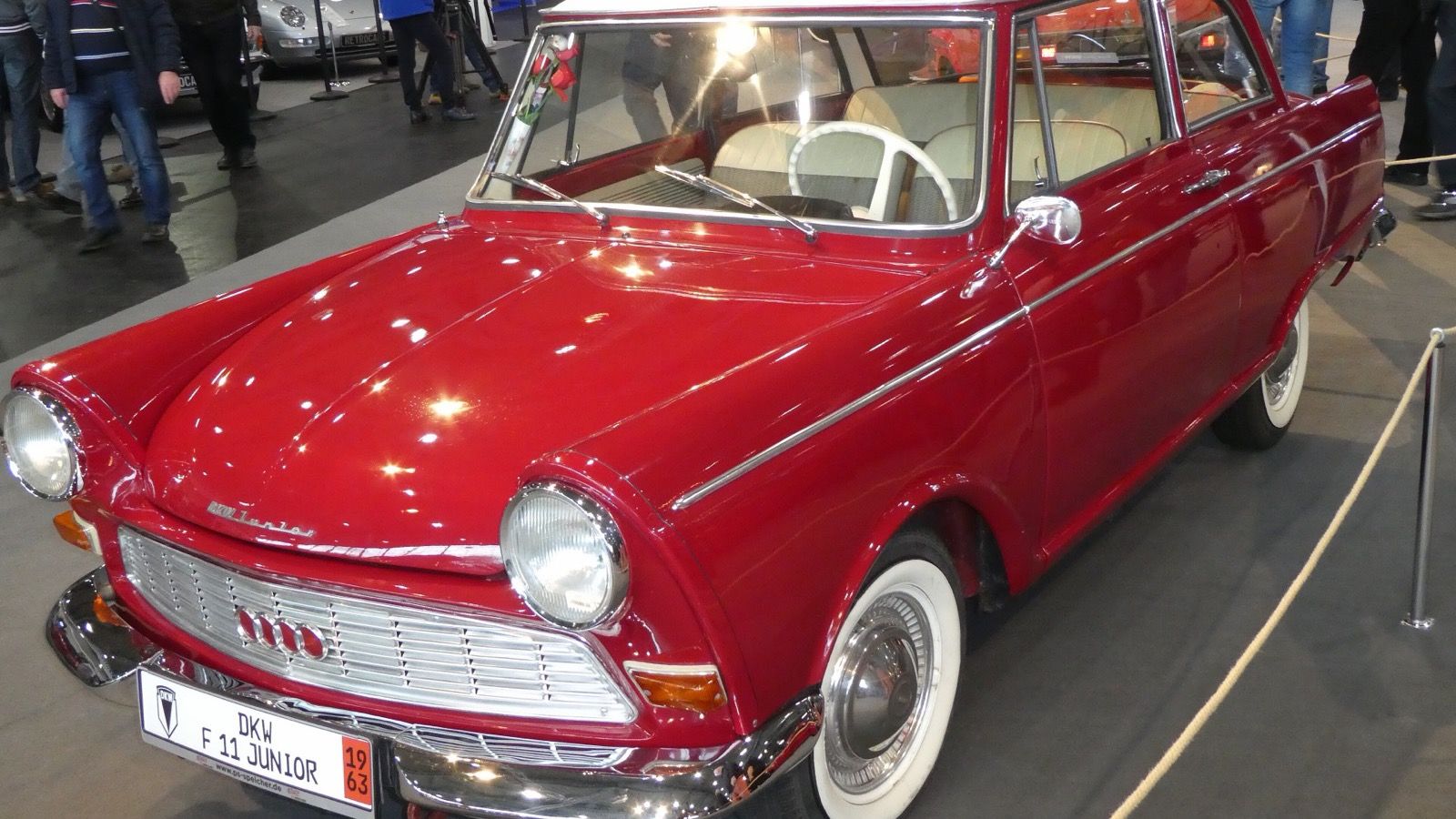
Photo: “DKW F11 Junior De Luxe (1963) (49552290932).jpg” by Andrew Bone from Weymouth, England / Wikimedia Commons, licensed under CC BY 2.0. Cropped to 16:9.
889 cc F12 added front disc brakes (a class first); F11 was the simplified 796 cc continuation; both discontinued 1965.
1963 Photo: “DKW F11 Junior De Luxe (1963) (49552290932).jpg” by Andrew Bone from Weymouth, England / Wikimedia Commons, licensed under CC BY 2.0. Cropped to 16:9.
Body styles
- Sedan
- Roadster
Related models
Collect the nameplate
Find a scale model of the DKW Junior / F11 / F12
Search Amazon across available years, colors, and scales. Exact releases vary, so confirm the listing before ordering.