
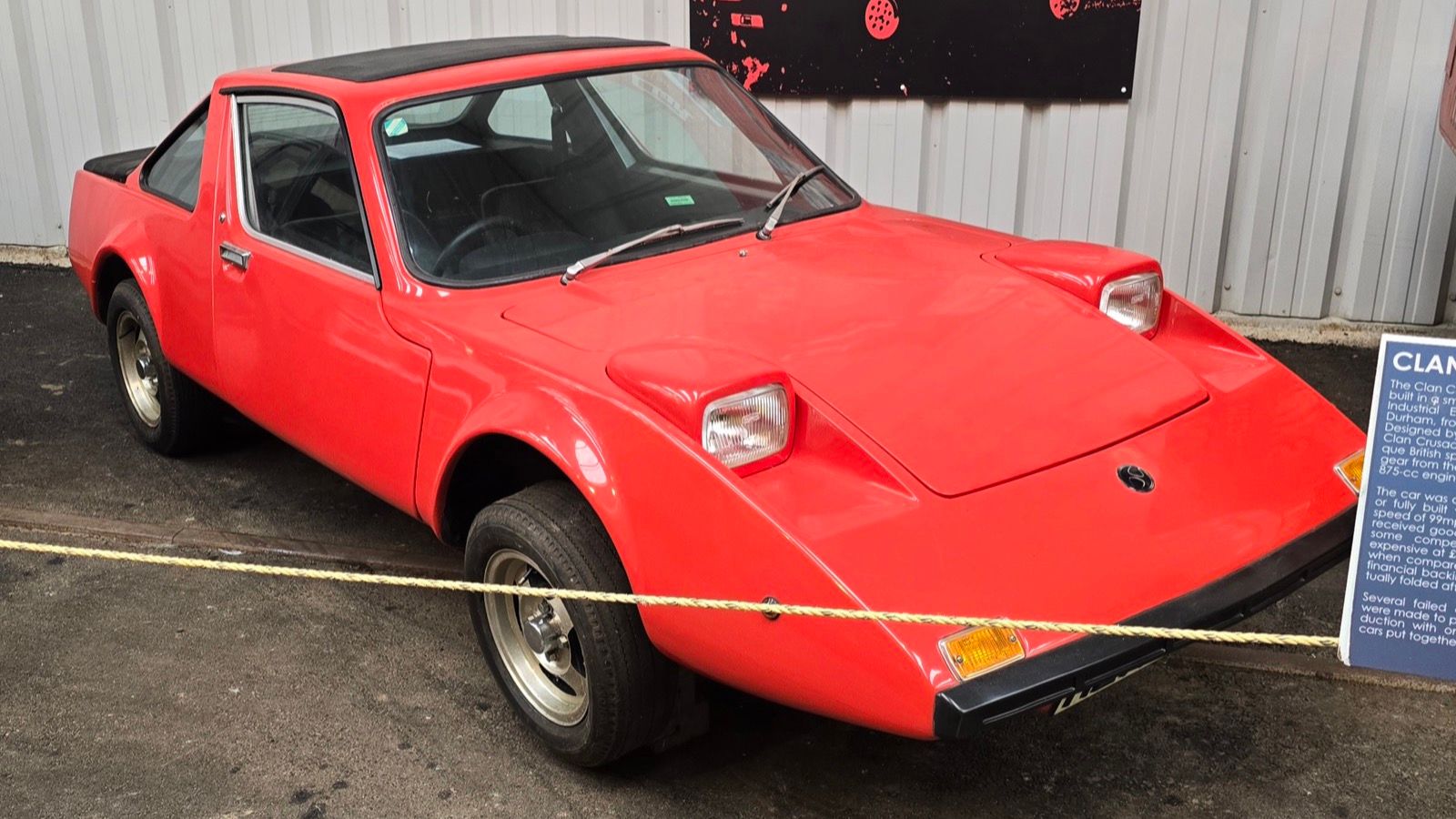
Clan Crusader History
A lightweight fibreglass monocoque coupé using Hillman Imp running gear — circa 315 road cars built before the 1973 Oil Crisis ended production.
Photo: “Clan Crusader” by Calreyn88 / Wikimedia Commons, licensed under CC BY-SA 4.0. Cropped to 16:9.
History
The Clan Crusader was conceived in 1967 by Paul Haussauer and Brian Luff, two engineers who had worked at Lotus, with styling by designer John Frayling. After leaving Lotus and securing a development grant from the Washington Development Corporation, they relocated from Norfolk to a purpose-built 24,500-square-foot factory in Washington, County Durham, and began small-scale production in July 1971. The car was publicly launched in September 1971 at London's Grosvenor House Hotel.
The Crusader's defining technical feature was its one-piece glassfibre monocoque body-chassis — a clamshell moulding technique that gave exceptional rigidity and crash resistance at very low weight (approximately 579 kg / 1,356 lb). Running gear came wholesale from the Hillman Imp Sport: a rear-mounted 875 cc Coventry Climax-derived inline-four producing around 51 bhp, driving the rear wheels. A larger 998 cc engine was also available. The combination of light weight and an aerodynamic coupé body gave a claimed top speed of close to 100 mph and 0–60 mph in approximately 12.5 seconds.
In rallying the Crusader proved surprisingly competitive: Alan Conley took first place on the 1972 Tour of Mull, the 1973 Derwent Star Rally, and the 1973 Jim Clark Memorial Rally, while the model claimed first place in the 1973 BARC Production Car Trials and the 1974 British Caledonian Mod-sports and Sports and Special GT Championship. Production peaked at around five cars per week with 29 employees. The 1973 Oil Crisis, introduction of VAT on kit cars, a UK three-day week, and supply disruptions from Chrysler (Hillman's parent) made the already price-sensitive car unviable; production ended in November 1973 with approximately 315 road cars and 18 competition cars completed.
Generations
First and only generation · Crusader
Photo: “Clan Crusader” by Calreyn88 / Wikimedia Commons, licensed under CC BY-SA 4.0. Cropped to 16:9.
One-piece glassfibre monocoque coupé on Hillman Imp Sport running gear; rear-mounted 875 cc engine, roughly 315 road cars built 1971–1973.
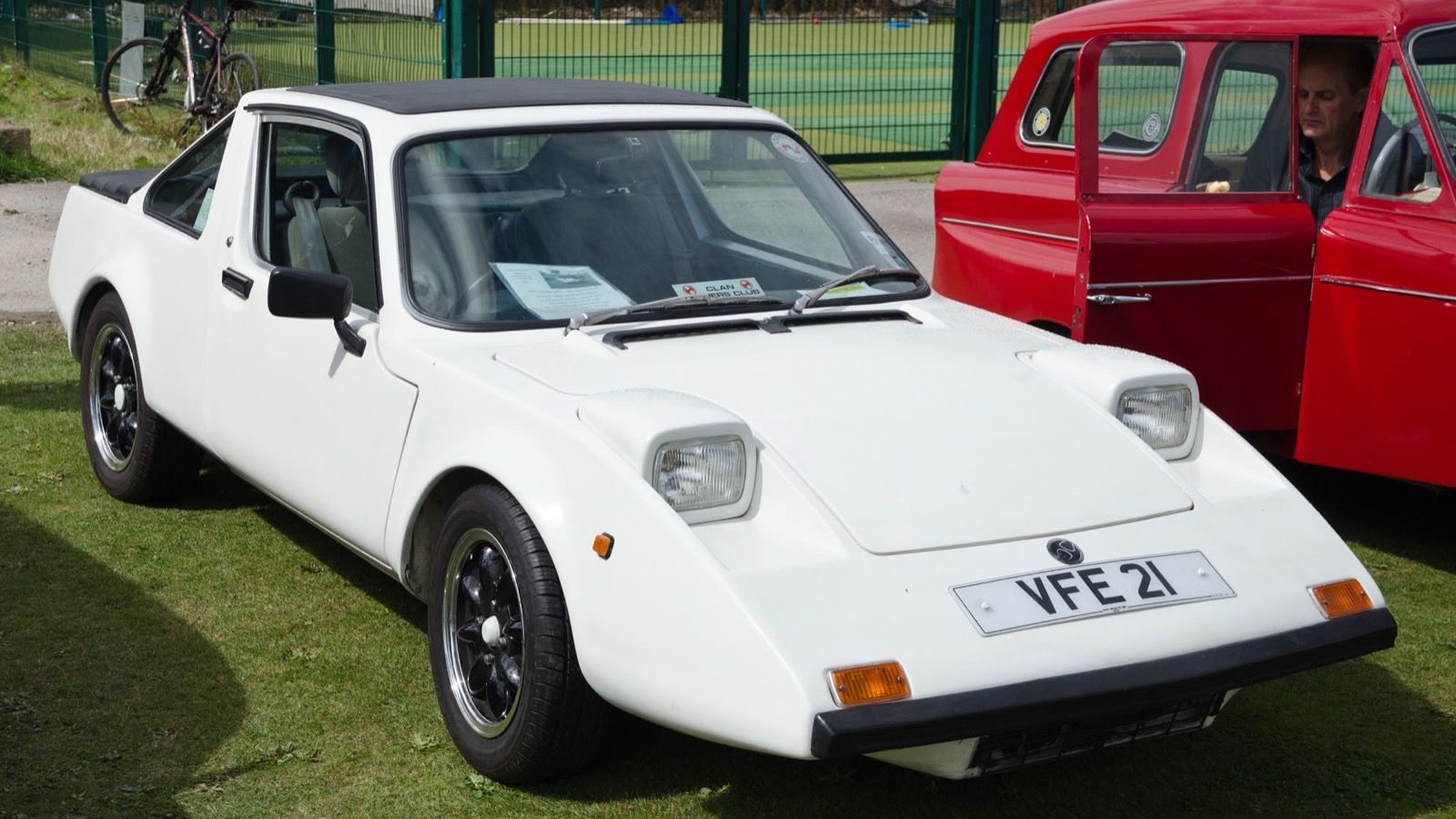
1971 Photo: “Clan Crusader (1971)” by SG2012 / Wikimedia Commons, licensed under CC BY 2.0. Cropped to 16:9.
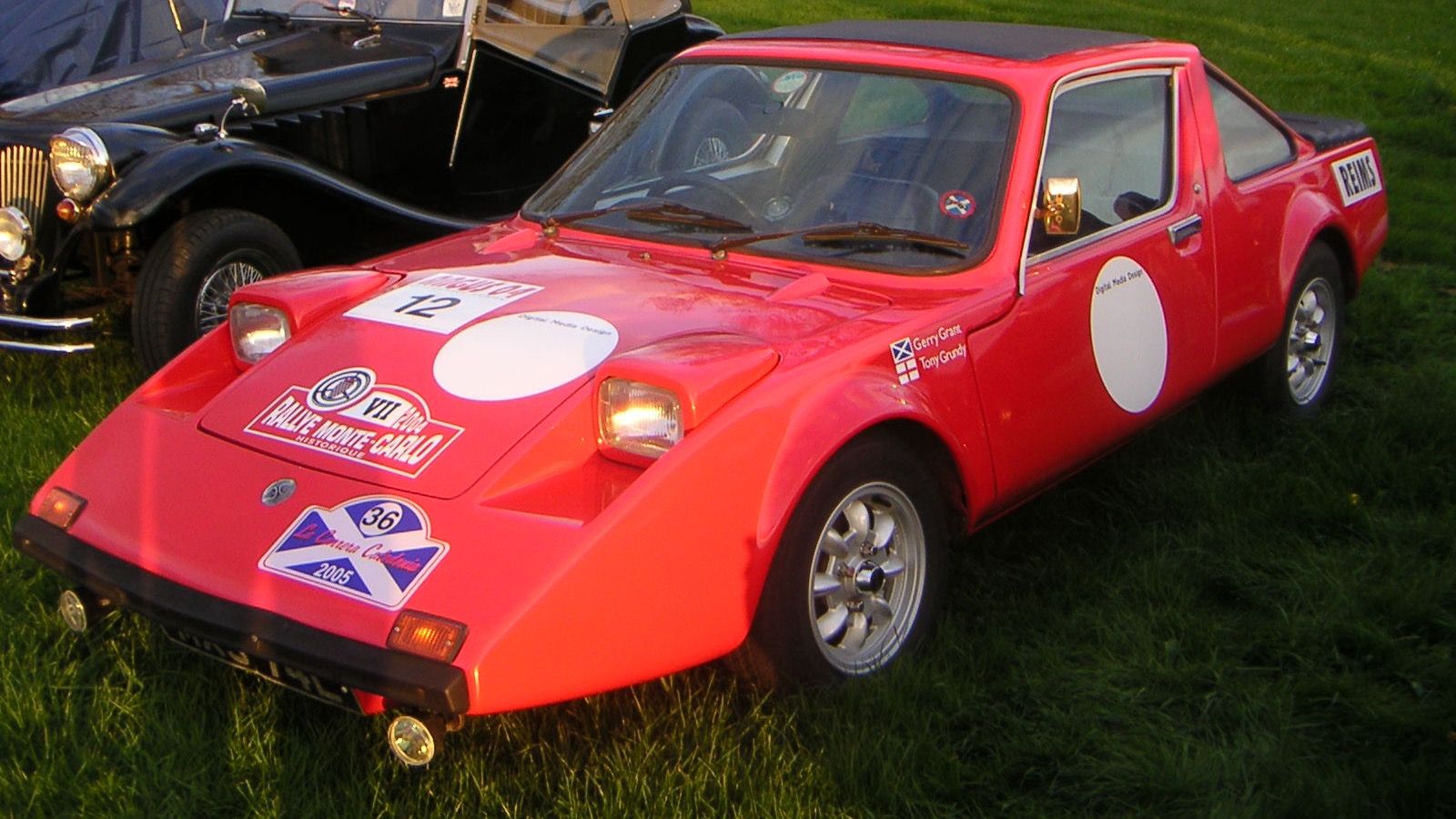
1972 Photo: “1972 Clan Crusader” by Clancrusader at English Wikipedia / Wikimedia Commons — Public domain. Cropped to 16:9.
Body styles
- Coupé
Notable special editions & performance variants
Competition Crusader
Factory-prepared rally variant; 18 examples built, winning multiple British club-rally championships 1972–1974.
Related models
Collect the nameplate
Find a scale model of the Clan Crusader
Search Amazon across available years, colors, and scales. Exact releases vary, so confirm the listing before ordering.