
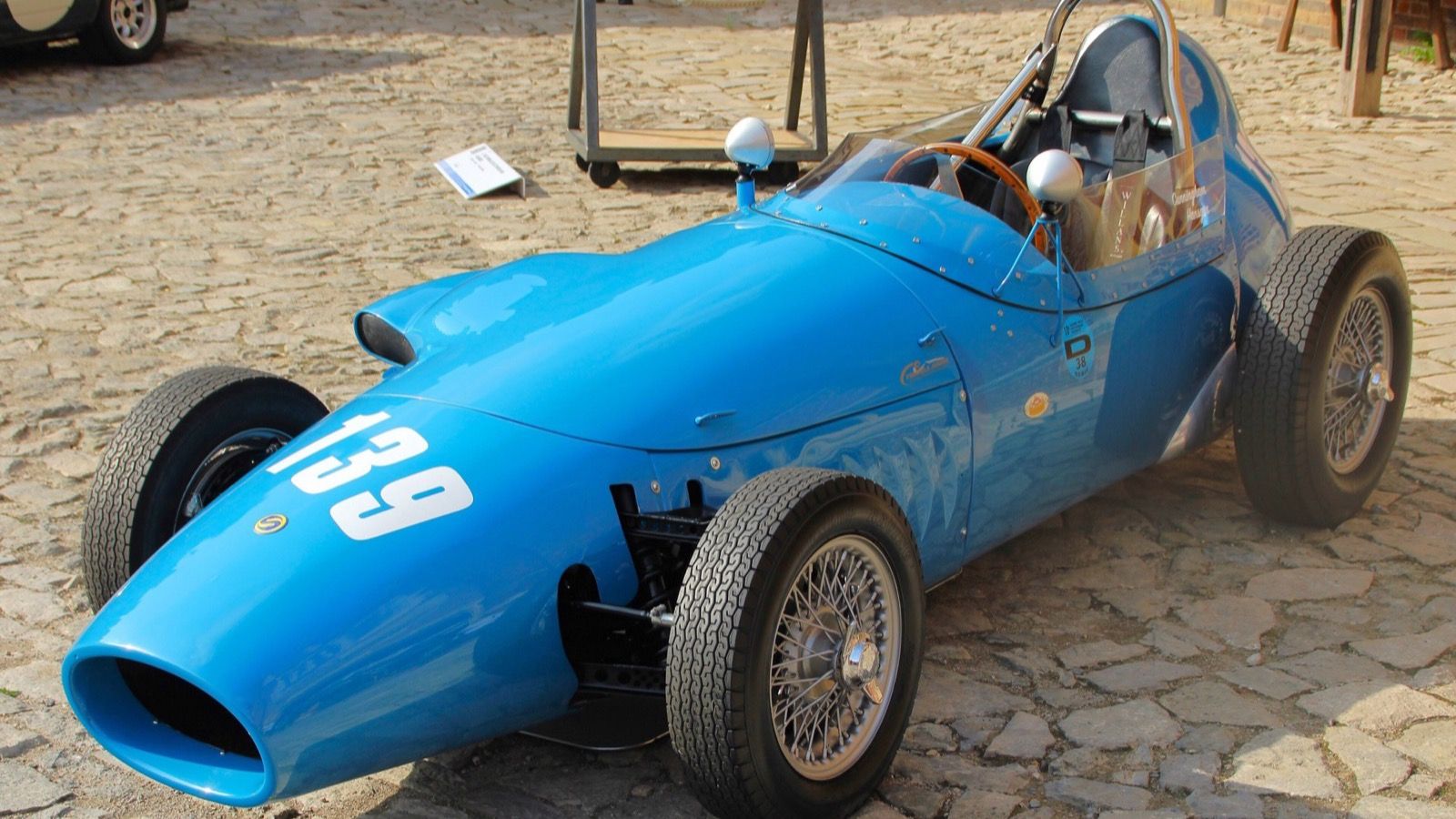
Stanguellini Formula Junior History
Stanguellini's front-engined Formula Junior single-seater — the car that launched the class, built in nearly 150 examples and dominant through 1960, driven early in their careers by Bandini and von Trips.
Photo: “1959 Stanguellini Formula Junior HCC22” by MrWalkr / Wikimedia Commons, licensed under CC BY-SA 4.0. Cropped to 16:9.
History
When Italy launched Formula Junior in 1957 as a low-cost single-seater class for aspiring racers, Vittorio Stanguellini saw the opportunity immediately. After Juan Manuel Fangio tested an early prototype in Modena and gave his approval, Stanguellini became the first manufacturer to enter series production for the new formula. The car used a Fiat 1100 cc engine tuned in-house, mounted in a front-engined, ladder-framed chassis with a body styled for minimum frontal area. It was light, reliable, and fast.
Formula Junior was elevated to international status for 1958, and Stanguellini's order books swelled accordingly. The cars dominated European Formula Junior racing throughout 1958 and 1959, winning numerous national and international events. In 1959 a Stanguellini-entered car won the inaugural international Formula Junior championship. Lorenzo Bandini and Wolfgang von Trips — both future Formula 1 names — scored early career wins aboard Stanguellinis. By the end of the programme nearly 150 examples had been built, with some sources citing figures approaching 200.
British mid-engined designs from Cooper and Lotus arrived in force for 1960 and quickly outpaced the front-engined Stanguellinis on faster circuits, though the Italian cars continued to win on tighter tracks. Stanguellini responded with the rear-engined Delfino (1961–1962), but it did not restore the earlier dominance. The Italian Automobile Federation (ANCAI) awarded Vittorio Stanguellini the Formula Junior Constructors' World Trophy in 1962 in recognition of the marque's foundational role in the class.
Generations
Front-engined series · Junior 1100 Monoposto
Photo: “1959 Stanguellini Formula Junior HCC22” by MrWalkr / Wikimedia Commons, licensed under CC BY-SA 4.0. Cropped to 16:9.
The dominant front-engined Formula Junior; won the first international championship in 1959 and accumulated over 40 national and international victories before mid-engined British rivals arrived.
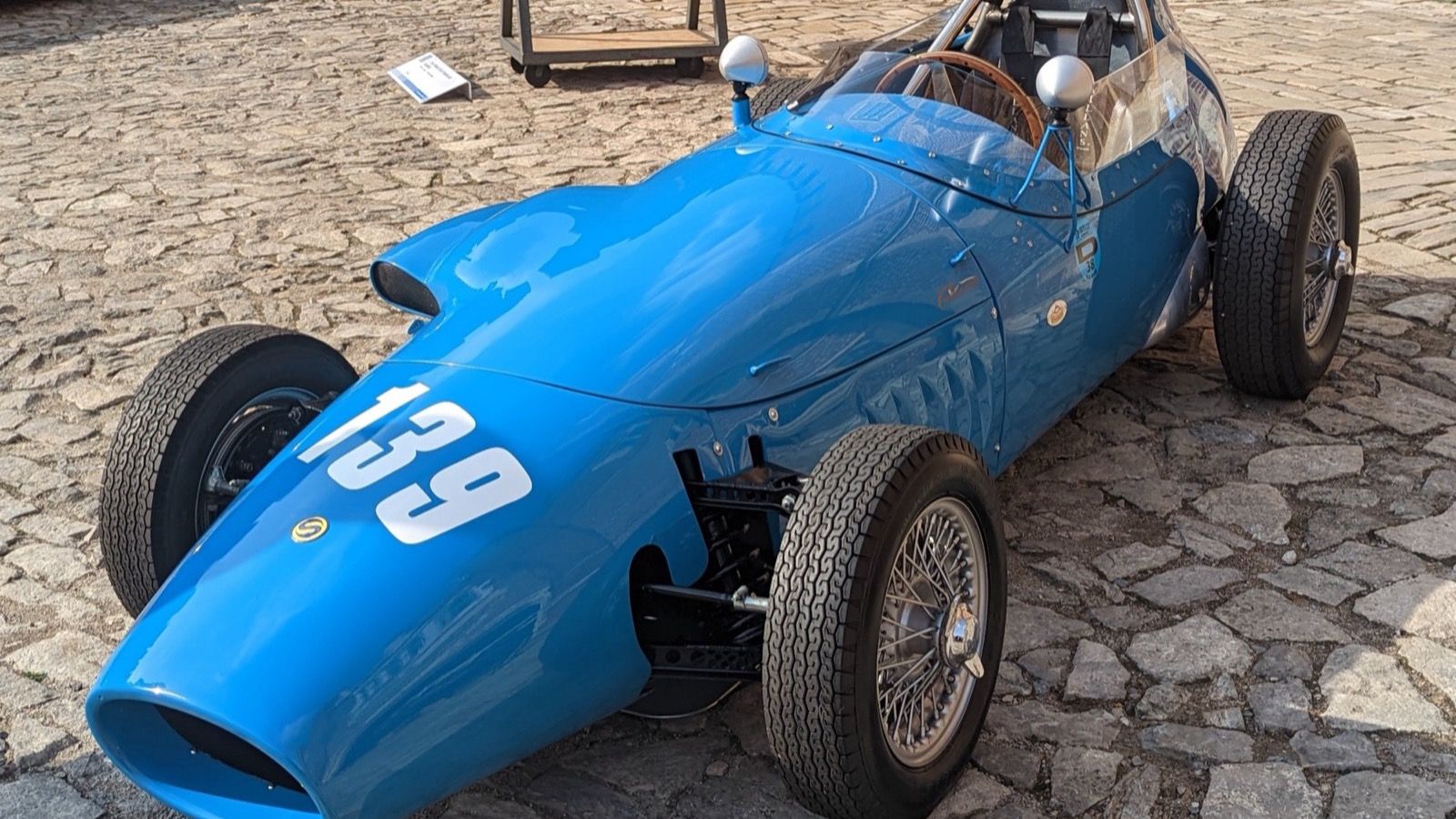
1959 Photo: “1959 Stanguellini Formula Junior” by Calreyn88 / Wikimedia Commons, licensed under CC BY-SA 4.0. Cropped to 16:9.
Rear-engined series · Delfino
Innovative rear-engined response to Cooper and Lotus; produced in small numbers and unable to match the British cars' pace on open circuits, but earned Vittorio the ANCAI World Trophy in 1962.
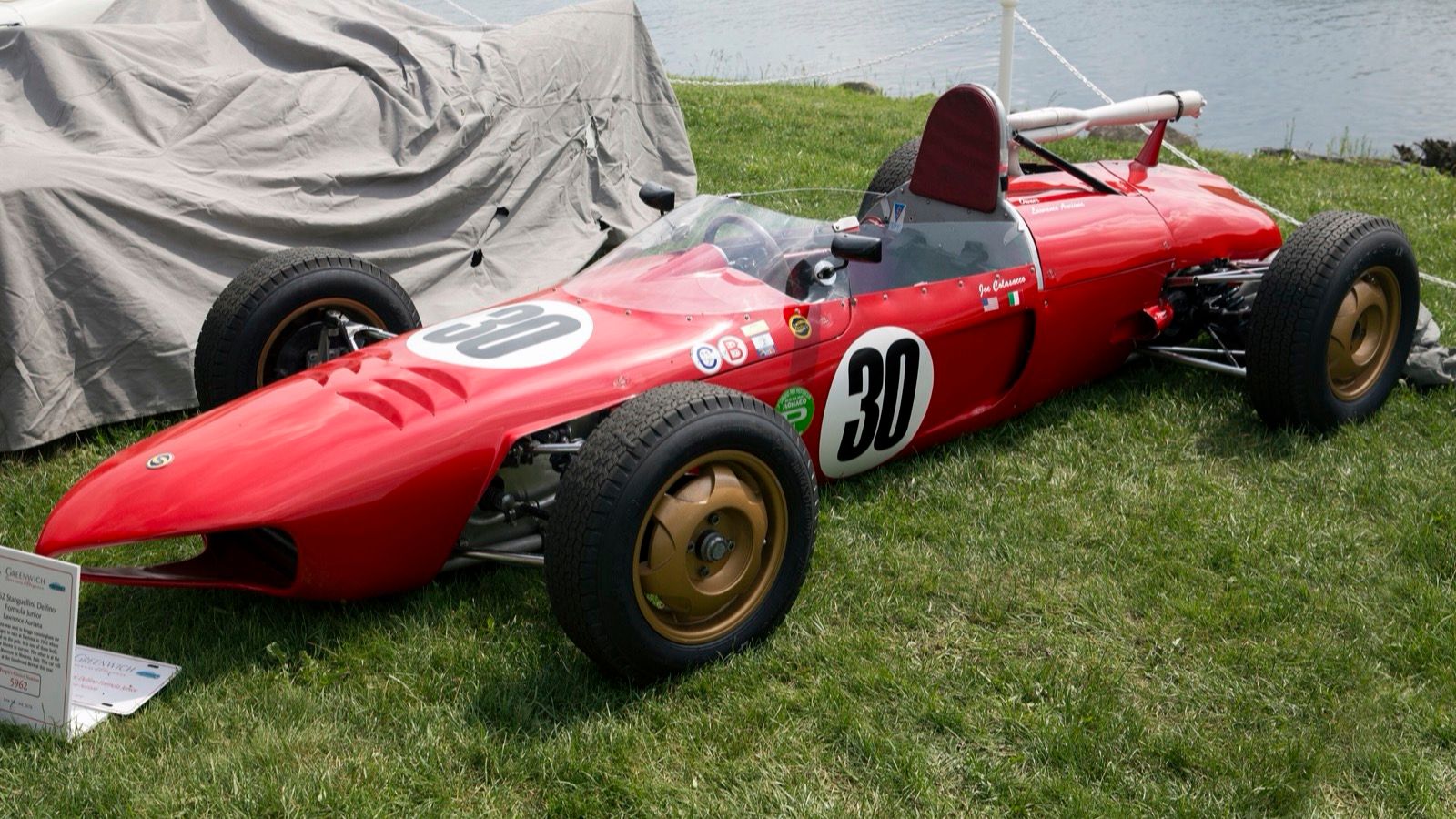
1962 Photo: “1962 Stanguellini Delfino Formula Junior, ex-Cunningham at Greenwich 2018” by Mr.choppers / Wikimedia Commons, licensed under CC BY-SA 3.0. Cropped to 16:9.
Body styles
- Open-wheel single-seater
Related models
Collect the nameplate
Find a scale model of the Stanguellini Formula Junior
Search Amazon across available years, colors, and scales. Exact releases vary, so confirm the listing before ordering.