
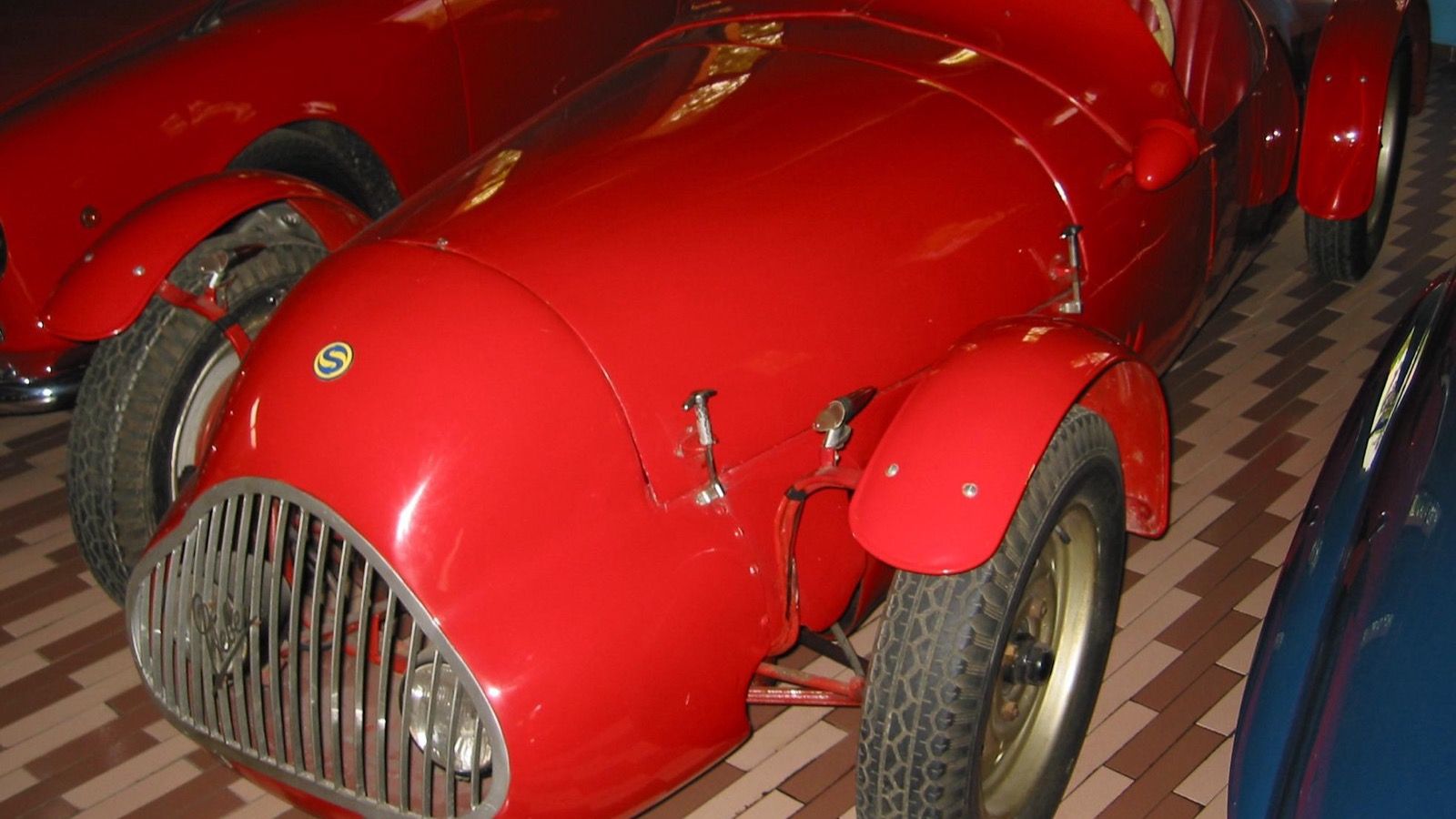
Stanguellini Barchetta Sport (1100 & 750) History
Stanguellini's open two-seat sports racers of the late 1940s and 1950s — twin-cam Fiat-derived 750 cc and 1100 cc barchettas that won the Italian 750-class championship five times.
Photo: “Stanguellini Zweisitzer” by Buch-t / Wikimedia Commons — Public domain. Cropped to 16:9.
History
Following the end of World War II, Vittorio Stanguellini drew on his pre-war experience tuning and racing Fiats to build entirely new sports racers in Modena. The cars used Fiat 750 and 1100 cc engines rebuilt with in-house twin-overhead-cam cylinder heads, light-alloy blocks, and twin side-draught Weber carburettors. Chassis were fabricated from high-strength tubular steel at the Stanguellini workshop, keeping weight to a minimum. The resulting 750 cc engine produced around 60 bhp at 7,500 rpm; the 1100 cc unit some 90 bhp at 7,000 rpm — extraordinary outputs for tiny-displacement road-racing machinery of the period.
1947 was Scuderia Stanguellini's golden year: wins accumulated race after race, and not a weekend passed without at least one victory for a Stanguellini-built or -tuned car. The 750 Sport class Italian Championship fell to the marque five times across nine seasons — 1947, 1952, 1954, 1955, and 1956 — and Stanguellini cars won their class at the Mille Miglia (1940) and the Targa Florio (1938, 1952). A Stanguellini 1100 also took a class victory at the 1957 12 Hours of Sebring, demonstrating the design's competitiveness even against larger machinery.
By the mid-1950s the barchettas faced growing competition from factory-backed rivals, but they had firmly established the Stanguellini name as synonymous with precision engineering in Italy's small-displacement racing classes. Many examples survive in historic-motorsport events today.
Generations
First generation · Tubular-chassis barchetta
Photo: “Stanguellini Zweisitzer” by Buch-t / Wikimedia Commons — Public domain. Cropped to 16:9.
Original postwar sports racers on hand-built tubular-steel frames with Fiat-derived, twin-cam-head 750 and 1100 cc engines; 1947 was the golden year of the Squadra.
Second generation · Sport Internazionale
Refined 750 Sport Internazionale and 750 Corsa variants with a fully in-house twin-cam 750 cc engine (from 1950); dominated Italian championship racing through 1956.
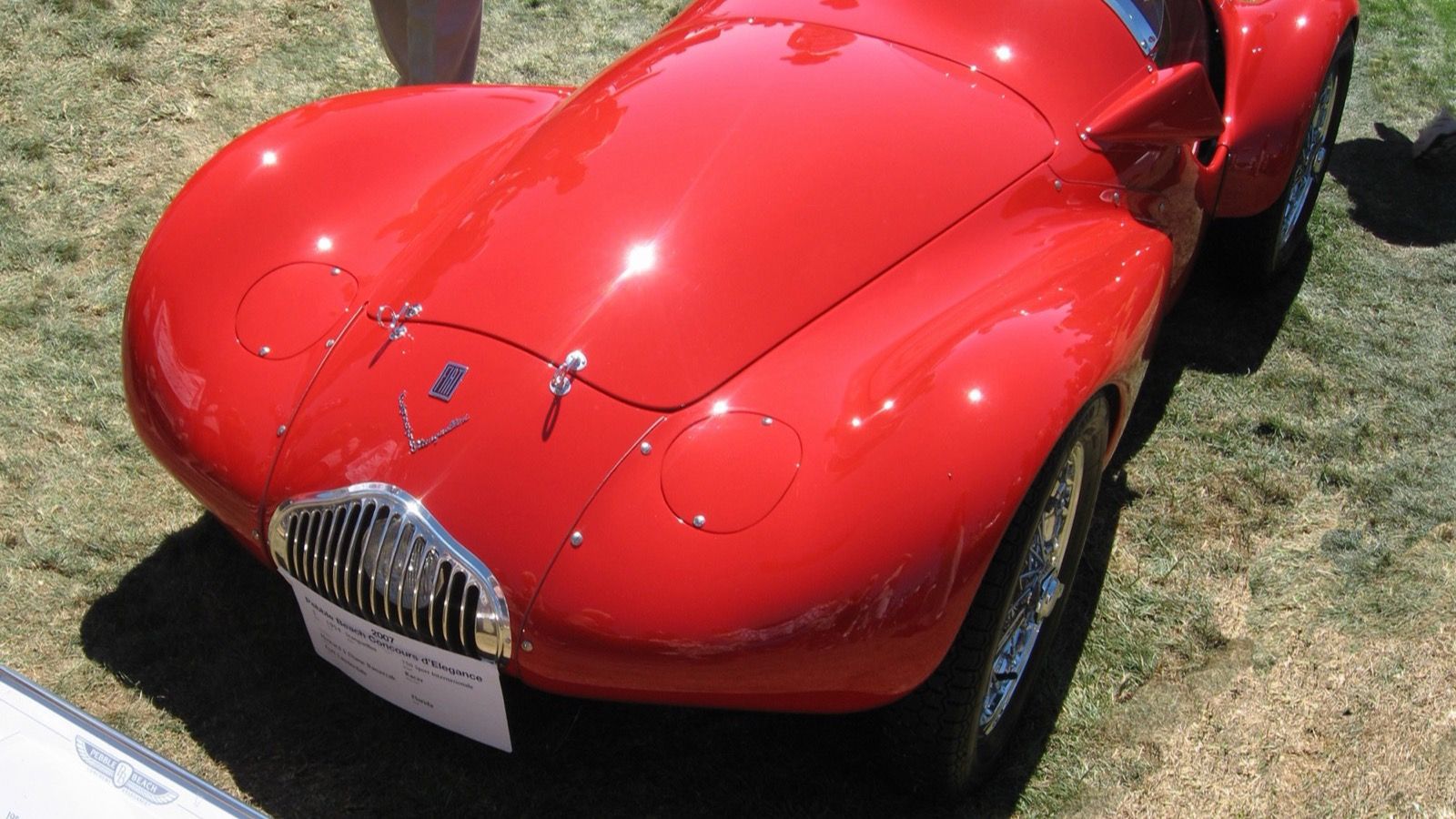
1954 Photo: “Stanguellini 750 SI” by Simon Davison from Los Gatos, United States; Cropped, rotated and missing bits redrawn by uploader Mr.choppers / Wikimedia Commons, licensed under CC BY 2.0. Cropped to 16:9.
Body styles
- Barchetta (open two-seater)
Related models
Collect the nameplate
Find a scale model of the Stanguellini Barchetta Sport (1100 & 750)
Search Amazon across available years, colors, and scales. Exact releases vary, so confirm the listing before ordering.