
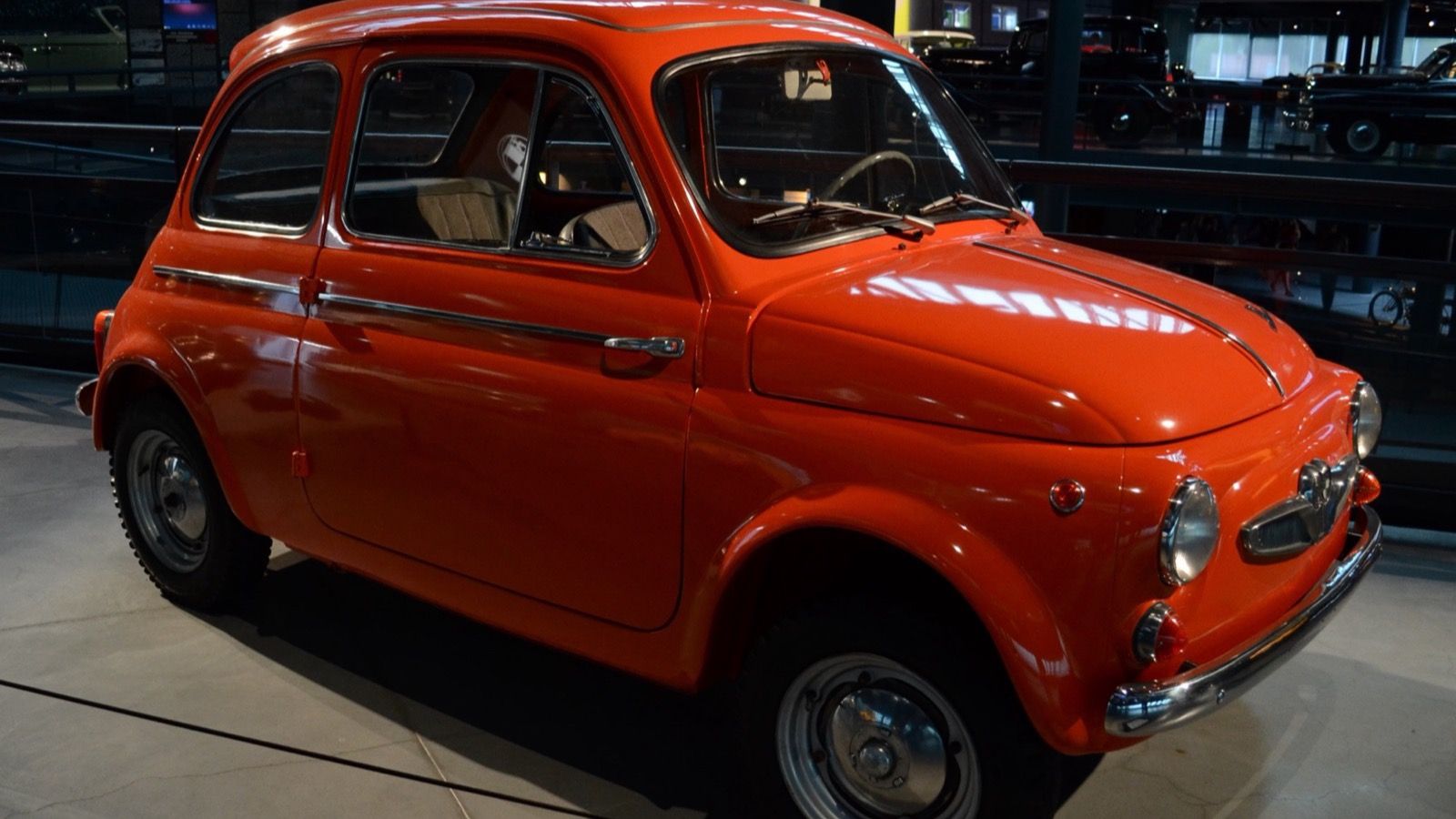
Puch 500 History
Austria's beloved city car — a Fiat 500 body paired with a uniquely Austrian flat-twin engine that could embarrass far larger cars in Alpine rallying.
Photo: “Puch 500 D (1962).jpg” by Milhouse35 / Wikimedia Commons, licensed under CC BY-SA 4.0. Cropped to 16:9.
History
The Puch 500 launched in 1957 as a licensed adaptation of the Dante Giacosa–designed Fiat 500, built at the Steyr-Daimler-Puch plant in the Thondorf district of Graz. While the body shell came from Turin, Puch replaced every mechanical component with Austrian engineering: a proprietary horizontally opposed twin-cylinder engine, gearbox, and chassis. The result was a city car that was substantially different under the skin — smoother and more rev-willing than the Fiat's straight-twin unit.
The model family expanded rapidly through the 1960s. A 643 cc engine produced estate variants (700 C and 700 E, 1961) and the sporting 650 T and 650 TR sedans from 1962, with the twin-carburettor 650 TR II developing up to 40 hp in its hottest tune. These rally-oriented versions earned the Puch 500 an outsized motorsport reputation: in 1966, Polish driver Sobiesław Zasada won the European Rally Championship driving a Puch — making the 500 the smallest car ever to claim that title. A total of approximately 60,000 Puch 500-family cars were built before production ended in 1975.
A 1967 facelift introduced front-hinged doors in place of the original rear-hinged 'suicide' design and updated the roofline in step with Fiat's own refresh, producing the 500 S and Europa variants. The final cars used the 643 cc engine under Fiat's 126 body for 1973–1975, rounding off eighteen years as Austria's definitive small car.
Generations
First generation · 500 / 500 D / 500 DL
Photo: “Puch 500 D (1962).jpg” by Milhouse35 / Wikimedia Commons, licensed under CC BY-SA 4.0. Cropped to 16:9.
Original 493 cc cars with the folding or fixed metal roof; 500 D/DL introduced a Fiat-sourced fixed roof for 1959.
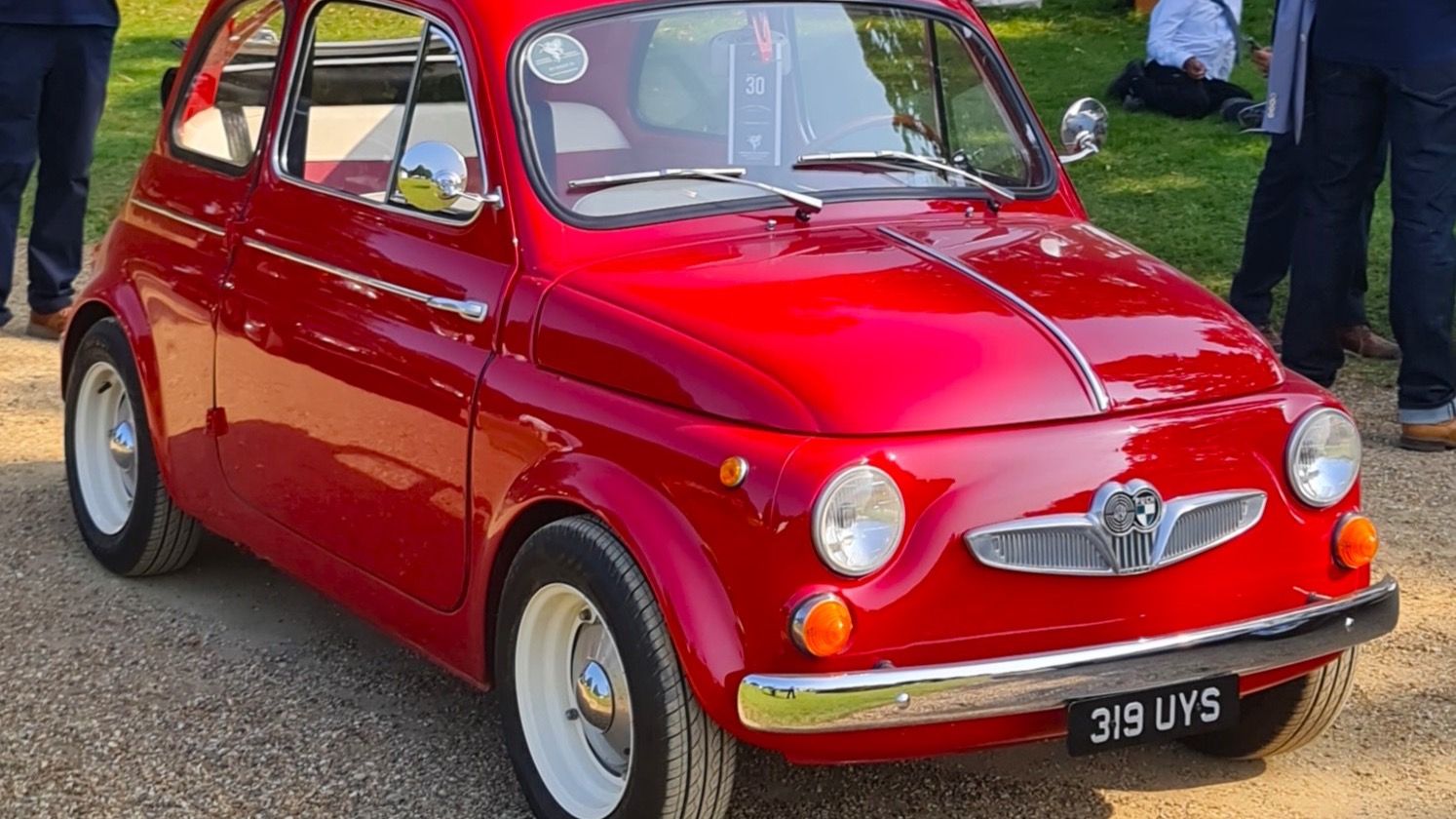
1962 Photo: “1962 Steyr-Puch 500 D HCC21.jpg” by MrWalkr / Wikimedia Commons, licensed under CC BY-SA 4.0. Cropped to 16:9.
Second generation · 650 T / 650 TR / 700 C / 700 E
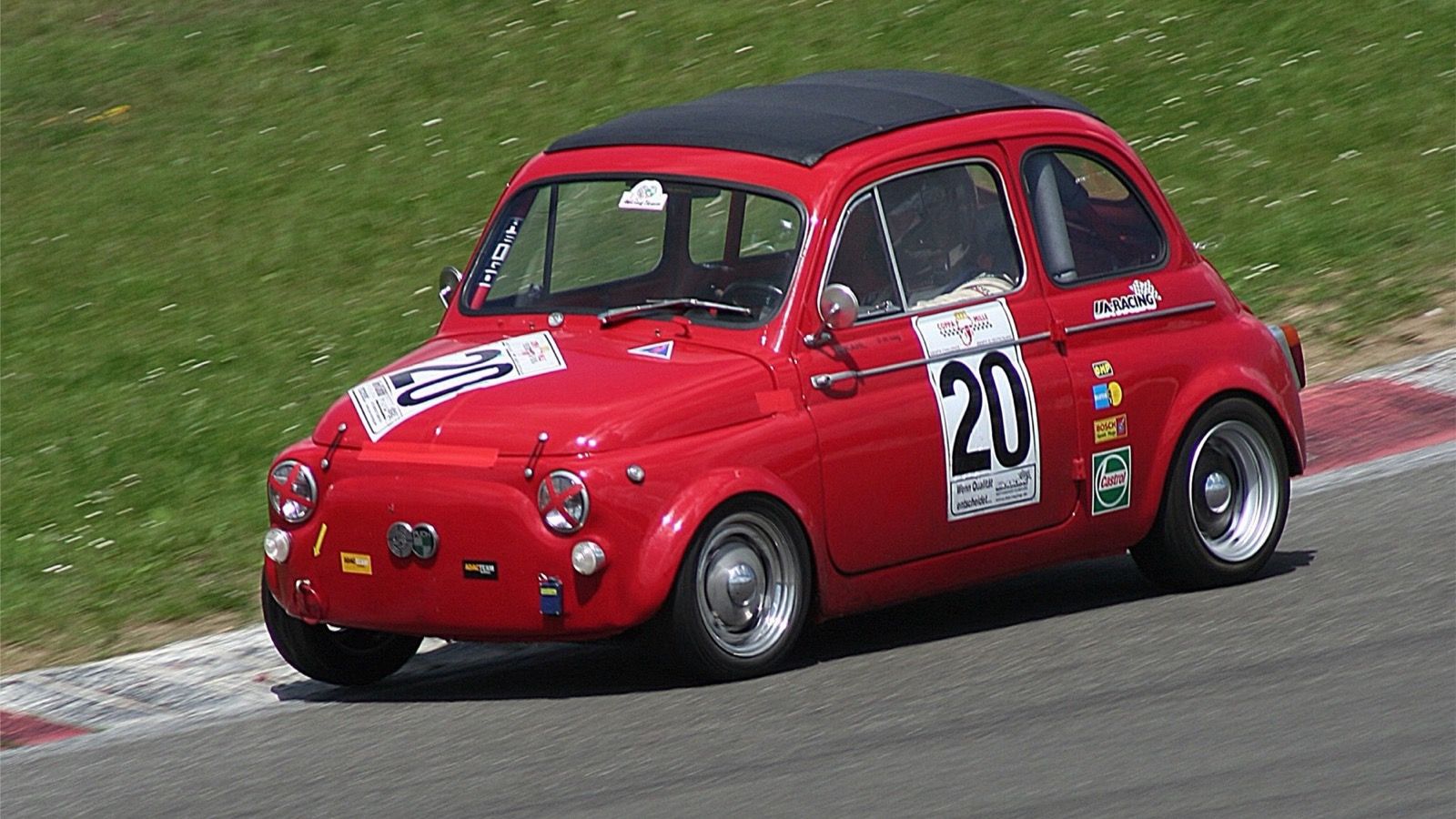
Photo: “2007-06-17 Steyr-Puch 650 TR, 660 cm³, Bj. 1964.jpg” by Spurzem / Wikimedia Commons, licensed under CC BY-SA 2.0 de. Cropped to 16:9.
Expanded 643–660 cc engine family; estates (700) and the dual-carburettor rally 650 TR and TR II. Zasada's 1966 European Rally Championship title won with this generation.
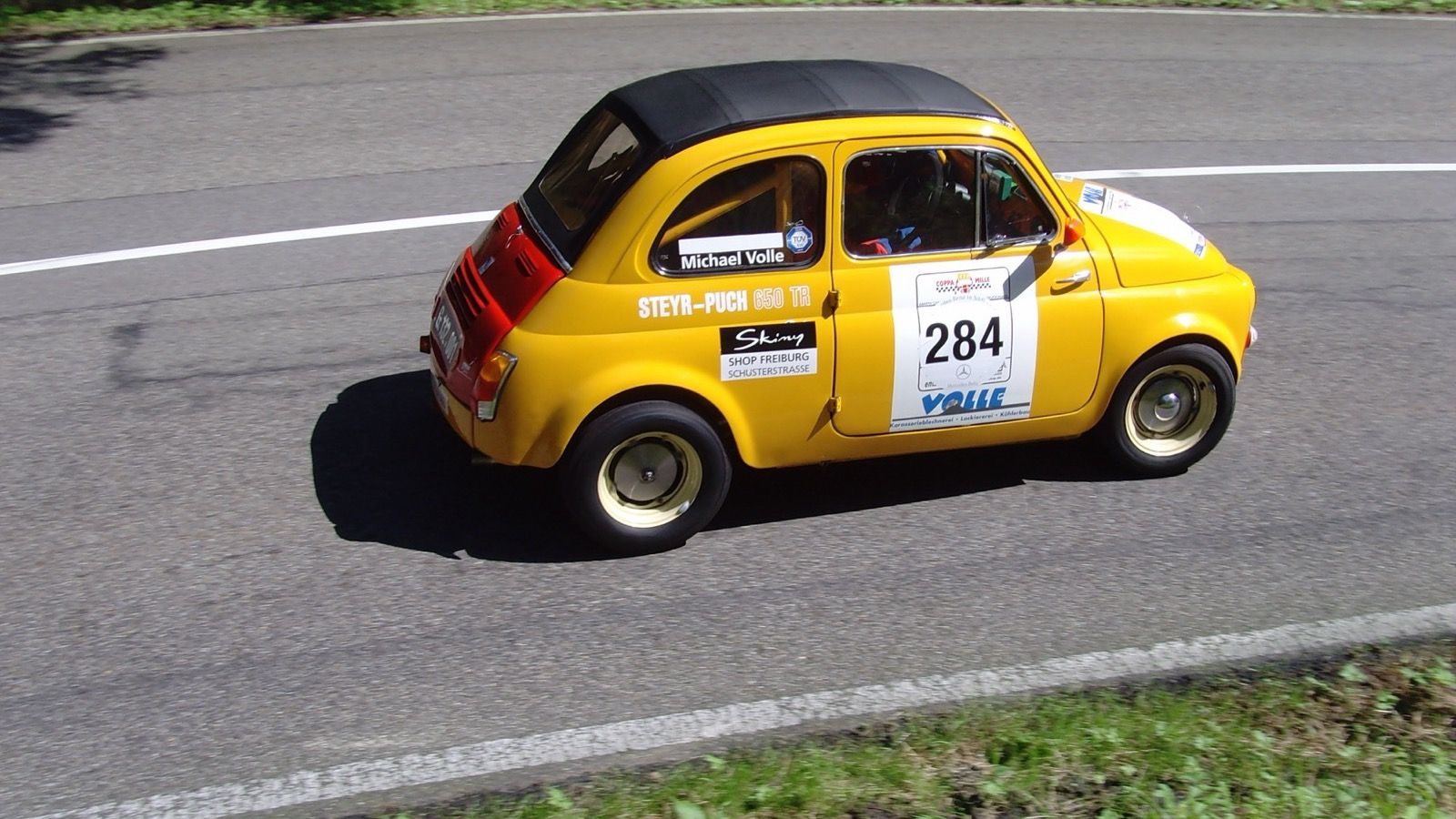
1964 Photo: “Steyr-Puch 650 TR II, 1964.jpg” by Klaus Nahr / Wikimedia Commons, licensed under CC BY-SA 2.0. Cropped to 16:9.
Third generation · 500 S / Europa / 126-body
Front-hinged doors replace suicide design; final 1973–1975 cars use Fiat 126 body with Puch's 643 cc engine.
Body styles
- Saloon
- Cabriolet
- Estate (Combi)
Notable special editions & performance variants
650 TR II
Dual-carburettor 660 cc twin developing up to ~40 hp — the hot-rod factory Puch, basis of Zasada's 1966 championship car.
Related models
Collect the nameplate
Find a scale model of the Puch 500
Search Amazon across available years, colors, and scales. Exact releases vary, so confirm the listing before ordering.