
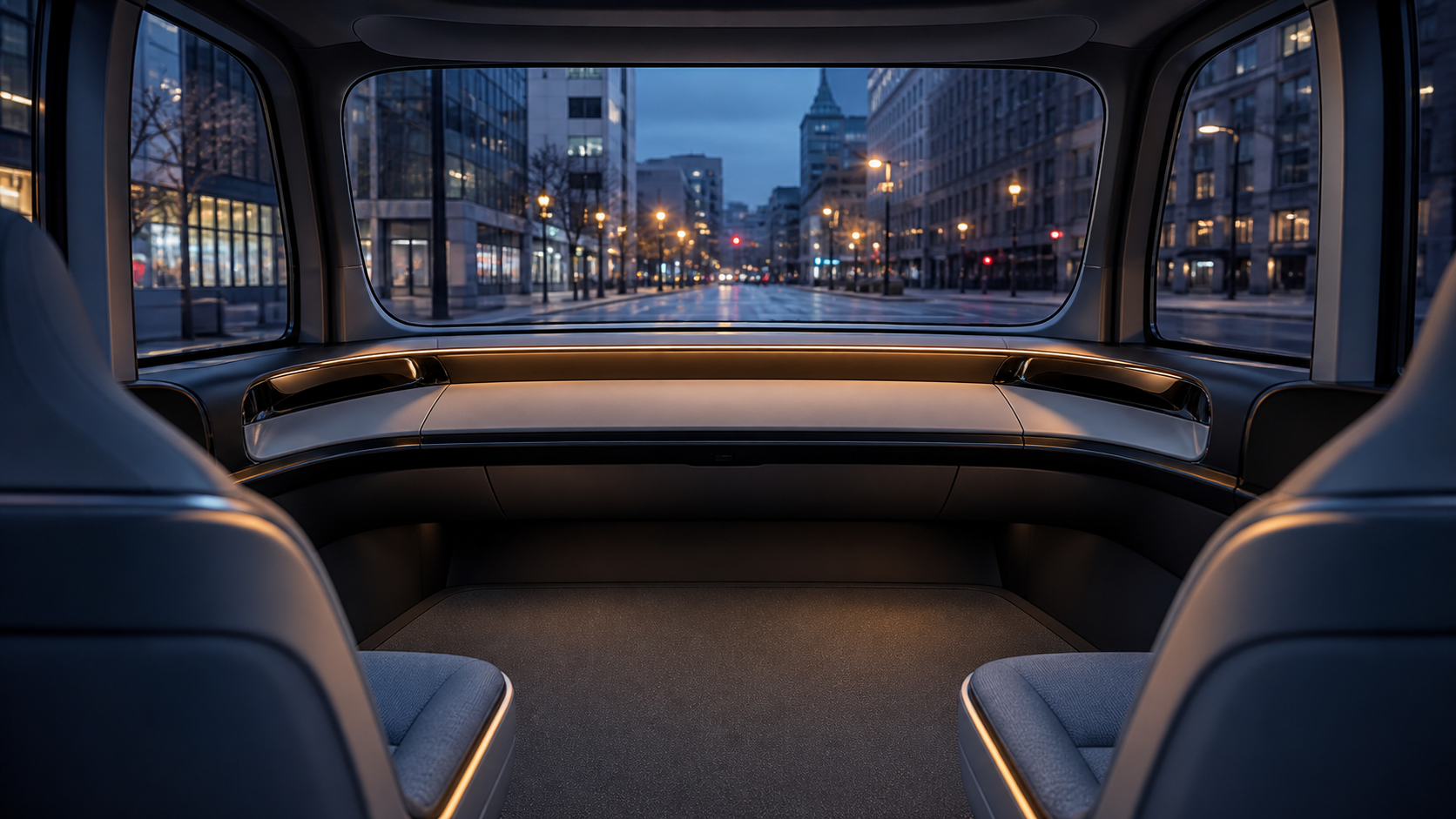
Can a driverless vehicle legally skip the brake pedal?
NHTSA has proposed a path for purpose-built automated vehicles without manual controls, but it has not issued a final rule or relaxed stopping-distance requirements.
Answer first
NHTSA's autonomous vehicle brake pedal proposal 2026 would let a purpose-built automated vehicle omit a human-operated brake pedal only when it has no manual driving controls; the proposal is not final, and the vehicle would still have to pass FMVSS No. 135 stopping tests.
This is a proposal, not permission already in force
NHTSA published a notice of proposed rulemaking on June 26, 2026 to update Federal Motor Vehicle Safety Standard No. 135, the light-vehicle braking standard. The agency extended the comment deadline from July 27 to August 26, 2026. A proposed rule invites evidence and comments; it does not change the binding standard until NHTSA publishes a final rule with an effective date.
The proposal is narrow. It addresses automated-driving-system vehicles designed without manually operated driving controls. If an automated vehicle retains controls that a person can use—including a service-brake control—the existing manual-control requirements would continue to apply. It would not authorize an owner or converter to remove the brake pedal from an ordinary road car.
The stopping requirements would remain
The proposal would replace test steps that assume a human foot or hand with alternative ways to command braking on a vehicle that has no manual controls. NHTSA says it is not proposing to change the stopping-distance requirements in FMVSS No. 135. The brake system would still have to stop the vehicle within the standard's performance limits when actuated.
That distinction matters: removing a design-specific control is not the same as removing braking regulation. The proposal concerns how a purpose-built automated vehicle is equipped and tested, while preserving the standard's core stopping-performance outcome.
- Covered by the proposal: certain ADS-equipped light vehicles with no manually operated driving controls.
- Not covered by the exemption: ADS-equipped vehicles that retain manual driving controls.
- Unchanged in the proposal: FMVSS No. 135 stopping-distance performance requirements.
- Not authorized by an NPRM: production certification under a rule that has not yet been finalized.
Brake hardware compliance is not an autonomous-driving safety test
NHTSA explicitly separates two questions. FMVSS No. 135 tests whether the brakes can stop the vehicle after they are commanded. It does not establish whether an automated driving system recognizes the right hazard, chooses the right time to brake, or drives safely through a real-world scenario.
The agency says it is developing separate objective safety-performance tests for ADS-equipped vehicles and retains defect and recall authority. That future work should not be described as part of this brake-pedal proposal, and the proposal should not be read as federal approval of any particular robotaxi service or automated-driving system.
What this means for drivers and passengers
For a car a consumer can drive today, nothing in this proposal changes the driver's duty to use the installed controls or remain attentive when the vehicle's assistance system requires it. NHTSA says no fully automated vehicle is currently offered for consumer sale in the United States and distinguishes today's driver-assistance systems from future ADS vehicles that perform the entire driving task.
If the rule is finalized, its practical effect would be to remove a federal design barrier for a specialized class of purpose-built vehicle. Whether and where one could operate would still depend on the final federal rule, certification or exemption status, defect law, and applicable state and local operating rules.
Evidence ledger
Primary sources
Time-sensitive claims were checked against the sources below on August 25, 2026. The linked source controls.
- Federal Register / NHTSANotice of proposed rulemaking: FMVSS No. 135 for ADS-equipped vehicles
- Federal Register / NHTSAComment-period extension through August 26, 2026
- NHTSANHTSA summary of the proposed brake-standard update
- NHTSAAutomated vehicle safety and consumer-availability guidance