
Lotus Esprit History
Lotus's mid-engine supercar (1976–2004) — Giugiaro's 'folded-paper' wedge, James Bond's submarine car, later V8-powered.
Photo: “File:1979 Lotus Esprit S2 001.jpg” by Mustang Joe / Wikimedia Commons — CC0 1.0. Cropped to 16:9.
History
The Esprit (1976–2004) was Lotus's mid-engine flagship for nearly three decades. Its sharp 'folded-paper' wedge body was styled by Giorgetto Giugiaro and became an instant icon — cemented when a white Esprit transformed into a submarine in the 1977 James Bond film The Spy Who Loved Me.
Early cars used a 2.0-litre Lotus 907/910 four; the Turbo Esprit (from 1980) added forced induction and serious pace. Peter Stevens softened the wedge for the 1987 redesign (X180), and from 1996 the Esprit gained a 3.5-litre twin-turbo Lotus V8 of around 350 hp. After 28 years and roughly 10,675 cars, the last Esprit was built in February 2004.
Generations
S1–S2 (4-cylinder) · Giugiaro wedge
Photo: “File:1979 Lotus Esprit S2 001.jpg” by Mustang Joe / Wikimedia Commons — CC0 1.0. Cropped to 16:9.
The original sharp-edged Giugiaro wedge with the naturally aspirated 2.0-litre Lotus 907 four — the Bond-film car.
1979 Photo: “File:1979 Lotus Esprit S2 001.jpg” by Mustang Joe / Wikimedia Commons — CC0 1.0. Cropped to 16:9.
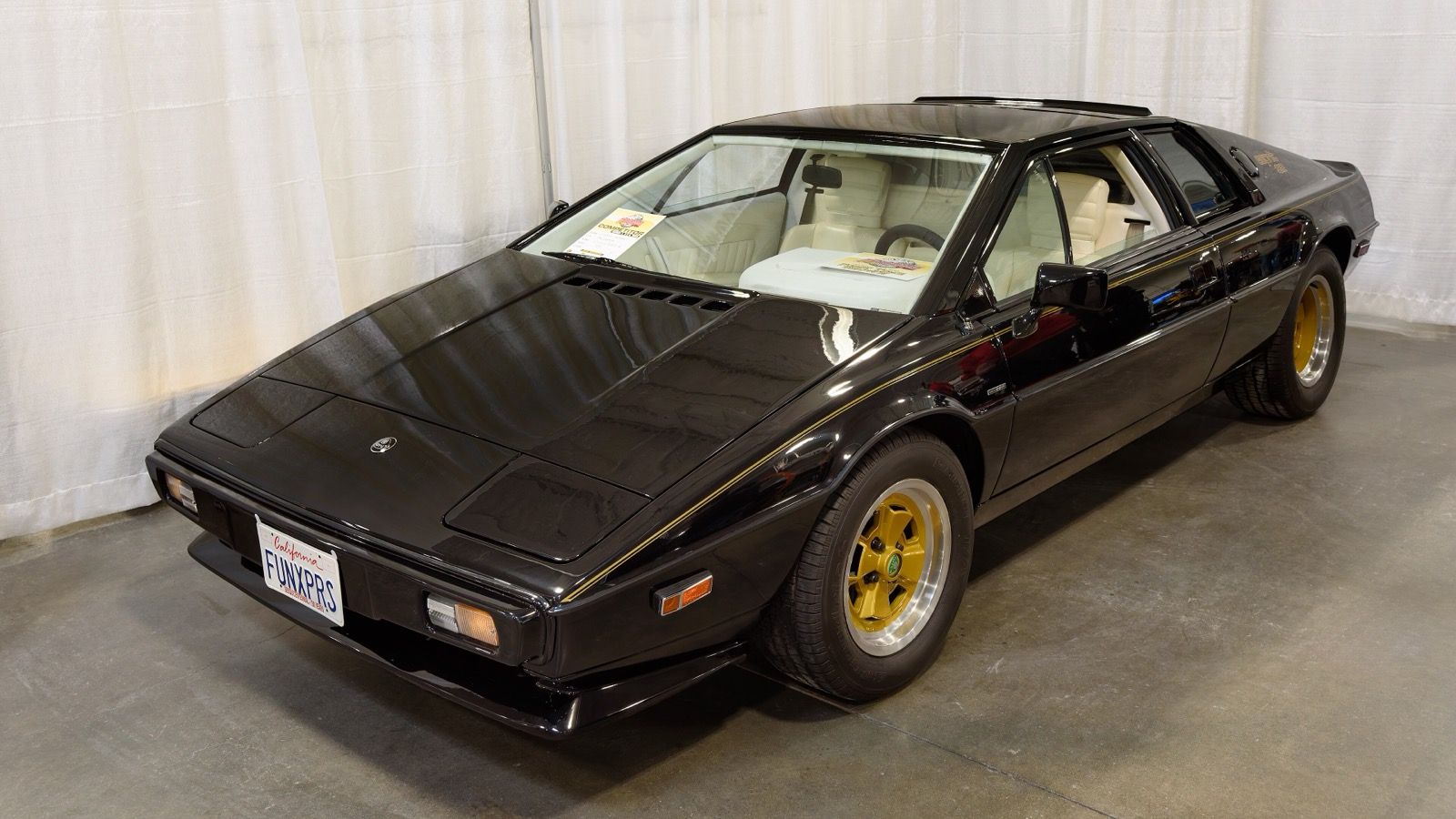
S3 / Turbo Esprit · Turbo era
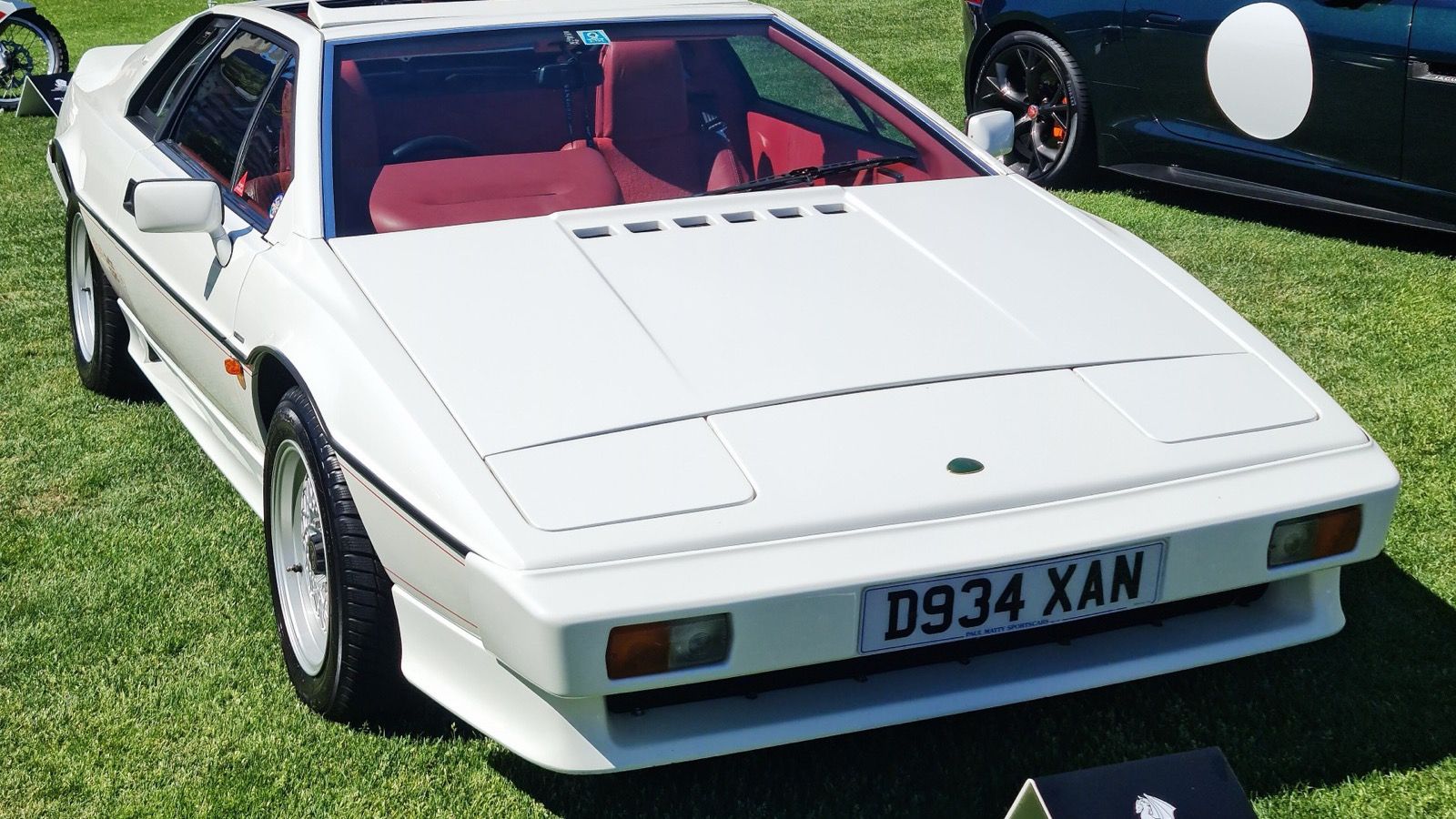
Photo: “File:1987 Lotus Esprit Turbo HC.jpg” by MrWalkr / Wikimedia Commons, licensed under CC BY-SA 4.0. Cropped to 16:9.
Added the turbocharged Esprit, transforming the car's performance while keeping the angular Giugiaro body.
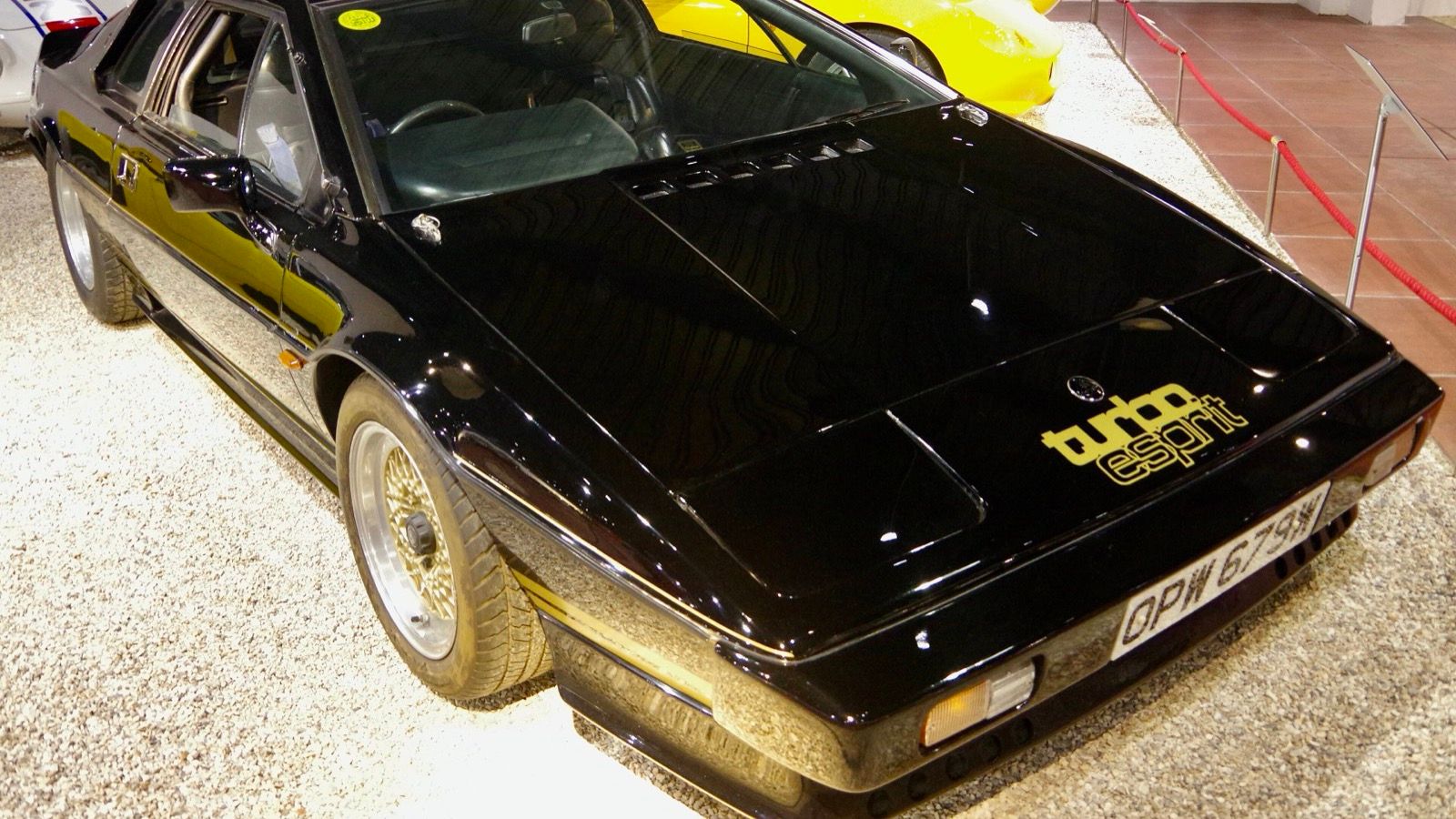
1981 Photo: “File:1981 Lotus Turbo Esprit (53427098809).jpg” by David Merrett from Daventry, England / Wikimedia Commons, licensed under CC BY 2.0. Cropped to 16:9.
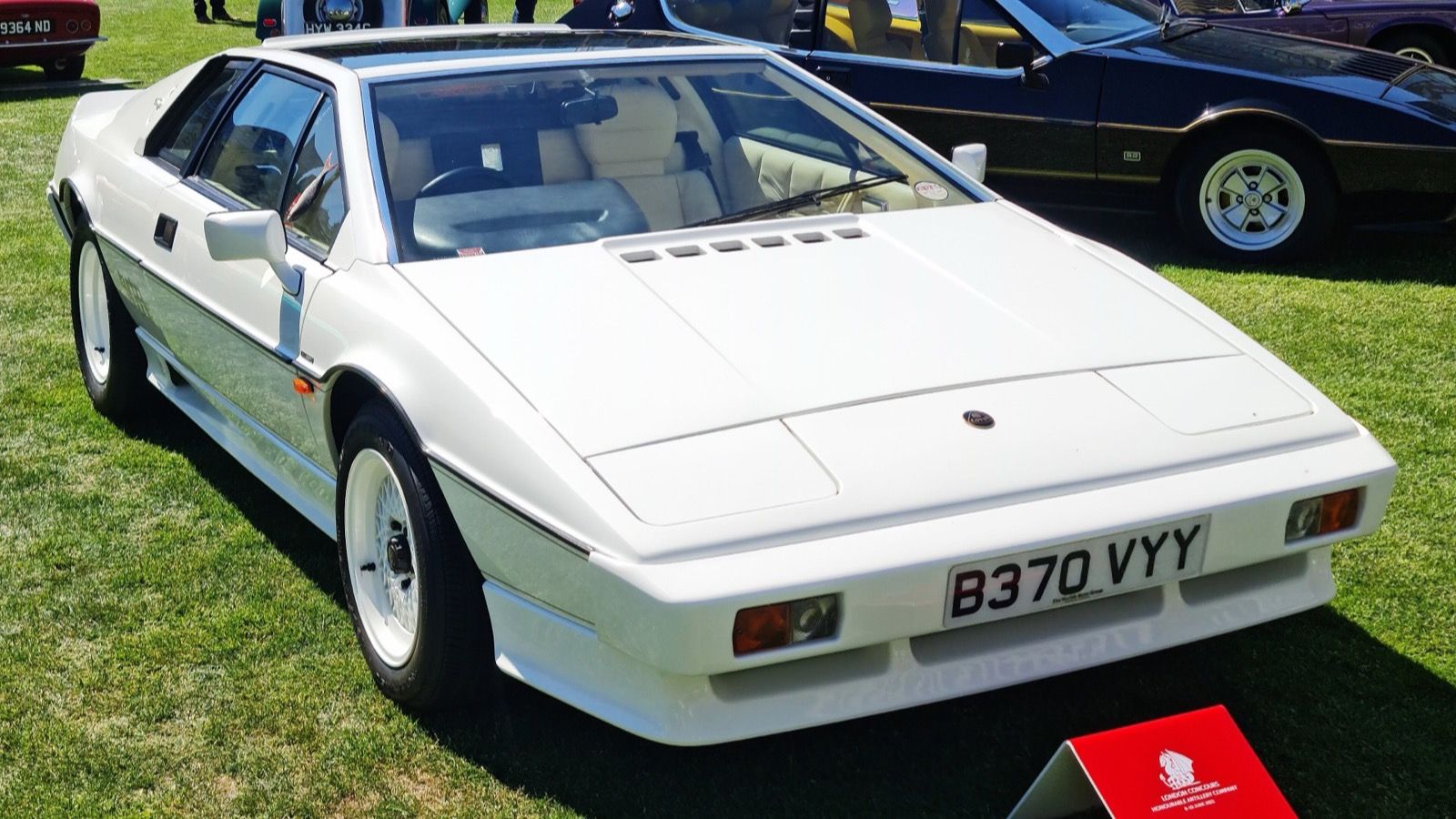
1984 Photo: “File:1984 Lotus Esprit Turbo.jpg” by MrWalkr / Wikimedia Commons, licensed under CC BY-SA 4.0. Cropped to 16:9.
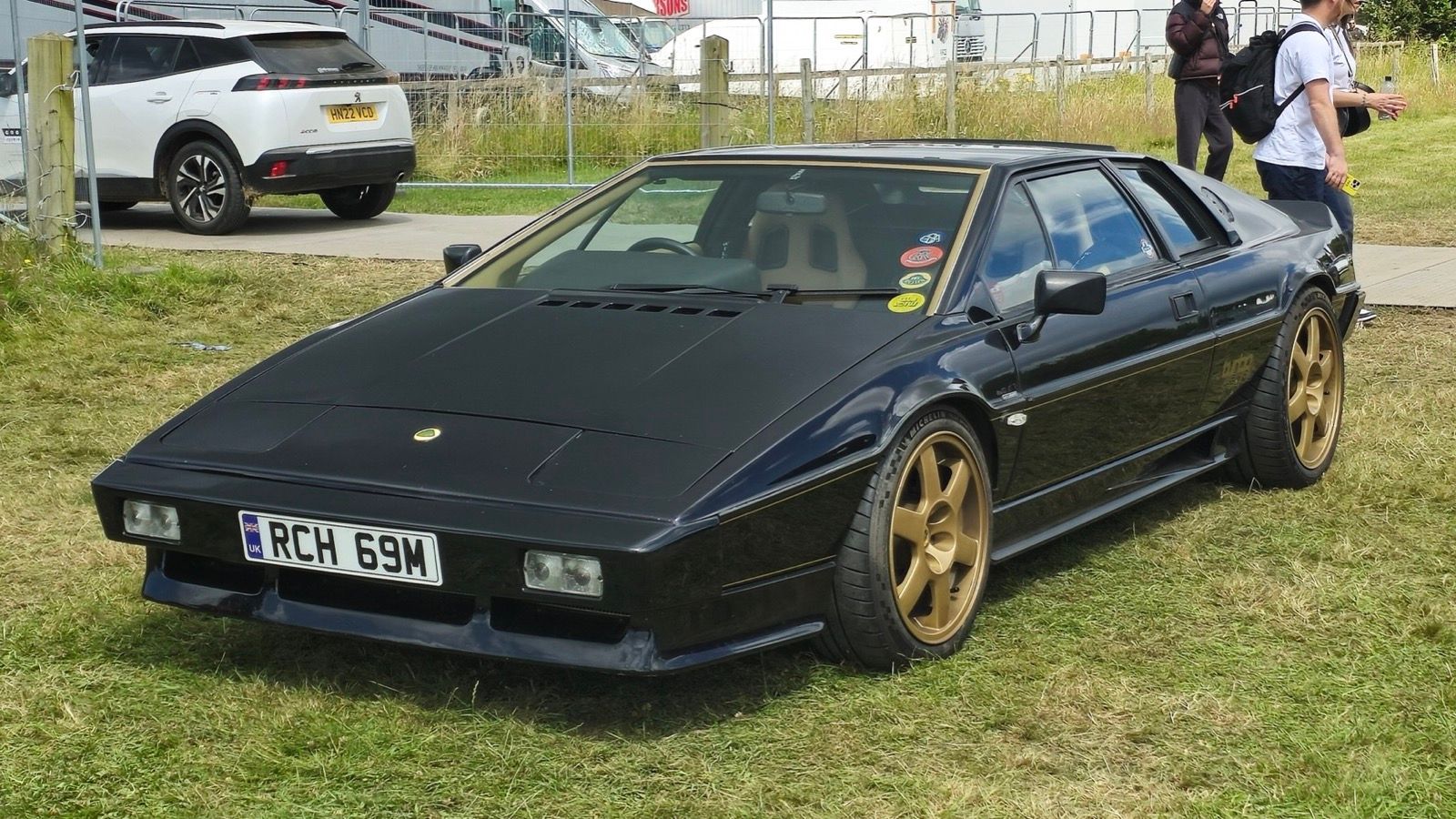
1985 Photo: “File:1985 Lotus Esprit Turbo 2.jpg” by Calreyn88 / Wikimedia Commons, licensed under CC BY-SA 4.0. Cropped to 16:9.
1987 Photo: “File:1987 Lotus Esprit Turbo HC.jpg” by MrWalkr / Wikimedia Commons, licensed under CC BY-SA 4.0. Cropped to 16:9.
Stevens redesign · X180
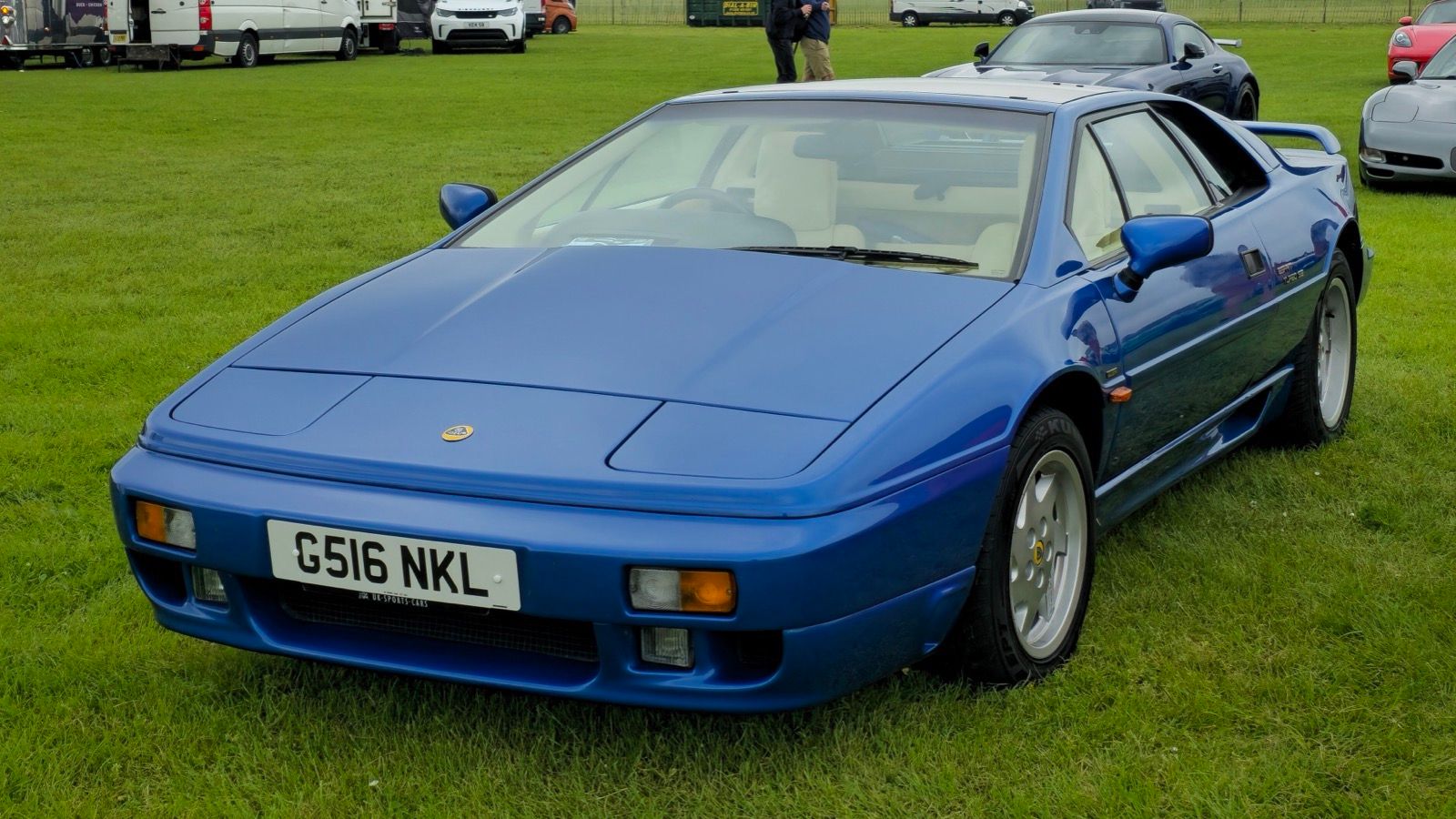
Photo: “File:1989 Lotus Esprit Turbo SE 2.jpg” by Calreyn88 / Wikimedia Commons, licensed under CC BY-SA 4.0. Cropped to 16:9.
Peter Stevens reskinned the Esprit with smoother, rounded bodywork while retaining the underlying chassis.
1989 Photo: “File:1989 Lotus Esprit Turbo SE 2.jpg” by Calreyn88 / Wikimedia Commons, licensed under CC BY-SA 4.0. Cropped to 16:9.
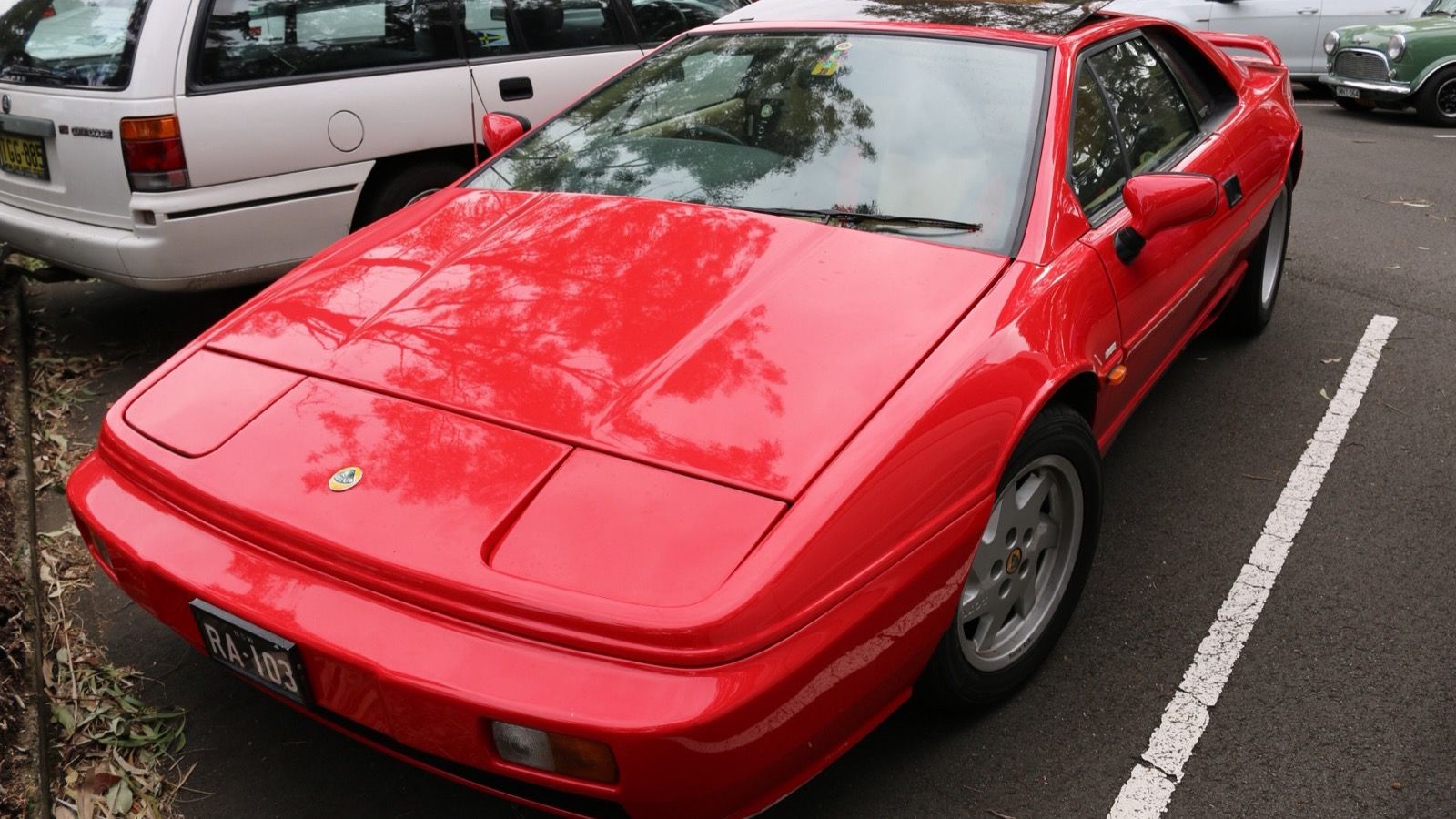
1990 Photo: “File:1990 Lotus Esprit Turbo (28987359131).jpg” by Jeremy from Sydney, Australia / Wikimedia Commons, licensed under CC BY 2.0. Cropped to 16:9.
S4 / V8 · Lotus V8 era
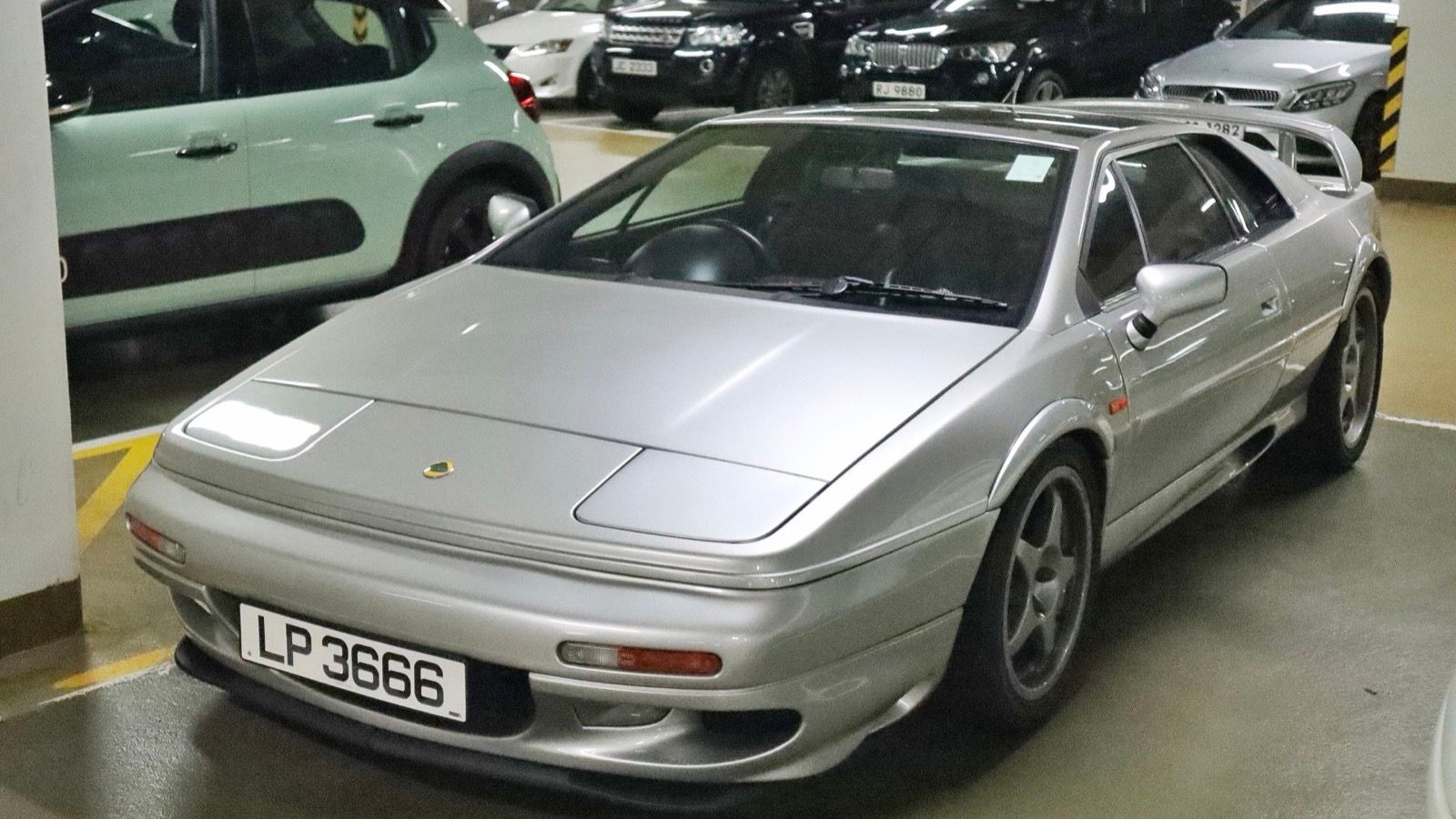
Photo: “File:2001 Lotus Esprit V8 (51240683540).jpg” by Jones028 from Hong Kong / Wikimedia Commons, licensed under CC BY 2.0. Cropped to 16:9.
Final cars, topped by the 1996-on twin-turbo 3.5-litre Lotus V8 of roughly 350 hp; the last Esprit left Hethel in 2004.
2001 Photo: “File:2001 Lotus Esprit V8 (51240683540).jpg” by Jones028 from Hong Kong / Wikimedia Commons, licensed under CC BY 2.0. Cropped to 16:9.
Body styles
- Coupe (mid-engine)
Notable special editions & performance variants
Turbo Esprit
First turbocharged Esprit (Lotus 910 engine) — a major performance step and an Esprit Turbo also famously appeared in the Bond film For Your Eyes Only.
Esprit V8
Twin-turbo 3.5-litre Lotus Type 918 V8 producing roughly 350 hp — the most powerful production Esprit.
Esprit Sport 350
Lightweight, limited-run V8 special with reduced weight and upgraded brakes/aero — a focused track-oriented Esprit; capped at 50 cars (roughly 42 actually built) and finished in a signature silver/blue livery.
Related models
Collect the nameplate
Find a scale model of the Lotus Esprit
Search Amazon across available years, colors, and scales. Exact releases vary, so confirm the listing before ordering.