
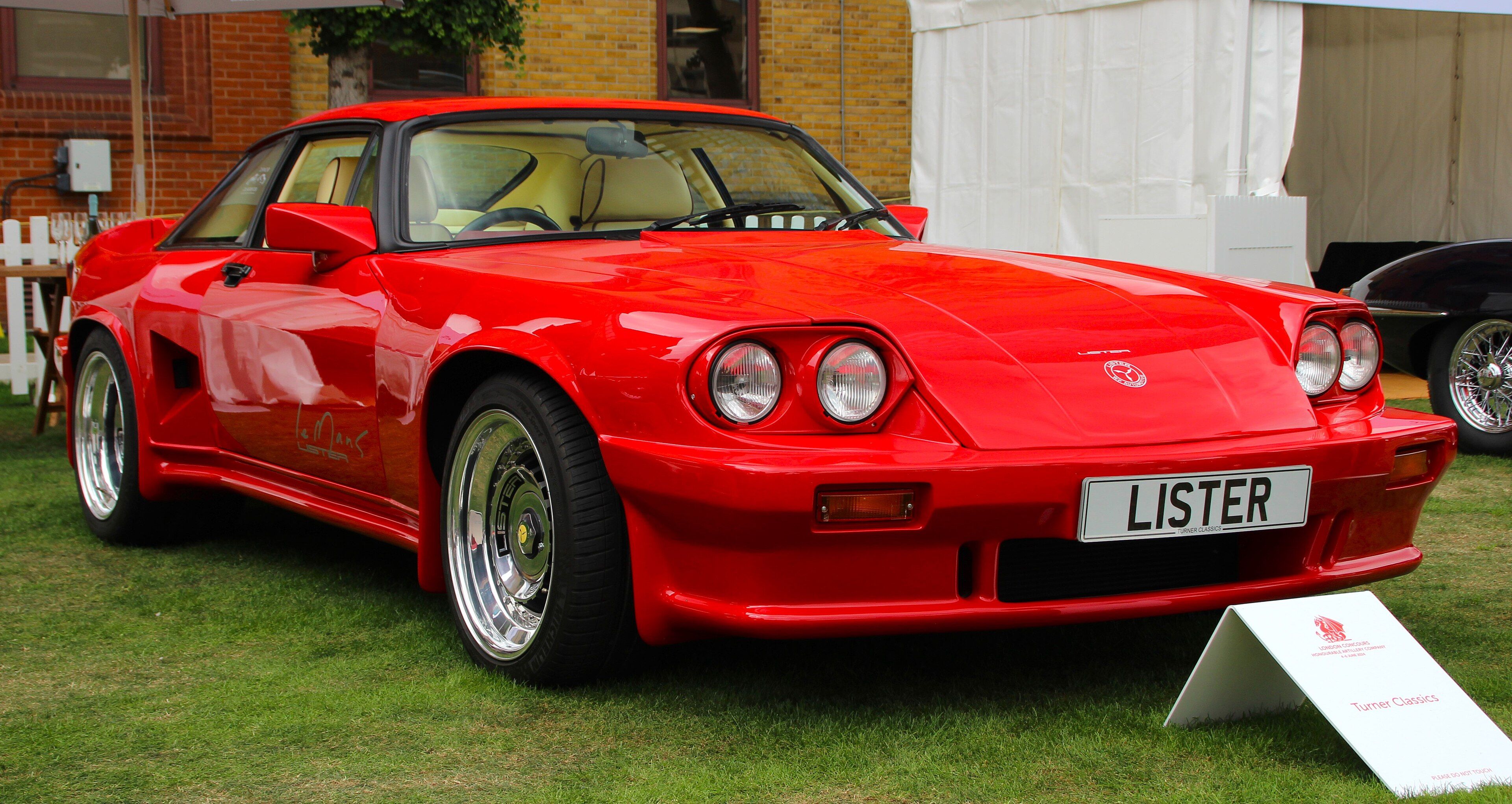
Lister Le Mans History
A heavily reworked Jaguar XJS transformed by Laurence Pearce into a 200 mph grand tourer — one of the fastest four-seat cars in the world when new.
Photo: “Lister Le Mans LC24 Low.jpg” by MrWalkr / Wikimedia Commons, licensed under CC BY-SA 4.0
History
When engineering entrepreneur Laurence Pearce acquired the dormant Lister name in 1986, he embarked on a programme of converting Jaguar XJS bodyshells into something far more formidable. By 1989 this had crystallised into the Lister Le Mans: a thoroughly re-engineered XJS with a bored-out 6.0-litre V12, Cosworth-supplied internals, additional fuel injectors, and a reworked engine management system producing around 482 bhp — enough to push the coupe beyond 200 mph, a figure that in 1989 was the preserve of outright supercars.
The most extreme Le Mans variant used a 7.0-litre twin-supercharged V12 producing over 600 bhp (period sources cite 604 bhp), transmitted via a Ferrari clutch and a five-speed manual gearbox to wide Goodyear tyres. Every car received its own chassis number and was designated a Lister-Jaguar rather than a simple conversion. A cabriolet joined the coupe for 1990. The Le Mans was priced from £121,000 at launch — roughly treble the standard XJS — and approximately 90 examples were built in total across the production run, making it a rare contemporary of the Ferrari F40.
Generations
Le Mans (1989–1993) · Lister-Jaguar Le Mans
Photo: “Lister Le Mans LC24 Low.jpg” by MrWalkr / Wikimedia Commons, licensed under CC BY-SA 4.0
Laurence Pearce's heavily re-engineered Jaguar XJS with a 6.0-litre (later 7.0-litre supercharged) V12, widened bodywork and 200 mph capability; roughly 90 built as coupe and cabriolet.
Body styles
- Coupe
- Cabriolet
Notable special editions & performance variants
7.0-litre Twin-Supercharged
Ultimate variant with the bored-out 7.0-litre V12 and twin Albrecht superchargers producing 604 bhp; priced around £170,000 in 1991.
Related models
Collect the nameplate
Find a scale model of the Lister Le Mans
Search Amazon across available years, colors, and scales. Exact releases vary, so confirm the listing before ordering.