
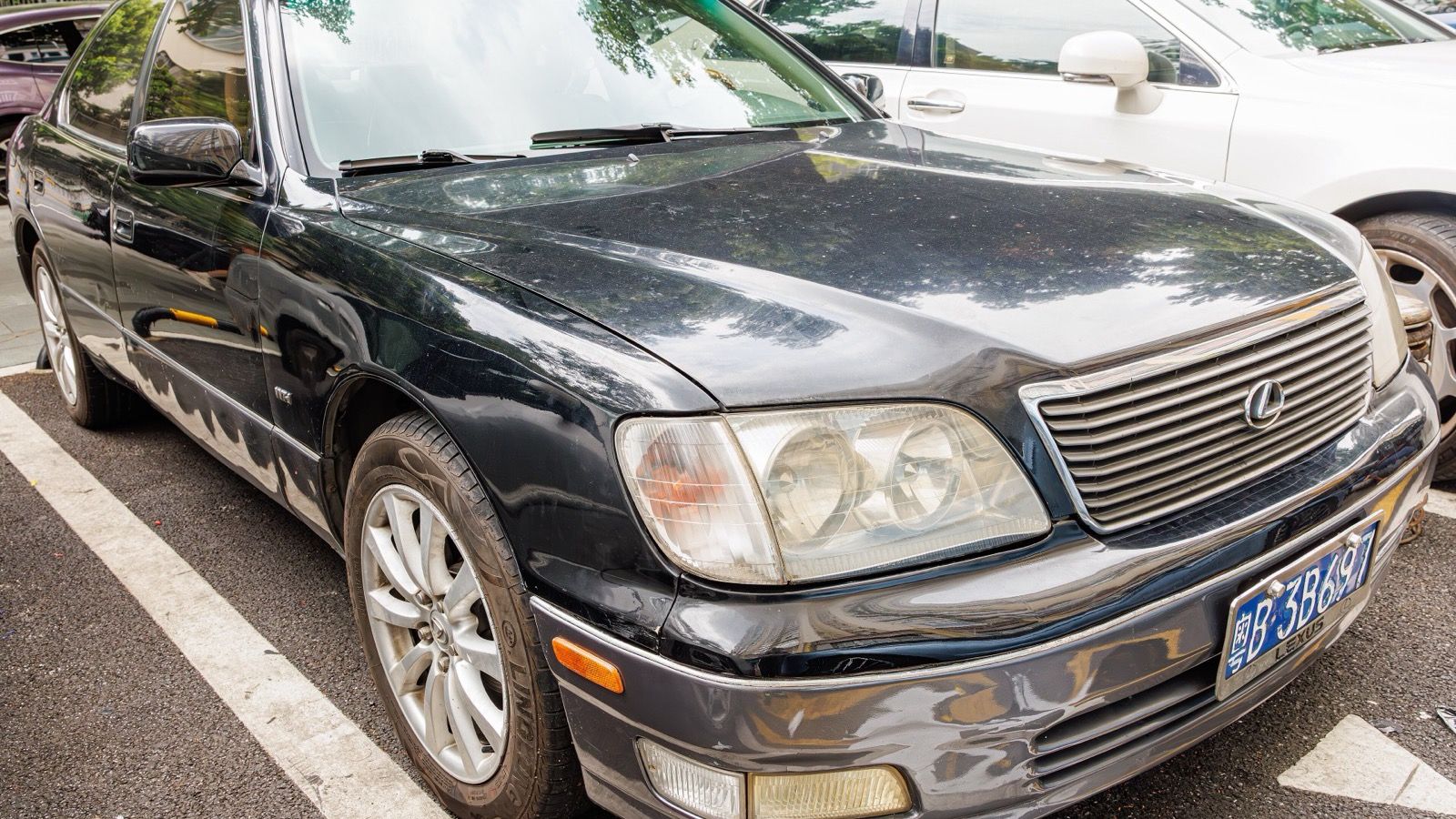
Lexus LS History
The Lexus flagship sedan — the V8-powered LS 400 that launched the brand and rewrote luxury-car benchmarks in 1989.
Photo: “File:LEXUS LS 400 (XF20) China.jpg” by Dinkun Chen / Wikimedia Commons, licensed under CC BY-SA 4.0. Cropped to 16:9.
History
The LS is the car that created Lexus. Developed under Toyota's secret 'F1' programme — a $1 billion, 1,400-engineer project initiated by Chairman Eiji Toyoda in 1983 — the LS 400 debuted at the January 1989 Detroit Auto Show and went on sale in the US that September with a 4.0-litre V8 that was quieter, faster, and more refined than any German rival at its price point. Road & Track and Car and Driver put the LS 400 on their Ten Best lists, and by 1991 Lexus had displaced Mercedes-Benz as America's top-selling luxury import.
Four more generations followed across three decades. The second-generation LS 400 (1995–2000) grew the wheelbase and shed weight; the third-generation LS 430 (2001–2006) added adaptive cruise control and a Mark Levinson audio system. The fourth-generation LS 460 (2007–2017) arrived with a then-novel eight-speed automatic and a parallel-park-assist system. The current fifth-generation LS 500 (2018–present) uses a twin-turbocharged V6 and is offered as the LS 500h hybrid, abandoning the V8 but gaining far sharper dynamics.
The LS has served as Lexus's halo and its proof-of-concept for every generation, even as the RX crossover surpassed it in volume. Its reputation for long-term reliability and near-silent refinement remains the foundation of the Lexus brand identity.
Generations
First generation (UCF10) · UCF10 — LS 400
The brand-launching V8 flagship; quieter and cheaper than its German rivals and Motor Trend's Import Car of the Year.
Second generation (UCF20) · UCF20 — LS 400
Photo: “File:LEXUS LS 400 (XF20) China.jpg” by Dinkun Chen / Wikimedia Commons, licensed under CC BY-SA 4.0. Cropped to 16:9.
Longer wheelbase, lighter body, refined V8; solidified Lexus as the top US luxury import.
Third generation (UCF30) · UCF30 — LS 430

Photo: “File:LEXUS LS 430 (XF30) China.jpg” by Dinkun Chen / Wikimedia Commons, licensed under CC BY-SA 4.0. Cropped to 16:9.
The LS 430 with a 4.3L V8, adaptive cruise, and one of the earliest available rear-seat entertainment systems.
Fourth generation (USF40/USF45/USF46) · USF40 — LS 460
LS 460 with a new 4.6L V8, eight-speed automatic, and the first production parallel-parking assist; the LS 600hL hybrid added AWD.
Fifth generation (XF50) · XF50 — LS 500
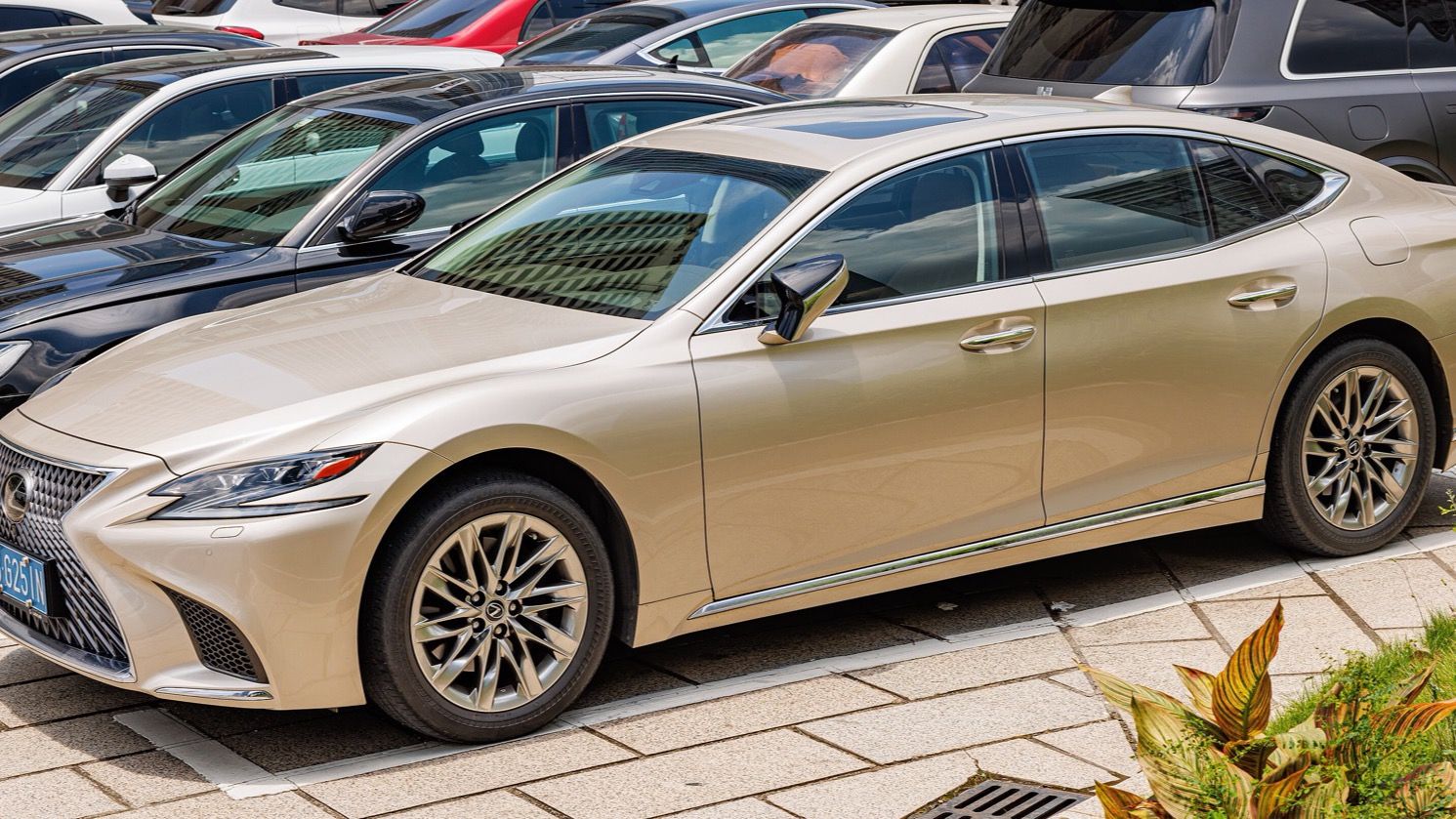
Photo: “File:LEXUS LS 350 (14).jpg” by Dinkun Chen / Wikimedia Commons, licensed under CC BY-SA 4.0. Cropped to 16:9.
Twin-turbo V6 replaces the V8; offered as LS 500 and LS 500h hybrid; sharper handling marks a new character for the flagship.
Body styles
- Sedan
- Long-wheelbase sedan
Notable special editions & performance variants
LS 460 L
Long-wheelbase version of the LS 460 with extra rear legroom; US sales ran alongside the standard wheelbase throughout the fourth generation.
LS 600h L
V8 parallel hybrid in long-wheelbase form with AWD, aimed at chauffeured use; priced above the standard LS 460.
Related models
Collect the nameplate
Find a scale model of the Lexus LS
Search Amazon across available years, colors, and scales. Exact releases vary, so confirm the listing before ordering.