
Lagonda Aston Martin Lagonda History
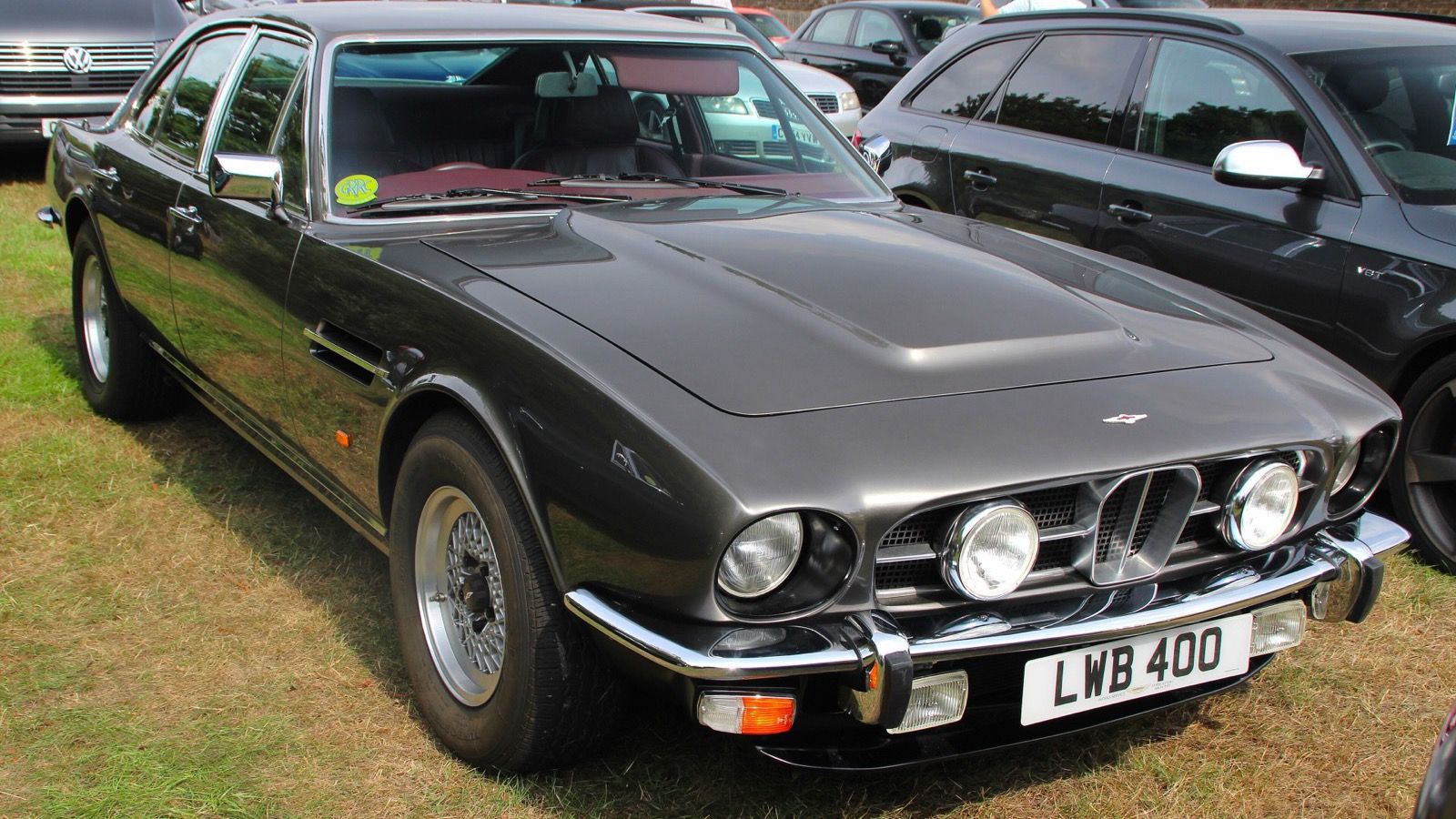
The futuristic William Towns wedge — 645 built across four series, and among the first production cars with a digital instrument panel.
Photo: “File:1975 Aston Martin Lagonda Series 1 HCC22.jpg” by MrWalkr / Wikimedia Commons, licensed under CC BY-SA 4.0. Cropped to 16:9.
History
The Lagonda returned in 1974 as a four-door, long-wheelbase Aston Martin V8 variant — only seven of this Series 1 were built. A radical redesign followed in 1976, with William Towns drawing an extreme wedge-shaped body that gave the car one of the most dramatic silhouettes of the decade. Built on the Aston Martin V8's mechanicals and 5.3-litre engine, the futuristic interior attempted a fully digital touch-button instrument panel — one of the first production cars to do so.
The electronics proved notoriously troublesome and expensive to perfect; Series 2 deliveries did not begin until 1979, two years after announcement. Series 3 (1986–87, approximately 75 built) brought fuel injection and vacuum-fluorescent instruments replacing the earlier CRT displays. Series 4 (1987–90, approximately 105 built) softened the angles and replaced the pop-up headlights with fixed triple units per side.
A total of 645 cars were produced across all series, making the Towns wedge the most prolific Lagonda of the marque's history. Its polarising appearance, technology-first ambition, and perpetual electronic fragility have made it a cult object — frequently cited alongside the Lamborghini Countach and Lotus Esprit as one of the defining shapes of the wedge-design era.
Generations
Series 1 · V8-based four-door
Photo: “File:1975 Aston Martin Lagonda Series 1 HCC22.jpg” by MrWalkr / Wikimedia Commons, licensed under CC BY-SA 4.0. Cropped to 16:9.
Long-wheelbase four-door version of the Aston Martin V8; only seven built before the Towns redesign superseded it.
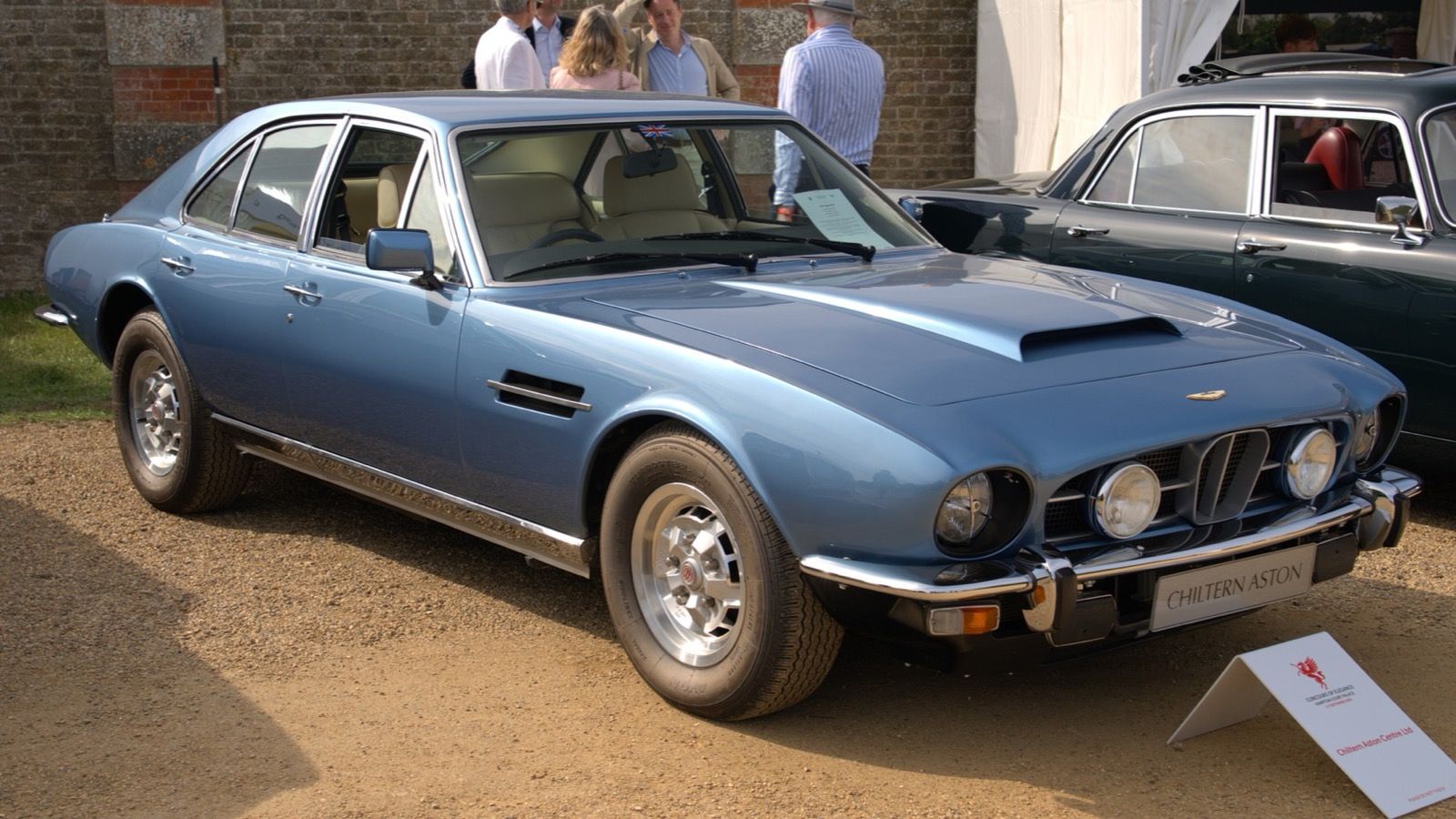
1974 Photo: “File:1974 Aston Martin Lagonda Series I HCC25.jpg” by MrWalkr / Wikimedia Commons, licensed under CC BY-SA 4.0. Cropped to 16:9.
1975 Photo: “File:1975 Aston Martin Lagonda Series 1 HCC22.jpg” by MrWalkr / Wikimedia Commons, licensed under CC BY-SA 4.0. Cropped to 16:9.
Series 2 · William Towns wedge
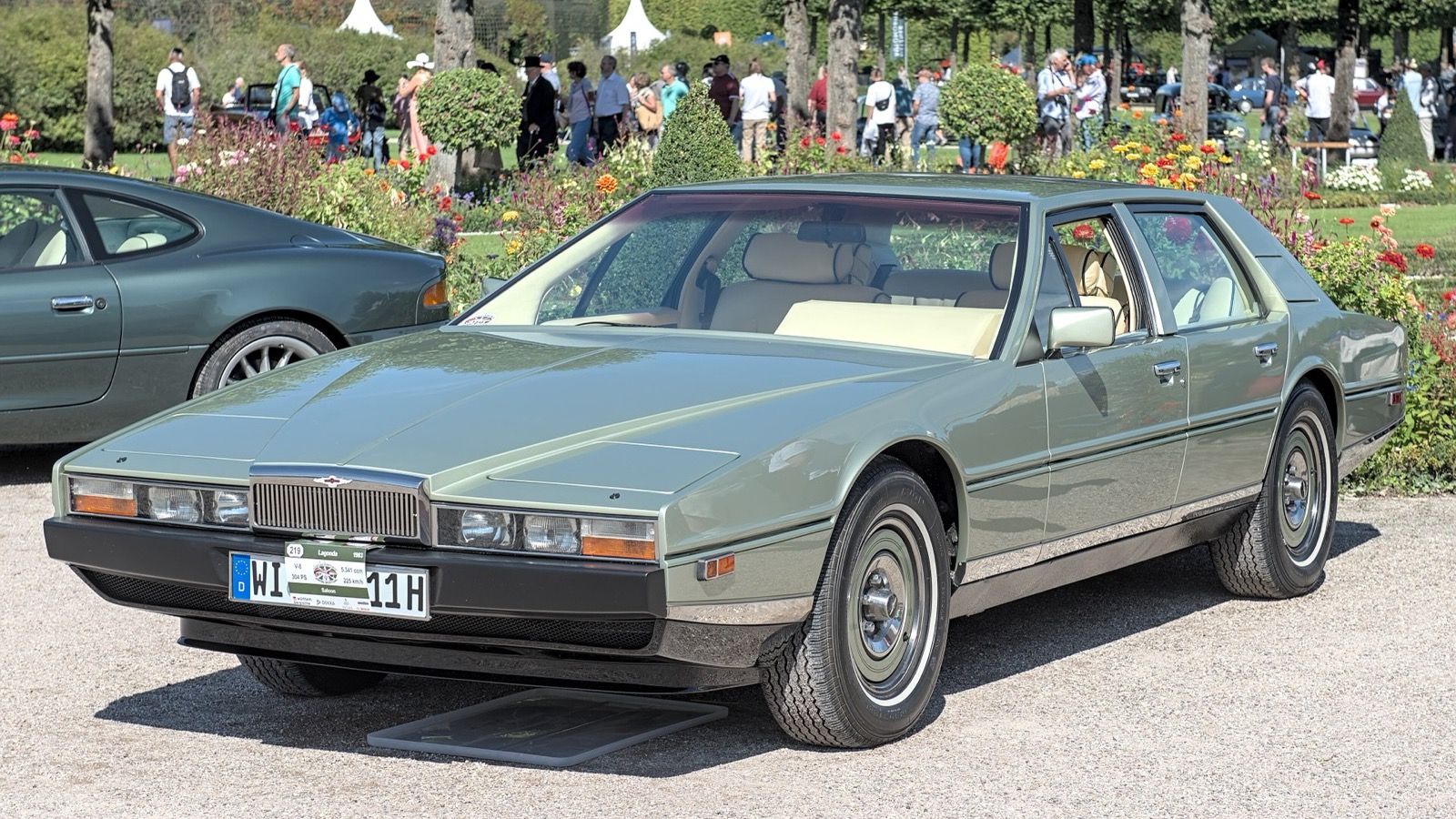
Photo: “File:1983 Aston Martin Lagonda Series 2 Classic-Gala 2025 DSC 1111.jpg” by Alexander Migl / Wikimedia Commons, licensed under CC BY-SA 4.0. Cropped to 16:9.
The iconic wedge shape with LCD/touch-button digital dashboard; first deliveries 1979 due to electronics delays.
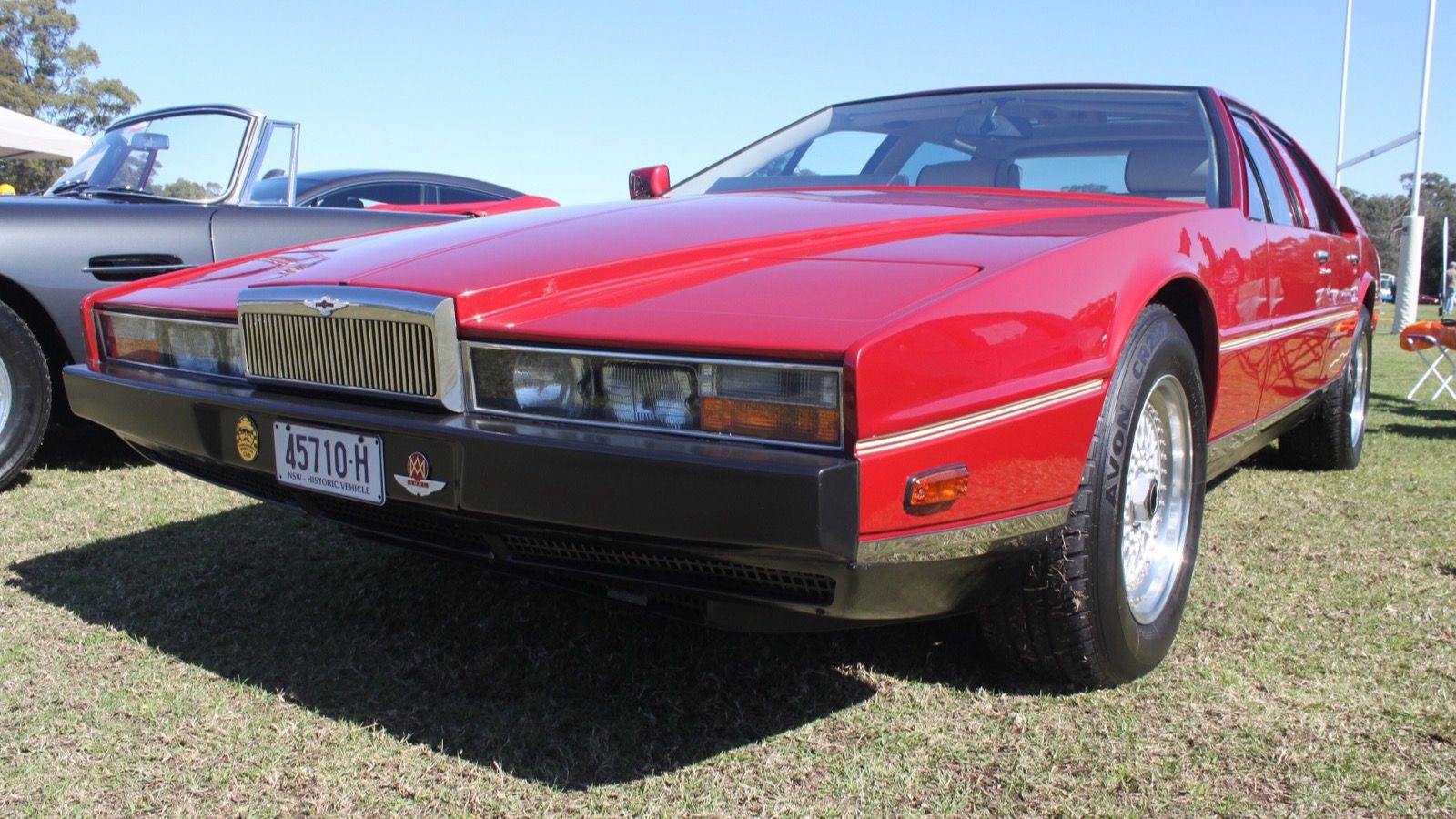
1981 Photo: “File:1981 Aston Martin Lagonda sedan (21673854216).jpg” by Jeremy from Sydney, Australia / Wikimedia Commons, licensed under CC BY 2.0. Cropped to 16:9.
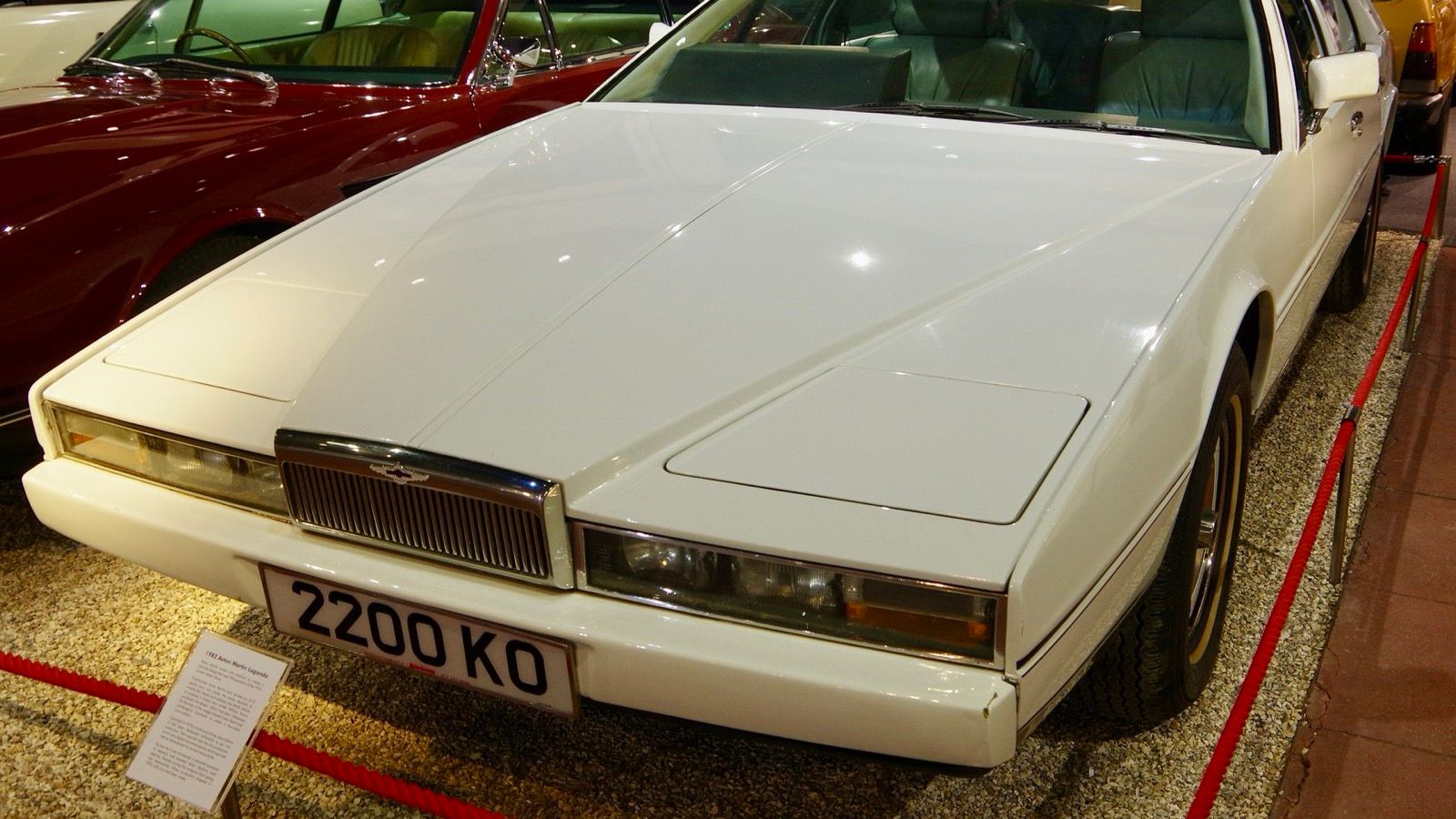
1982 Photo: “File:1982 Aston Martin Lagonda (53426774626).jpg” by David Merrett from Daventry, England / Wikimedia Commons, licensed under CC BY 2.0. Cropped to 16:9.
1983 Photo: “File:1983 Aston Martin Lagonda Series 2 Classic-Gala 2025 DSC 1111.jpg” by Alexander Migl / Wikimedia Commons, licensed under CC BY-SA 4.0. Cropped to 16:9.
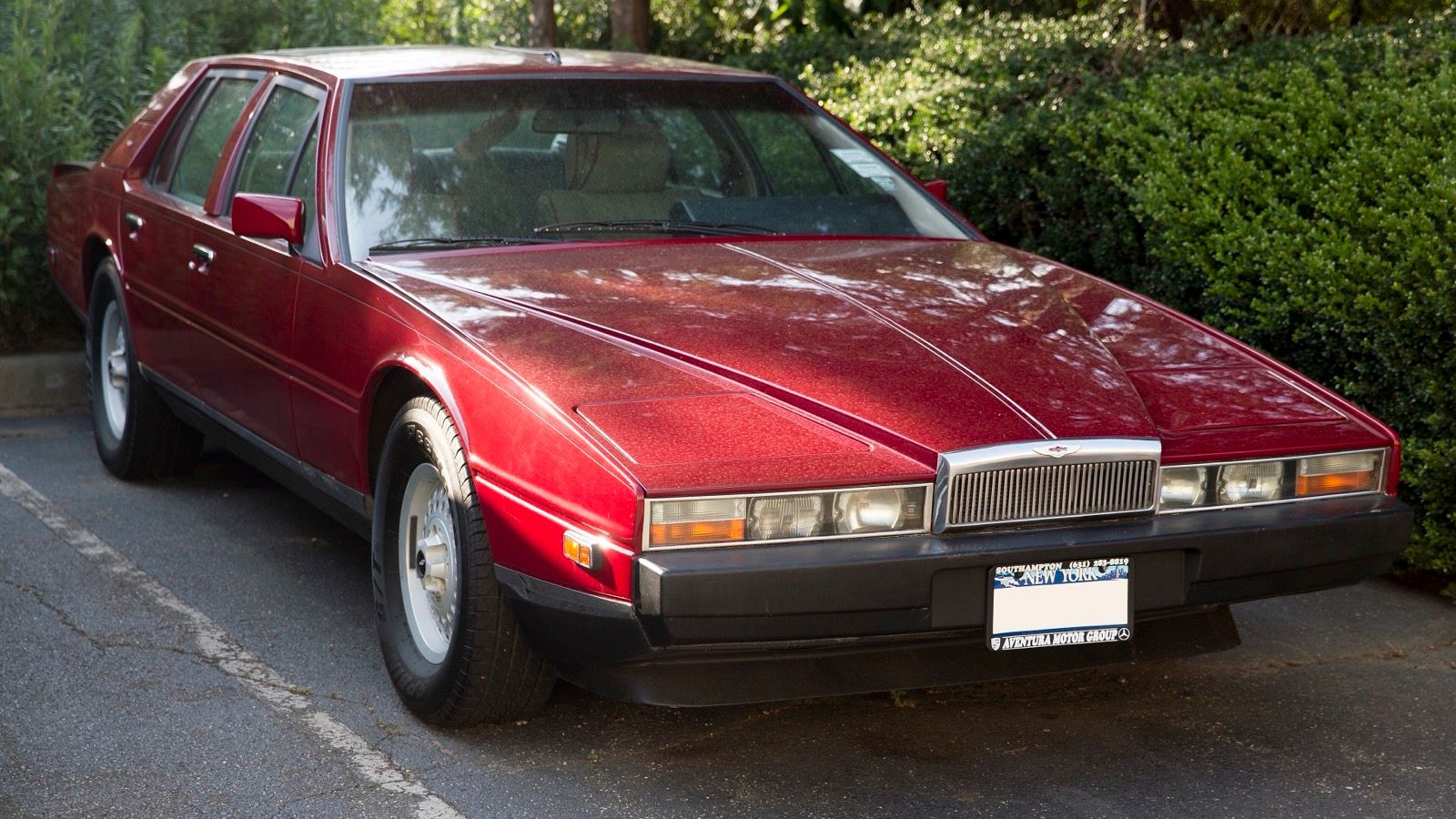
1984 Photo: “File:1984 Aston Martin Lagonda Series II (Red), front right.jpg” by Mr.choppers / Wikimedia Commons, licensed under CC BY-SA 3.0. Cropped to 16:9.
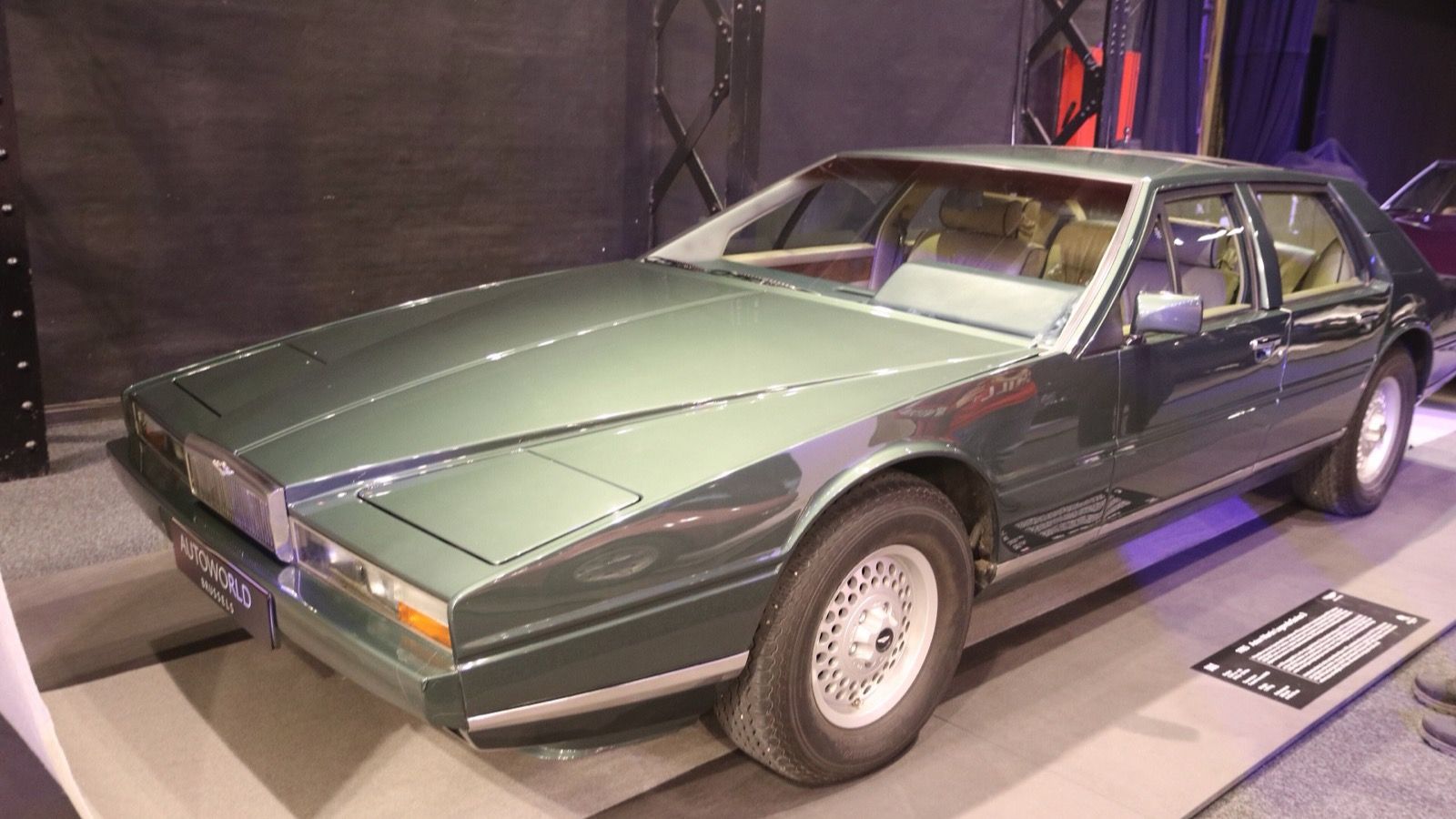
1985 Photo: “File:Aston-Martin "Lagonda" Series III - 1985.jpg” by Loudumo / Wikimedia Commons, licensed under CC BY-SA 4.0. Cropped to 16:9.
Series 3 · Fuel-injected update
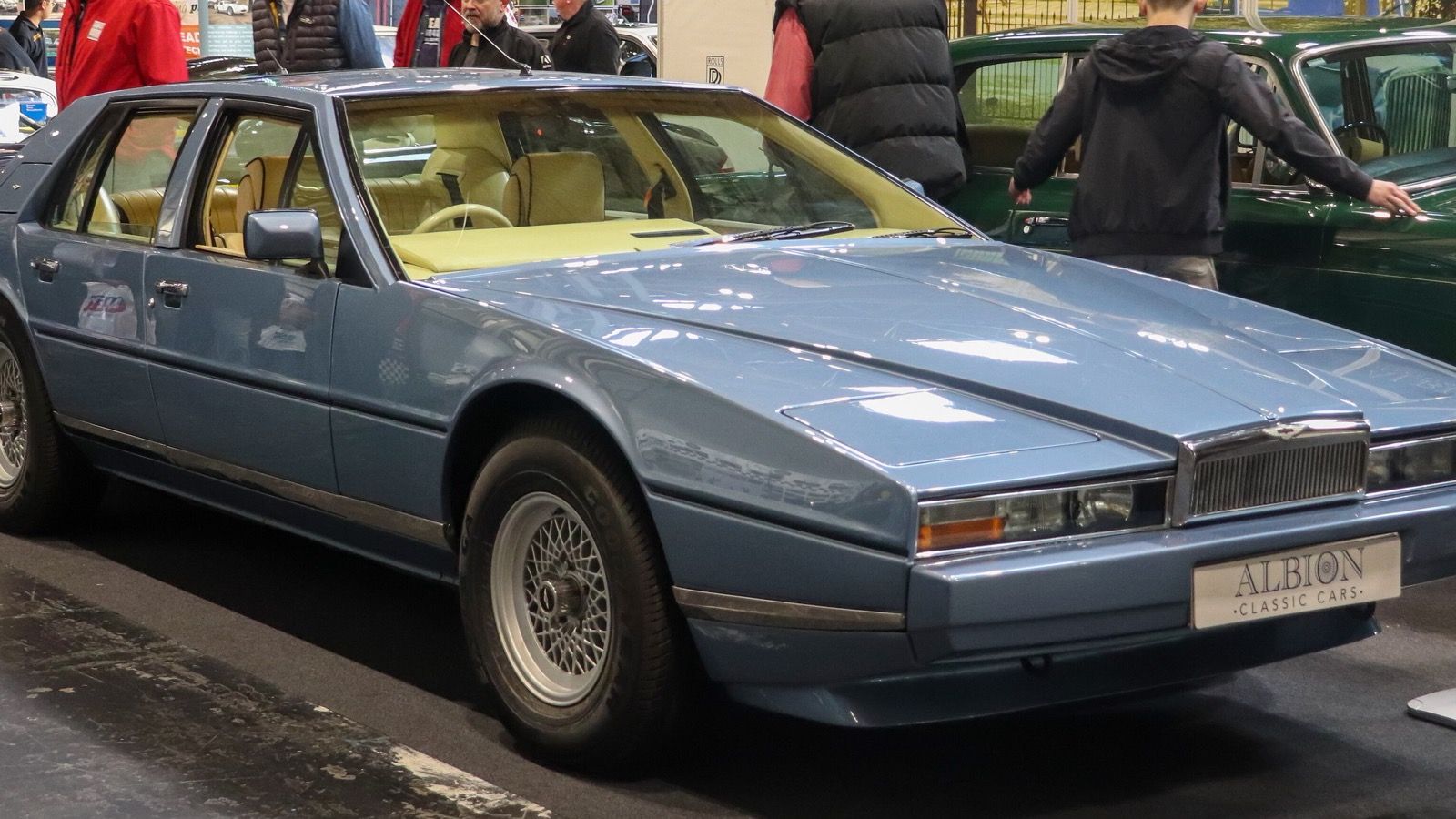
Photo: “File:1986 Aston Martin Lagonda Series 3.jpg” by Vauxford / Wikimedia Commons, licensed under CC BY-SA 4.0. Cropped to 16:9.
Fuel-injected V8; vacuum-fluorescent instruments replacing CRT displays; approximately 75 built.
1986 Photo: “File:1986 Aston Martin Lagonda Series 3.jpg” by Vauxford / Wikimedia Commons, licensed under CC BY-SA 4.0. Cropped to 16:9.
Series 4 · Softened wedge
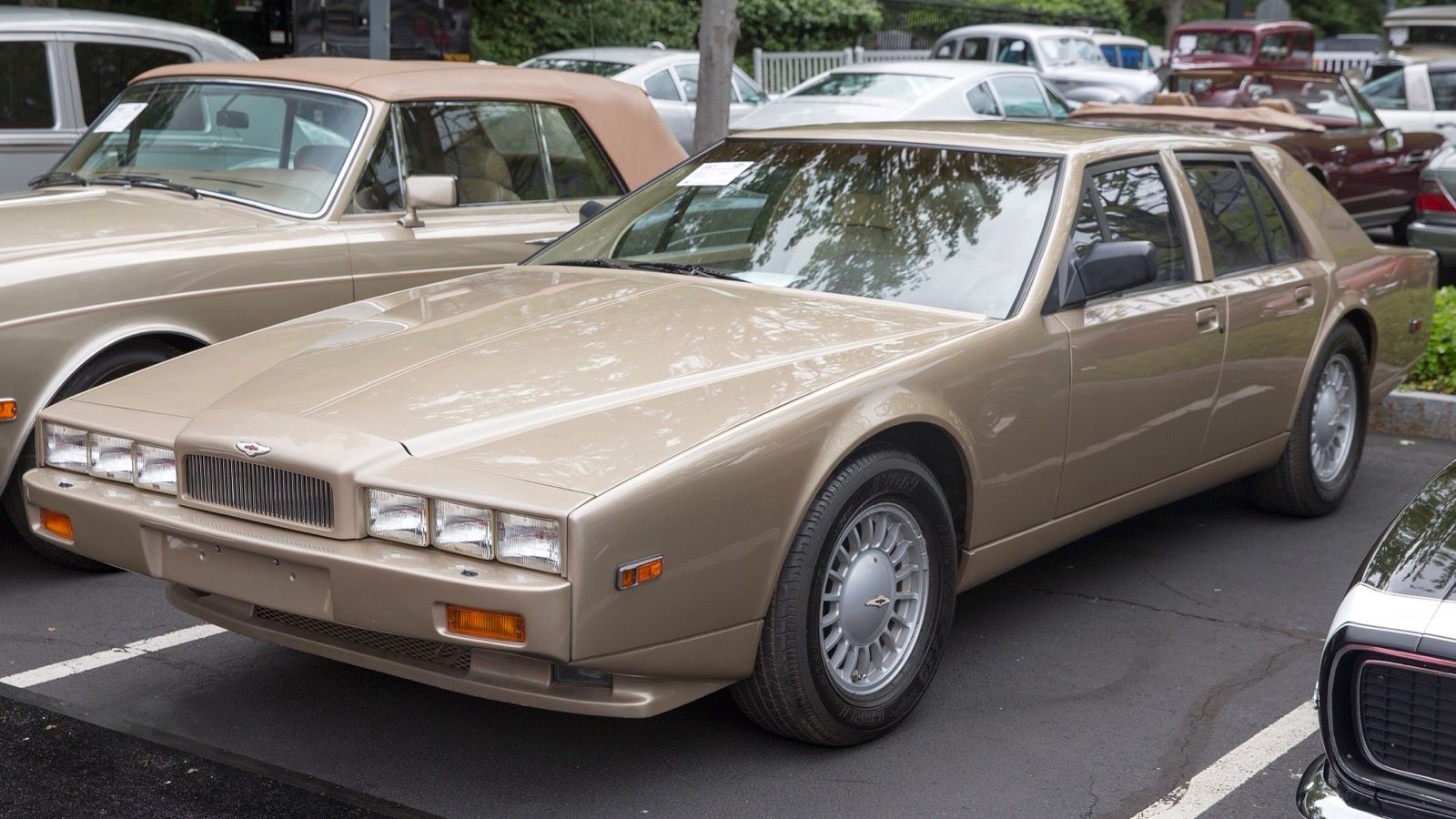
Photo: “File:1988 Aston Martin Lagonda Series 4 in Pennine Sand, front left.jpg” by Mr.choppers / Wikimedia Commons, licensed under CC BY-SA 3.0. Cropped to 16:9.
Rounded edges and fixed triple headlamps replaced pop-ups; approximately 105 built, 72 left-hand drive.
1988 Photo: “File:1988 Aston Martin Lagonda Series 4 in Pennine Sand, front left.jpg” by Mr.choppers / Wikimedia Commons, licensed under CC BY-SA 3.0. Cropped to 16:9.
Body styles
- 4-door Saloon
Related models
Collect the nameplate
Find a scale model of the Lagonda Aston Martin Lagonda
Search Amazon across available years, colors, and scales. Exact releases vary, so confirm the listing before ordering.