
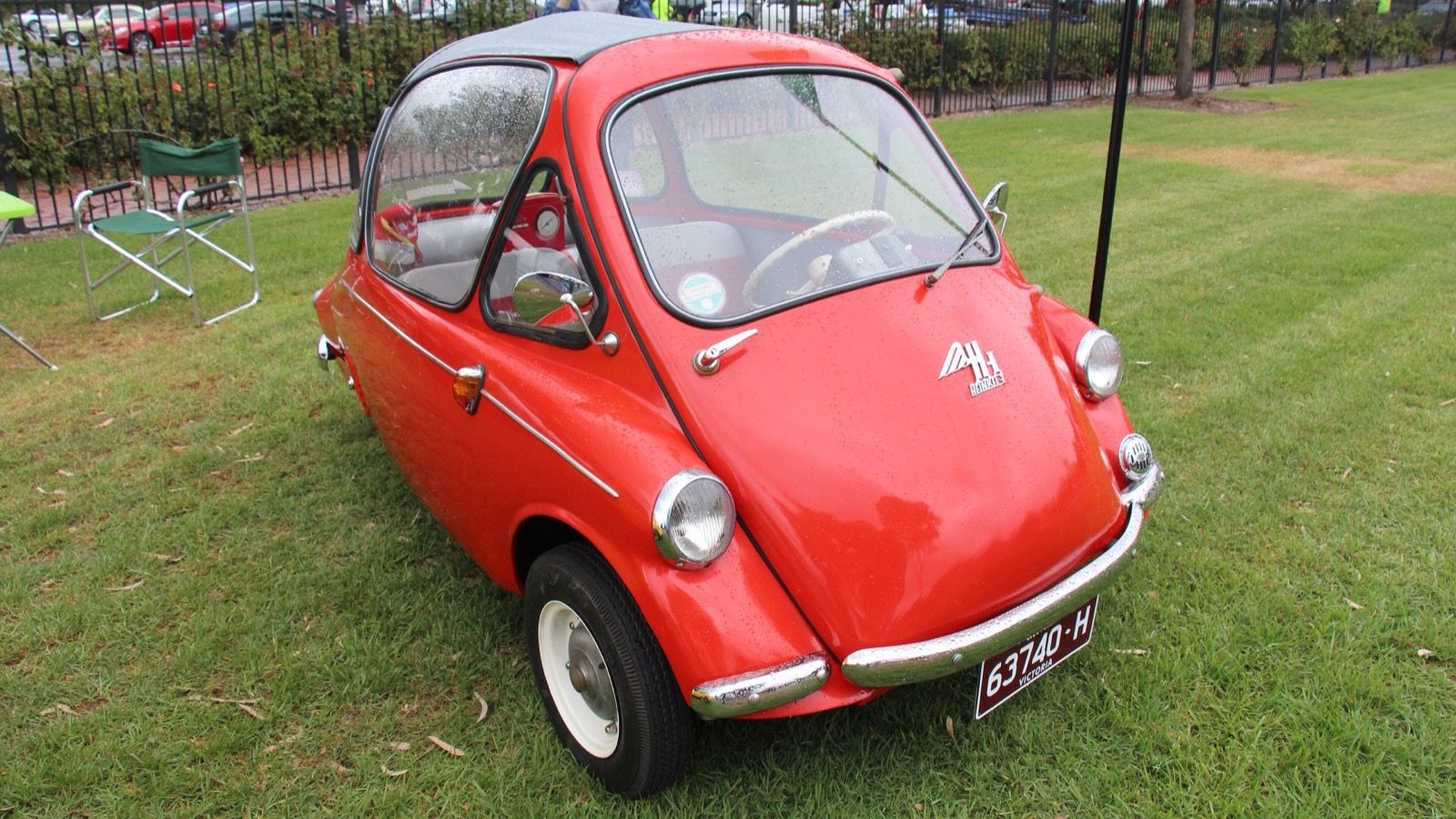
Heinkel Kabine History
Heinkel's sole automobile — a three- or four-wheel aircraft-inspired microcar with a front-hinged door, produced in Germany from 1956 to 1958.
Photo: “1957 Heinkel Kabine 200 Bubble Car (33103824156).jpg” by Sicnag / Wikimedia Commons, licensed under CC BY 2.0. Cropped to 16:9.
History
The Heinkel Kabine entered production in March 1956, designed by the same Heinkel Flugzeugwerke engineers who had built the He 178 jet and the He 111 bomber. Sharing its 174 cc single-cylinder four-stroke engine with the Heinkel Tourist scooter, the first variant — the Model 150 — seated three occupants in tandem inside a steel monocoque body accessed through a single front-hinged door that incorporated the steering column, making entry feel unmistakably aircraft-like. The 174 cc unit produced approximately 9.2 hp.
In October 1956 Heinkel expanded the range with the Model 153 (three wheels, 204 cc engine) and the Model 154 (four wheels, 204 cc). The larger engine lifted output to around 10.1 hp. Both 204 cc variants were later reduced to 198 cc — reportedly to keep the cars within lower insurance-cost thresholds for drivers in export markets. Total German production across all variants reached approximately 6,438 units, modest even by microcar standards.
Ernst Heinkel's death in January 1958 prompted the company to exit automotive manufacturing and concentrate on aircraft. The entire production facility and tooling were sold to Dundalk Engineering Company in Ireland in June 1958; quality problems ended that venture quickly. The design lived on as the Trojan 200, built under licence by Trojan Cars Ltd. in the UK from 1960 to 1966, and as an Argentine licence-built variant by Los Cedros S.A. from 1959 to 1962 — but German Heinkel production had definitively closed after just two years.
Generations
Model 150 · Kabine 150
Launch variant; 174 cc / ~9.2 hp four-stroke single-cylinder; three-wheel layout; shared engine with the Heinkel Tourist scooter.
Models 153 / 154 · Kabine 153 / 154
Photo: “1957 Heinkel Kabine 200 Bubble Car (33103824156).jpg” by Sicnag / Wikimedia Commons, licensed under CC BY 2.0. Cropped to 16:9.
Introduced October 1956: Model 153 (three wheels) and 154 (four wheels), both with 204 cc engine later reduced to 198 cc; broader export appeal.
1957 Photo: “1957 Heinkel Kabine 200 Bubble Car (33103824156).jpg” by Sicnag / Wikimedia Commons, licensed under CC BY 2.0. Cropped to 16:9.
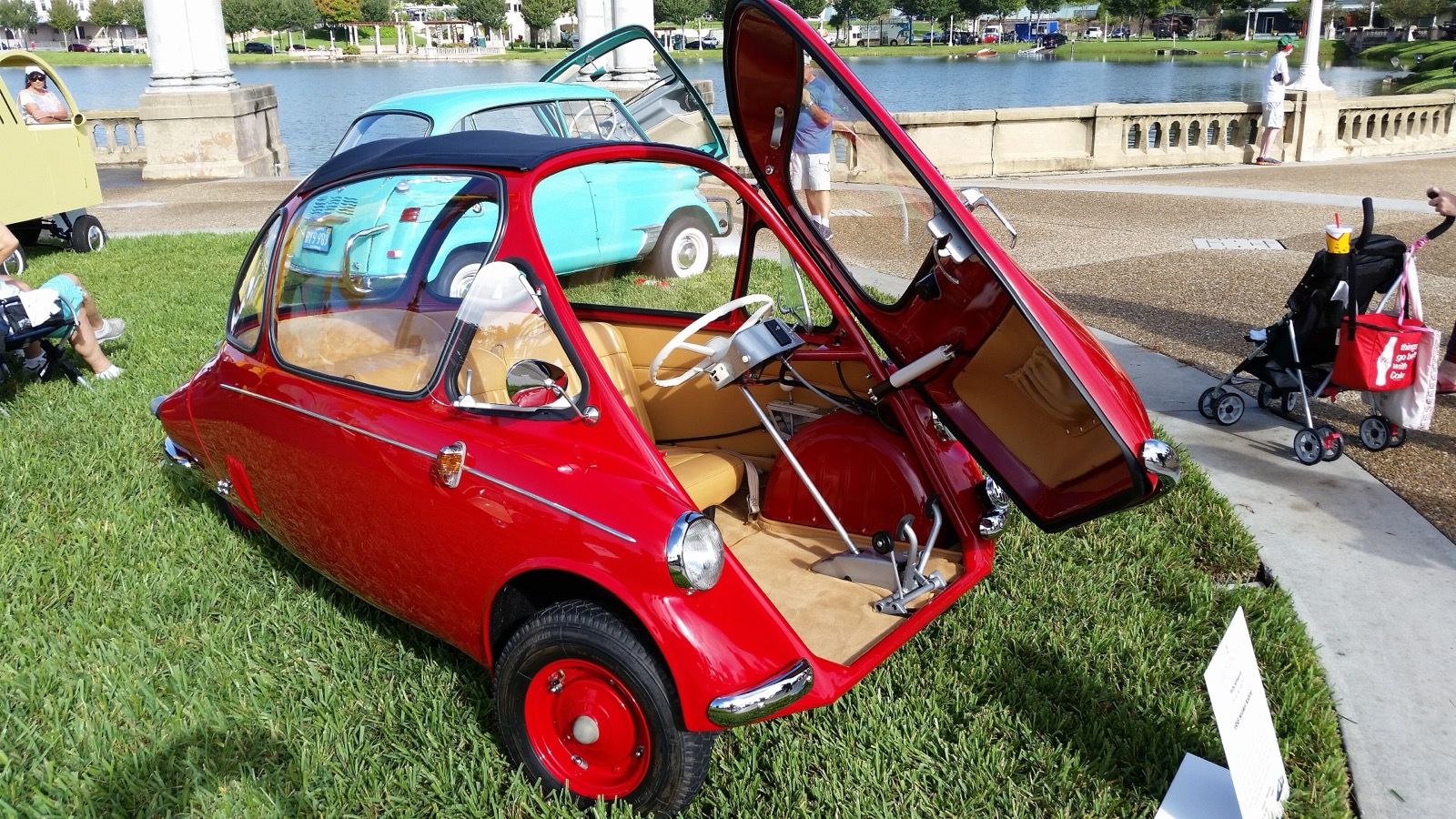
1958 Photo: “1958 Heinkel Kabine.jpg” by Michel Curi / Wikimedia Commons, licensed under CC BY 2.0. Cropped to 16:9.
Body styles
- Microcar (three-wheel)
- Microcar (four-wheel)
Related models
Collect the nameplate
Find a scale model of the Heinkel Kabine
Search Amazon across available years, colors, and scales. Exact releases vary, so confirm the listing before ordering.