
Glas V8 History
Catalog record
Photography for this nameplate has not yet cleared the archive’s licensing and identity checks. The researched text below remains available while the page stays out of search and advertising inventory.
History
Glas unveiled the V8 coupé at Frankfurt in September 1965 to immediate sensation. Pietro Frua's four-seat fastback body bore a striking resemblance to his concurrent Maserati Quattroporte design, earning the car its affectionate nickname 'Glaserati'. The engine was an unusual 2,580 cc SOHC V8 created by mating two Glas four-cylinder blocks on a common crankcase, producing 150 PS and capable of 198 km/h.
The Glas 2600 V8 entered production in August 1966, but the company's finances had already deteriorated to a crisis point. BMW completed its acquisition of Hans Glas GmbH in September 1966, motivated primarily by the desire to expand production capacity at Dingolfing and to secure Glas's timing-belt patents. Production of the 2600 V8 ended in August 1967 after 277 examples.
BMW continued the model in revised form as the BMW-Glas 3000 V8, fitting the enlarged 3.0-litre engine that Glas engineers had already developed; this version produced 175 PS. The 3000 V8 sold from September 1967 until May 1968, with 389 cars completed. The Dingolfing factory subsequently became BMW's largest production plant. Combined output of 666 V8 coupés across both variants makes the Glaserati one of the rarest and most collectible German cars of the 1960s.
Generations
Glas 2600 V8 · 2600 V8
2,580 cc SOHC V8, 150 PS, 277 produced; carried the Glas badge until the BMW acquisition wound down this variant.
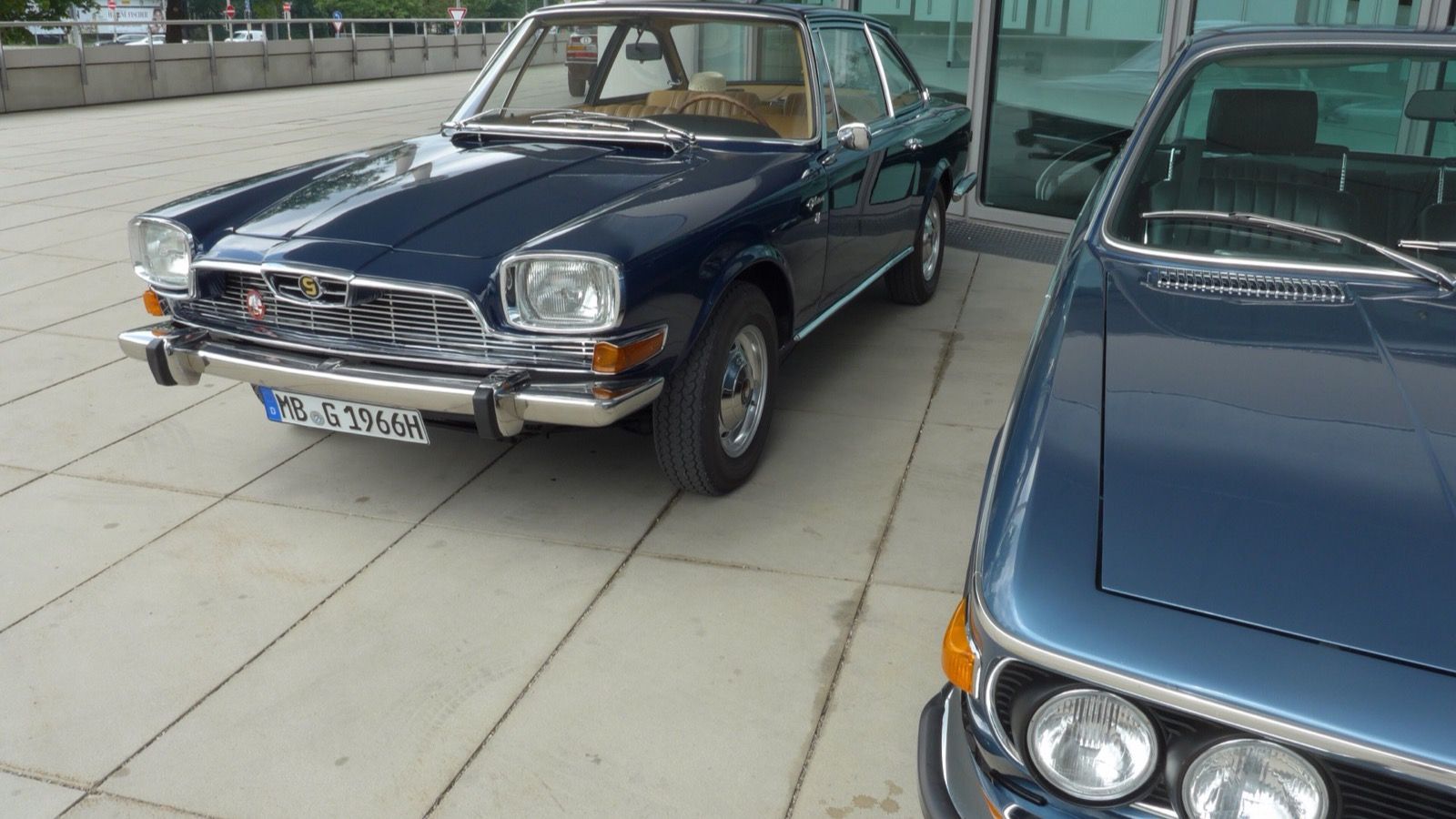
1966 Photo: “Glas V8-1966.jpg” by Wikisympathisant / Wikimedia Commons, licensed under CC BY-SA 4.0. Cropped to 16:9.
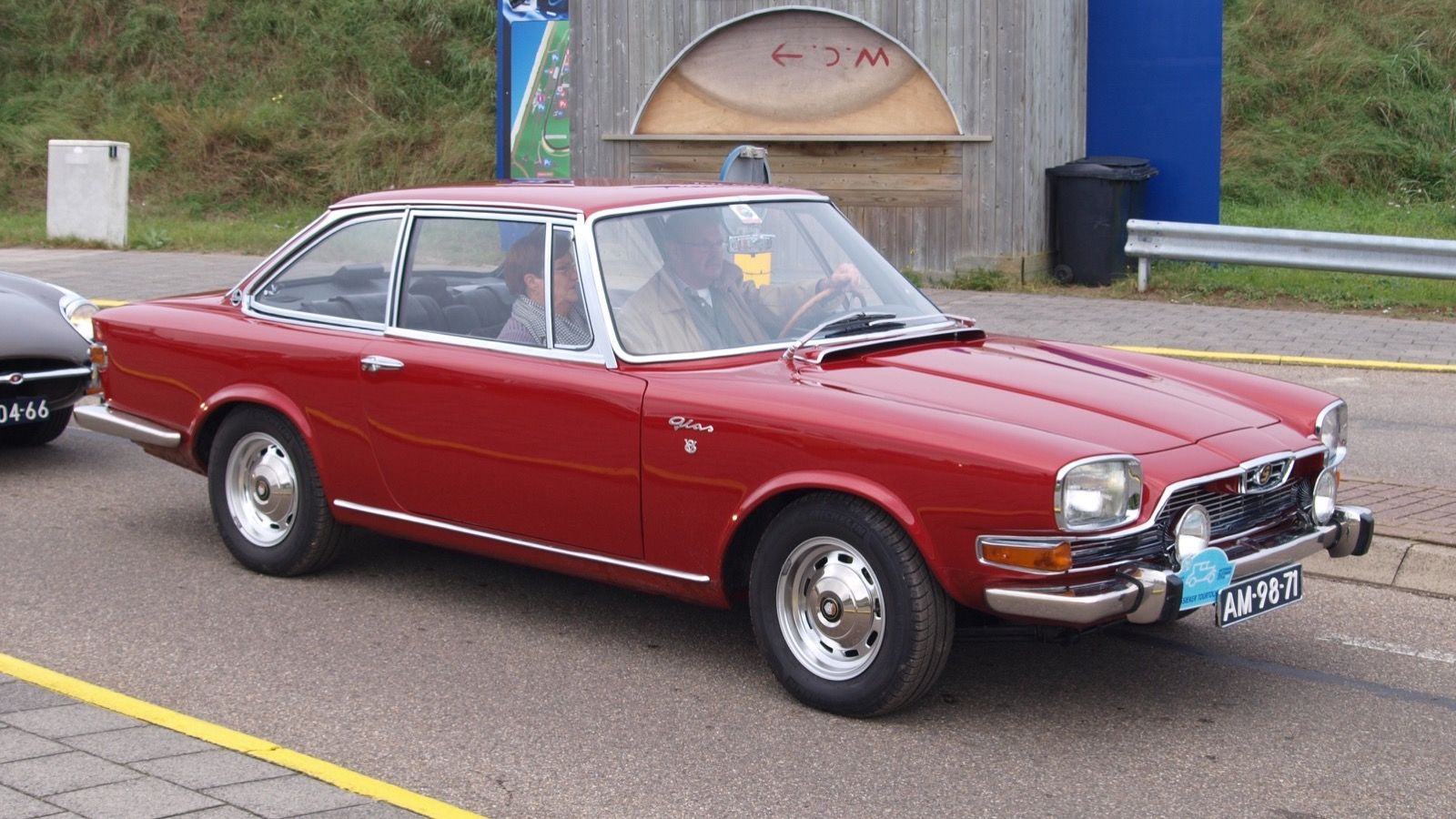
1967 Photo: “Nationale oldtimerdag Zandvoort 2010, 1967 GLAS 2600, AM-98-71.JPG” by Alf van Beem / Wikimedia Commons — CC0 1.0. Cropped to 16:9.
BMW-Glas 3000 V8 · 3000 V8
Post-acquisition BMW-badged version with enlarged 3.0-litre engine, 175 PS; 389 built before the model was retired in May 1968.
Body styles
- Coupé
Related models
Collect the nameplate
Find a scale model of the Glas V8
Search Amazon across available years, colors, and scales. Exact releases vary, so confirm the listing before ordering.