
Glas Goggomobil History
Catalog record
Photography for this nameplate has not yet cleared the archive’s licensing and identity checks. The researched text below remains available while the page stays out of search and advertising inventory.
History
The Goggomobil T250 was unveiled at the Geneva Motor Show in March 1955 and entered production in Dingolfing, Bavaria that same year. It was powered by a tiny air-cooled, two-stroke two-cylinder engine of just 242 cc mounted in the rear, producing 13 hp, and transmitted drive through an electrically pre-selected four-speed gearbox built by Getrag — an unusually sophisticated arrangement for a car in its class.
Three body variants were offered: the T (sedan) in 250 cc, 300 cc, and 400 cc forms; the TS coupé introduced in 1957 with the same mechanical options and slightly sportier two-tone styling; and the TL Transporter van, also from 1957, intended for light commercial use. The car's independent all-round coil-spring suspension and monocoque body made it technically ahead of several German bubble-car rivals. Glas also licensed production to an Australian assembler (roughly 5,000 units) and to Argentina.
By the end of production in June 1969 — the last Goggomobil rolling off the line as the BMW acquisition wound down the Glas marque — a total of 214,313 sedans, 66,511 coupés, and 3,667 Transporters had been built, approximately 285,000 vehicles in all. At its peak the Goggomobil was the world's best-selling vehicle of its type.
Generations
T250 / T300 / T400 sedan · Goggomobil T
The original four-seat two-door sedan; air-cooled two-stroke twin of 250–400 cc, Getrag pre-selector gearbox, built in Dingolfing until the very last day of Glas production.
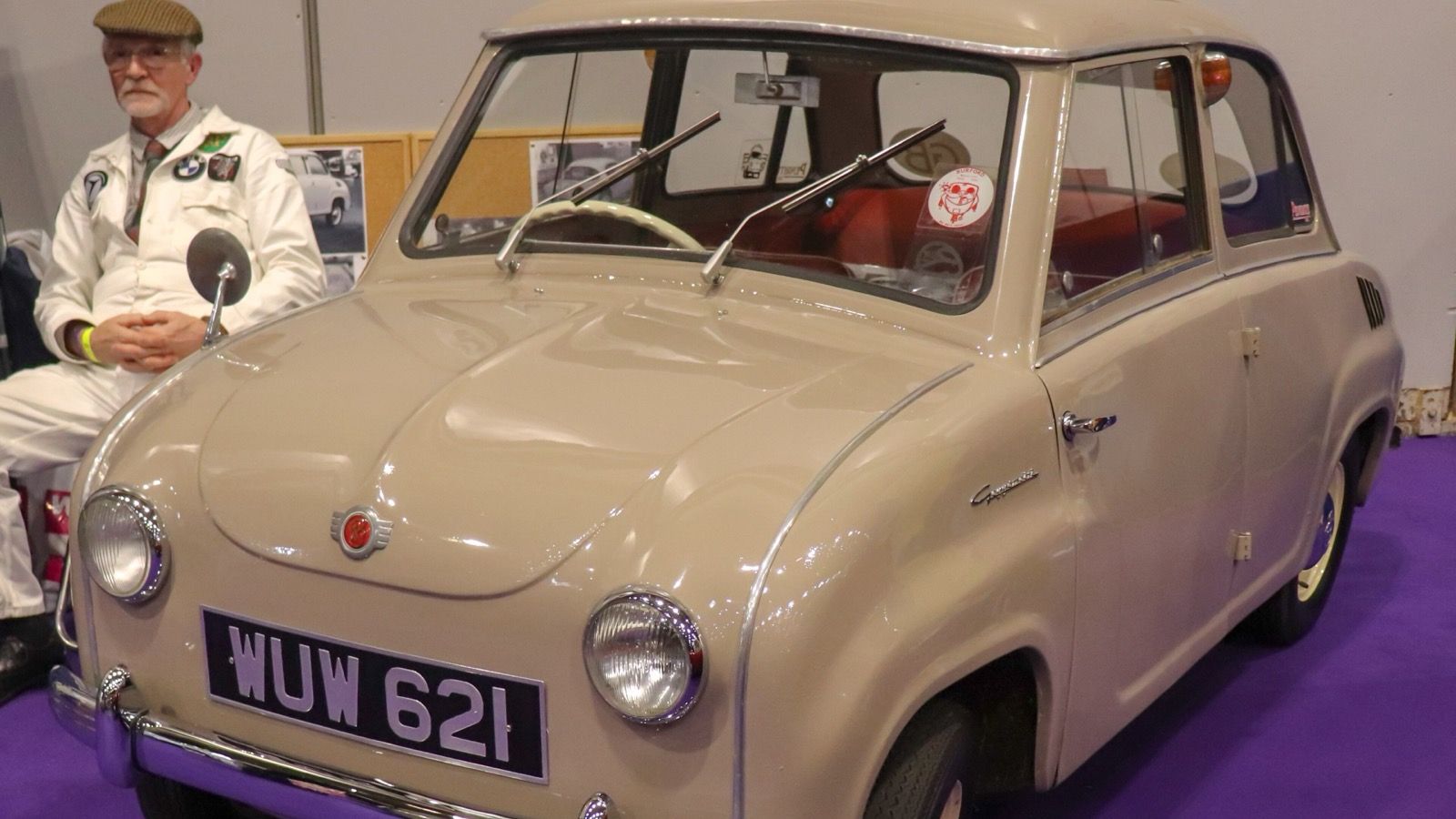
1959 Photo: “1959 Glas Goggomobil 300.jpg” by Vauxford / Wikimedia Commons, licensed under CC BY-SA 4.0. Cropped to 16:9.
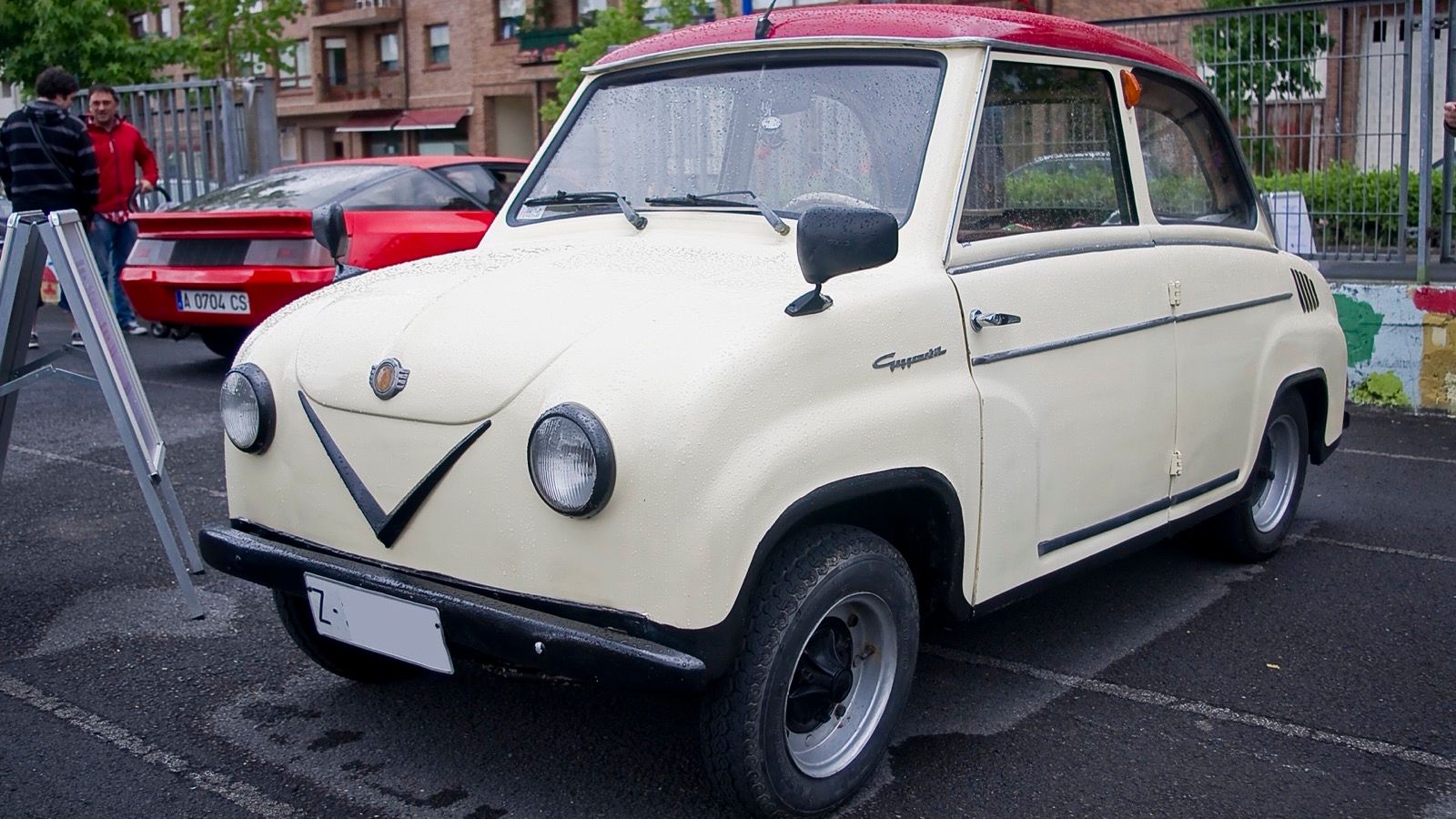
1962 Photo: “1962 Goggomobil T 250 (5976251514).jpg” by Spanish Coches / Wikimedia Commons, licensed under CC BY 2.0. Cropped to 16:9.
TS coupé · Goggomobil TS
Two-door, two-seat coupé companion on the same platform; the rakish roofline and two-tone paint made it the sporty face of the Goggomobil range.
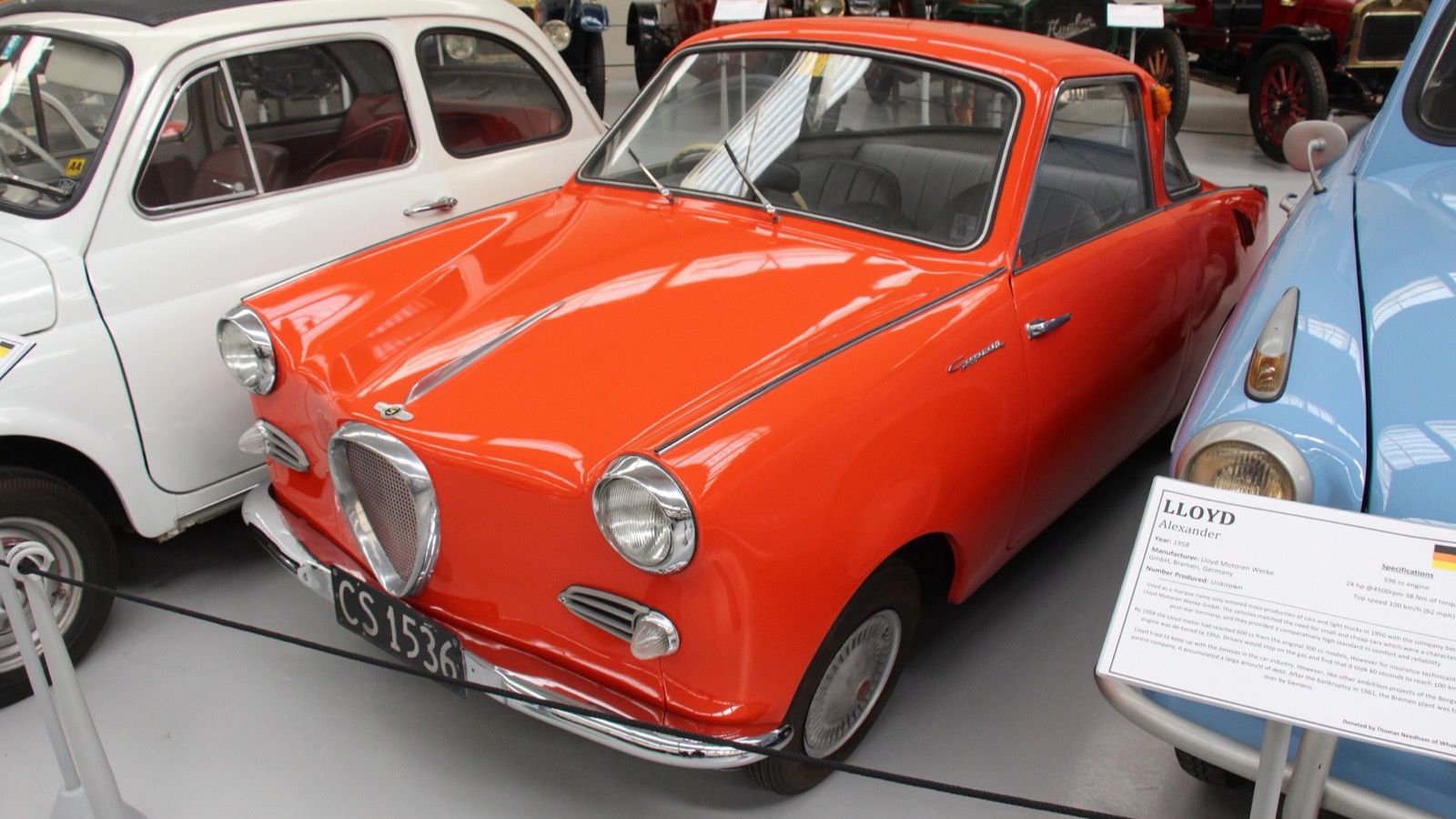
1957 Photo: “1957 Goggomobil TS300 Coupe (32364096727).jpg” by Sicnag / Wikimedia Commons, licensed under CC BY 2.0. Cropped to 16:9.
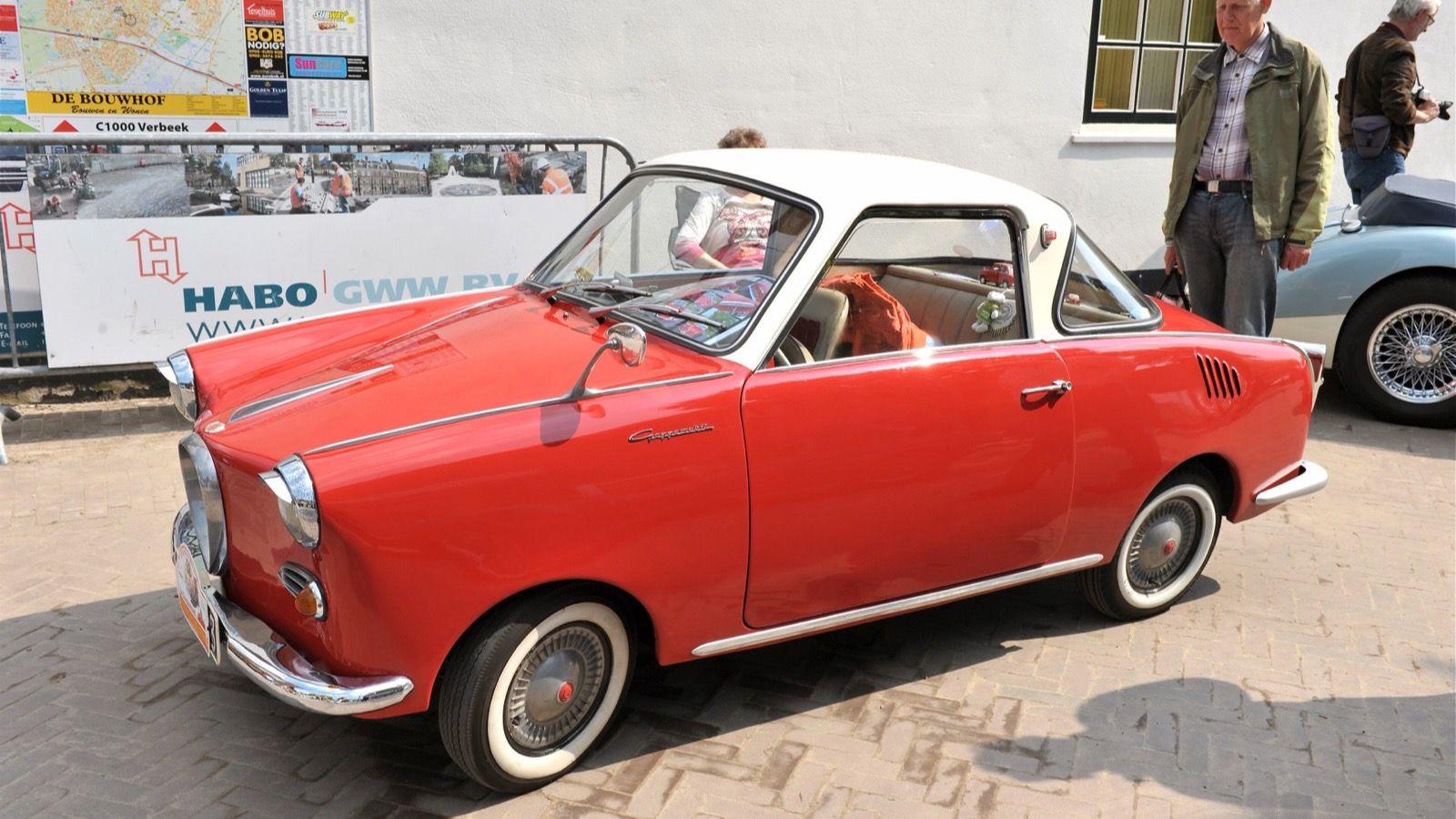
1961 Photo: “Goggomobil Coupé TS 250 1961 (7241852478).jpg” by FaceMePLS from The Hague, The Netherlands / Wikimedia Commons, licensed under CC BY 2.0. Cropped to 16:9.
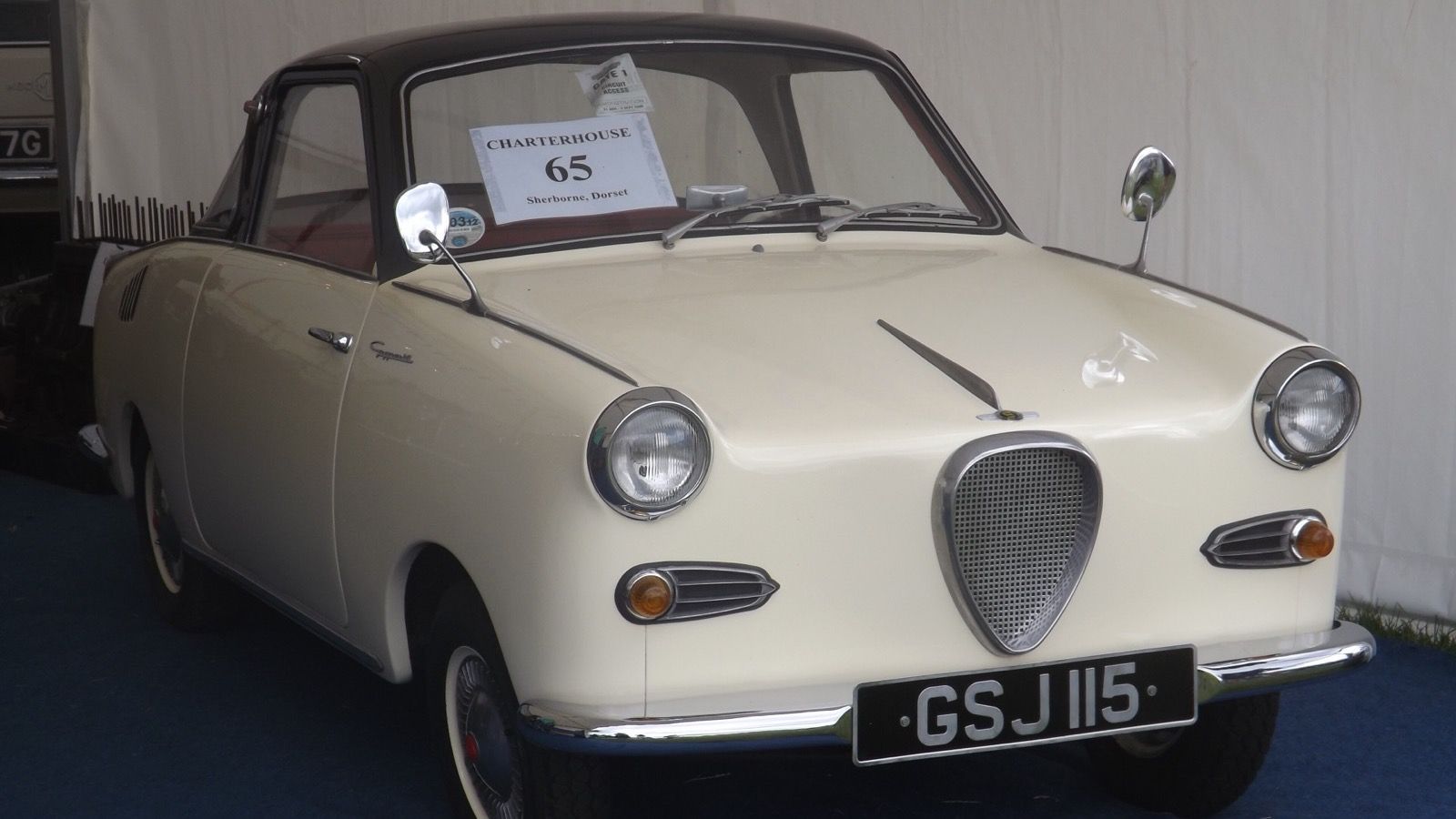
1963 Photo: “Glas Goggomobil TS250 Coupe (1963) (19215120174).jpg” by Andrew Bone from Weymouth, England / Wikimedia Commons, licensed under CC BY 2.0. Cropped to 16:9.
TL Transporter · Goggomobil TL
Forward-control van/pickup for light commercial use; rarer than the passenger cars with only 3,667 built.
Body styles
- Sedan
- Coupé
- Transporter van
Related models
Collect the nameplate
Find a scale model of the Glas Goggomobil
Search Amazon across available years, colors, and scales. Exact releases vary, so confirm the listing before ordering.