
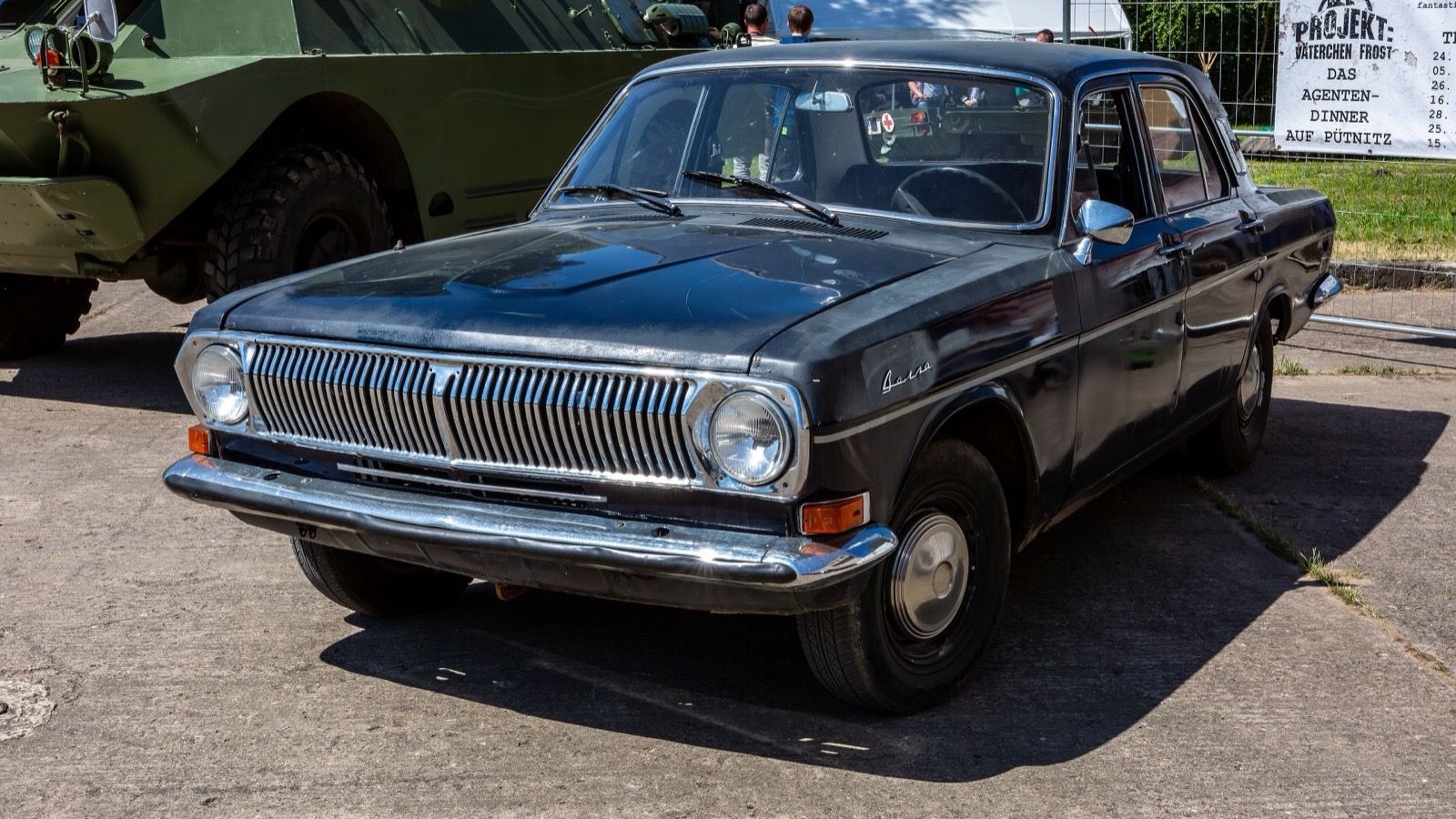
GAZ Volga History
The Volga — the Soviet Union's most iconic executive sedan, produced across multiple generations from 1956 to 2010.
Photo: “File:GAZ- 24 Volga, Pfingsttreffen Puetnitz 2018, Ribnitz-Damgarten (1X7A2446).jpg” by Matti Blume / Wikimedia Commons, licensed under CC BY-SA 4.0. Cropped to 16:9.
History
The first pre-production Volga left the Gorky plant on 10 October 1956, replacing the Pobeda as GAZ's primary passenger car. Named for the great Russian river, it became the near-universal transport of Soviet officials, KGB officers, doctors, and taxi drivers — a cultural touchstone that represented an entire epoch. The GAZ-21 (first generation, 1956–1970) was produced in three distinct series totaling 639,478 units; its most distinctive feature was the characteristic 36-slit grille of the 1962 'Baleen' (third series), which became a Volga trademark for decades.
The GAZ-24 (second generation, 1970–1985) brought cleaner, more rectangular 1970s styling while keeping the rear-wheel-drive, inline-four formula. A substantially updated version — the GAZ-24-10 — ran from 1985 to 1992. The third-generation GAZ-3102 (from 1982) offered a more upscale, longer-wheelbase body for official use, spawning a series of progressively restyled variants including the GAZ-31029, GAZ-3110, and the most heavily reworked GAZ-31105 (from 2004).
In March 2003, GAZ's management declared that passenger cars were no longer a priority; the Volga range was officially discontinued in 2010 under CEO Bo Andersson. The GAZ facility then transitioned to contract manufacturing for Volkswagen and General Motors.
Generations
First generation (GAZ-21) · GAZ-21
The original Volga in three series; the 1962 'Baleen' grille became a Soviet design icon. 639,478 built.
Second generation (GAZ-24) · GAZ-24
Photo: “File:GAZ- 24 Volga, Pfingsttreffen Puetnitz 2018, Ribnitz-Damgarten (1X7A2446).jpg” by Matti Blume / Wikimedia Commons, licensed under CC BY-SA 4.0. Cropped to 16:9.
Cleaner 1970s styling with the GAZ-24 (1970–1985) and facelifted GAZ-24-10 (1985–1992).
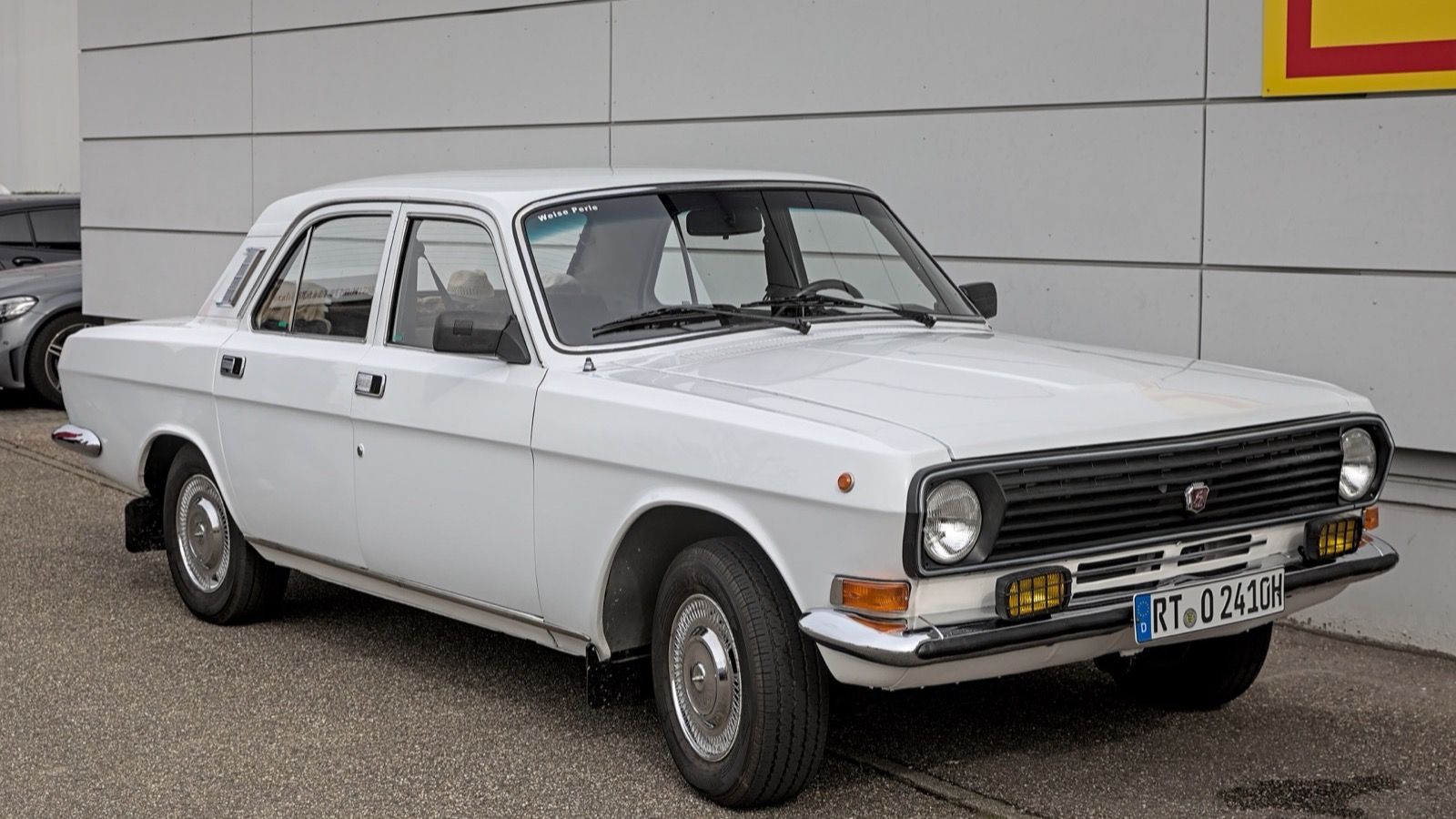
1979 Photo: “File:1979 GAZ-24 Volga 1X7A2560.jpg” by Alexander-93 / Wikimedia Commons, licensed under CC BY-SA 4.0. Cropped to 16:9.
Third generation (GAZ-3102 / GAZ-31xx series) · GAZ-3102 / GAZ-31105
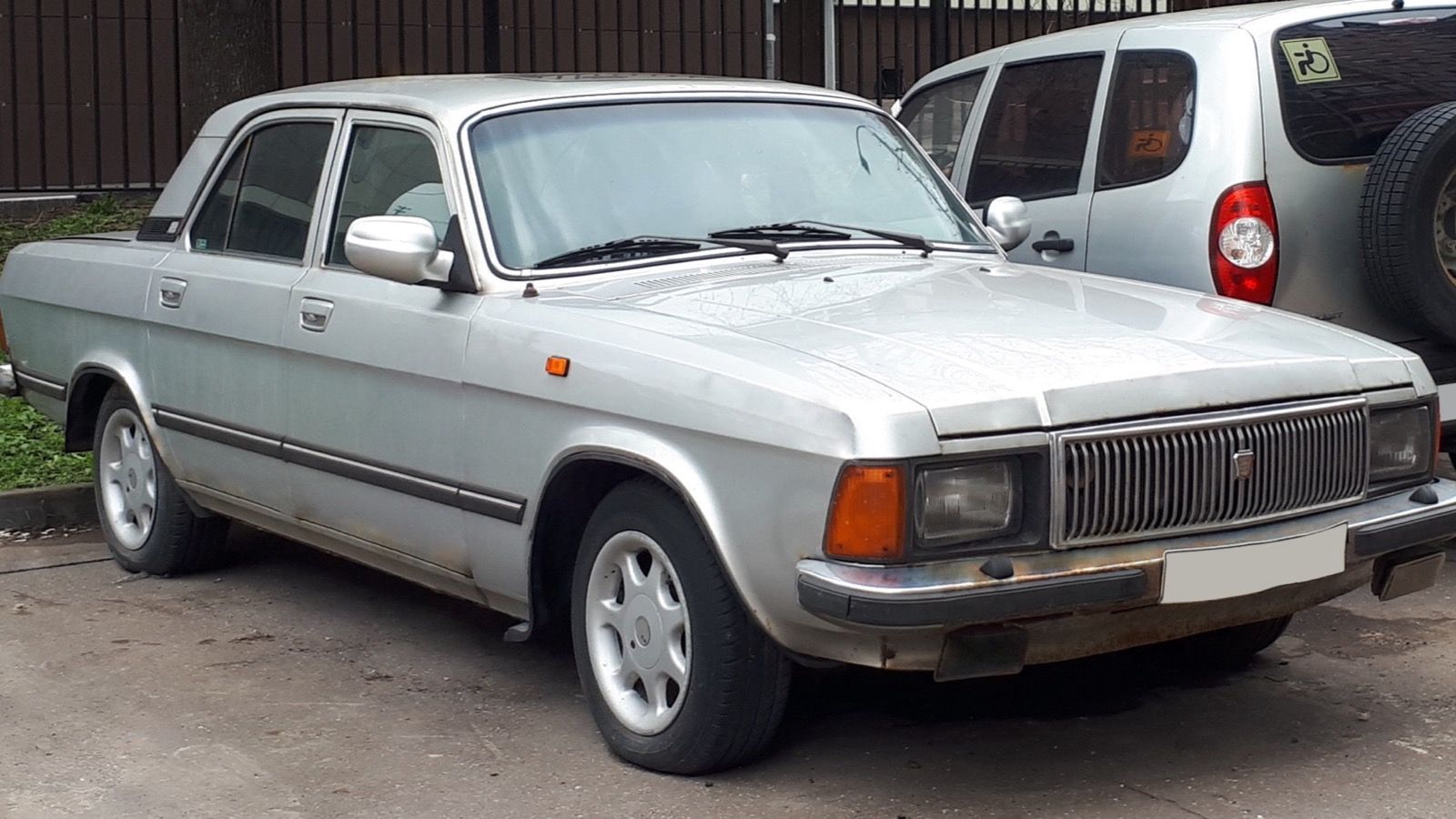
Photo: “File:2006-2008 GAZ-3102 silver front.jpg” by Kirill Borisenko / Wikimedia Commons, licensed under CC BY-SA 4.0. Cropped to 16:9.
A longer, progressively restyled run spanning the GAZ-3102, GAZ-31029, GAZ-3110, and GAZ-31105, ending Volga production in 2010.
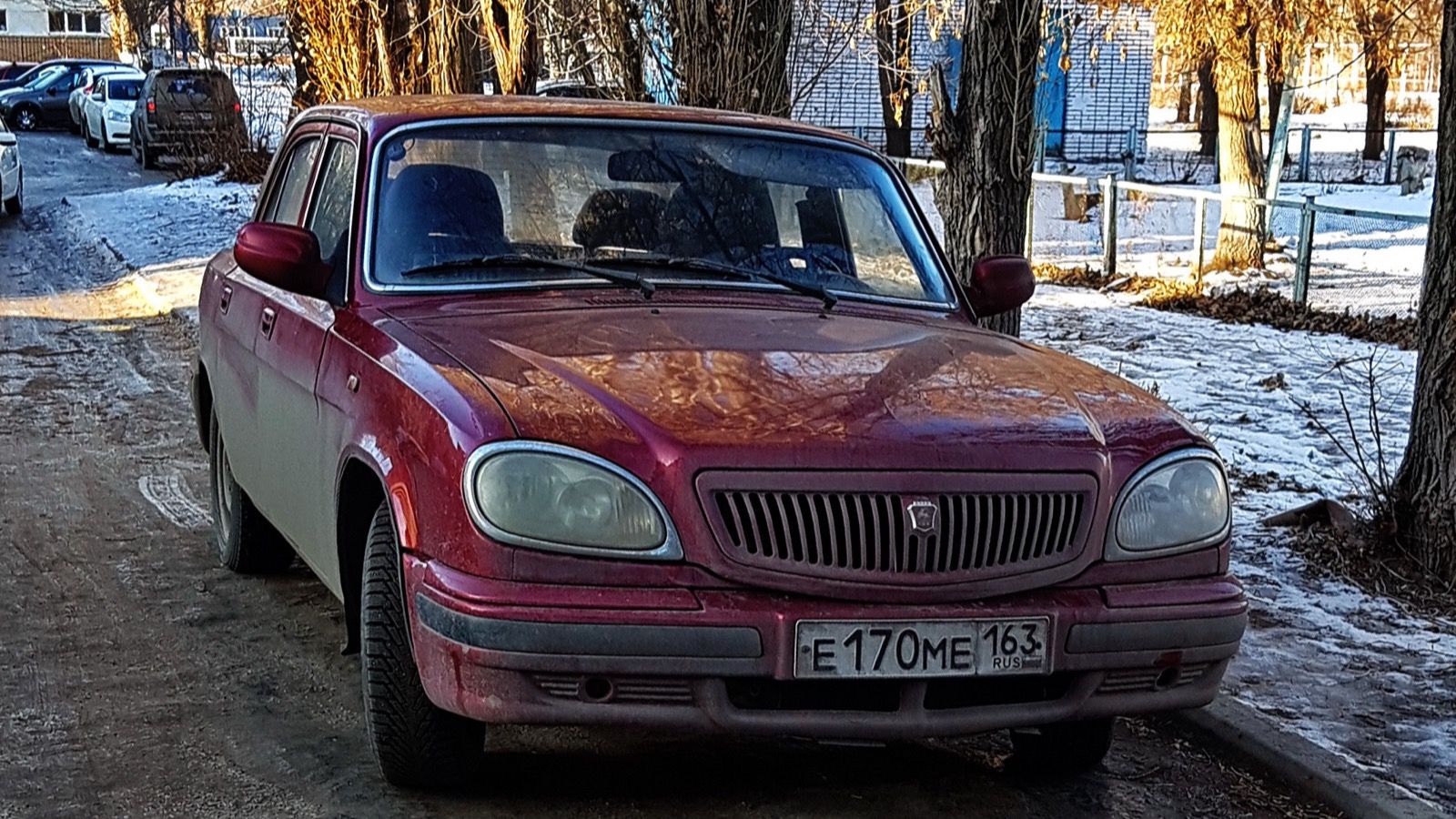
2004 Photo: “File:2004 GAZ 31105 red front.jpg” by Капитан Немо / Wikimedia Commons, licensed under CC BY 4.0. Cropped to 16:9.
Body styles
- Sedan
- Station wagon
- Ambulance
- Taxi
Related models
Collect the nameplate
Find a scale model of the GAZ Volga
Search Amazon across available years, colors, and scales. Exact releases vary, so confirm the listing before ordering.