
Franklin Airman History
Catalog record
Photography for this nameplate has not yet cleared the archive’s licensing and identity checks. The researched text below remains available while the page stays out of search and advertising inventory.
History
Introduced for 1928, the Airman exploited the marketing windfall of Charles Lindbergh's May 1927 solo Atlantic crossing in the air-cooled-engined Spirit of St. Louis: Franklin, the only major American maker of air-cooled cars, named its new line 'Airman' to tie the marque to aviation's biggest story. Franklin presented a 1928 Airman sedan to Lindbergh himself, a car he later gave to Henry Ford for the Henry Ford Museum. Amelia Earhart and Orville Wright were also documented Airman owners.
The Series 12 Airman (1928) added four-wheel Lockheed hydraulic brakes, a 3.87-liter engine, and — for the last time — a wood chassis frame on the longer-wheelbase 12B cars. The 1929 Series 13 shifted to all-steel frames and expanded to three price tiers with a further enlarged 4.49-liter engine; that year Franklin reached its all-time production peak of 14,432 units. The redesigned 1930 engine drew 100 hp from the same displacement through improved cooling ducting, one of the highest power-to-weight ratios in American cars at the time.
Six-cylinder Airmans on the 132-inch-wheelbase chassis remained the company's volume cars even after the Twelve arrived — roughly 1,700 were built for 1932 — but Depression-era demand for an expensive air-cooled luxury car kept shrinking: 6,043 units in 1930, 2,851 in 1931, and eventually just 360 in the final partial year of 1934. To attract buyers, Franklin commissioned coachwork from Raymond Dietrich, Derham, and LeBaron, but the combination of Depression austerity and cheap water-cooled competition from Detroit proved fatal.
Generations
Series 12 · First Airman
3.87L air-cooled six, four-wheel Lockheed brakes; last Franklin with a wood chassis frame (12B long-wheelbase cars).
Series 13 · Peak production
All-steel frame, 4.49L engine, three price tiers; 14,432 units — the brand's all-time production high.
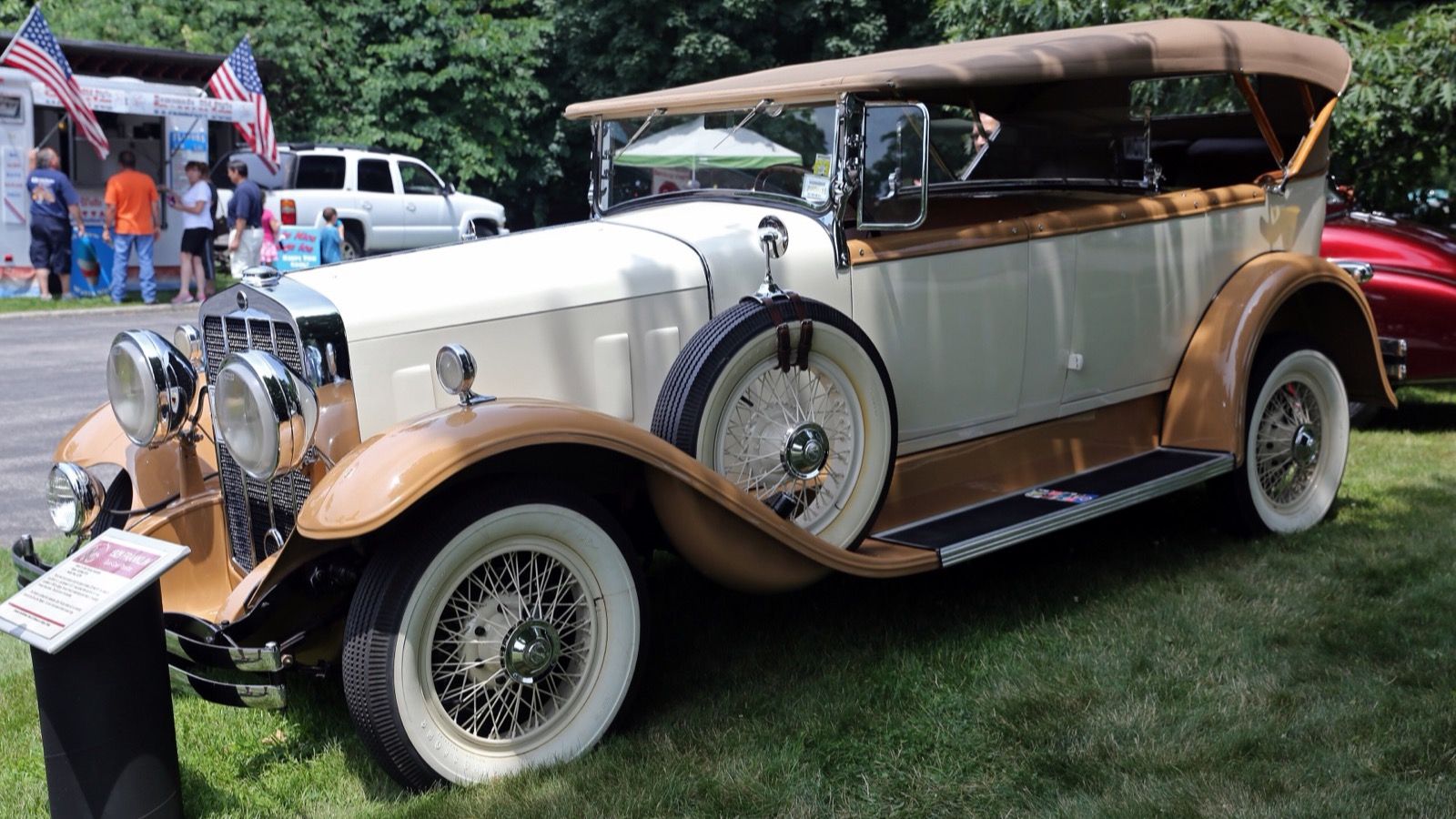
1929 Photo: “1929 Franklin Model 137 5-passenger Sport Touring Dual Cowl.jpg” by Mr.choppers / Wikimedia Commons, licensed under CC BY-SA 3.0. Cropped to 16:9.
New Airman (Series 145–153) · Depression-era Airman
Redesigned 100 hp engine; Dietrich and LeBaron coachwork; production collapsed from 6,043 (1930) to 360 (1934).
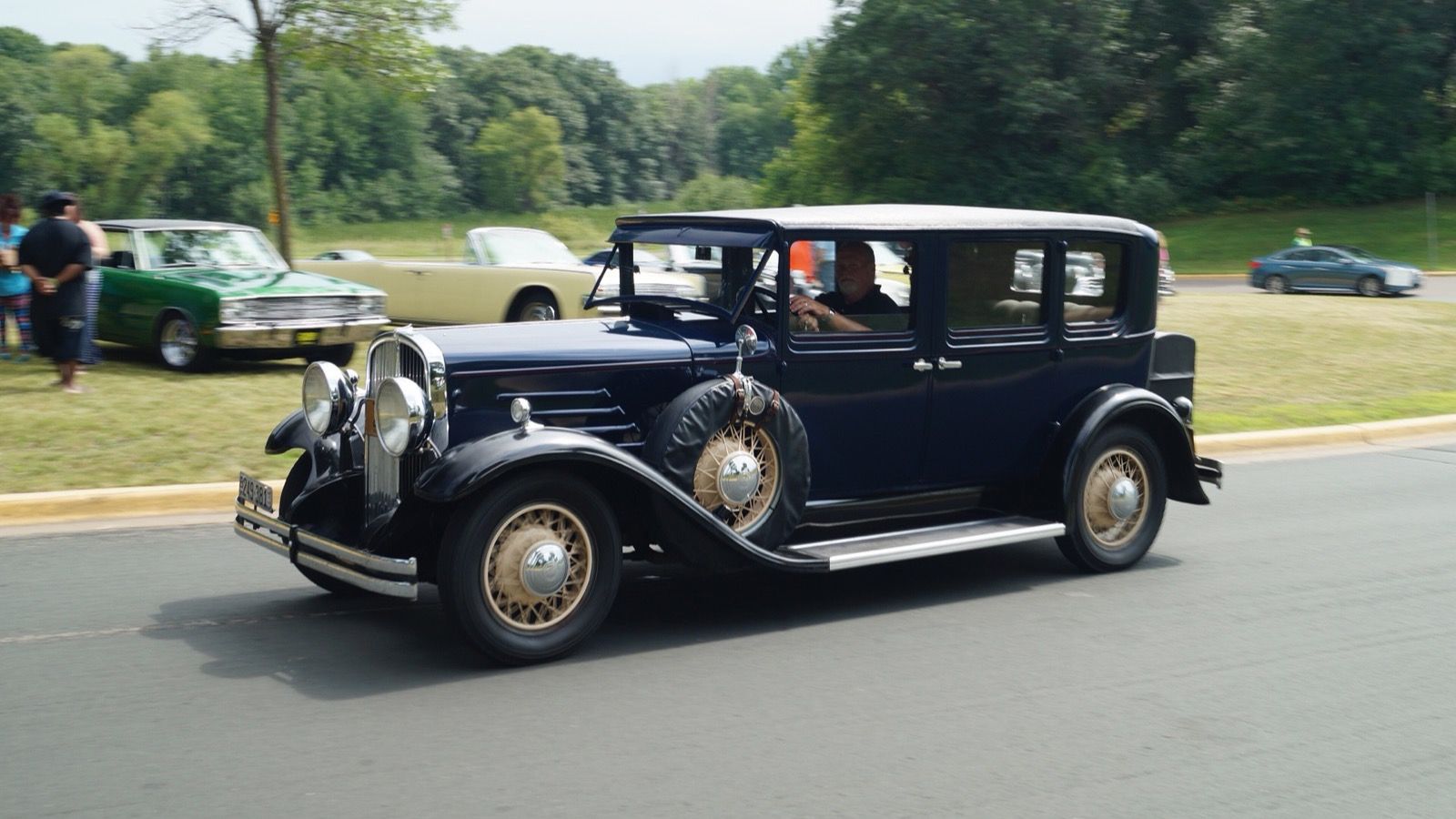
1930 Photo: “1930 Franklin sedan (20240440489).jpg” by Greg Gjerdingen from Willmar, USA / Wikimedia Commons, licensed under CC BY 2.0. Cropped to 16:9.
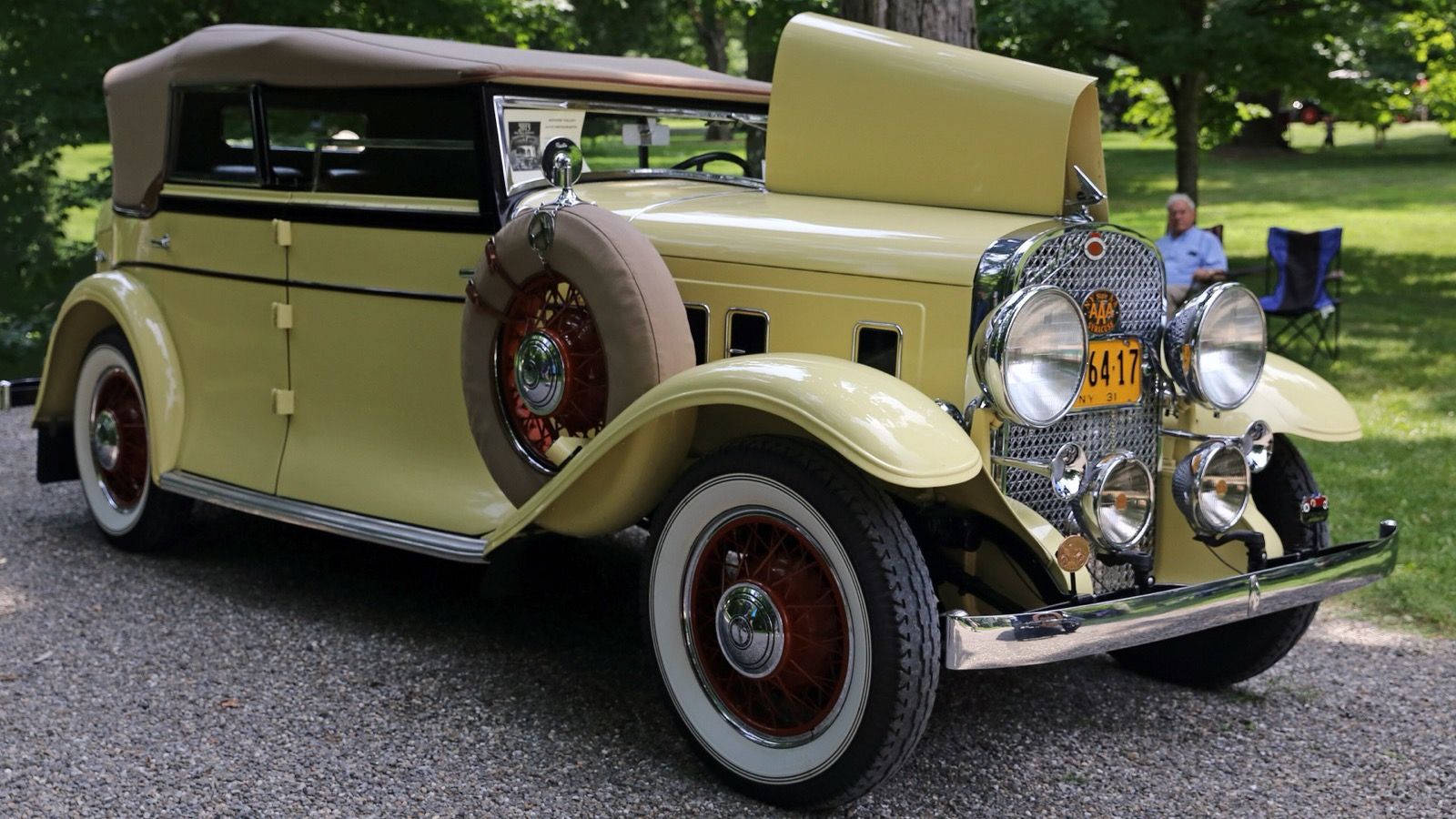
1931 Photo: “1931 Franklin Model 153 Pirate Touring, front right (Nippert).jpg” by Mr.choppers / Wikimedia Commons, licensed under CC BY-SA 3.0. Cropped to 16:9.
Body styles
- Sedan
- Touring
- Coupe
- Limousine
- Roadster
- Convertible Coupe
- Town Sedan
- Victoria Coupe
Notable special editions & performance variants
Pirate
Raymond Dietrich design with concealed running boards and flared doors — originally planned for the entire 1930 line, but produced only as a five-passenger touring and seven-passenger phaeton.
Related models
Collect the nameplate
Find a scale model of the Franklin Airman
Search Amazon across available years, colors, and scales. Exact releases vary, so confirm the listing before ordering.