
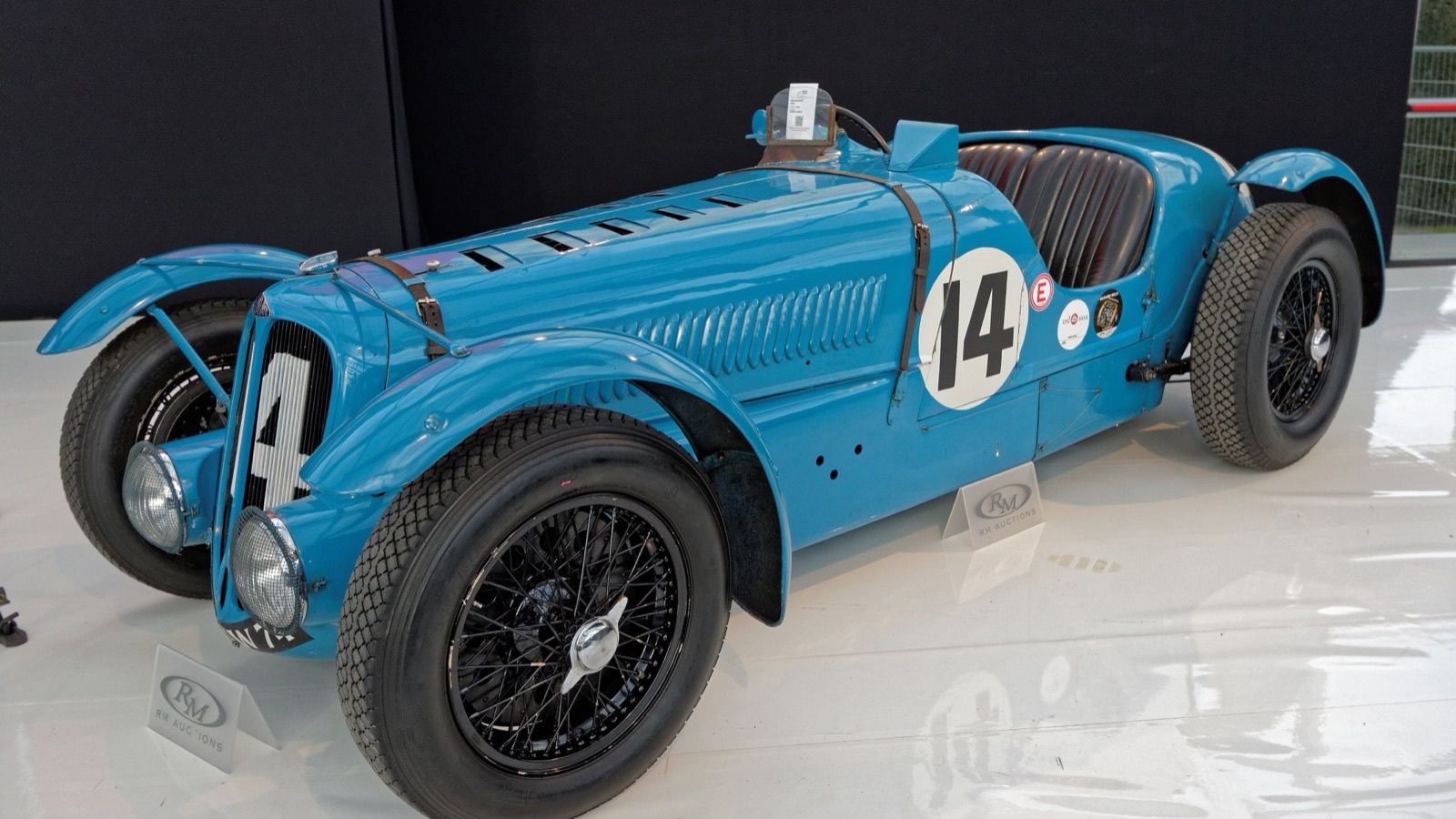
Delahaye Type 135 History
Delahaye's most celebrated model — a coachbuilt grand tourer and outright Le Mans winner, produced from 1935 until the marque's closure in 1954.
Photo: “Paris - RM auctions - 20150204 - Delahaye 135 S - 1935 - 001.jpg” by Thesupermat / Wikimedia Commons, licensed under CC BY-SA 4.0. Cropped to 16:9.
History
Introduced at the 1935 Paris Salon, the Type 135 announced Delahaye's transformation from maker of worthy but conventional tourers into a builder of sporting, glamorous automobiles. Its engine was a 3.2-litre overhead-valve straight-six derived from a truck unit, tuned to deliver 95–110 hp in twin-carburettor form. The chassis attracted every leading Parisian coachbuilder — Figoni & Falaschi, Henri Chapron, Letourneur et Marchand, Saoutchik, and Marcel Pourtout among them — who draped it in some of the most extravagant streamlined bodywork of the era.
An enlarged 3.557cc version, the 135M, arrived in 1936 with outputs ranging from 90 hp in mild trim to well over 160 hp in full competition specification. The sportiest road variant, the 135MS (Modifié Spécial), was capable of more than 180 km/h. The Type 135's competition record was formidable: it swept the first six places at the 1936 Marseilles race, placed second and third in the 1936 Mille Miglia, won the 1937 Monte Carlo Rally with René Le Bègue and Julio Quinlin, and in 1938 scored a decisive 1-2-4 result at the 24 Hours of Le Mans — Chaboud and Trémoulet taking the overall win.
Post-war 135s were identical mechanically to the 1939 cars; roughly 100 post-war examples were built (mainly for the domestic market) before production finally ended with the marque's closure in 1954. Total production of all Type 135 variants was approximately 2,000 units, making it by far the most numerous Delahaye of the era.
Generations
Type 135 (original) · 3.2-litre six
Photo: “Paris - RM auctions - 20150204 - Delahaye 135 S - 1935 - 001.jpg” by Thesupermat / Wikimedia Commons, licensed under CC BY-SA 4.0. Cropped to 16:9.
The debut 3.2-litre model shown at the 1935 Paris Salon; 95–110 hp and immediately attractive to the leading coachbuilders.
1935 Photo: “Paris - RM auctions - 20150204 - Delahaye 135 S - 1935 - 001.jpg” by Thesupermat / Wikimedia Commons, licensed under CC BY-SA 4.0. Cropped to 16:9.
Type 135M / 135MS · Enlarged 3.557cc
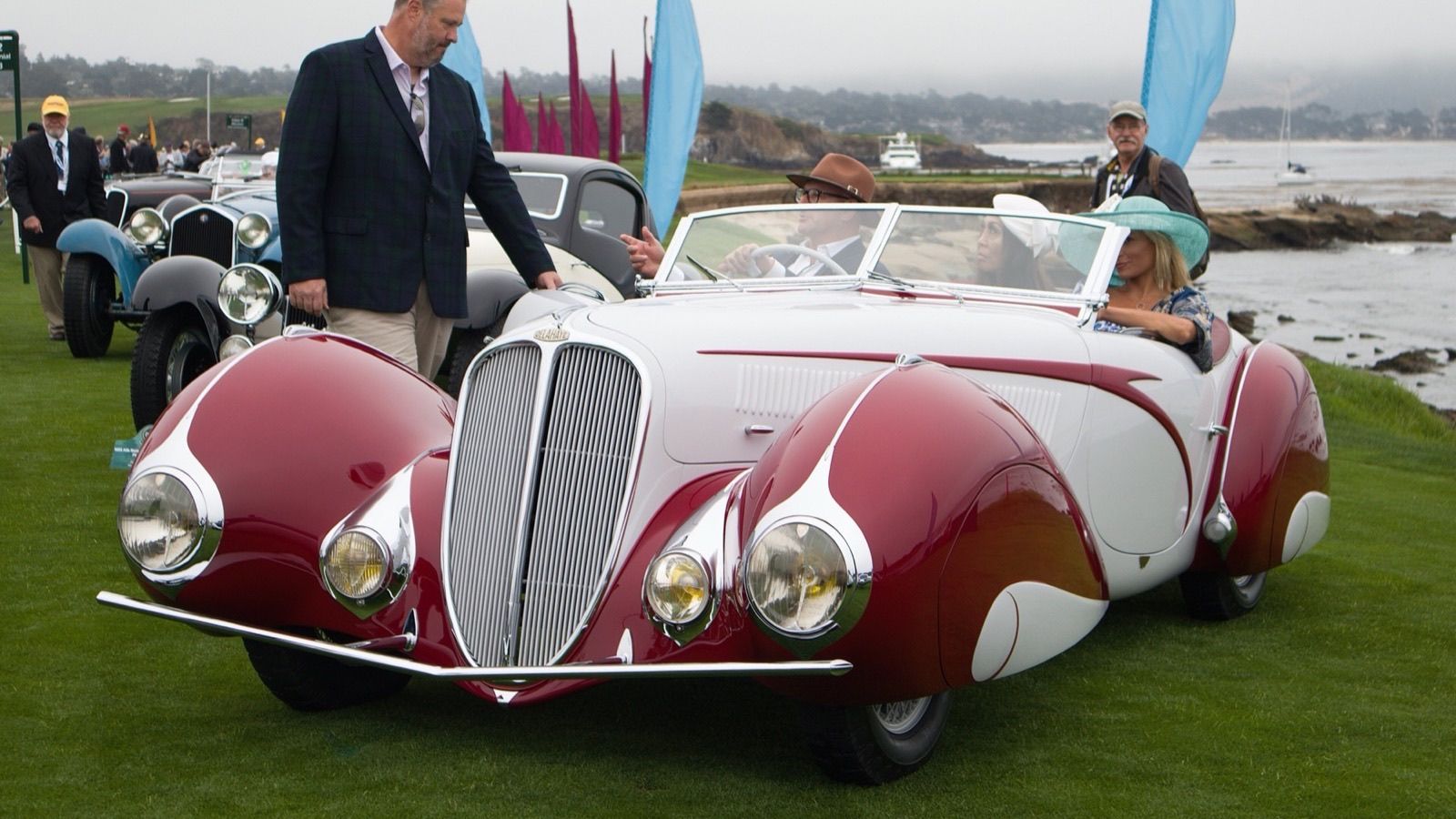
Photo: “1937 Delahaye 135 Roadster at Pebble Beach Concours 2023.jpg” by Prova MO / Wikimedia Commons, licensed under CC BY-SA 4.0. Cropped to 16:9.
Enlarged 3.557cc engine; the MS (Modifié Spécial) offered 120–145 hp in road form and over 160 hp in competition trim — the variant that won Le Mans in 1938.
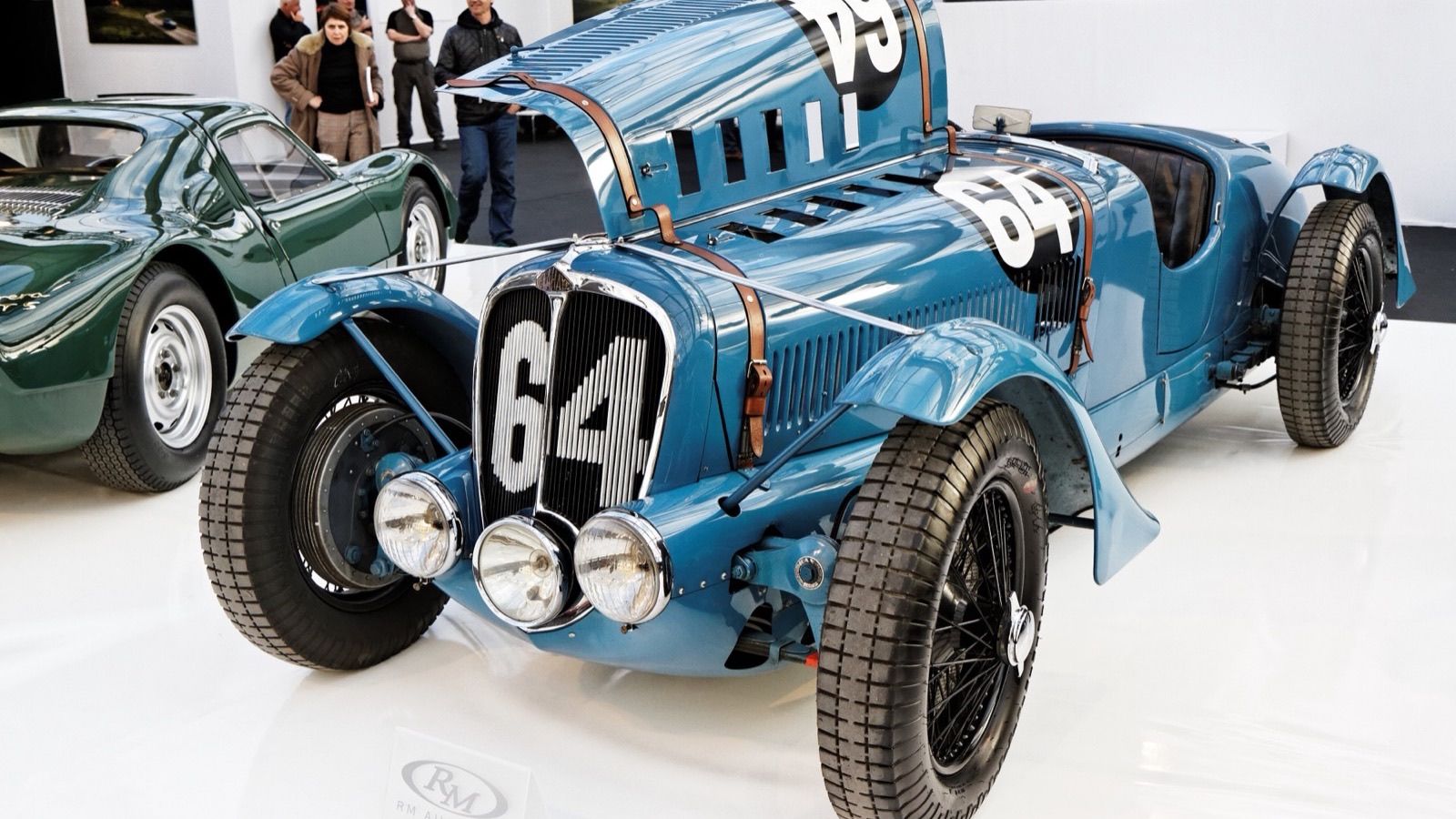
1936 Photo: “Paris - RM Auctions - 5 février 2014 -Delahaye 135 S - 1936 - 003.jpg” by Thesupermat / Wikimedia Commons, licensed under CC BY-SA 3.0. Cropped to 16:9.
1937 Photo: “1937 Delahaye 135 Roadster at Pebble Beach Concours 2023.jpg” by Prova MO / Wikimedia Commons, licensed under CC BY-SA 4.0. Cropped to 16:9.
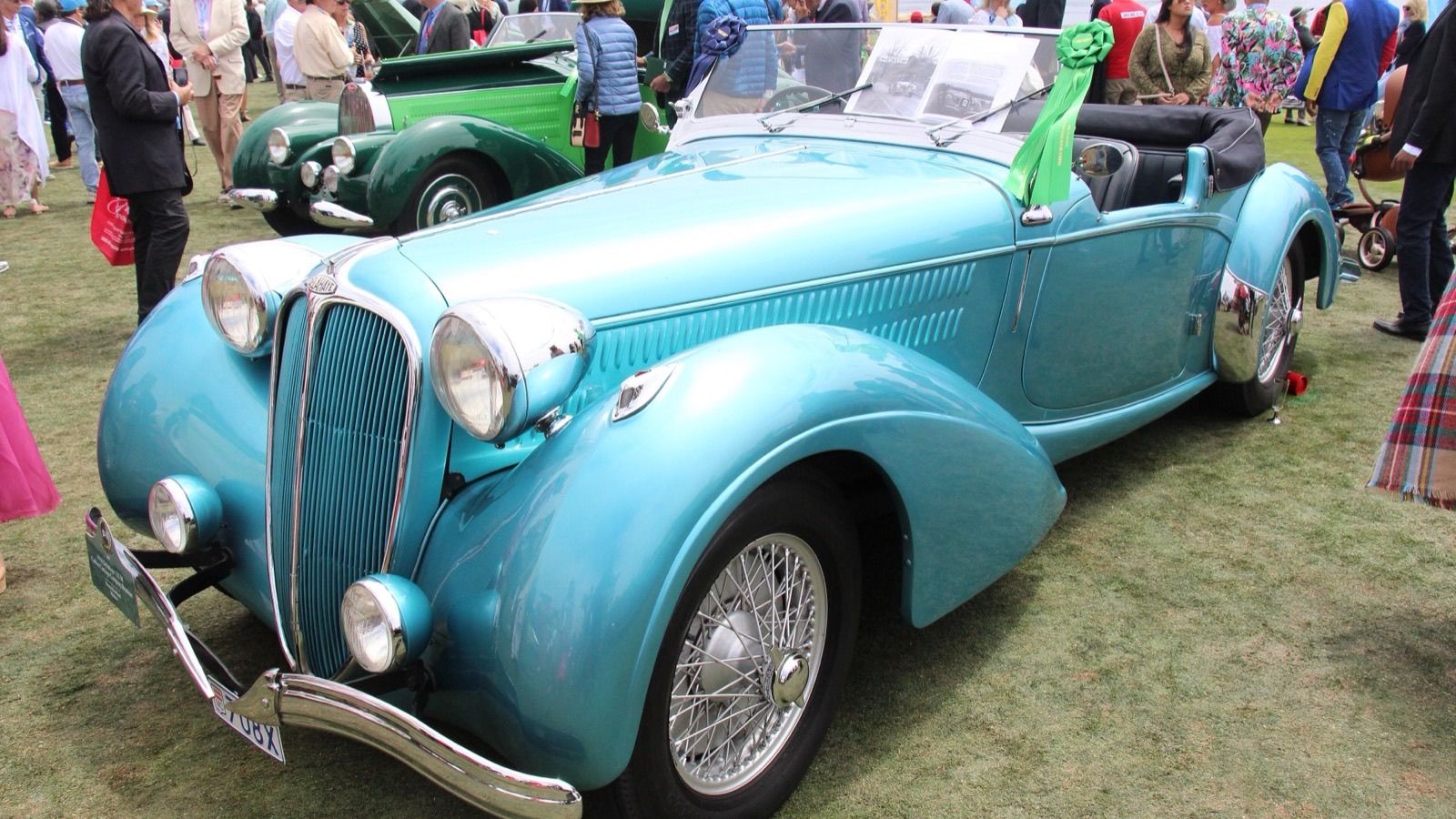
1938 Photo: “1938 Delahaye 135M Carlton Roadster.jpg” by Cars Down Under / Wikimedia Commons, licensed under CC BY 2.0. Cropped to 16:9.
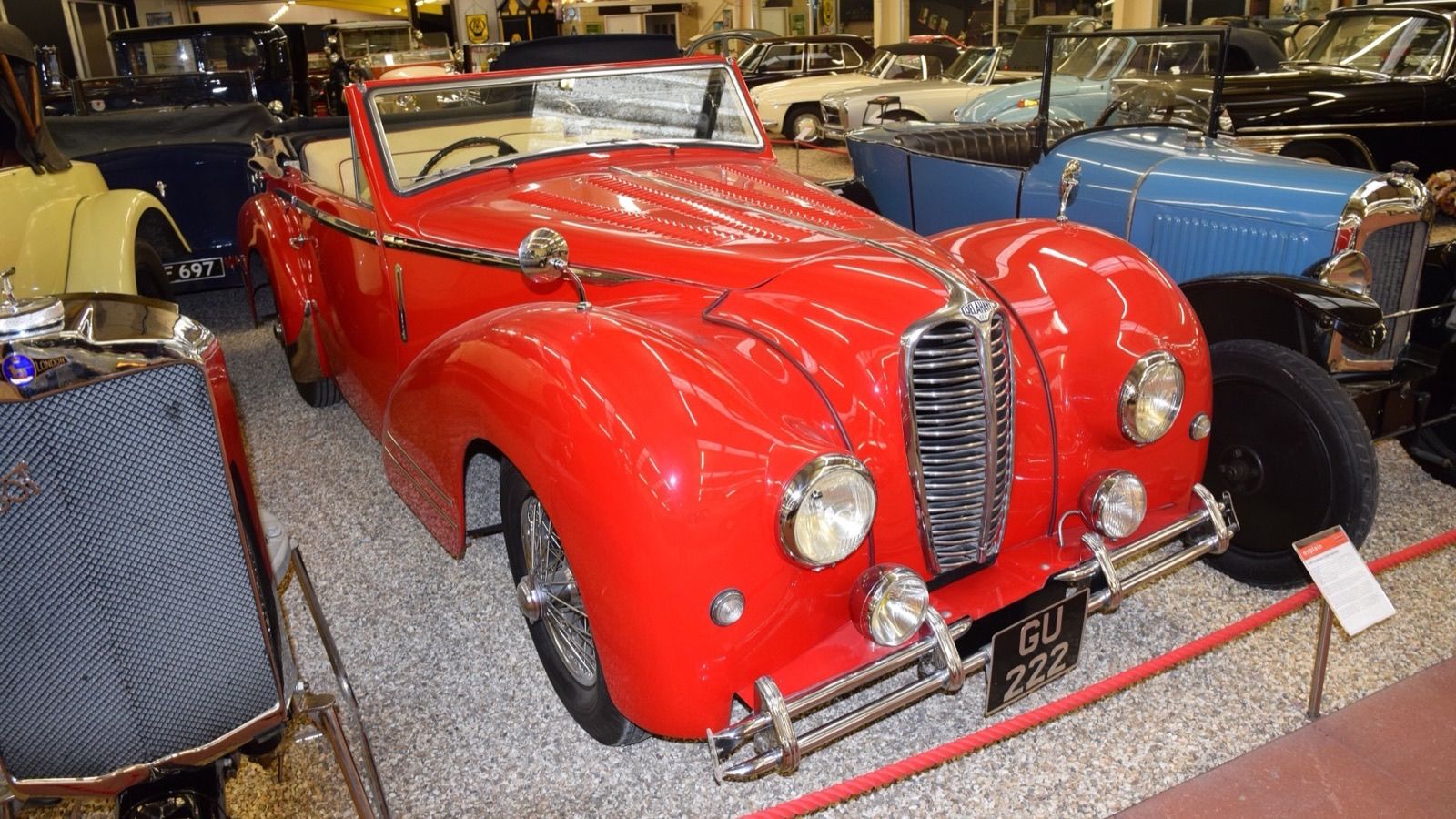
1939 Photo: “1939 Delahaye 135M Cabriolet (34478382633).jpg” by Hugh Llewelyn from Keynsham, UK / Wikimedia Commons, licensed under CC BY-SA 2.0. Cropped to 16:9.
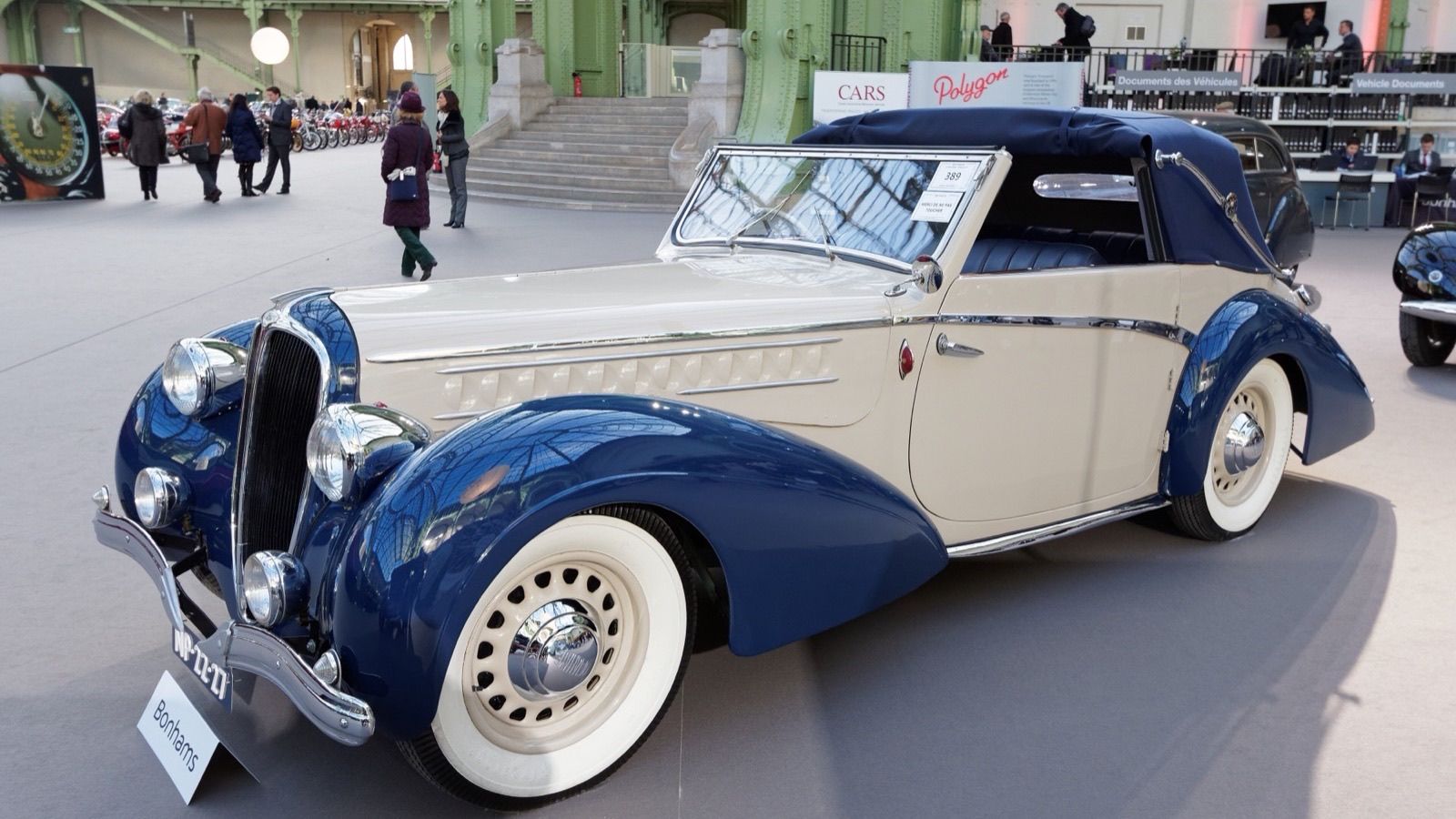
1946 Photo: “Paris - Bonhams 2015 - Delahaye 135M Cabriolet - 1946 - 004.jpg” by Thesupermat / Wikimedia Commons, licensed under CC BY-SA 4.0. Cropped to 16:9.
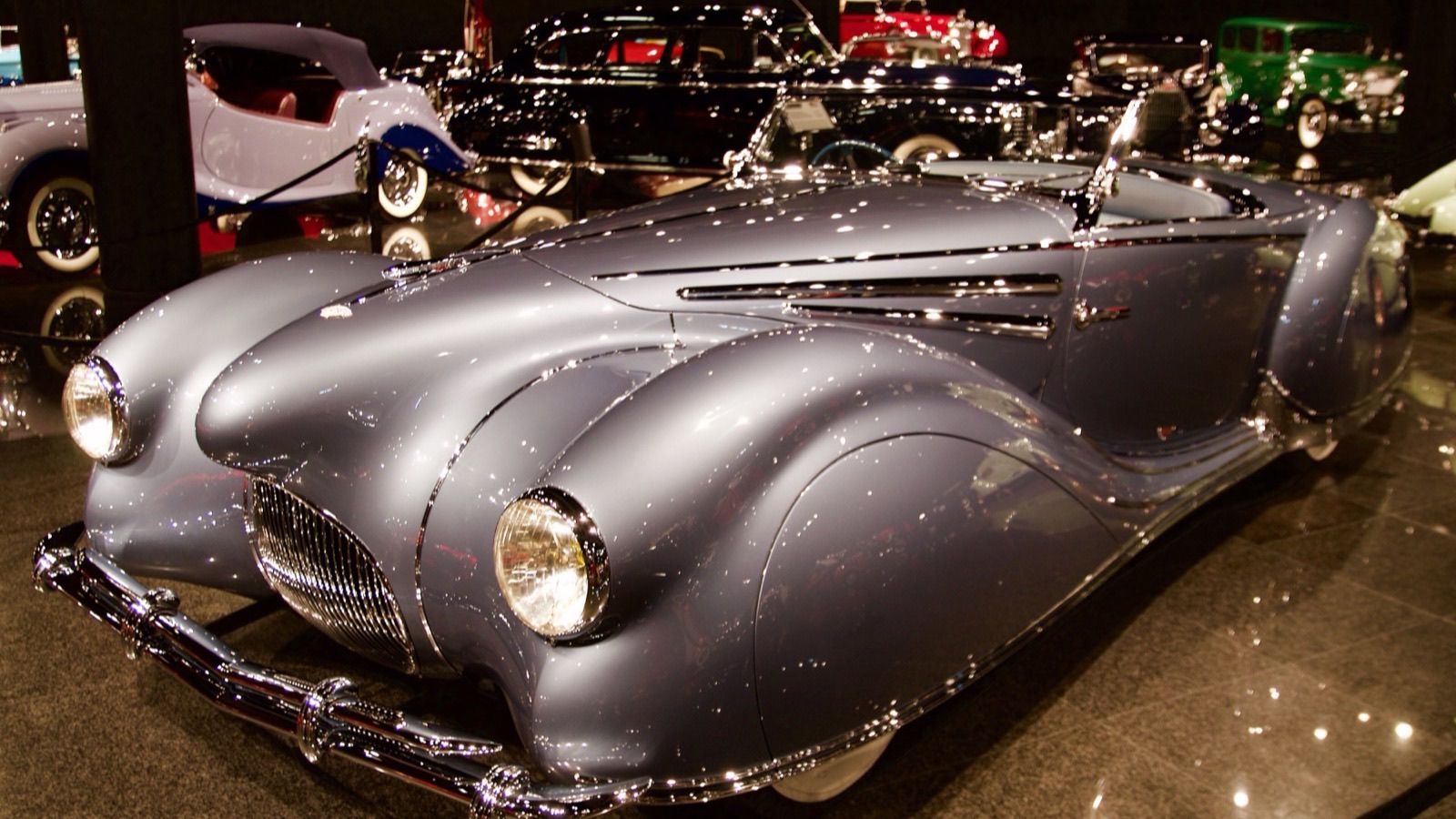
1947 Photo: “1947 Delahaye Model 135 M Figoni et Falaschi 'Narval' Cabriolet, Blackhawk Museum DSC 0203.jpg” by Bill Abbott / Wikimedia Commons, licensed under CC BY-SA 2.0. Cropped to 16:9.
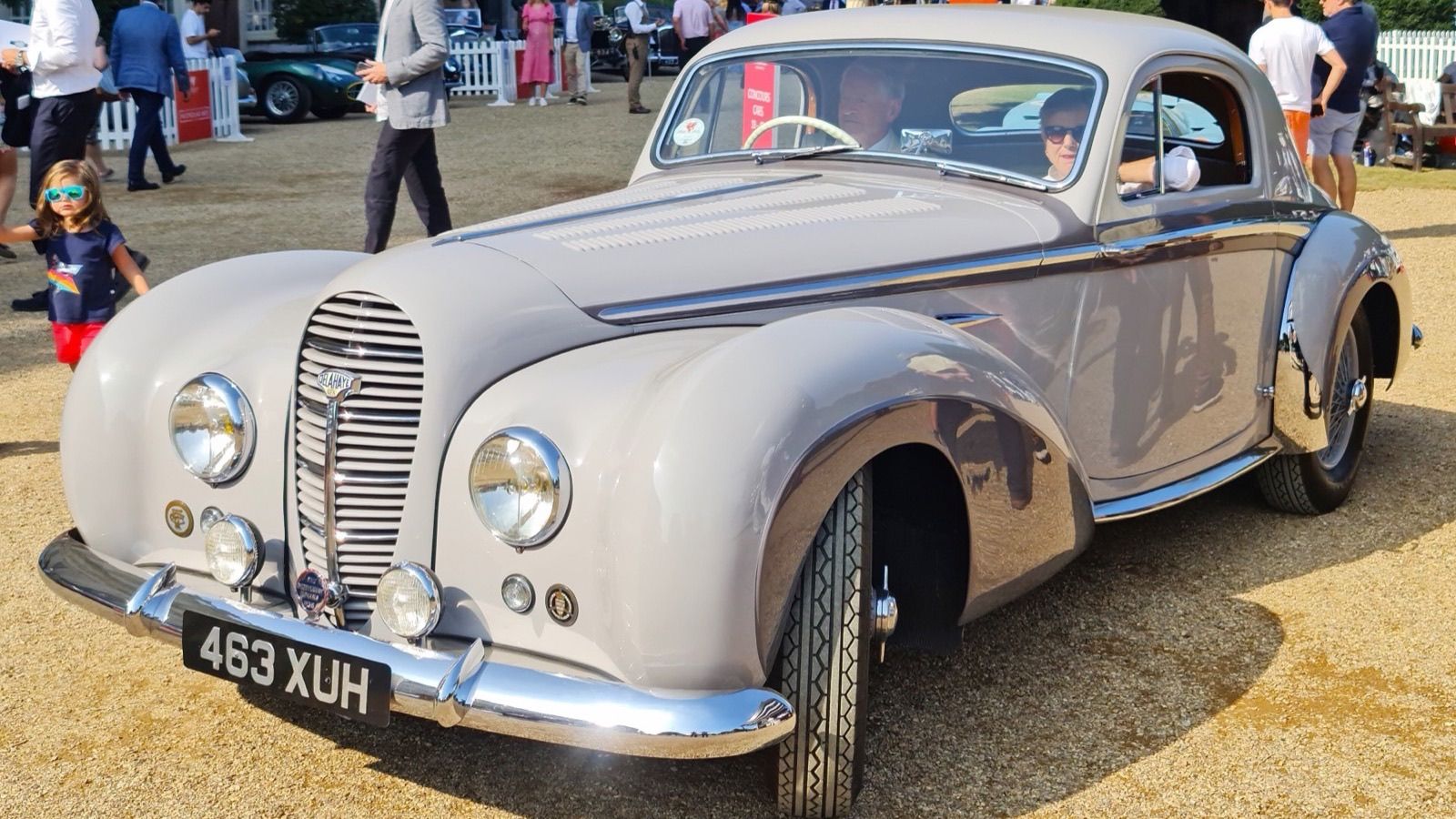
1948 Photo: “1948 Delahaye 135 M Coupe HCC21.jpg” by MrWalkr / Wikimedia Commons, licensed under CC BY-SA 4.0. Cropped to 16:9.
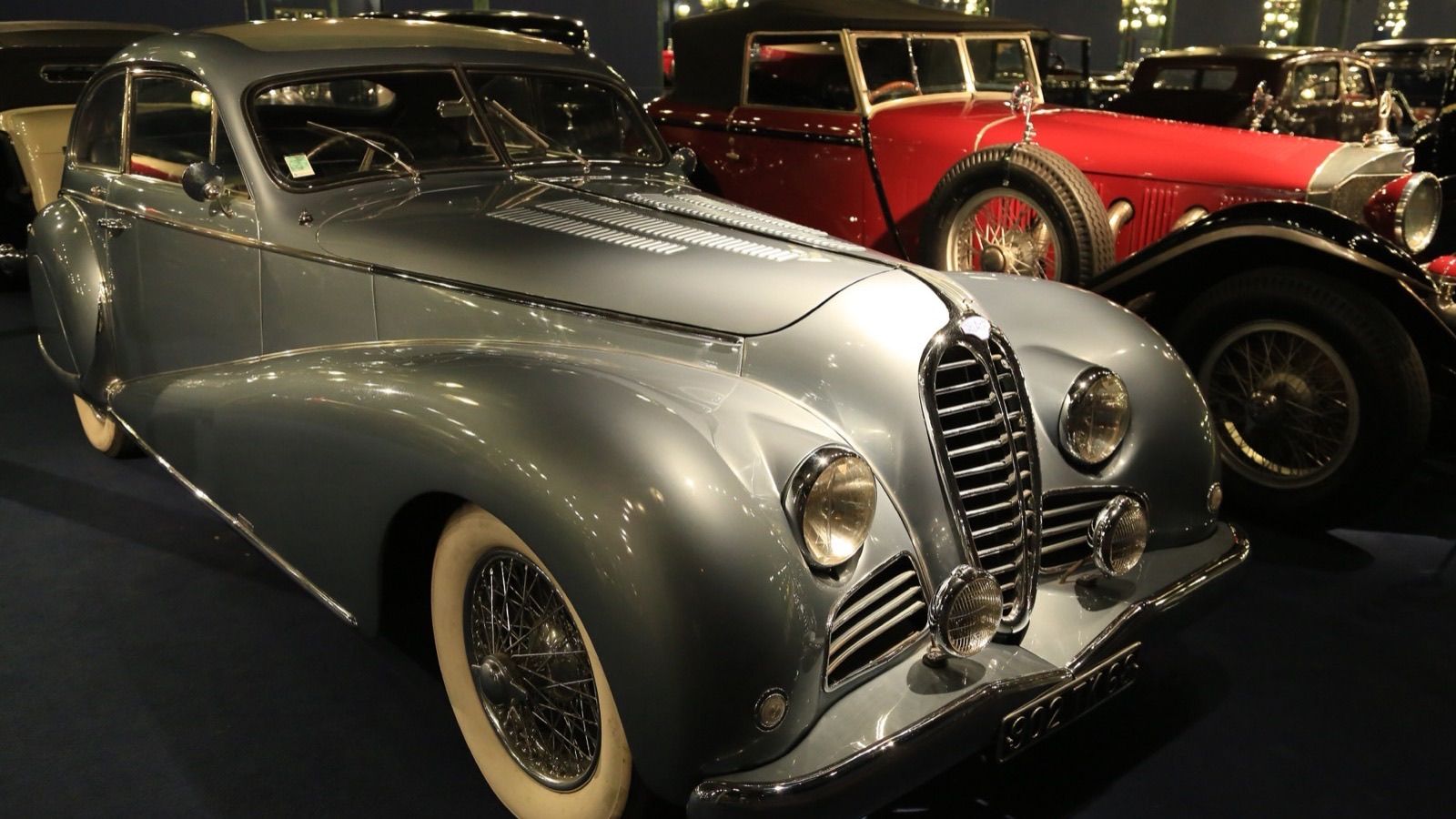
1949 Photo: “1949 Delahaye 135M Coach Profilée by Antem at Mulhouse.jpg” by questa_ta / Wikimedia Commons, licensed under CC BY 2.0. Cropped to 16:9.
Body styles
- Cabriolet
- Coupe
- Berline
- Roadster
- Competition roadster
Notable special editions & performance variants
135 CS (Competition Spéciale)
Short-wheelbase competition variant built for sports-car racing; the most extreme factory-supported 135, running at Le Mans and Mille Miglia.
135MS Chapron / Figoni bodies
The most celebrated coachbuilt 135s — Figoni & Falaschi's teardrop-fendered cabriolets and Chapron's berlines are now among the most valuable prewar French cars at auction.
Related models
Collect the nameplate
Find a scale model of the Delahaye Type 135
Search Amazon across available years, colors, and scales. Exact releases vary, so confirm the listing before ordering.