
De Dion-Bouton Vis-à-Vis (Model D) History
Catalog record
Photography for this nameplate has not yet cleared the archive’s licensing and identity checks. The researched text below remains available while the page stays out of search and advertising inventory.
History
In 1898–1899 De Dion-Bouton added four wheels to their powertrain formula. The production version, known as the Model D, debuted for 1900 with a 3¾ CV (402 cc) single-cylinder engine mounted under the rear seat and driving the rear wheels through a two-speed gearbox — one of the earliest uses of a sliding-gear transmission in a production car.
The vis-à-vis layout placed passengers on a forward-facing bench and the driver behind them on the rear seat, a design that felt eccentric even at the time but made sense with a rear engine. By 1900 De Dion-Bouton was the largest automobile manufacturer in the world, producing 400 cars and 3,200 engines in that year alone; the vis-à-vis was the car that earned that distinction.
A larger 8 CV rear-entry phaeton (Model K) joined the range for 1902, and a three-speed transmission appeared on the Model O that same year. The rear-engined layout was abandoned for 1903 in favour of the more conventional front-engine Populaire, but the vis-à-vis era established De Dion-Bouton as a credible full-vehicle manufacturer, not merely an engine supplier.
Generations
Model D · 3¾ CV vis-à-vis
402 cc single-cylinder, rear-mounted, two-speed gearbox; passenger faces driver.
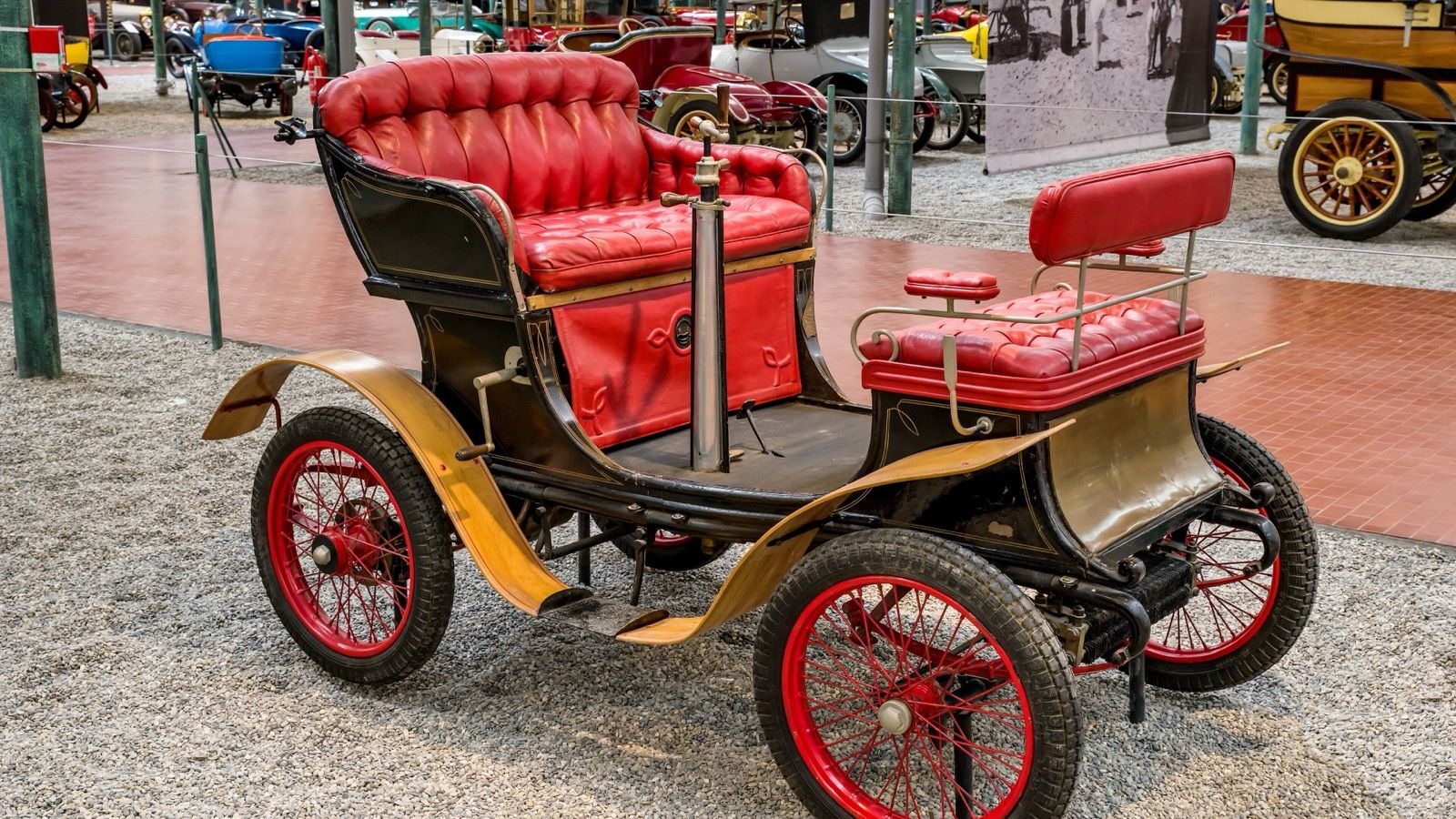
1900 Photo: “De Dion-Bouton Vis à vis Type E (1900) jm63754” by joergens.mi / Wikimedia Commons, licensed under CC BY-SA 3.0. Cropped to 16:9.
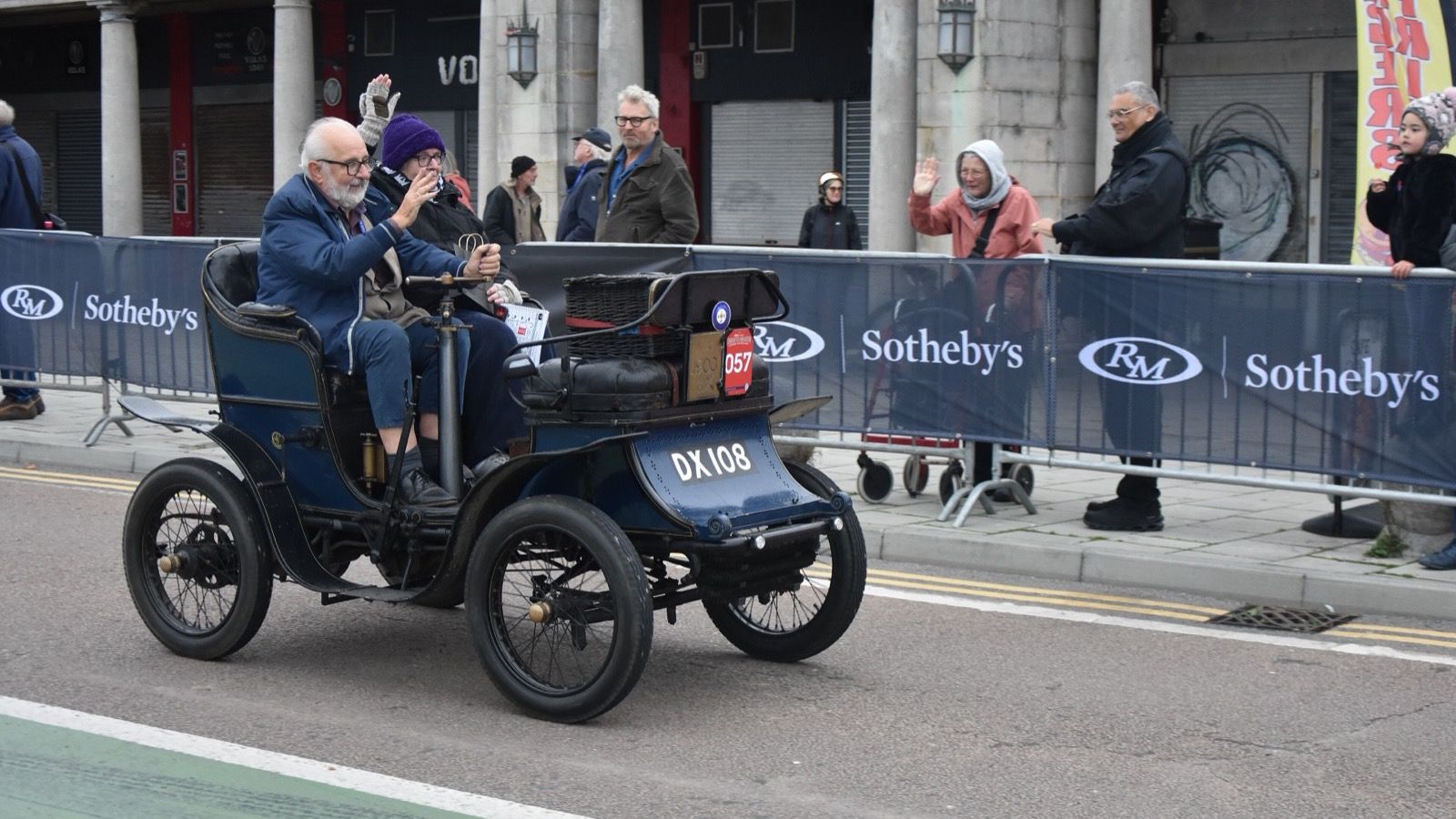
1901 Photo: “De Dion-Bouton, DX 108, London to Brighton Veteran Car Run 2024, 4,5 CV 1901 - 72” by Jon Lavis / Wikimedia Commons, licensed under CC BY 2.0. Cropped to 16:9.
Models K / O · 8 CV phaeton
Larger 8 CV rear-entry phaeton (Model K); three-speed gearbox introduced on Model O.
Body styles
- Vis-à-vis voiturette
Related models
Collect the nameplate
Find a scale model of the De Dion-Bouton Vis-à-Vis (Model D)
Search Amazon across available years, colors, and scales. Exact releases vary, so confirm the listing before ordering.