
De Dion-Bouton Motor Tricycle History
Catalog record
Photography for this nameplate has not yet cleared the archive’s licensing and identity checks. The researched text below remains available while the page stays out of search and advertising inventory.
History
After Trépardoux resigned in 1894 over the switch from steam to petrol, Georges Bouton designed a revolutionary new single-cylinder engine for 1895: 137 cc, trembler-coil ignition, and capable of an unprecedented 3,500 rpm — far beyond the lumbering 200–400 rpm of contemporary rival engines. It was fitted to a tricycle frame, initially producing 1¼ CV (about 185 cc), and went on sale in 1896.
The tricycle remained in production for nearly ten years. Engine displacement and output grew continuously: 185 cc at launch, rising through 1¾ CV (1897) and 2¾ CV to 8 CV racing derivatives; the final 1904 model displaced 955 cc and produced 8 hp at 1,800 rpm. Michelin pneumatic tires were standard from the start. By 1904 De Dion-Bouton had exported some 40,000 engines across Europe, with approximately 150 manufacturers licensing the design — making the De Dion single-cylinder the de facto standard powerplant of the early automobile industry.
The tricycle's influence extended far beyond France: licensed copies were produced in Britain, Germany, the United States, and elsewhere under dozens of names, and the engine's high-revving, lightweight design set the template for the petrol vehicle era. Racing versions were campaigned successfully across Europe, cementing De Dion-Bouton's reputation as a performance and technology leader.
Generations
First series · 1¼ CV
Original 137–185 cc Bouton single-cylinder, 1¼–1¾ CV; unprecedented 3,500 rpm capability that redefined what a small petrol engine could do.
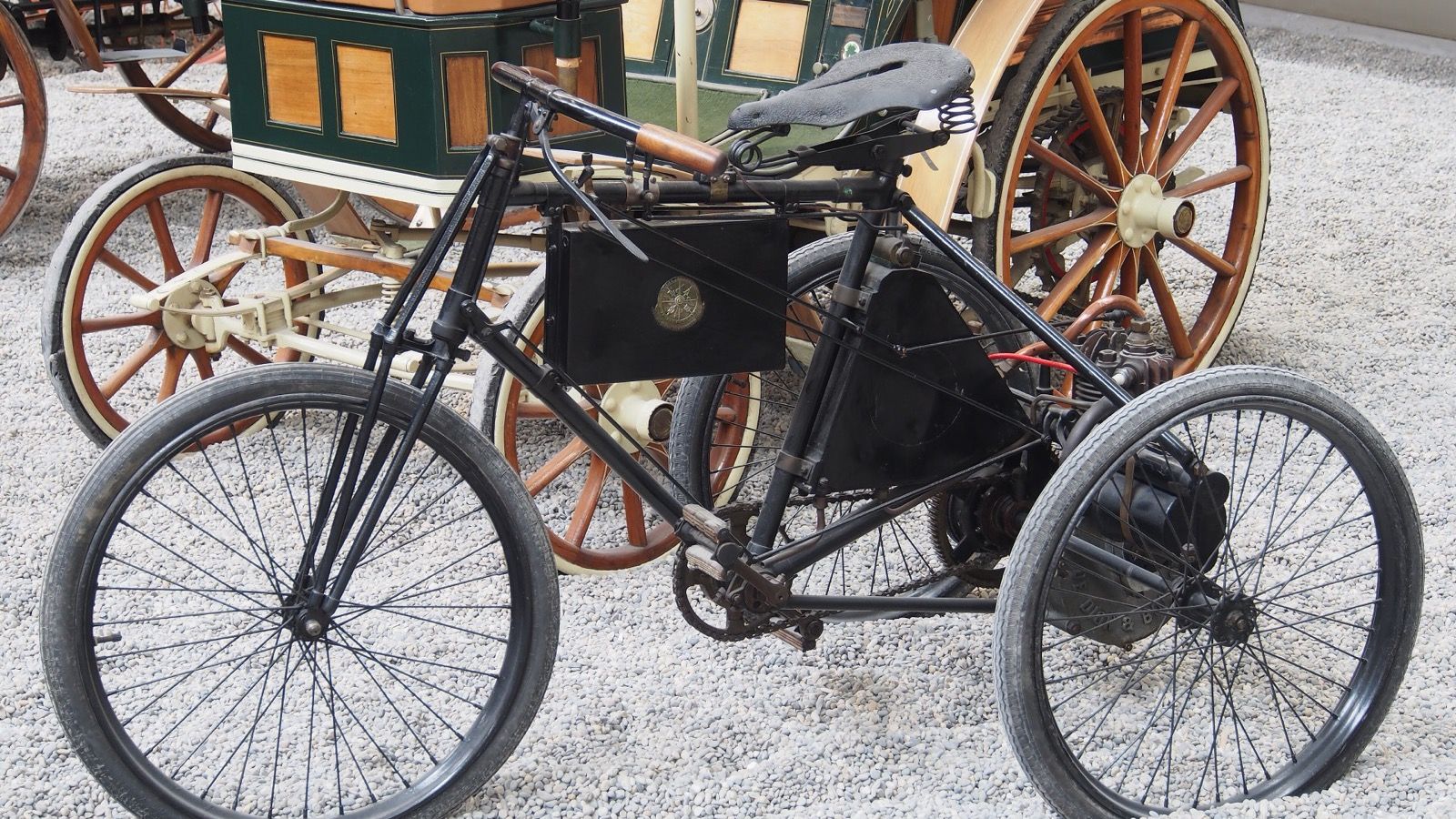
1897 Photo: “1897 De Dion-Bouton tricycle photo 1” by Alf van Beem / Wikimedia Commons — Public domain. Cropped to 16:9.
Second series · 2¾–8 CV
Growing displacement through 955 cc; up to 8 CV in road trim, higher in racers; final models had fully developed mechanical valves replacing the original atmospheric type.
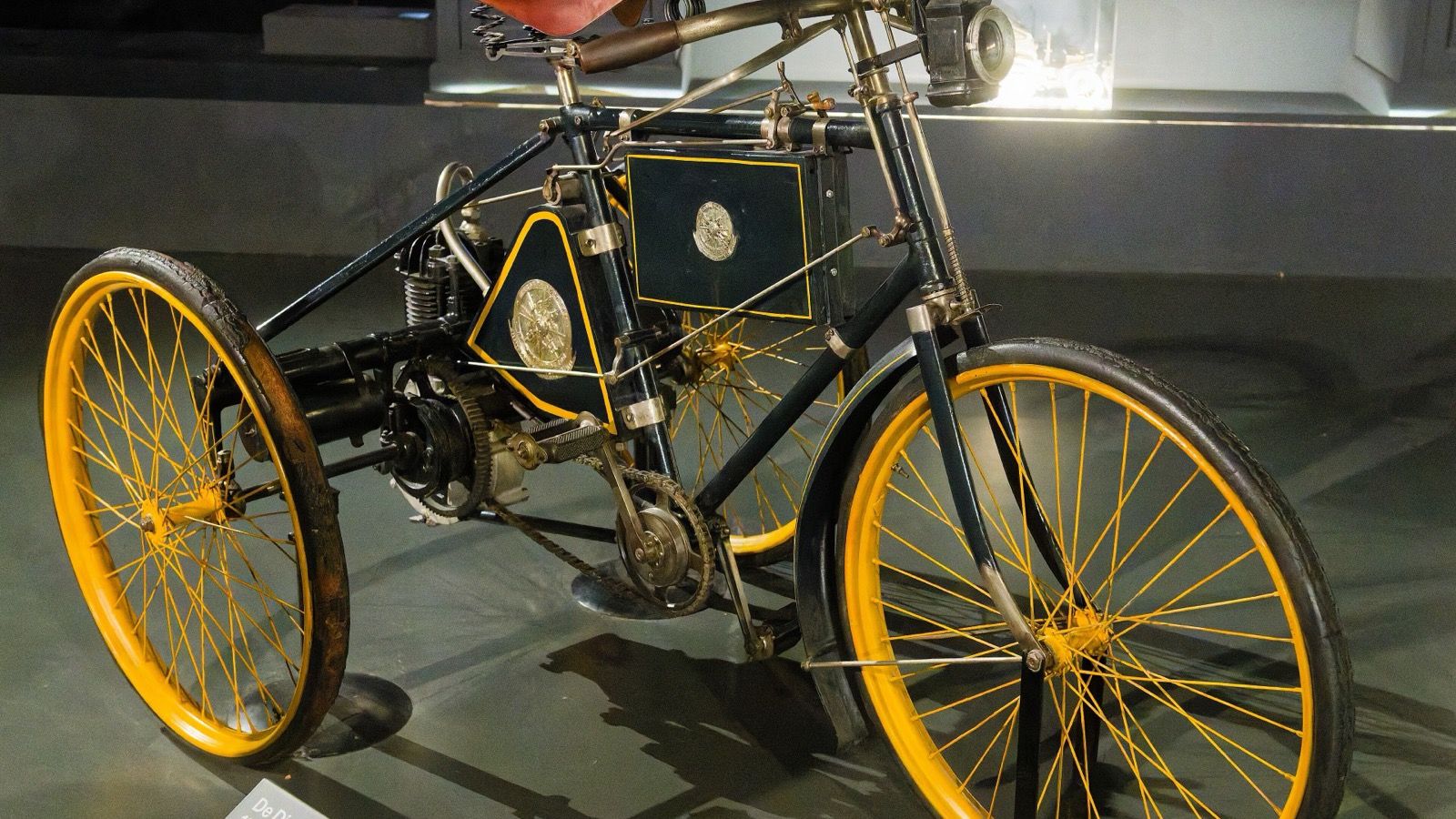
1898 Photo: “De Dion Bouton 1,25CV 1898 MAUTO” by Marie-Lan Taÿ Pamart / Wikimedia Commons, licensed under CC BY 4.0. Cropped to 16:9.
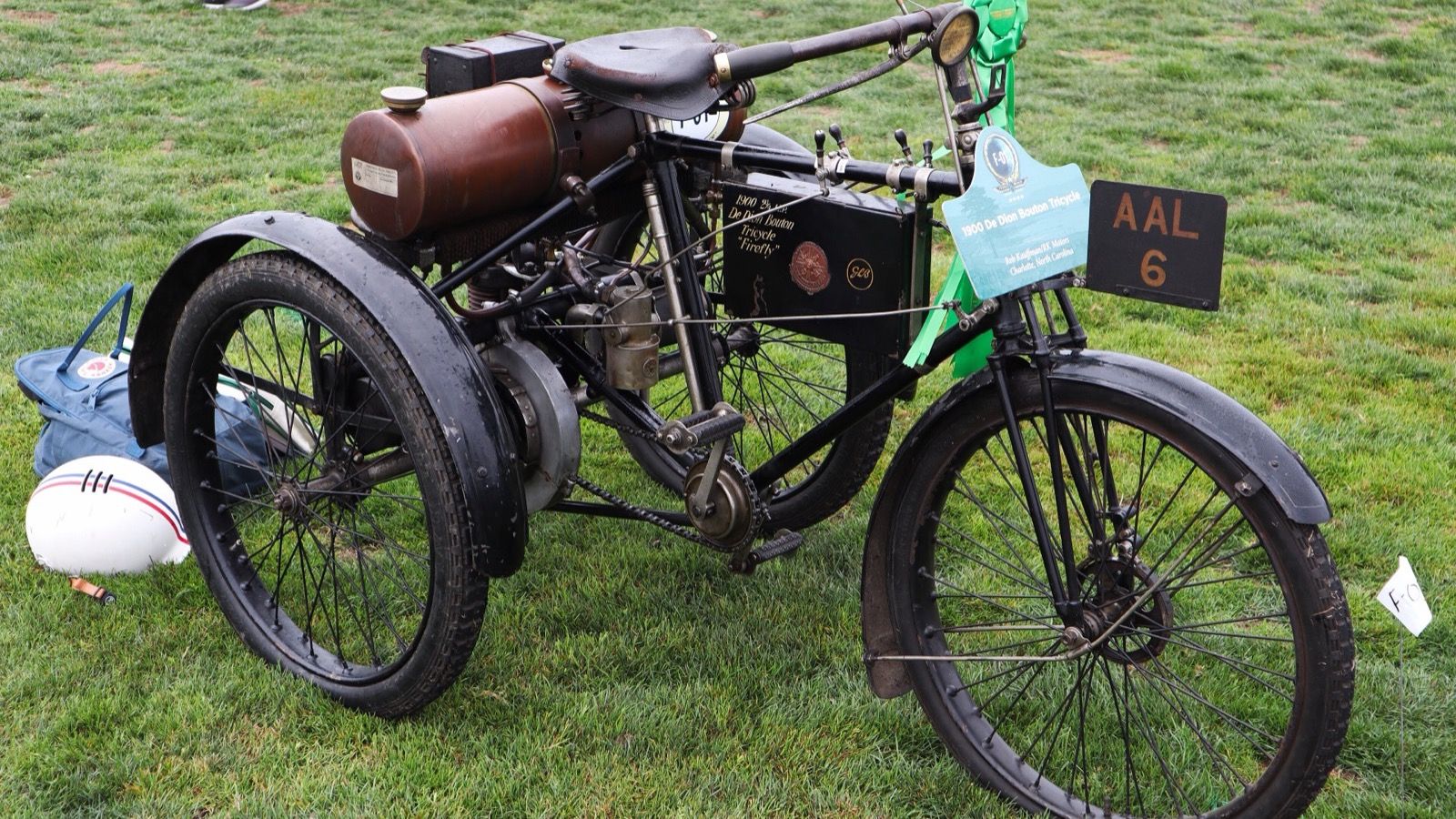
1900 Photo: “1900 De Dion Bouton Tricycle at PB 2022 front right” by Prova MO / Wikimedia Commons, licensed under CC BY-SA 4.0. Cropped to 16:9.
Body styles
- Three-wheel single-track vehicle
Related models
Collect the nameplate
Find a scale model of the De Dion-Bouton Motor Tricycle
Search Amazon across available years, colors, and scales. Exact releases vary, so confirm the listing before ordering.