
Darracq Clegg-Darracq 12 HP / 16 HP History
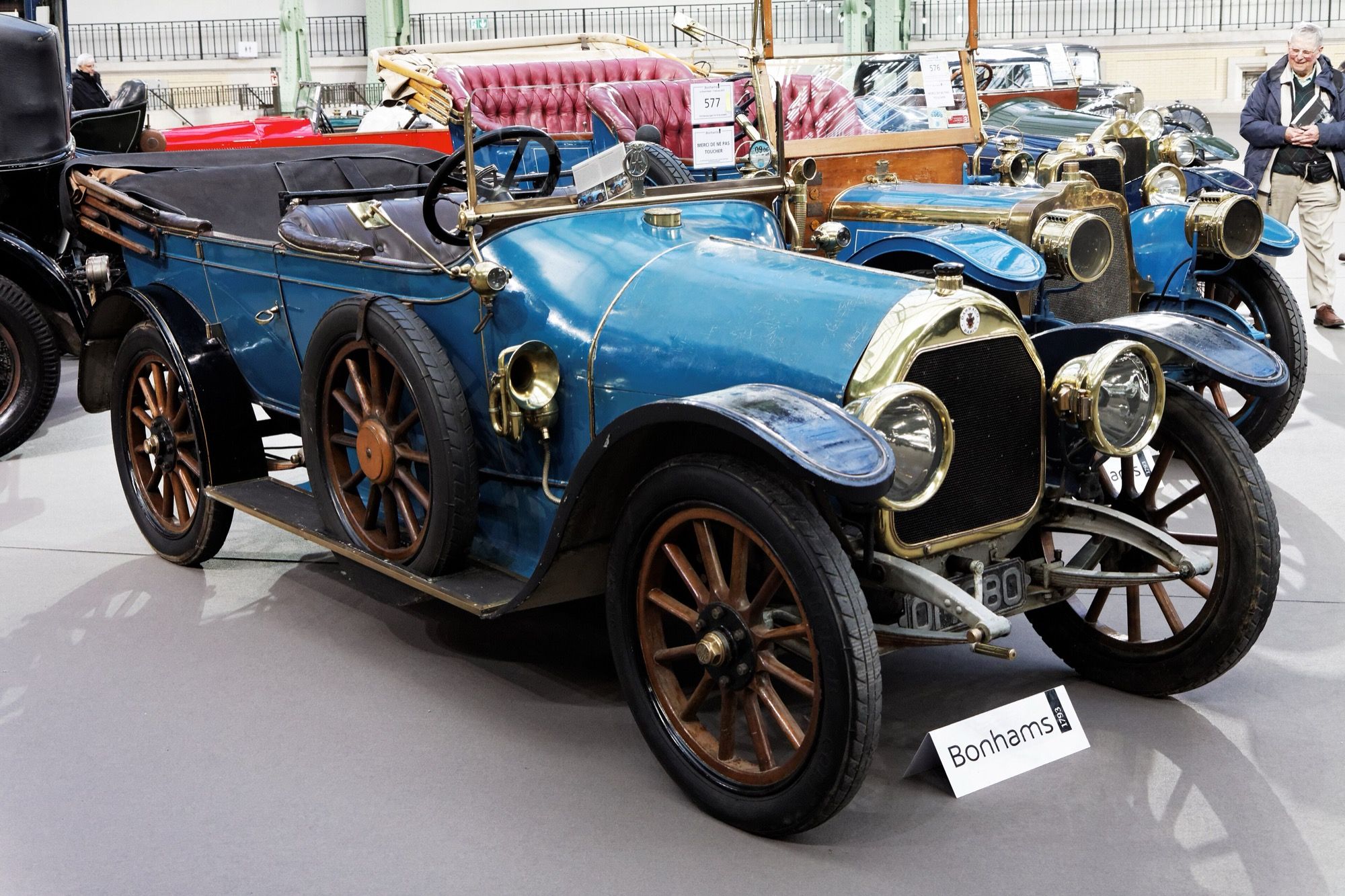
The Owen Clegg-designed recovery models that restored Darracq's reputation — reliable, conventional four-cylinder tourers that brought the factory to 60 cars a week by 1914.
Photo: “Paris - Bonhams 2013 - Darracq type V14 16 HP torpédo - 1914 - 001.jpg” by Thesupermat / Wikimedia Commons, licensed under CC BY-SA 3.0
History
After the rotary-valve engine debacle, Owen Clegg — formerly works manager at Rover — was appointed to Suresnes in October 1912. His brief was straightforward: return to proven conventional design. Clegg drew on his experience with the Rover Twelve, producing a new 12 HP model with a 2.1-litre side-valve four-cylinder engine and a 16 HP variant that became known as the 16 HP Clegg-Darracq.
The approach worked quickly. By 1913 both models were selling well; by 1914 the factory employed 12,000 workers and was producing fourteen cars per day — approximately sixty per week. It was the highest output Darracq had achieved, and it came through engineering discipline rather than novelty.
The 16 HP continued in spirit as the post-war 'Type V14': by the October 1919 Paris Motor Show, the 2,940 cc four-cylinder Type V14 had returned to production. It was joined by the ambitious 4,584 cc V8 'Type A' (24 HP, with four-wheel brakes from 1920), though the Type A sold poorly. Within two years the entire range would be rebadged as Talbot-Darracq, and by 1922 the Darracq name was gone.
Generations
Clegg recovery range · 12 HP / 16 HP
Photo: “Paris - Bonhams 2013 - Darracq type V14 16 HP torpédo - 1914 - 001.jpg” by Thesupermat / Wikimedia Commons, licensed under CC BY-SA 3.0
Owen Clegg's conventional side-valve tourers; 2.1-litre 12 HP and larger 16 HP; rebuilt Darracq's output to 60 cars a week before WWI halted production.
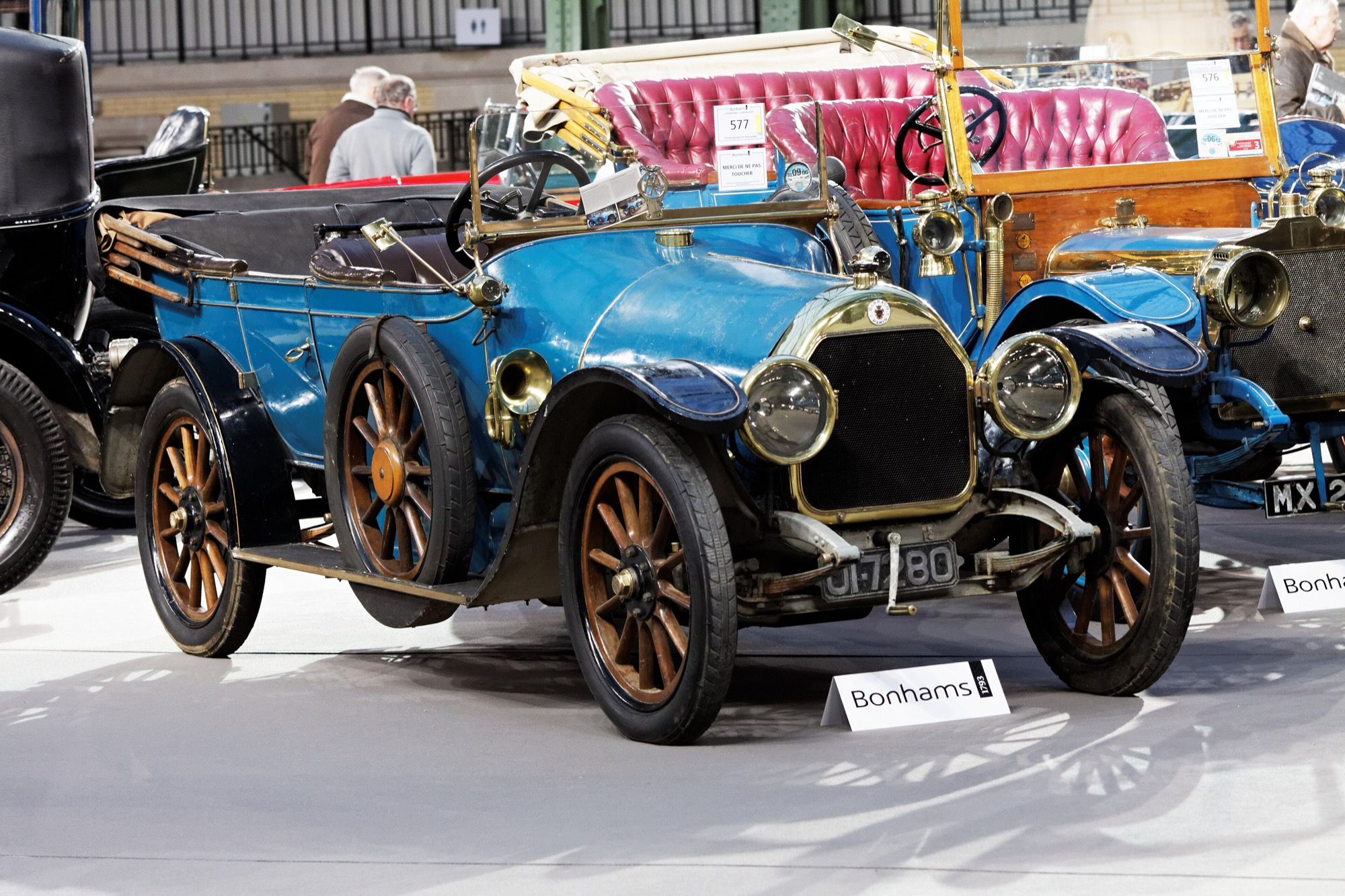
1914 Photo: “Paris - Bonhams 2013 - Darracq type V14 16 HP torpédo - 1914 - 004.jpg” by Thesupermat / Wikimedia Commons, licensed under CC BY-SA 3.0
Post-war revival · Type V14 / Type A
Type V14: 2,940 cc four-cylinder (the prewar 16 HP resumed); Type A: 4,584 cc V8 with four-wheel brakes from 1920 — last cars before rebadging as Talbot-Darracq.
Related models
Collect the nameplate
Find a scale model of the Darracq Clegg-Darracq 12 HP / 16 HP
Search Amazon across available years, colors, and scales. Exact releases vary, so confirm the listing before ordering.