
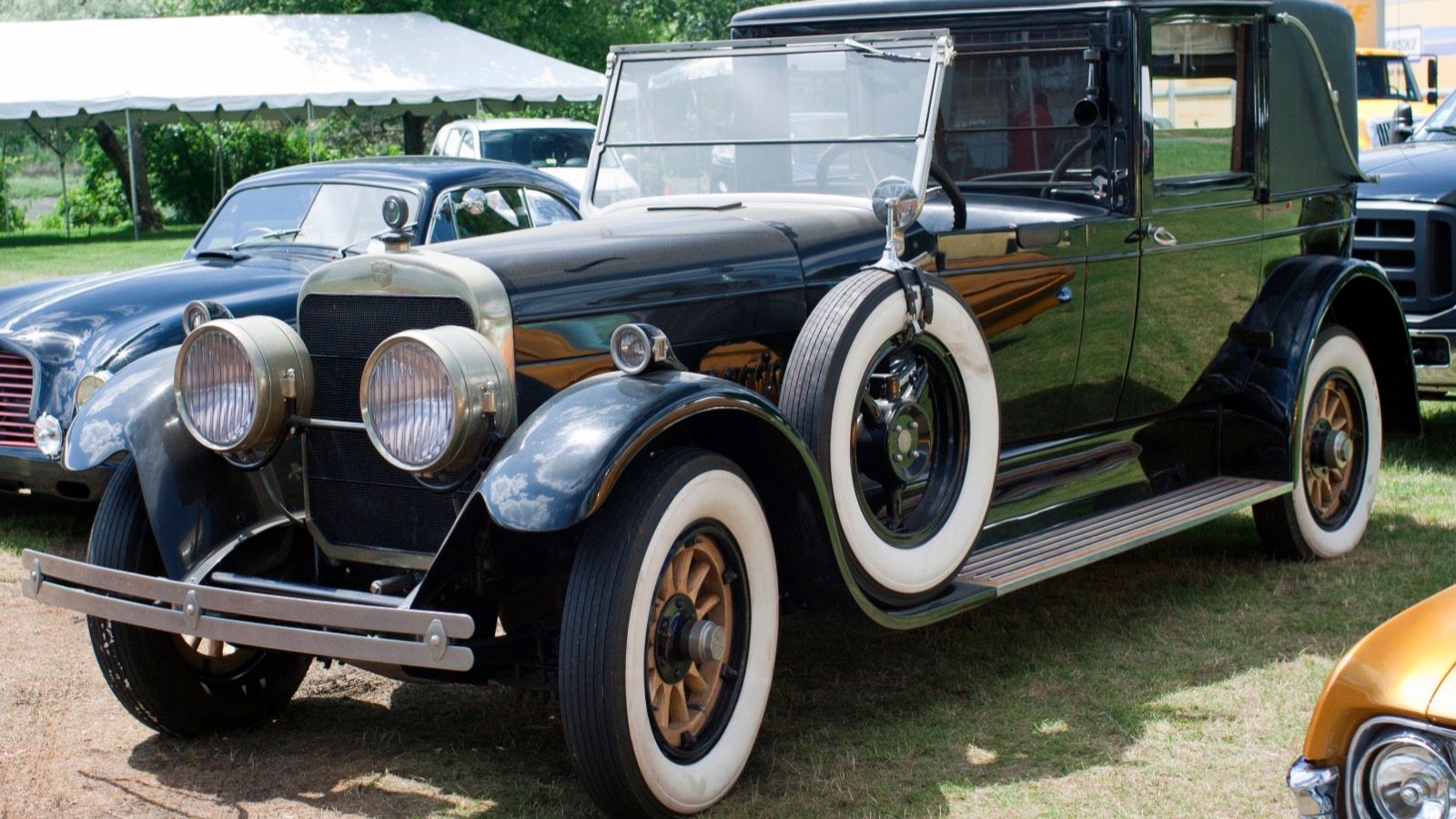
Cunningham Series V History
Cunningham's V8 flagship (Series V-1 through V-7, 1916–1931) — one of America's first V8 cars and the heart of the 'American Rolls-Royce' legend.
Photo: “1922 Cunningham V4 Model 82-A Town Limousine” by Mr.choppers / Wikimedia Commons, licensed under CC BY-SA 3.0. Cropped to 16:9.
History
Introduced in 1916, the Series V-1 made Cunningham one of the first American manufacturers to put a V8 engine into a production car. The engine was a side-valve (L-head) V8 of 442 cubic inches, initially rated at 45 horsepower under the conservative NACC (National Automobile Chamber of Commerce) formula — a figure that understated its real output and rose substantially over the model's life, reaching roughly 90 horsepower by the early 1920s and around 106 horsepower in the late-1920s cars.
The Series V ran through a sequence of refinements — V-1 (1916–1917), V-2 (1918–1919), V-3 (1920–1921), V-4 (1922 onward), V-6 (mid-1920s), and V-7 (1928 onward) — each improving the same fundamental big side-valve V8 chassis rather than reinventing it. Hand-built and bodied in Cunningham's own shops, these were among the most expensive cars in the United States, and the marque's reputation for craftsmanship earned it the nickname 'the American Rolls-Royce.' A Cunningham driven by Ralph DePalma set a record run of about 98 mph at Sheepshead Bay in 1919, underlining that the cars had performance to match their price.
In the 1920s the Series V became a status symbol of Hollywood and high society — owners included Mary Pickford, Harold Lloyd, Fatty Arbuckle, Hoot Gibson, Cecil B. DeMille, William Randolph Hearst (who kept one at San Simeon), and members of the Field and Wrigley families. Passenger-car production wound down around 1931 as the Depression destroyed the market for hand-built ultra-luxury cars; the firm then built custom bodywork for other chassis before leaving the automobile business entirely in 1936.
Generations
Series V-1 · V-1
The first Cunningham V8 — a 442-cubic-inch side-valve V8, one of the earliest American production V8 cars, NACC-rated at 45 hp.
Series V-2 · V-2
A mild update to the V-1 with detail changes and a reduced range of body styles.
Series V-3 · V-3
An improved-engine series; the era of the Cunningham V-3, including rakish boattail speedster bodies now prized by collectors.
Series V-4 · V-4
Photo: “1922 Cunningham V4 Model 82-A Town Limousine” by Mr.choppers / Wikimedia Commons, licensed under CC BY-SA 3.0. Cropped to 16:9.
Added a four-speed manual transmission; the long-running early-1920s Series V (announced 1922, roughly 90 hp; sources vary on the exact end year before the V-6, ~1924–1925).
1922 Photo: “1922 Cunningham V4 Model 82-A Town Limousine” by Mr.choppers / Wikimedia Commons, licensed under CC BY-SA 3.0. Cropped to 16:9.
Series V-6 · V-6
Mid-1920s V8 on a 132- or 142-inch wheelbase, with output up to about 90 horsepower; documented on cars from roughly 1925 through 1928, overlapping the introduction of the V-7. (An intermediate Series V-5 also existed — a CCCA-recognized full classic — but its exact years are poorly documented, so it is not given its own entry here.)
Series V-7 · V-7
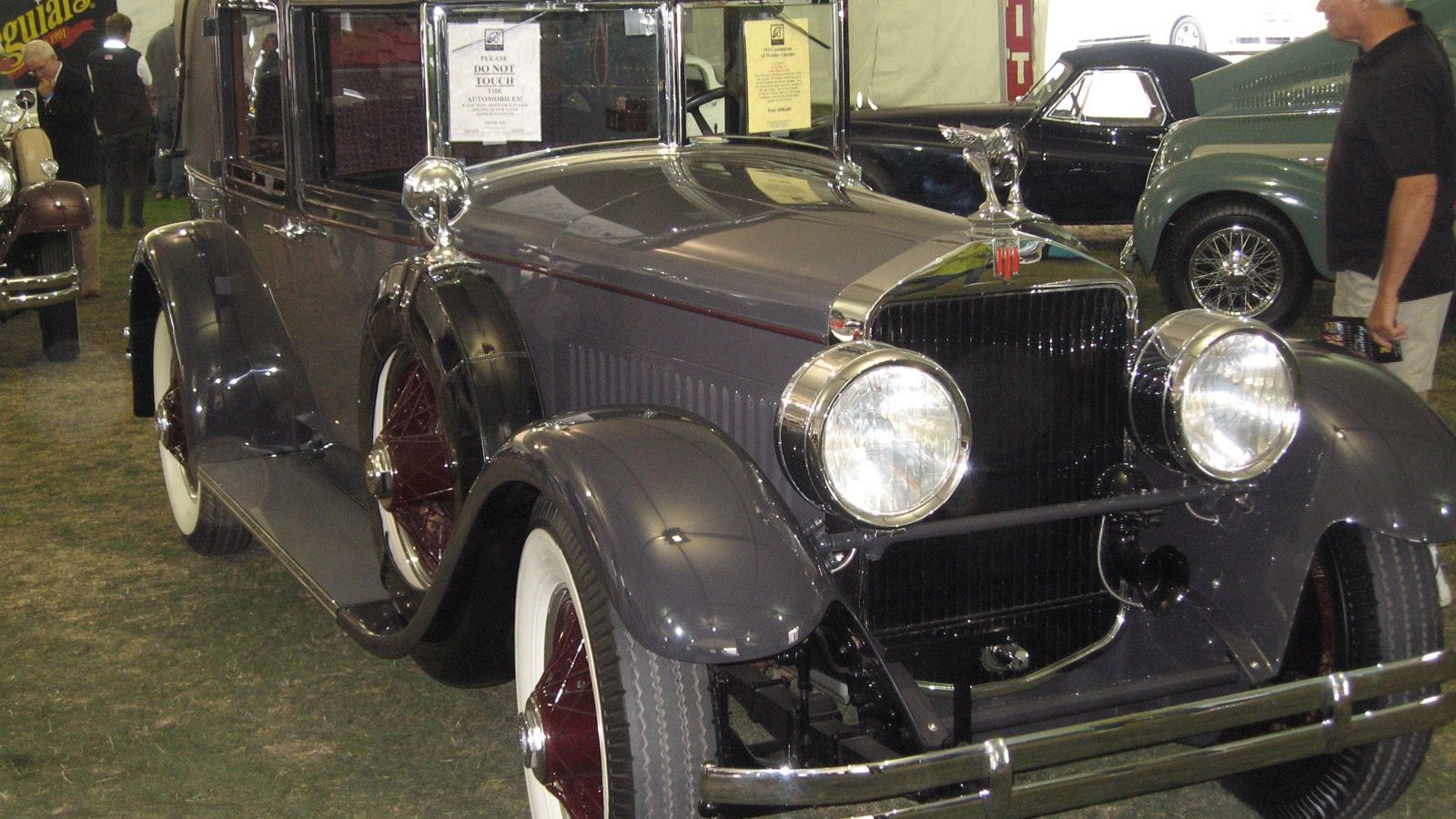
Photo: “1929 Cunningham open drive limousine” by Simon Davison from Los Gatos, United States / Wikimedia Commons, licensed under CC BY 2.0. Cropped to 16:9.
Late-1920s flagship on a 132- or 142-inch wheelbase with roughly 106 horsepower; the last catalogued passenger series (documented as the 1928/1929 V-7). As the Depression ended demand for hand-built ultra-luxury cars, passenger production wound down by about 1931, after which Cunningham concentrated on custom bodywork and professional cars.
1929 Photo: “1929 Cunningham open drive limousine” by Simon Davison from Los Gatos, United States / Wikimedia Commons, licensed under CC BY 2.0. Cropped to 16:9.
Body styles
- Touring
- Roadster
- Phaeton
- Limousine
- Town car
- Speedster
Related models
Collect the nameplate
Find a scale model of the Cunningham Series V
Search Amazon across available years, colors, and scales. Exact releases vary, so confirm the listing before ordering.